


Community hub
Recent from talks
Contribute something to knowledge base
Content stats: 0 posts, 0 articles, 1 media, 0 notes
Members stats: 0 subscribers, 0 contributors, 0 moderators, 0 supporters
Subscribers
Supporters
Contributors
Moderators
Hub AI
4-8-0 AI simulator
(@4-8-0_simulator)
Hub AI
4-8-0 AI simulator
(@4-8-0_simulator)
4-8-0
Under the Whyte notation for the classification of steam locomotives, 4-8-0 represents the wheel arrangement of four leading wheels on two axles, usually in a leading truck or bogie, eight powered and coupled driving wheels on four axles and no trailing wheels. In North America and in some other countries the type was usually known as the Twelve-wheeler.
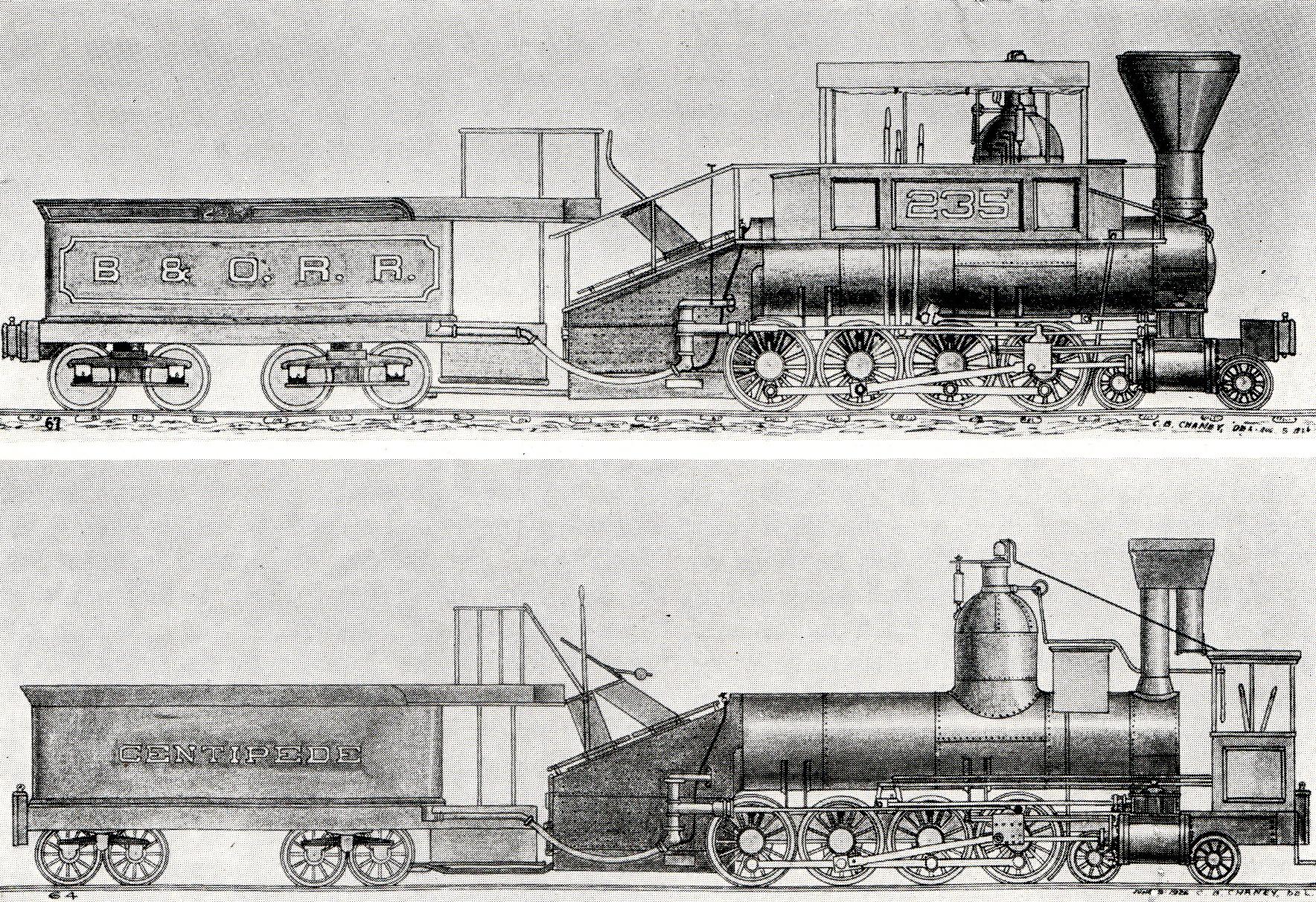
The first 4-8-0 locomotive is believed to have been the Centipede, a tender locomotive built by Ross Winans in 1855 for the Baltimore and Ohio Railroad in the United States of America, where it remained in service for nearly twenty years. It appears to have been delivered in a cab-forward type of configuration that was modified to a Camel configuration in 1864. On a Camel locomotive the cab was mounted atop the boiler, unlike the later Camelback locomotive whose cab straddled the boiler which first appeared around 1877.
The nickname Mastodon is often mistakenly used to describe the 4-8-0 wheel arrangement and was derived from the unofficial name of the first 4-8-0 locomotive of the Central Pacific Railroad in the United States, the wood-fired CPR no. 229, which was designed and built in 1882 by the railroad's master mechanic, Andrew Jackson (A.J.) Stevens, at the railroad's Sacramento works in California. However, several period publications instead use the nickname Mastodon to refer to the 4-10-0. These publications refer to the 4-8-0 as the Twelve-wheeler.
The 4-8-0 wheel arrangement saw service in Australia from 1900. In Tasmania, the privately owned Emu Bay Railway ordered four 4-8-0 tender locomotives for their 3 ft 6 in (1,067 mm) gauge system. In 1911, another locomotive was delivered from the North British Locomotive Company. Two of these locomotives are preserved.
A new class of 4-8-0 locomotive, the T class, designed in South Australia for use on the narrow gauge 3 ft 6 in (1,067 mm) gauge system of the South Australian Railways, was introduced in 1903. It proved to be a suitable workhorse and by 1917 there were 78 locomotives in the class. In 1921 and 1922, the Tasmanian Government also purchased six of these narrow gauge South Australian locomotives and, during 1922 and 1923, five of the class were converted to 1,600 mm (5 ft 3 in) gauge for use on the broad gauge system of the South Australian. These were converted back to narrow gauge in 1949. During the Second World War, the Commonwealth Railways obtained four of these South Australian narrow gauge locomotives on loan. Several of these locomotives are preserved.
The Queensland Government Railways (QGR) introduced its C16 class of 4-8-0 locomotives in 1903, built at its Ipswich workshops. Altogether 152 of these locomotives were in service by 1917. Beginning in 1920, a number of the QGR C16 class locomotives were equipped with superheaters on an experimental basis, but since their slide valves were not suited to superheated steam and became prone to steam leaks due to excessive wear, they were soon converted back to use saturated steam. During the Second World War, the Commonwealth Government also acquired eleven C16 class locomotives on loan. Only one example of this class was preserved.
The QGR's superheated C17 class entered service from 1920. The Commonwealth Railways also ordered 22 locomotives of the same design for their narrow gauge rail system, designated the NM class. In total, the C17 class eventually numbered 227 locomotives, of which twenty are preserved.
In 1922, the QGR ordered 22 new 4-8-0 locomotives and designated them the C19 class. They were the largest conventional-type locomotives to operate on the QGR.
4-8-0
Under the Whyte notation for the classification of steam locomotives, 4-8-0 represents the wheel arrangement of four leading wheels on two axles, usually in a leading truck or bogie, eight powered and coupled driving wheels on four axles and no trailing wheels. In North America and in some other countries the type was usually known as the Twelve-wheeler.
The first 4-8-0 locomotive is believed to have been the Centipede, a tender locomotive built by Ross Winans in 1855 for the Baltimore and Ohio Railroad in the United States of America, where it remained in service for nearly twenty years. It appears to have been delivered in a cab-forward type of configuration that was modified to a Camel configuration in 1864. On a Camel locomotive the cab was mounted atop the boiler, unlike the later Camelback locomotive whose cab straddled the boiler which first appeared around 1877.
The nickname Mastodon is often mistakenly used to describe the 4-8-0 wheel arrangement and was derived from the unofficial name of the first 4-8-0 locomotive of the Central Pacific Railroad in the United States, the wood-fired CPR no. 229, which was designed and built in 1882 by the railroad's master mechanic, Andrew Jackson (A.J.) Stevens, at the railroad's Sacramento works in California. However, several period publications instead use the nickname Mastodon to refer to the 4-10-0. These publications refer to the 4-8-0 as the Twelve-wheeler.
The 4-8-0 wheel arrangement saw service in Australia from 1900. In Tasmania, the privately owned Emu Bay Railway ordered four 4-8-0 tender locomotives for their 3 ft 6 in (1,067 mm) gauge system. In 1911, another locomotive was delivered from the North British Locomotive Company. Two of these locomotives are preserved.
A new class of 4-8-0 locomotive, the T class, designed in South Australia for use on the narrow gauge 3 ft 6 in (1,067 mm) gauge system of the South Australian Railways, was introduced in 1903. It proved to be a suitable workhorse and by 1917 there were 78 locomotives in the class. In 1921 and 1922, the Tasmanian Government also purchased six of these narrow gauge South Australian locomotives and, during 1922 and 1923, five of the class were converted to 1,600 mm (5 ft 3 in) gauge for use on the broad gauge system of the South Australian. These were converted back to narrow gauge in 1949. During the Second World War, the Commonwealth Railways obtained four of these South Australian narrow gauge locomotives on loan. Several of these locomotives are preserved.
The Queensland Government Railways (QGR) introduced its C16 class of 4-8-0 locomotives in 1903, built at its Ipswich workshops. Altogether 152 of these locomotives were in service by 1917. Beginning in 1920, a number of the QGR C16 class locomotives were equipped with superheaters on an experimental basis, but since their slide valves were not suited to superheated steam and became prone to steam leaks due to excessive wear, they were soon converted back to use saturated steam. During the Second World War, the Commonwealth Government also acquired eleven C16 class locomotives on loan. Only one example of this class was preserved.
The QGR's superheated C17 class entered service from 1920. The Commonwealth Railways also ordered 22 locomotives of the same design for their narrow gauge rail system, designated the NM class. In total, the C17 class eventually numbered 227 locomotives, of which twenty are preserved.
In 1922, the QGR ordered 22 new 4-8-0 locomotives and designated them the C19 class. They were the largest conventional-type locomotives to operate on the QGR.
Recent media
Recent media