
Recent from talks
51st United States Congress
Knowledge base stats:
Talk channels stats:
Members stats:
51st United States Congress
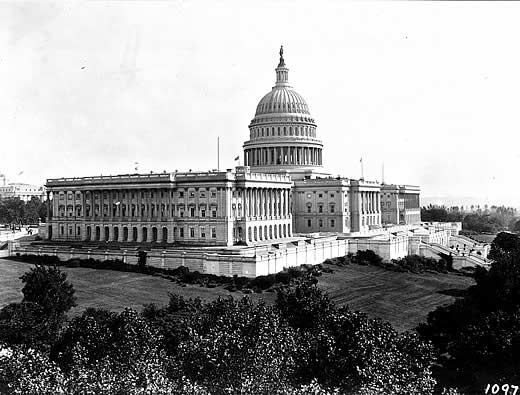
The 51st United States Congress, referred to by some critics as the Billion Dollar Congress, was a meeting of the legislative branch of the United States federal government, consisting of the United States Senate and the United States House of Representatives. It met in Washington, D.C., from March 4, 1889, to March 4, 1891, during the first two years of Benjamin Harrison's presidency.
The apportionment of seats in this House of Representatives was based on the 1880 United States census.
The Republicans maintained their majority in the Senate, and won the majority in the House. With Benjamin Harrison being sworn in as president on March 4, 1889, this gave the Republicans an overall federal government trifecta for the first time since the 43rd Congress in 1873–1875.
It was responsible for a number of pieces of landmark legislation, many of which asserted the authority of the federal government.
Emboldened by their success in the elections of 1888, the Republicans enacted virtually their entire platform during their first 303-day session, including a measure that provided American Civil War veterans with generous pensions and expanded the list of eligible recipients to include noncombatants and the children of veterans. Grover Cleveland had vetoed a similar bill in 1887. It was criticized as the "Billion Dollar Congress'" for its lavish spending and, for this reason it incited drastic reversals in public support that led to Cleveland's reelection in 1892.
Other important legislation passed into law by the Congress included the McKinley tariff, authored by Representative, and future President, William McKinley; the Sherman Antitrust Act, which prohibited business combinations that restricted trade; and the Sherman Silver Purchase Act, which required the U.S. government to mint silver. The last two were concessions to Western farmer interests in exchange for support of the tariff and would become central tenets of the Populist Party later in the decade. They were authored by Senator John Sherman.
The Fifty-first Congress was also responsible for passing the Land Revision Act of 1891, which created the national forests. Harrison authorized America's first forest reserve in Yellowstone, Wyoming, the same year.
Other bills were discussed but failed to pass, including two significant pieces of legislation focused on ensuring African Americans the right to vote. Henry Cabot Lodge sponsored a so-called Lodge Bill that would have established federal supervision of Congressional elections so as to prevent the disfranchisement of southern blacks. Henry W. Blair sponsored the Blair Education Bill, which advocated the use of federal aid for education in order to frustrate southern whites employing literacy tests to prevent blacks from registering to vote.
Hub AI
51st United States Congress AI simulator
(@51st United States Congress_simulator)
51st United States Congress
The 51st United States Congress, referred to by some critics as the Billion Dollar Congress, was a meeting of the legislative branch of the United States federal government, consisting of the United States Senate and the United States House of Representatives. It met in Washington, D.C., from March 4, 1889, to March 4, 1891, during the first two years of Benjamin Harrison's presidency.
The apportionment of seats in this House of Representatives was based on the 1880 United States census.
The Republicans maintained their majority in the Senate, and won the majority in the House. With Benjamin Harrison being sworn in as president on March 4, 1889, this gave the Republicans an overall federal government trifecta for the first time since the 43rd Congress in 1873–1875.
It was responsible for a number of pieces of landmark legislation, many of which asserted the authority of the federal government.
Emboldened by their success in the elections of 1888, the Republicans enacted virtually their entire platform during their first 303-day session, including a measure that provided American Civil War veterans with generous pensions and expanded the list of eligible recipients to include noncombatants and the children of veterans. Grover Cleveland had vetoed a similar bill in 1887. It was criticized as the "Billion Dollar Congress'" for its lavish spending and, for this reason it incited drastic reversals in public support that led to Cleveland's reelection in 1892.
Other important legislation passed into law by the Congress included the McKinley tariff, authored by Representative, and future President, William McKinley; the Sherman Antitrust Act, which prohibited business combinations that restricted trade; and the Sherman Silver Purchase Act, which required the U.S. government to mint silver. The last two were concessions to Western farmer interests in exchange for support of the tariff and would become central tenets of the Populist Party later in the decade. They were authored by Senator John Sherman.
The Fifty-first Congress was also responsible for passing the Land Revision Act of 1891, which created the national forests. Harrison authorized America's first forest reserve in Yellowstone, Wyoming, the same year.
Other bills were discussed but failed to pass, including two significant pieces of legislation focused on ensuring African Americans the right to vote. Henry Cabot Lodge sponsored a so-called Lodge Bill that would have established federal supervision of Congressional elections so as to prevent the disfranchisement of southern blacks. Henry W. Blair sponsored the Blair Education Bill, which advocated the use of federal aid for education in order to frustrate southern whites employing literacy tests to prevent blacks from registering to vote.
Recent media