Hubbry Logo
Lodge BillLodge BillMain
Open search
Lodge Bill
Community hub
Lodge Bill
logo
8 pages, 0 posts
0 subscribers
Be the first to start a discussion here.
Lodge Bill
Lodge Bill
from Wikipedia

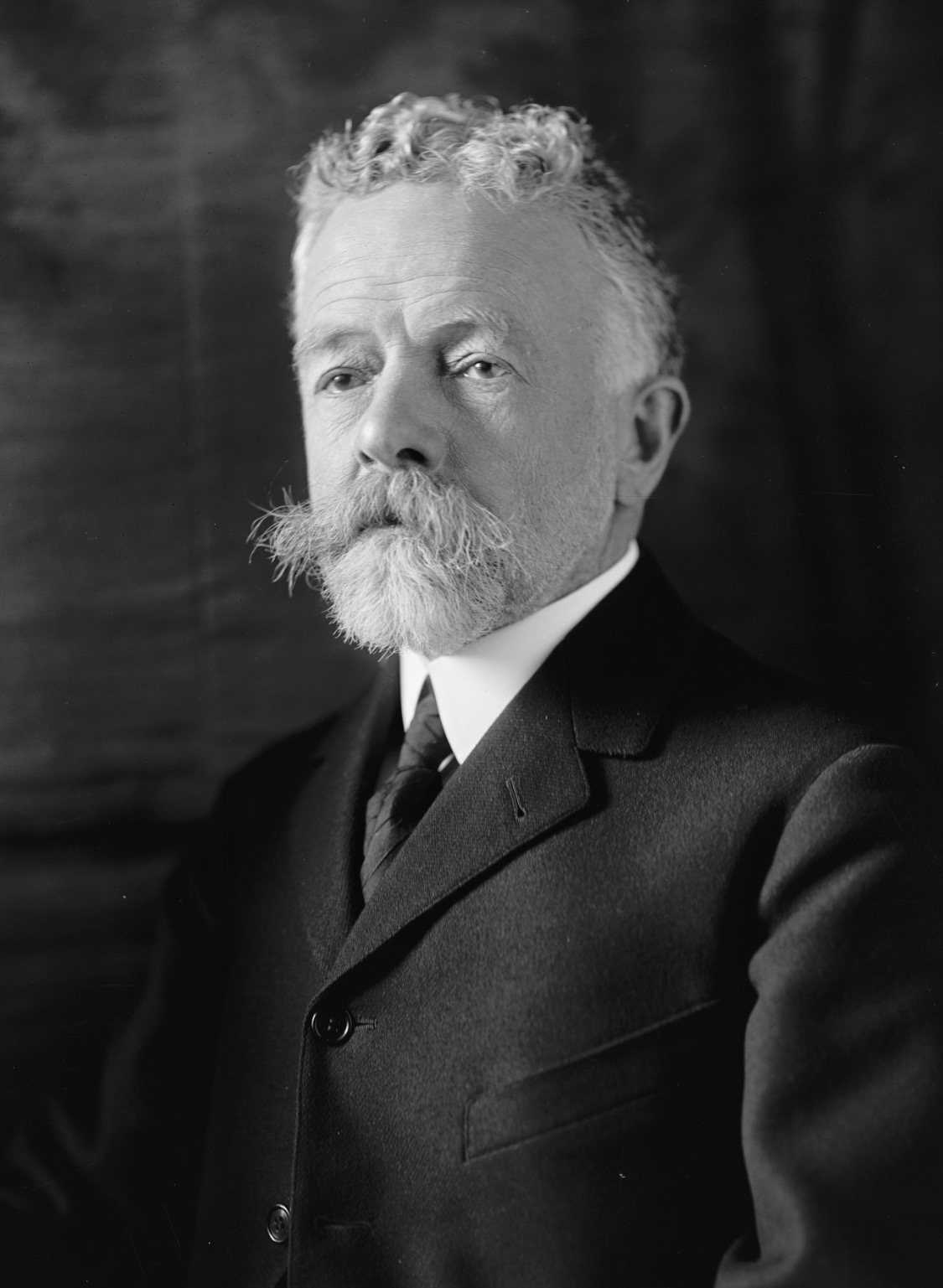
Republican Henry Cabot Lodge in 1905

The Lodge Bill of 1890, also referred to as the Federal Elections Bill or by critics as the Lodge Force Bill, was a proposed bill to ensure the security of elections for U.S. Representatives. It was drafted and proposed by Representative Henry Cabot Lodge of Massachusetts and sponsored in the Senate by George Frisbie Hoar with the endorsement of President Benjamin Harrison and all Republicans. The bill provided for the federal regulation of elections to the United States House of Representatives, which had heretofore been regulated by state governments. In particular, the bill would have permitted federal circuit courts (upon a petition by 500 citizens from any district) to appoint federal supervisors for congressional elections. Supervisors would have the power to attend elections, inspect registration lists, verify doubtful voter information, administer oaths to challenged voters, stop illegal immigrants from voting, and certify the vote count.[1] Perhaps most controversially, the supervisor would have the power to request Deputy United States Marshals to secure elections by force if deemed necessary.

The bill was created primarily to enforce the ability of blacks, predominantly Republican at the time, to vote in the Southern United States, as provided for in the constitution. The Fifteenth Amendment already formally guaranteed that right, but white southern Democrats had passed laws restricting voter registration and instituting electoral requirements, such as requiring payment of poll taxes and literacy tests (often waived if the prospective voter's grandfather had been a registered voter, the "grandfather clause"), that effectively prevented blacks from voting. That year Mississippi passed a new constitution that disfranchised most blacks, and other states would soon follow the "Mississippi plan".

After passing the House by just six votes,[2] the Lodge bill was successfully filibustered by Democrats in the Senate, with little action by the President of the Senate, Vice President Levi P. Morton, because Silver Republicans in the West traded it away for Southern support of the Sherman Silver Purchase Act and Northern Republicans traded it away for Southern support of the McKinley Tariff.[3][4]

Background

[edit]

The 15th Amendment to the US Constitution states: “The right of citizens of the United States to vote shall not be denied or abridged by the United States or by any State on account of race, color, or previous condition of servitude”[5] Its purpose was to acknowledge African American men's voting rights.[6] After the passage of the 15th Amendment in 1870, African Americans were subjected to voting restrictions in certain states. Disenfranchisement of African Americans came in various forms, such as poll taxes, literacy tests, white primaries, and grandfather clauses.

Provisions

[edit]

According to an article written on March 15 and published on March 16, 1890, from The New York Times, the Lodge Bill had 21 sections.[7]

WASHINGTON, March 15. — Representative Henry Cabot Lodge of Massachusetts, Chairman of the House Committee on the Election of President and Vice President and Representatives in Congress, to-day introduced a bill to regulate elections of Representatives in Congress. Mr. Lodge says the bill is very carefully drawn after consultation with many persons. It is a voluminous bill of twenty-one sections.

The article described the provisions of the law as follows:

  1. Whenever 500 persons, voters and residents in any Congressional district of the United States, not less than two months prior to the next election of Representatives, petition the Judge of the District Court to place the next Congressional election in said district under the provisions of this act, it shall be the duty of such Judge to announce at once that the next Congressional election in said district will be held under the provisions of this act. The Judge shall then appoint such officers of election and registration and make such other provision for the conduct of the Congressional election as are hereafter provided.
  2. There are to be two registers of voters for each voting precinct, one of whom shall be a member of the party which at the next preceding Presidential election polled the highest number of votes, and one a member of the party which polled the next highest number of votes. These registers are to prepare a preliminary list of the voters of their precinct, which shall be posted publicly and give notice that they will meet at specified times and places to register voters. Within three days after the posting of the preliminary lists the registers shall begin to hold meetings, which shall be public, to register all duly qualified voters who may come before them and who are not already registered. Registration shall cease not less than ten days before election. The second list of voters shall then be published, but no names shall be added after the close of registration, and no names shall be stricken off except on proof of death or removal from the Congressional district.
  3. The ballots shall be of white paper of the weight ordinarily used in printing, and not more than eight nor less than six inches wide, nor more than ten nor less than eight inches long, and before distribution the ballots shall be so folded in marked creases that their width and length when folded shall be one-half the width and length herein specified. On the back and outside, when folded, shall be printed "Official ballot for Representative in Congress," followed by the designation of the polling place for which the ballot is proposed, the date of election and a fac simile of the signature of the clerk of the district who has caused the ballot to be printed. All ballots when printed shall be folded as herein before provided, and fastened together in such manner that each ballot may be detached and removed separately. A record of the number of ballots printed and furnished to each polling place shall be kept by the Clerk of the District Court.
  4. There shall be provided for each voting place three sets of such ballots, each of not less than 100 for every 50 and fraction of 50 registered male voters therein, and it shall be the duty of the registrars of voters in each precinct to certify to the Clerk of the District Court, fourteen days previous to such election, the number of male registered voters in such voting precinct. Provision is also made for the printing and distribution of instructions for the guidance of voters as to obtaining ballots, manner of marking them, &c.
  5. As to the manner of voting, it is provided that the inspectors (provision for which is made) and registrars in each voting precinct shall designate and appoint (and if they fail to at least five days before the election, then the Judge of the District Court shall designate and appoint) a polling place therein, at a convenient place, and shall cause to be provided a sufficient number of voting shelves or compartments at or in which voters may conveniently mark their ballots so that in the marking they may be screened from the observation of others; and a guard rail shall be so constructed and placed that only such persons as are inside of it can approach within twenty feet of the ballot boxes and of such shelves or compartments.
  6. The arrangements shall be such that neither the ballot boxes nor the voting shelves or compartments shall be hidden from view of those outside the rail. The number of such shelves or compartments shall not be less than one for every seventy-five voters and not less than three in any precinct. Any person desiring to vote shall give his name and, if requested, his residence, to one of the registrars, who shall announce the same in a loud and distinct voice; and if such name be found upon the check list by the registrar he shall immediately report it and the voter shall be allowed to enter the space inclosed by the rail. He shall be furnished with but one ballot and his name then checked off. Besides the election officers no voters in excess of the number of voting shelves or compartments provided shall be allowed in said inclosed space at one time.
  7. On receipt of his ballot the voter shall forthwith, and without leaving the inclosed space, retire alone to one of the voting shelves or compartments and prepare his ballot by marking in the appropriate margin or place a cross (X) opposite the name of the candidate of his choice for Congressman, or by filling in the name of the candidate of his choice in the blank space provided and marking a cross (X) opposite thereto. Before leaving the voting shelf or compartment the voter shall fold his ballot without displaying the marks thereon in the same way it was folded when received by him, and he shall keep the same so folded until he has voted. He shall then vote, after announcing his name to the inspector and having it checked on the inspectors' list before leaving the inclosed space, and shall deposit his ballot in the box with the official indorsement uppermost.
  8. He shall mark and deposit his ballot without undue delay and shall quit the inclosed space as soon as he has voted. No voter shall be allowed to occupy a voting shelf or compartment already occupied by another, nor to remain within said inclosed space for more than six minutes, nor to occupy a voting shelf or compartment for more than five minutes, in case all of such shelves or compartments are in use and other voters are waiting to occupy them. No person shall take or remove any ballot from the polling place before the close of the polls.
  9. Other sections provide that where there is no constitutional educational qualification voters who cannot read or see may receive the assistance of the inspectors in marking their ballots. A voter who purposely allows anyone to know how he is about to vote by showing his marked ballot, or any person who endeavors to induce a voter to show his marked ballot, shall be subject to a fine of from $50 to $500, and larger fines and penalties are to be imposed for destruction of election posters or supplies or for filing false certificates of nominations or for failure of election officers in their duties.
  10. Challenges are not to be entertained for the purpose of delaying voting. The returns of elections are to be made in duplicate to the Clerk of the District Court, who, with the Judge of the court, is to compute the votes in each Congressional district and certify the result, as at present, to the Clerk of the House of Representatives, who is to place on the roll the names of the persons certified.
  11. The Marshal of the court is required to furnish deputies to preserve order, under the direction of the election officers, and to secure to all duly qualified voters the peaceable exercise of their right to vote, but he is not to allow them to interfere with the election. Registrars are to receive $2 per day and inspectors and deputies $3. They are to be paid on certificate of the Clerk of the court, who is to pay the expense of printing ballots, and for these purposes the bill carries an appropriation of $500,000.

Support

[edit]

Julius Caesar Chappelle (1852–1904) was among the earliest black Republican legislators in the northern United States, serving in the Massachusetts House of Representatives from 1883 to 1886. In 1890, Chappelle gave a political speech for the right of blacks to vote at an "enthusiastic" meeting at Boston's Faneuil Hall to support the federal elections bill. He was featured in a front-page article in The New York Age newspaper covering his support of the Lodge bill.[8]

Alfred A. Taylor, a Republican from Tennessee, supported the Lodge Bill. Taylor was from East Tennessee, which remained a Republican stronghold during the Jim Crow era due to its Southern Unionist history during the Civil War. Taylor represented Tennessee's 1st congressional district from 1889 to 1895, and later served as Governor of Tennessee from 1921 to 1923.[9]

Legislative history

[edit]

William M. Stewart's account

[edit]

Republican Senator William M. Stewart of Nevada was instrumental to preventing the passage of the Lodge Bill, as Stewart described in detail in his own memoir, published in 1908. According to Stewart's memoir, the Lodge Bill was passed in the House of Representatives as H. R. 10958 in the 1st Session of the 51st Congress, and was defeated in the Senate during the 2nd session in 1891.

Relevant paragraphs of Stewart's memoir describing the legislative history of the bill and how he helped Democrats defeat the Lodge Bill are provided here.

Henry Cabot Lodge of Massachusetts, then a member of the House, cooperated with the President, and on June 14, 1890, introduced a bill to amend the Federal election laws of the United States, which was referred to the select committee on elections of President, Vice-President, and Representatives in Congress. This bill was so amended by the committee, and by Mr. Lodge on the floor of the House, that it practically placed all elections under special officers appointed by the President, backed by the military arm of the Government. It seemed to me that its passage would subvert the Government of the United States and substitute military dictation for civil authority in elections in the several States.

The contest in the House was elaborate and protracted, but finally on July 2, 1890, the bill passed the House by a vote of 155 to 149. There was a majority of about six in favor of the bill in the Senate. It was an Administration measure and Republican Senators, naturally supported it. It was a long bill, sweeping in its provisions, and sufficiently ambiguous to puzzle ordinary readers. I found by my conversation with Republican Senators that very few of them possessed any real knowledge of the provisions of the bill.

Benton McMillin of the House, afterward Governor of Tennessee, called at my rooms in the Shoreham Hotel shortly after the bill passed the House and found me examining its provisions. After some preliminary conversation he asked me what I thought of the measure, and if I thought it would pass the Senate. I told him I was very much opposed to the bill, but that there was only one chance of defeating it in the Senate, and that was by delay.

I said to him that there were many important measures pending before the Senate; the tariff bill, and others of almost equal importance. If it could be so arranged as to consider those bills before the election bill, commonly called the "Force bill," so that it would not be considered in the long session, it might be defeated in the short session by debate and parliamentary tactics. I told him to tell his friends to keep quiet and supply what aid they could in placing the consideration of the Force bill after the tariff and other bills were disposed of. He reported to me from time to time such facts as he could learn with regard to the order of business. Finally a caUcus of the Republican Senators was called to arrange the order of business. I did all in my power to assist every Senator who had a favorite measure to advance its consideration, and it so happened that the Force bill was placed low on the calendar of measures to be considered, and was not reached during the long session.

Senator Gorman of Maryland, the leader of the Democratic party in the Senate, managed the opposition to the bill with skill and ability from the beginning. We consulted together constantly as to the mode of procedure.

Congress convened on December 1, 1890. The President in his message argued at some length in favor of the Force bill, and urgently recommended its passage. On December 3 the Senate resumed consideration of the Force bill, and Mr. Hoar immediately requested that that portion of the President's message relating to the Federal election law be read, which was accordingly done.

The message was an urgent appeal to Congress to pass the Lodge Force bill and place the control of elections in the Federal Executive. The bill was debated from time to time until the holidays intervened. ...

The Silver bill, in connection with other necessary bills, occupied the attention of the Senate until January 16, 1891, when the Senate again resumed consideration of the Force bill. ...

On January 20 Senator Aldrich moved to take up a resolution, previously introduced by him, amending the rules of the Senate so as to cut off debate at the will of the remainder of that session. The object of Mr. Aldrich and his associates, who were in favor of the Force bill, was to end debate so that a majority could pass the Force bill at will.

The rule was debated in connection with the Force bill until January 22, when it was side-tracked by the bill making an apportionment of Representatives in Congress among the several States. This was a very important bill, and it was necessary that it should be passed before the 4th of March in order to provide for the following fall elections. Mr. Wolcott had charge of the bill.

We canvassed the Senate thoroughly and ascertained that we would have a majority to take it up on January 22.

There were just enough Senators paired with those in favor of taking up the Apportionment bill to carry it by one majority without the vote of Senator Stanford, and by two majority with his vote. Senator Stanford had gone to New York, and a violent snow, hail, and rain-storm had cut off telegraphic communication between that city and Washington. However, before Senator Stanford left, in anticipation of the necessity of his vote, I called at his house and he told me I might pair him in favor of taking up the Apportionment bill at any time.

On January 22, according to our understanding. Senator Wolcott moved to take up the Apportionment bill, and demanded the yeas and nays. The various pairs were stated and arranged except that of Senator Stanford. I contended that he was in favor of taking up the Apportionment bill, and emphatically denied the right of any Senator to pair him against me. There the matter rested, and the Senator from California was not paired.

The Apportionment bill, when the vote was announced, was taken up by 35 to 34. The Senate then proceeded to the consideration of the bill, which required considerable time. It was conceded both by the friends and foes of the Force bill that it was too late in the session to consider it, in view of the Apportionment bill and appropriation bills then pending.

On the afternoon of that day I happened to be in the cloakroom, and heard one of the colored messengers remark that Senator Aldrich was going to New York that night. The train for New York was to leave at five o'clock, and I determined to make the trip myself. I took it for granted that his journey on that night was for the purpose of securing the vote of Senator Stanford to resume the consideration of the Force bill. ...

When I arrived Mrs. Stanford was in the parlor of the suite of rooms which she and the Senator occupied. I told her my business, and said that according to the understanding with the Senator, which, by the way, was agreed to when she was present, I would not allow him to be paired in favor of the Force bill. She said the Senator had met with a severe accident, having been thrown from a hansom in the afternoon of that day and quite severely bruised, and that it was unnecessary to disturb him, as she could attend to the business as well as he could. She said she knew what his views were and would make them known.

She called the Senator's secretary, and asked him for the dispatch which he had written to send as soon as the wires were again up between New York and Washington. It was directed to me, and read: Pair me against the Force bill and all matters connected therewith. (Signed) Leland Stanford.

I asked the secretary to go down stairs with me, and as we reached the office floor we met Senator Aldrich at the elevator on his way to visit Senator Stanford. I told him he was too late, and the clerk showed him the dispatch. He turned away, and there the matter dropped, and thus the Force bill was defeated, never again to be revived. After that it was never endorsed by the Republican party of the nation or of any State.

Aftermath

[edit]
The First Vote, illustration by A.R. Waud, Harper's Weekly, November 16, 1867

The Republican Party's commitment to African-American rights had been declining since Reconstruction ended in 1877, and the 1890 Lodge Bill proved to be the last Republican effort in support of African American suffrage.[10] The NAACP wrote to Lodge in 1919 to ask him to again draft a voting rights bill, but Lodge never responded, as Lodge and other Republicans were more focused on women's suffrage, World War I and the Spanish flu epidemic.[11] By 1919, and even more so by the following decade, the Republican Party had changed so much that they were actually usually to the right of the Democratic Party on economic issues; Lodge himself was known as one of the most conservative Republicans in the Senate, the leading opponent to the League of Nations, and one of the nation's leading nativists.[12]

The Lodge Bill was a precursor of the various Civil Rights legislation that followed. The bill's failure led to an increase in voter suppression until Congress passed the Voting Rights Act of 1965, which was signed into law by President Lyndon B. Johnson.

The Voting Rights Act outlawed the discriminatory voting practices adopted in many southern states after the Civil War, including literacy tests.[13] It stated that "jurisdictions covered by these special provisions could not implement any change affecting voting until the Attorney General or the United States District Court for the District of Columbia determined that the change did not have a discriminatory purpose and would not have a discriminatory effect. In addition, the Attorney General could designate a county covered by these special provisions for the appointment of a federal examiner to review the qualifications of persons who wanted to register to vote. Further, in those counties where a federal examiner was serving, the Attorney General could request that federal observers monitor activities within the county's polling place.[14]

See also

[edit]

References

[edit]
Revisions and contributorsEdit on WikipediaRead on Wikipedia
from Grokipedia
The Lodge Bill, formally the Federal Elections Bill of 1890 (H.R. 11045), was a legislative proposal introduced in the United States by Republican Congressman of to enforce the Fifteenth Amendment by providing federal oversight of congressional elections, particularly to counteract voter suppression tactics targeting in Southern states. The bill authorized the appointment of federal supervisors upon petition by 100 voters alleging fraud or intimidation, empowered federal courts to review contested election results, and aimed to close enforcement gaps exploited by white Democratic majorities to disenfranchise black voters through poll taxes, literacy tests, and violence. Sponsored amid rising reports of electoral irregularities, such as in the election where black Republican contested results due to suppressed votes, the measure reflected ongoing Republican efforts to extend Reconstruction-era protections beyond their formal end in 1877. President endorsed the bill, viewing it as essential to upholding constitutional voting rights, but it faced fierce opposition from who decried it as the "Lodge Force Bill," portraying federal intervention as tyrannical overreach that threatened and white Democratic control. After passing the on , 1890, by a narrow 155-149 vote along partisan lines, the bill stalled in the amid a Democratic filibuster and wavering Republican support, ultimately failing to advance in September 1890 as party leaders prioritized tariff legislation to maintain unity for midterm elections. Its defeat marked a pivotal retreat from federal enforcement of , accelerating the entrenchment of and the "Solid South" Democratic dominance that persisted until the mid-20th century civil rights reforms.

Historical Context

Post-Reconstruction Electoral Challenges

Following the , which resolved the disputed presidential election by withdrawing federal troops from the , Southern Democratic "Redeemer" governments rapidly dismantled Reconstruction-era protections for voters. This shift enabled widespread use of extralegal violence and intimidation to suppress Republican-leaning participation in elections. In Alabama's 1874 elections, for instance, congressional investigations documented stolen boxes, , and threats against voters like James Rapier, while Democrats organized companies to disrupt Republican gatherings in 1876. Such tactics, often perpetrated by groups allied with white supremacist organizations, reduced voter turnout and facilitated Democratic regains of state power, with no members serving in Congress from the by 1887. By the late 1880s, Southern states supplemented intimidation with legal barriers to circumvent the Fifteenth Amendment, including poll taxes, literacy tests, and understanding clauses designed to disqualify black voters while exempting many whites via grandfather clauses. Poll taxes, implemented in states like , , and , proved the primary disenfranchising mechanism, reducing overall by approximately 18 percentage points in the . tests further depressed participation by about 8 points, particularly targeting blacks through subjective administration. These measures entrenched one-party Democratic dominance, as and minimized black influence despite residual voting in some areas. The cumulative effect was a precipitous decline in voter registration across the . In , where 70% of black males had registered by 1867, only 9,000 out of 147,000 voting-age black men qualified by 1890 following the state's new constitution. Southern voter turnout overall plummeted below 45% by 1900, compared to over 80% elsewhere in the nation, averaging under 26% from 1904 to 1948. This suppression not only eroded black political representation—yielding no southern members from 1901 to 1929—but also fostered persistent allegations of ballot stuffing and coercion, highlighting the need for renewed federal oversight.

Decline of Federal Enforcement in the South

The , resolving the disputed 1876 presidential election, resulted in the withdrawal of remaining federal troops from and , effectively ending military enforcement of Reconstruction-era policies in the South. This shift allowed Southern Democratic "" to regain control of state governments, where they promptly dismantled Republican administrations and curtailed black political participation through intimidation and local laws. Supreme Court rulings in 1876 further eroded the of 1870 and 1871, which had authorized federal intervention against voter suppression and election violence. In United States v. Reese, the Court invalidated key provisions for lacking explicit ties to constitutional rights, limiting federal prosecutorial reach. Similarly, restricted federal authority over private conspiracies to interfere with voting, deeming such acts beyond congressional power under the Fifteenth Amendment. These decisions, combined with the of 1878 prohibiting military involvement in civilian law enforcement, hampered subsequent administrations' ability to deploy federal resources effectively. Prosecutions under the Enforcement Acts declined sharply after President Rutherford B. Hayes's inauguration in 1877, despite initial efforts yielding few convictions amid hostile Southern juries and judges. By the early , federal cases against election fraud and violence had become rare, as attorneys general prioritized other matters and local officials ignored violations. Black , which exceeded 90% of eligible men during peak Reconstruction enforcement, plummeted to under 10% in many Southern states by the , reflecting unchecked poll taxes, tests, and white primaries implemented without federal opposition. This federal retrenchment enabled the entrenchment of one-party Democratic rule in the , with disenfranchisement solidifying by the late through constitutional conventions and grandfather clauses that evaded direct Fifteenth Amendment challenges. By 1890, when renewed federal election supervision was debated, the absence of consistent enforcement had transformed Southern elections into white-only affairs, underscoring the obsolescence of prior statutes.

Origins and Sponsorship

Henry Cabot Lodge's Initiative

Henry Cabot Lodge, a Republican congressman from Massachusetts elected to the House of Representatives in 1886, spearheaded the Federal Elections Bill as a means to enforce federal protections for voters in congressional elections, particularly targeting intimidation and fraud against black voters in Southern states. As a member of the House Committee on Elections, Lodge drafted and introduced the legislation during the 51st Congress, drawing on historical precedents from Reconstruction-era enforcement acts to argue for renewed federal oversight. The bill, reported out of committee by March 1890, was presented as a constitutional response to documented electoral abuses, including ballot stuffing and voter suppression documented in contested election cases from the 1888 midterms. Lodge's motivations stemmed from a principled commitment to upholding the Fifteenth Amendment's guarantee of voting rights irrespective of race, viewing Southern Democratic regimes as systematically undermining these protections through informal violence and procedural manipulations rather than overt legal disqualification. Influenced by his scholarly background in American and prior writings on the slave trade and Reconstruction, Lodge contended that without federal supervisors at polling places, the Republican-leaning black electorate in the —estimated at over a million eligible voters—would continue to be effectively disenfranchised, perpetuating one-party Democratic dominance and eroding national democratic integrity. He emphasized during floor debates that the measure was not an innovation but a restoration of mechanisms proven effective in the , carefully calibrated to activate only upon petitions from 100 registered voters alleging irregularities, thereby minimizing routine federal intrusion. The initiative reflected Lodge's broader ideological alignment with Northern Republicanism, which prioritized national authority over in matters of , even as it served partisan interests by potentially restoring black favorable to the GOP. Lodge consulted extensively with party leaders and legal experts to refine the bill's provisions, ensuring provisions for bipartisan federal supervisors and expedited judicial reviews to address the backlog of over 20 contested seats from Southern districts. Despite criticisms portraying it as coercive federal overreach, Lodge maintained that of electoral violence—such as lynchings tied to voting disputes and widespread evasions—necessitated action to prevent the nullification of constitutional amendments.

Alignment with Republican Party Goals

The Lodge Bill, formally H.R. 11045, aligned closely with the Republican Party's post-Civil War objectives of enforcing the Fifteenth Amendment and countering Southern Democratic efforts to disenfranchise African American voters, who formed a reliable Republican base in the region. By proposing federal supervisors to oversee elections upon petition from 100 registered voters alleging fraud or intimidation, the legislation sought to address documented practices such as poll taxes, literacy tests, and violence that had eroded turnout since the end of Reconstruction in 1877, thereby upholding the party's foundational commitment to equal suffrage as articulated during the 1888 campaign. President , a Republican, explicitly urged to prioritize such measures to fulfill pledges protecting minority voting rights, viewing federal intervention as essential to preventing the "redemption" of Southern states by Democrats through suppressed ballots. This alignment extended to partisan strategy, as Republicans anticipated that safeguarding African American participation would dismantle the Democratic "" and enable GOP gains in congressional districts where black voters outnumbered whites, as evidenced by contested elections like the 1890 case of , a Republican claimant denied a seat due to alleged fraud. Party leaders, including House Speaker Thomas B. Reed, integrated the bill with procedural reforms like the Reed Rules to streamline passage, reflecting a broader effort to build Republican organizational strength amid declining Northern enthusiasm for Southern intervention. Critics within the party, however, noted tensions with fiscal conservatives wary of enforcement costs, yet the core support stemmed from the recognition that unchecked Southern electoral manipulation threatened national Republican viability. In essence, the bill embodied the party's dual pursuit of principled civil rights enforcement—rooted in opposition to Democratic Redeemer governments—and pragmatic electoral revival, though its failure in the highlighted intra-party divisions over federal overreach versus . This objective persisted despite opposition from silver Republicans prioritizing economic issues, underscoring the bill's role in reaffirming the GOP's Reconstruction-era legacy amid shifting national priorities.

Key Provisions

Mechanisms for Federal Oversight

The Lodge Federal Elections Bill of 1890 established federal oversight in congressional election districts upon petition by at least 100 registered voters alleging potential , , or , or by smaller thresholds (50 citizens in counties or cities over 20,000 inhabitants). circuit courts were empowered to appoint a chief supervisor of elections and necessary assistant supervisors in response to such petitions, with appointments required to be bipartisan where possible to mitigate bias claims. These supervisors operated independently of state officials, drawing authority from existing of 1870 and 1871, which the bill sought to strengthen for nationwide application, particularly targeting Southern districts where voter suppression against citizens was documented. Supervisors held extensive duties encompassing the entire electoral process: they monitored to verify eligibility and prevent fraudulent enrollments, stationed themselves at polling places to observe voting and challenge suspected illegal ballots in real time, and oversaw the counting and tallying of votes to ensure transparency and accuracy. Assistants reported directly to the chief supervisor, who coordinated enforcement and could summon federal marshals for assistance in maintaining order or investigating violations. This structure aimed to provide on-site federal intervention without supplanting local administration unless irregularities warranted it, with supervisors empowered to administer oaths and collect affidavits as evidence. Additionally, circuit courts appointed a United States board of canvassers for the district, tasked with independently certifying election results based on supervised tallies; this federal certificate served as evidence in any disputes, overriding state certifications if discrepancies arose. For contested seats, the bill facilitated federal , allowing candidates to petition courts for recounts or investigations under supervisor findings, thereby shifting resolution from state legislatures—often accused of partisan manipulation—to federal tribunals. These provisions collectively sought to enforce the Fifteenth Amendment's guarantees through direct federal presence, though critics argued they risked overreach by unelected appointees.

Enforcement and Judicial Procedures

The Lodge Bill proposed the appointment of federal supervisors of elections by judges of the circuit courts upon receipt of a signed by at least 100 registered voters in a congressional district, alleging that the right to vote had been or was likely to be abridged due to , , or other unlawful means. These supervisors, once appointed, were authorized to attend polling places, examine registration lists, challenge the qualifications of any voter they reasonably suspected of ineligibility, and require such individuals to provide affidavits or other proof of , residency, and non-participation in . To facilitate enforcement, the bill empowered circuit courts to appoint additional deputy supervisors and marshals as needed, granting marshals authority to summon posses comitatus for maintaining order and arresting violators on the spot. Violations of laws, including attempts to intimidate voters, forge ballots, or obstruct supervisors, were to be prosecuted in federal courts, with penalties including fines of up to $3,000 and for up to three years for individuals, and enhanced punishments for repeat offenses or conspiracies involving multiple parties. Judicial procedures emphasized federal jurisdiction to override state processes, allowing aggrieved voters or candidates to bring contests directly to federal circuit courts, which could order recounts, investigate fraud, and determine the rightful winner of congressional seats independently of state canvassing boards. Appeals from these decisions could proceed to the of the , ensuring uniform federal standards for resolving disputes over voter suppression or ballot integrity. This framework aimed to deter Southern Democratic tactics of disenfranchisement by centralizing authority in impartial federal judiciary, though critics argued it risked partisan appointments given the circuit courts' composition.

Debate and Positions

Arguments in Favor

Supporters of the Lodge Federal Elections Bill, primarily Republicans led by , contended that it was necessary to enforce the Fifteenth Amendment by countering widespread voter fraud and intimidation in Southern congressional elections, particularly against African American voters. The bill proposed federal supervisors for registration, polling, and ballot counting in districts where at least 100 voters petitioned due to alleged irregularities, aiming to prevent practices such as ballot box stuffing, invalidation of valid ballots, and threats by Democratic officials or mobs that effectively nullified . This mechanism was defended as a targeted intervention, not blanket federal control, to ensure honest elections and uphold constitutional voting rights without undue interference in state affairs where no complaints arose. A key example cited was the 1888 South Carolina congressional election, where Republican Thomas E. Miller contested his defeat on grounds that most Black voters had been prevented from casting ballots through suppression tactics; the Republican-controlled House seated Miller on September 23, 1890, highlighting the need for federal oversight to validate such claims. In the 1890 rematch, election officials discarded Miller's ballots on pretextual grounds of improper printing, further illustrating how local control enabled disenfranchisement. Proponents argued the bill would protect votes of all citizens, Black and white, by mandating accurate registration and counting, thereby preserving fair representation and preventing Southern Democratic dominance achieved through illicit means rather than genuine popular will. Republicans framed the legislation as a continuation of Reconstruction-era commitments to a republican form of government, asserting that unchecked state-level abuses rendered the Fifteenth Amendment meaningless and allowed violence or fraud to subvert national . Lodge and allies emphasized its restraint—supervision only upon verified petition—and its role in safeguarding the predominantly Republican vote, which faced systematic exclusion via literacy tests, poll taxes, and intimidation, as documented in congressional investigations of Southern elections. Without such measures, they warned, the South's "solid Democratic" bloc would distort congressional and policy, undermining the Union's post-Civil War settlement.

Arguments Against and Criticisms

Opponents, primarily , contended that the Lodge Bill represented an unconstitutional encroachment on by authorizing extensive federal supervision of congressional elections, which they viewed as a core state function under the Tenth Amendment. They argued that such intervention would undermine local self-government and revive the coercive federalism of Reconstruction-era Force Acts, evoking memories of military occupation and bayonet rule in the during the . Critics like Senator George Vest of labeled it the "most infamous bill" ever proposed, asserting it would degrade elections into a partisan federal spectacle rather than preserving democratic integrity. A key practical criticism focused on the bill's potential for abuse and corruption, as federal supervisors—appointed upon by 100 voters—could be manipulated for partisan gain, particularly by Republicans seeking to bolster in Democratic strongholds. claimed this mechanism would incentivize fraud, vote-buying, and intimidation by federal agents favoring one party, inverting the very electoral purity the bill purported to protect and leading to endless contested elections resolved in Washington. Even some Republicans, wary of alienating moderate voters, echoed concerns that the bill's broad enforcement powers would entangle the federal government in routine polling disputes nationwide, fostering and litigation rather than resolution. The proposed implementation was decried as prohibitively expensive, requiring thousands of federal marshals and supervisors across congressional districts, with estimates running into millions of dollars annually at a time of . Opponents highlighted that the bill's provisions for judicial circuits and appeals would swell federal expenditures without guaranteed benefits, diverting resources from pressing national priorities like tariffs and pensions. Broader criticisms warned that the bill would reignite sectional animosities, forcing the into perpetual conflict with the federal government and hindering national reconciliation post-Civil . Democrats portrayed it as a Republican ploy to "Africanize" Southern politics by empowering illiterate and manipulable black voters under federal protection, which they argued would destabilize governance and invite misrule, though this rhetoric masked efforts to maintain white supremacy through emerging state-level restrictions. Northern business interests and some party moderates opposed it to avoid disrupting trade relations with the , prioritizing economic harmony over electoral reform.

Legislative Process

Passage in the House

The Lodge Federal Elections Bill, formally H.R. 11045, was introduced in the by Republican on June 14, 1890, as part of the 51st Congress's efforts to enforce the Fifteenth Amendment through federal supervision of congressional elections in districts suspected of fraud or intimidation. The bill emerged from the House Committee on Elections, where Lodge served as chairman, and reflected Republican priorities to counter disenfranchisement tactics in the South following the disputed 1888 elections. Debate on the House floor spanned several weeks, beginning in late , with Republicans emphasizing the need for federal intervention to protect African American voters from violence, ballot stuffing, and poll taxes that violated constitutional guarantees. Lodge and allies like Thomas B. Reed argued that without such measures, the Republican Party's electoral viability in Southern states would collapse, citing evidence from recent elections where black turnout had plummeted due to intimidation. Democrats, led by figures such as Roger Q. Mills of , decried the bill as an unconstitutional "" that would impose military-like oversight on state affairs, potentially leading to partisan abuse by federal supervisors appointed by Republican marshals. The House, controlled by Republicans with a slim majority of 166 to 159 Democrats, witnessed procedural maneuvers including extended speeches and quorum calls to delay proceedings, yet the bill advanced under strict party discipline. On July 2, 1890, it passed by a narrow margin of 155 to 149, with nearly all Republicans voting in favor and Democrats united in opposition, underscoring the partisan divide over Reconstruction-era commitments. Eight Republicans defected, while one Democrat supported it, highlighting internal GOP fissures over the bill's federalism implications. This vote marked the last significant attempt by Congress to legislatively revive federal election protections until the mid-20th century.

Senate Deliberations and Obstruction

The Lodge Federal Elections Bill reached the following its narrow passage in the on July 14, 1890, by a vote of 155 to 149. It was referred to the Senate Committee on Privileges and Elections, which reported it favorably in late 1890, allowing general debate to begin in December amid intense partisan contention. Southern Democrats, holding a minority position in the Republican-controlled (approximately 51 Republicans to 37 Democrats), mounted vigorous obstruction through tactics, including extended speeches and procedural delays designed to exhaust legislative time without invoking modern rules, which did not exist. They framed the measure as unconstitutional federal overreach akin to Reconstruction-era "bayonet rule," warning of renewed sectional conflict and portraying it as Northern interference in Southern . This opposition was amplified by dilatory amendments, such as Democratic efforts in the to attach riders to appropriations bills prohibiting federal troops at polls—tactics echoed in Senate maneuvers to stall unrelated legislation. Republican unity fractured under competing priorities; Western senators, focused on economic issues like the , allied with Democrats to withhold support, trading votes for concessions on silver coinage and protections rather than pressing the elections bill. Proponents, including Senate Republicans like William E. Chandler of , defended the bill as essential enforcement of the Fifteenth Amendment against documented voter intimidation, but lacked the needed to invoke closure on debate. On January 22, 1891, the voted 35 to 34 to postpone further consideration of the bill indefinitely, effectively dooming it without a final vote on passage as the session prioritized other Republican agenda items. This procedural defeat, driven by minority obstruction and majority disunity, marked the end of federal legislative efforts to safeguard minority voting rights until the mid-twentieth century.

Role of William M. Stewart

William M. Stewart, Republican Senator from and a leading advocate for coinage, opposed the Lodge Bill in the , viewing it as secondary to Western economic interests and potentially unconstitutional federal overreach into state elections. His strategic delays, leveraging procedural tactics and alliances across party lines, were instrumental in preventing the bill's passage during the 51st Congress. Stewart's actions reflected the priorities of Silver Republicans, who sought to condition Republican unity on advancing silver amid declining metal prices and industry pressures in the West. Following the bill's House passage on July 2, 1890, Stewart coordinated with Democratic Representative Benton McMillin in July to urge prioritization of the Bill, thereby postponing Senate debate on elections oversight. When Senate consideration resumed on December 1, 1890, he allied with Democrat Arthur Pue Gorman to mount opposition, exploiting the narrow Republican majority. On January 5, 1891, Stewart exploited the recent admission of Idaho to the Union by securing its new Senators' support to pivot Senate business toward a silver purchase bill, stalling the Lodge measure amid filibuster threats from Southern Democrats. He intensified resistance on January 20, 1891, by delivering a Senate speech contending the bill exceeded Congress's enumerated powers under Article I, Section 4 of the Constitution. Stewart's decisive maneuver occurred on January 22, 1891, when he traveled urgently to New York to pair absent Senator against the bill, thwarting Republican leader Nelson Aldrich's efforts to enforce and ensuring insufficient votes as the session neared its March 3 end. In his 1901 reminiscences, Stewart explained his rationale: "I was very much opposed to the bill, but that there was only one chance of defeating it in the , and that was by delay." This contributed directly to the bill's tabling on February 26, 1891, without final vote, prioritizing and silver reforms over federal voting protections.

Defeat and Short-Term Consequences

Factors Leading to Failure

The defeat of the Lodge Bill stemmed primarily from a relentless orchestrated by Democratic senators, who portrayed the measure as an unconstitutional federal overreach reviving the animosities of Reconstruction. , defending the emerging "" bloc, were joined by some Northern allies in prolonging debate through marathon speeches, exploiting the Senate's absence of rules to stall progress indefinitely. This obstruction began shortly after the bill's arrival from the in July 1890 and intensified, preventing a vote on its merits. Republican Senate leadership, holding only a narrow , lacked the cohesion to counter the effectively. Efforts by figures like Nelson Aldrich to impose debate limits, such as a resolution capping speeches at 30 minutes per senator, faltered due to defections from within the party, as some members balked at altering traditions or escalating sectional conflict during a sweltering Washington summer. Without unified support to overhaul procedural norms, the could not force advancement. Strategic prioritization of other agenda items compounded the bill's vulnerability. Amid rising economic pressures and populist unrest, Republicans shifted focus to high-priority measures like the Act, which aimed to protect domestic industries through higher duties averaging nearly 50% on imports. By September 1890, party leaders deprioritized the elections bill to secure passage of the tariff (enacted October 1, 1890) and related pension expansions, calculating that would alienate moderates and jeopardize broader legislative gains. The November 1890 midterm elections delivered a crushing rebuke to Republicans, who lost over 70 House seats and control of the chamber, signaling Northern voter fatigue with partisan gridlock and economic malaise over distant Southern voting disputes. In the lame-duck session, the weakened GOP could not revive the initiative against renewed Democratic obstruction. On January 22, 1891, the Senate voted 35–34 to postpone debate, effectively dooming the bill and marking the eclipse of federal commitments to safeguard minority suffrage.

Immediate Political Fallout

The defeat of the Lodge Bill in the U.S. on September 19, 1890, when senators voted 46–37 to prioritize the over further debate, immediately galvanized Democratic opposition and contributed to Republican electoral setbacks in the November 4, 1890, midterm congressional elections. framed the bill as a revival of Reconstruction-era " rule" and Northern interference, rallying white voters against Republican incumbents and amplifying regional resentment just weeks before polling day. Republicans suffered a catastrophic loss in the , dropping from 168 seats to 88, while Democrats surged from 152 to 235, securing firm control effective March 4, 1891. Contemporary Republican analyses, including those from senators like and Nelson Aldrich, attributed part of the rout to the bill's divisive focus, which diverted attention from economic priorities such as tariffs and silver purchases amid farmer discontent and , alienating moderate Northern and Western voters. The , though retaining a slim Republican majority (47–39 with 8 third-party seats), saw diminished momentum for civil rights initiatives as party leaders recalibrated toward fiscal legislation to avert further backlash. This congressional reversal crippled President Benjamin Harrison's legislative agenda, stalling any revival of the Lodge Bill or similar measures in the lame-duck 51st and signaling the Republican Party's tactical retreat from aggressive federal enforcement of in the South. Internally, the fallout exacerbated divisions between "stalwart" advocates like and pragmatic elements prioritizing party unity and economic orthodoxy, foreshadowing a broader accommodation with in subsequent years. Lodge himself, despite criticism as the bill's namesake sponsor, retained his seat but faced recriminations from colleagues who viewed the episode as a self-inflicted wound on Republican prospects.

Long-Term Impact

Acceleration of Southern Disenfranchisement

The defeat of the Federal Elections Bill on September 19, 1890, in the —finalized after a prolonged by —eliminated the immediate threat of federal election supervision, thereby emboldening state legislatures to enact barriers to African American voting without fear of congressional override. This outcome marked the effective end of Republican-led federal interventions to enforce the Fifteenth Amendment in the , shifting momentum toward unchecked local control by Democratic majorities who prioritized . Prior informal and fraud persisted, but the bill's failure accelerated formal codification, as states moved swiftly to constitutionalize disenfranchisement mechanisms in the ensuing decade. Southern states responded by revising constitutions and statutes to impose poll taxes, literacy tests, property requirements, and grandfather clauses that disproportionately excluded blacks while grandfathering white voters. Mississippi led with its 1890 constitution, ratified on November 1, which included a poll tax and literacy tests administered discriminatorily by registrars, reducing black voter registration from over 67% of eligible males in 1880 to under 6% by 1892. South Carolina followed in 1895 with a constitution mandating literacy and property qualifications alongside a poll tax, slashing black turnout from about 60,000 registered voters in 1892 to fewer than 14,000 by 1896. Louisiana's 1898 constitution introduced a grandfather clause exempting illiterate whites whose ancestors voted before 1867, correlating with a drop in black registrants from 130,000 in 1896 to 5,000 by 1900. Alabama's 1901 convention embedded cumulative poll taxes and stringent literacy tests, further entrenching these practices across the region. By 1904, black voter participation in Southern states had plummeted to negligible levels—often below 2% in key areas—securing Democratic dominance and enabling the entrenchment of segregationist policies without electoral competition. This acceleration not only nullified Reconstruction-era gains but also deterred future federal challenges until the mid-20th century, as national Republican priorities shifted away from Southern black enfranchisement amid partisan compromises.

Effects on National Party Dynamics

The of the Lodge Bill in 1891 reinforced Democratic Party control in the by enabling widespread disenfranchisement of voters through poll taxes, literacy tests, and violence, thereby solidifying the "" as a one-party Democratic stronghold that persisted until the mid-20th century. This regional lock diminished any remaining prospects for Republican competitiveness in Southern congressional districts, where voters had previously provided a potential base for biracial coalitions during Reconstruction. Republicans, facing Senate obstruction and internal divisions, shifted their national strategy away from aggressive enforcement of the Fifteenth Amendment toward economic priorities like the of and the , which better mobilized white voters in the North, Midwest, and West. This pivot allowed the party to secure presidential victories in 1896 and beyond despite lacking Southern electoral votes, as the structure favored Northern majorities over regional dominance. The bill's defeat exacerbated fractures within the Republican ranks, pitting "Stalwart" advocates of federal election supervision—such as —against moderates and business-oriented leaders who prioritized to avoid alienating Northern economic interests tied to Southern markets. Nationally, this contributed to a de-emphasis on racial issues across both parties, with Democrats leveraging Southern unity to wield disproportionate influence in through and control, while Republicans consolidated as a party of industrial growth and intervention in state affairs. The resulting stasis delayed substantive civil rights advancements until the , shaping party platforms around economic rather than voter protection.

Evaluations of Potential Efficacy

Supporters of the Lodge Bill argued that its provisions for federal election supervisors and U.S. marshals, triggered by petitions from as few as 100 registered voters alleging fraud, would effectively counter local intimidation and ballot stuffing, thereby securing African American participation in congressional elections and potentially restoring Republican influence in the South. Contemporary advocate T. Thomas Fortune described the measure as "not as strong as it should be" but the "best in sight," suggesting it could achieve a "free vote and a fair count" through targeted oversight without full federalization of elections. Critics, including and some Republicans, contended that the bill's petition mechanism invited partisan abuse, potentially requiring federal intervention in nearly every Southern district and straining resources with enforcement costs estimated in the millions amid limited federal capacity. The measure's reliance on court-appointed supervisors and marshals, without provisions for banning emerging state-level barriers like literacy tests or poll taxes, would likely prove insufficient against adaptive disenfranchisement tactics, as evidenced by Mississippi's 1890 constitution implementing grandfather clauses just as the bill advanced. Historical analyses indicate that even if enacted, the bill's efficacy would have been constrained by waning Northern political commitment, as Republicans prioritized economic legislation like the over sustained civil rights enforcement following the 1888 election gains. Prior federal interventions under the of 1870–1871 temporarily boosted Black turnout but collapsed amid violence and judicial narrowing, such as in (1876), presaging similar challenges for Lodge's framework without military occupation, which was politically unfeasible by 1890. Its scope limited to House elections further diminished potential for broader impact, requiring supplementary laws or rulings to address senatorial or state contests, where suppression intensified through the 1900s. In retrospect, the bill might have yielded short-term gains, such as increased voter registration in supervised districts during the 1892–1894 cycles, but long-term success hinged on improbable sustained federal resolve against local resistance, mirroring the post-1877 withdrawal of troops that enabled Jim Crow consolidation. By contrast, the succeeded through nationwide bans on discriminatory devices and preclearance, mechanisms absent in the Lodge proposal, underscoring its probable inadequacy in halting the South's constitutional disenfranchisement wave from to 1908.

References

Add your contribution
Related Hubs
User Avatar
No comments yet.