Hubbry Logo
655655Main
Open search
655
Community hub
655
logo
8 pages, 0 posts
0 subscribers
Be the first to start a discussion here.
655
655
from Wikipedia

655 in various calendars
Gregorian calendar655
DCLV
Ab urbe condita1408
Armenian calendar104
ԹՎ ՃԴ
Assyrian calendar5405
Balinese saka calendar576–577
Bengali calendar61–62
Berber calendar1605
Buddhist calendar1199
Burmese calendar17
Byzantine calendar6163–6164
Chinese calendar甲寅年 (Wood Tiger)
3352 or 3145
    — to —
乙卯年 (Wood Rabbit)
3353 or 3146
Coptic calendar371–372
Discordian calendar1821
Ethiopian calendar647–648
Hebrew calendar4415–4416
Hindu calendars
 - Vikram Samvat711–712
 - Shaka Samvat576–577
 - Kali Yuga3755–3756
Holocene calendar10655
Iranian calendar33–34
Islamic calendar34–35
Japanese calendarHakuchi 6
(白雉6年)
Javanese calendar546–547
Julian calendar655
DCLV
Korean calendar2988
Minguo calendar1257 before ROC
民前1257年
Nanakshahi calendar−813
Seleucid era966/967 AG
Thai solar calendar1197–1198
Tibetan calendarཤིང་ཕོ་སྟག་ལོ་
(male Wood-Tiger)
781 or 400 or −372
    — to —
ཤིང་མོ་ཡོས་ལོ་
(female Wood-Hare)
782 or 401 or −371
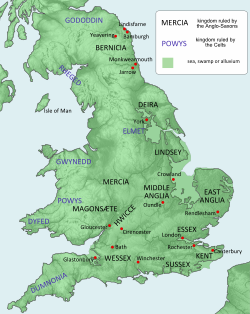
Anglo-Saxon England (c. 650)

Year 655 (DCLV) was a common year starting on Thursday of the Julian calendar. The denomination 655 for this year has been used since the early medieval period, when the Anno Domini calendar era became the prevalent method in Europe for naming years.

Events

[edit]

By place

[edit]

Byzantine Empire

[edit]

Britain

[edit]

Asia

[edit]

By topic

[edit]

Religion

[edit]


Births

[edit]

Deaths

[edit]

References

[edit]
Revisions and contributorsEdit on WikipediaRead on Wikipedia
from Grokipedia
Year 655 (DCLV) was a common year starting on Thursday of the Julian calendar. The denomination 655 for this year has been used since the early medieval period, when the Anno Domini calendar era became the prevalent method in Europe for naming years.

Events

Near East and Byzantine Empire

In 655, the Rashidun Caliphate, under the command of Muawiya ibn Abi Sufyan as governor of Syria, achieved a decisive naval victory over the Byzantine Empire in the Battle of the Masts (also known as the Battle of Phoenix or Dhāt al-Ṣawārī), fought off the Lycian coast near Mount Phoenix in southwestern Anatolia (modern Finike, Turkey). The Byzantine fleet, numbering approximately 500 ships and led by Emperor Constans II Pogonatus, sought to counter Arab maritime advances following the conquest of Cyprus in 649 and Rhodes in 654, but was ambushed and routed by a smaller Arab force of around 200 vessels commanded by Abu al-A'war al-Sulami. Byzantine losses were catastrophic, with chroniclers reporting up to 5,000 men drowned or captured, including high-ranking officials, while the Arabs captured numerous ships and secured temporary naval supremacy in the eastern Mediterranean. This battle marked the first major Muslim naval engagement and demonstrated the effectiveness of Muawiya's strategy to build a fleet using captured Byzantine shipwrights and Coptic Christian sailors from Egypt, shifting the balance of power by enabling Arab forces to project strength beyond land campaigns. In the aftermath, Arab raids intensified along the Anatolian coast and into the Aegean, though a fragile truce negotiated by Constans II in 659 halted further immediate offensives, allowing Byzantium a brief respite amid internal rebellions and Slavic incursions elsewhere. The defeat exacerbated Byzantine territorial losses in the Near East, where Arab control over Syria, Palestine, and Egypt—consolidated since the 630s—now extended maritime threats, contributing to the empire's strategic contraction.

Britain

The Battle of the Winwaed, fought on 15 November 655, pitted King Penda of Mercia against Oswiu, king of Bernicia (the northern half of Northumbria), resulting in a decisive Northumbrian victory and Penda's death. Penda, who had previously established Mercian hegemony over much of southern and midland England following his victory at Maserfield around 642, invaded Northumbria in response to Oswiu's refusal or delay in paying tribute demanded after the death of Oswiu's brother, Oswald. Oswiu's forces, reportedly outnumbered, confronted Penda's coalition, which included allies from East Anglia, Gwynedd, and Powys; the battle unfolded near the River Winwaed, possibly identifiable with the Went (a tributary of the Don) close to the Mercian-Northumbrian border. During the engagement, many of Penda's supporters drowned while fleeing across the flooded river, contributing to the Mercian rout. Penda himself was slain, likely in combat, ending his three-decade reign and dismantling Mercia's immediate dominance over northern kingdoms. Oswiu subsequently imposed temporary overlordship on Mercia, installing a sub-king, and secured permanent control over Deira (the southern Northumbrian kingdom), unifying Northumbria under his rule and elevating it as the preeminent Anglo-Saxon power until the late seventh century. The outcome shifted regional power dynamics, with Penda's son Peada, who had been baptized and allied with Oswiu prior to the battle, briefly ruling southern Mercia under Northumbrian influence before his murder in 656; another son, Wulfhere, later reasserted Mercian independence around 658. Exact troop numbers remain unknown, though chroniclers emphasize Penda's larger host, underscoring the battle's improbability from a Northumbrian perspective. The precise location, debated among sites near Leeds such as Whinmoor, relies on sparse contemporary accounts, primarily from Bede's Ecclesiastical History, which frames the event amid Christian-pagan tensions given Penda's adherence to traditional Germanic religion. No other major recorded events in Britain for 655 overshadow this clash, which halted Mercian expansion northward and facilitated Northumbrian cultural and ecclesiastical influence.

Asia and China

In the Tang Dynasty of China, 655 marked a decisive shift in imperial court politics when Emperor Gaozong (r. 649–683) deposed Empress Wang, following allegations of her involvement in the death of Wu Zhao's infant daughter, and subsequently removed Consort Xiao as well. Wu Zhao, who had risen from concubine to the emperor's primary consort after entering the palace in 651, was then formally installed as empress later that year, solidifying her role as the most powerful figure in the inner court. This elevation, amid documented rivalries and intrigues documented in Tang records, enabled Wu to influence policy and personnel decisions, foreshadowing her later regency and unprecedented rule as China's only female emperor. The deposition stemmed from Gaozong's favoritism toward Wu, who bore him sons including the future Emperor Zhongzong (b. 656), contrasting with Wang's childlessness and perceived threats to Wu's position. Historical accounts, primarily from official Tang annals compiled under subsequent dynasties, portray the events as justified by Wang's supposed sorcery and plotting, though these narratives reflect potential biases from Wu's own propagandistic influence during her ascendancy and the orthodox Confucian historiography that later critiqued her unorthodox power. No major military campaigns or external conquests dominated Tang affairs in 655, as the empire focused on internal stabilization following earlier expansions, including ongoing pressures against Goguryeo in the Korean peninsula that would intensify by 660. Elsewhere in Asia, the year saw the continuation of Emperor Saimei's reign in Japan (beginning formally in 655 after Emperor Kōtoku's death in 654), during which court reforms under the Taika era emphasized centralized administration modeled partly on Tang precedents, though without recorded upheavals specific to 655. On the Korean peninsula, Tang forces maintained their protracted campaign against Goguryeo, initiated in 645, with logistical preparations amid alliances with Silla, setting the stage for decisive offensives in subsequent years.

Other Regions

In the Merovingian kingdoms of Neustria and Burgundy, Clovis II reigned as king, exemplifying the emerging pattern of "do-nothing kings" (rois fainéants) where ceremonial monarchy gave way to governance by palace mayors. His rule, spanning from 639 until his death around 657–658, involved ongoing church patronage and internal noble rivalries, though no singular military or political upheaval is documented for 655 specifically. In Visigothic Hispania, King Recceswinth (r. 653–672) continued efforts to consolidate royal authority and religious uniformity, convening church councils to address liturgical and doctrinal issues amid influences from Byzantine practices. The Ninth Council of Toledo, held in 655, reinforced episcopal oversight and condemned heresies, reflecting the kingdom's focus on Catholic orthodoxy over Arian remnants. The Lombard Kingdom in northern Italy, under Aripert I (r. 653–661), maintained expansion against Byzantine holdings in the south, but contemporary annals record no decisive battles or reforms in 655, with stability prevailing after prior successions. Further afield, in sub-Saharan Africa and the Americas, no datable events from written or archaeological sources align precisely with 655, underscoring the Euro-Mediterranean bias in surviving 7th-century chronicles.

Religion and Culture

Christian Developments

Pope Martin I, who had presided over the Lateran Council of 649 condemning Monothelitism as heretical, died on September 16 in exile at Cherson in Crimea. His banishment stemmed from Emperor Constans II's enforcement of the Typos (648), which prohibited debate on Christ's wills and energies to quell doctrinal strife, viewing Martin's council as insubordination; Martin's steadfast orthodoxy against this imperial compromise led to his arrest in 653 and transport to the distant province, where privations hastened his demise as the last pope considered a martyr. This event underscored tensions between Roman primacy and Byzantine caesaropapism, with Martin's successors navigating similar pressures amid the Monothelite controversy's persistence in the East. In Anglo-Saxon England, the Battle of the Winwaed on November 15 saw Christian King Oswiu of Northumbria decisively defeat and kill Penda, the pagan ruler of Mercia, whose alliance of sub-kings disintegrated amid flooding rivers and desertions. Penda's death, as the final major Anglo-Saxon king adhering to traditional Germanic polytheism, accelerated Mercia's Christianization; his son Peada, already converted through Northumbrian influence, assumed rule over southern Mercia under baptismal vows, while Oswiu imposed Christianity northward, establishing monasteries and granting lands for religious foundations. Bede records that "the Mercians received the faith of Christ" post-victory, marking a causal turning point where military dominance by Christian rulers supplanted pagan resistance, aligning Mercia with the Roman-Irish missionary efforts begun under Augustine of Canterbury. This consolidation reduced intertribal pagan strongholds, fostering ecclesiastical growth amid Oswiu's subsequent Synod of Whitby (664) preparations.

Islamic Expansion

The Rashidun Caliphate, under Caliph Uthman ibn Affan, achieved a significant naval victory against the Byzantine Empire in 655 at the Battle of the Masts (Arabic: ذات الصواري, Dhat al-Sawari), held off the Lycian coast near Mount Phoenix. The Muslim fleet, commanded by Abdullah ibn Abi Sarh and supported by contingents from Muawiyah ibn Abi Sufyan's forces in Syria, numbered approximately 200 ships and decisively defeated a larger Byzantine armada of around 500 vessels led by Emperor Constans II. This battle marked the first major Muslim naval engagement, shattering Byzantine dominance in the eastern Mediterranean and facilitating subsequent raids on Cyprus, Rhodes, and the Anatolian coast. The victory enabled the caliphate's expansion into maritime domains, with Muslim forces capturing the strategic island of Cyprus in 649 and conducting punitive expeditions against Byzantine holdings thereafter, though full control over Cyprus was not consolidated until later under the Umayyads. Casualties were heavy on the Byzantine side, with estimates of up to 20,000 drowned or killed, including the patrician Manuel, while Muslim losses were comparatively light, bolstered by innovative tactics such as lashing ships together to create stable platforms for boarding actions reminiscent of land warfare. The battle's outcome stemmed from superior morale, tactical adaptability, and the caliphate's recent shipbuilding program initiated by Uthman to counter Byzantine sea power, drawing on shipwrights from conquered Egyptian and Persian territories. In parallel with naval advances, ground campaigns in 655 reinforced Islamic territorial gains in the Levant and Armenia, where Arab armies under Habib ibn Maslama subdued Byzantine remnants in the region following earlier conquests, extending caliphal influence toward the Caucasus. These efforts propagated Islam through direct governance, taxation reforms like the jizya on non-Muslims, and incremental conversions among subject populations, though mass conversions remained limited in this period due to the caliphate's policy of religious tolerance for dhimmis. By year's end, the caliphate's frontiers had pushed Byzantine forces into defensive postures in Anatolia, setting the stage for Muawiyah's later governorship and the transition to Umayyad rule.

People

Births

Historical documentation from the mid-7th century is limited, with few precise birth records preserved for non-royal or non-ecclesiastical figures, and none for prominent individuals definitively dated to 655. Surviving annals and chronicles, such as those from Byzantine or Anglo-Saxon sources, prioritize events like battles and accessions over individual births unless tied to major lineages. For instance, Lombard or Frankish genealogies occasionally estimate noble births around this era, but exact years like 655 lack corroboration from primary texts such as the Liber Pontificalis or early Islamic histories. This scarcity reflects the era's reliance on oral traditions and monastic scriptoria, where demographic details were secondary to political or religious narratives. No verifiable claims of notable births emerge from peer-reviewed analyses of 7th-century prosopography.

Deaths

Pope Martin I (r. 649–655), the first pope to be recognized officially as a martyr by the Catholic Church, died in exile on September 16 in Cherson (modern Chersonesus, Crimea), following his deposition and banishment by Byzantine Emperor Constans II for opposing Monothelitism at the Lateran Council of 649. Penda, pagan king of Mercia (r. c. 626–655), was killed on November 15 during his defeat at the Battle of the Winwaed against Northumbrian forces led by King Oswiu, marking the end of Mercian dominance in southern Britain and facilitating Christian expansion in the region. Æthelhere, king of East Anglia (r. c. 653–655) and brother of the slain King Anna, died alongside Penda on November 15 at the Battle of the Winwaed, where he had allied with the Mercian king in an invasion of Northumbria; his death led to instability in East Anglia until the restoration of Christian rule under subsequent Wuffingas rulers.

References

Add your contribution
Related Hubs
User Avatar
No comments yet.