
Recent from talks
8 January Brasília attacks
Knowledge base stats:
Talk channels stats:
Members stats:
8 January Brasília attacks
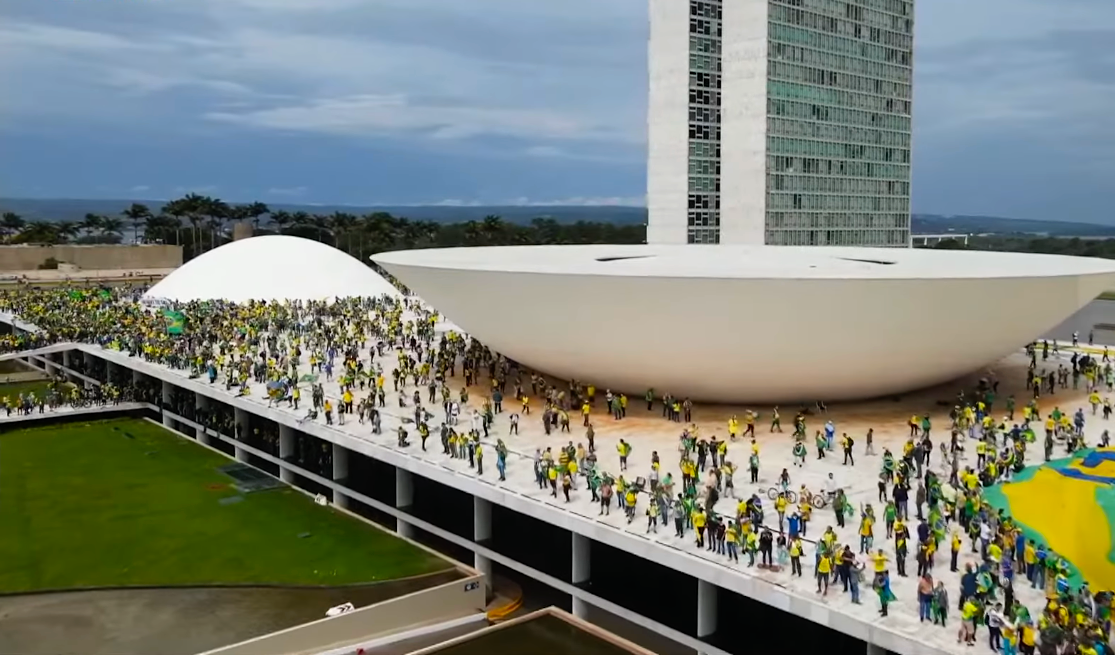
On 8 January 2023, following the defeat of then-president Jair Bolsonaro in the 2022 Brazilian general election and the inauguration of his successor Luiz Inácio Lula da Silva, a mob of Bolsonaro's supporters attacked Brazil's federal government buildings in the capital, Brasília. The mob invaded and caused deliberate damage to the Supreme Federal Court, the National Congress Palace and the Planalto Presidential Palace in the Praça dos Três Poderes (English: Three Powers Square or Three Branches of Government), seeking to violently overthrow the democratically elected president Lula, who had been inaugurated on 1 January. Many rioters said their purpose was to spur military leaders to launch a "military intervention" (related to a misinterpretation of the 142nd article of the Brazilian constitution and a euphemism for a coup d'état) and disrupt the democratic transition of power. The event is sometimes called the Bolsonarist uprising.
At the time of the riots, neither Lula nor Bolsonaro were in Brasília: Lula was in Araraquara, a city in the countryside of São Paulo, with mayor Edinho Silva and ministers Luiz Marinho, Jader Filho and Waldez Goés, surveying the city after heavy rains in the municipality; Bolsonaro was in Orlando, Florida, where he had been since the last days of 2022, even before the end of his term.
The attack occurred a week after Lula's inauguration and followed several weeks of unrest from Bolsonaro's supporters. It took more than five hours for the Brazilian security forces to clear all three buildings of the rioters, which happened at 21:00 BRT (UTC−03:00). The storming of the government buildings drew swift condemnation from governments around the world.
In response to the attack, at 18:00 BRT, Lula announced that he had signed a decree authorising a federal state of emergency in the Federal District through the end of January 2023. The Congress was not in session at the time of the attacks, but it swiftly ratified the declaration by 10 January.
During Bolsonaro's tenure as president of Brazil, his allies and supporters floated the idea of an assault like the United States Capitol attack of 6 January 2021 in the event he lost his re-election bid. Bolsonaro supporters alleged that the 2022 Brazilian general election suffered from widespread electoral fraud that caused Bolsonaro's loss. They claimed electronic voting machine malfunctions and deemed some voting patterns suspicious, and mistrusted election officials. The military helped oversee the election and found no signs of fraud. Supporters of Bolsonaro used social media to spread misinformation about supposed electoral fraud, further motivating the protesters. Supporters of Bolsonaro were also inspired by other international events in 2022 that bolstered the far-right such as the Canada convoy protests, the elections of Bongbong Marcos in the Philippines, and Giorgia Meloni in Italy.
Some military reservists voiced support for a truckers' strike before the second round of elections, including Colonel Marcos Koury, who, on 16 October 2022, published a video encouraging a truckers' general strike before the second round. Koury's video about the shutdowns was shared in several Pro-Bolsonaro groups on WhatsApp, Telegram, Facebook, and other social media websites, and, days later, members of these same groups started defending roadblocks after the elections. Calls for strikes were also made on YouTube, TikTok, Twitter, and Instagram.
Trucker protests lost strength on 3 November 2022, and Bolsonaro supporters began to gather in the vicinity of Brazilian Armed Forces facilities. Demonstrations took place at military installations in the cities of São Paulo, Rio de Janeiro, Brasília, Florianópolis, Recife, Salvador, and other cities and regions. In Brasília, a group had camped in front of the Army Headquarters, demanding that the Armed Forces carry out a military coup; in January, Lula's government attempted to remove these protesters and, when this failed, ordered reinforced security. That week, the minister of justice also reiterated that the camps would be dismantled.
The electoral victory of Luiz Inácio Lula da Silva (Lula) was officially ratified by the Superior Electoral Court on 12 December 2022. Militant far-right Bolsonaro supporters stormed the Federal Police headquarters in Brasília and torched vehicles on the street after one of the protesters was arrested for inciting violence to prevent Lula's swearing-in. The police used stun grenades and tear gas to disperse them. A bombing attempt near Brasília International Airport was prevented by the police on 23 December; the suspect was arrested a day later. According to his testimony, he was motivated by Bolsonaro casting doubts on the integrity of the election process in the past. Other attempted attacks were carried out by Bolsonaro supporters after the election and during the beginning of Lula's government, including the case of a man who was arrested while attempting to enter the ministries' esplanade carrying a knife and an explosive device during Lula's inauguration.
Hub AI
8 January Brasília attacks AI simulator
(@8 January Brasília attacks_simulator)
8 January Brasília attacks
On 8 January 2023, following the defeat of then-president Jair Bolsonaro in the 2022 Brazilian general election and the inauguration of his successor Luiz Inácio Lula da Silva, a mob of Bolsonaro's supporters attacked Brazil's federal government buildings in the capital, Brasília. The mob invaded and caused deliberate damage to the Supreme Federal Court, the National Congress Palace and the Planalto Presidential Palace in the Praça dos Três Poderes (English: Three Powers Square or Three Branches of Government), seeking to violently overthrow the democratically elected president Lula, who had been inaugurated on 1 January. Many rioters said their purpose was to spur military leaders to launch a "military intervention" (related to a misinterpretation of the 142nd article of the Brazilian constitution and a euphemism for a coup d'état) and disrupt the democratic transition of power. The event is sometimes called the Bolsonarist uprising.
At the time of the riots, neither Lula nor Bolsonaro were in Brasília: Lula was in Araraquara, a city in the countryside of São Paulo, with mayor Edinho Silva and ministers Luiz Marinho, Jader Filho and Waldez Goés, surveying the city after heavy rains in the municipality; Bolsonaro was in Orlando, Florida, where he had been since the last days of 2022, even before the end of his term.
The attack occurred a week after Lula's inauguration and followed several weeks of unrest from Bolsonaro's supporters. It took more than five hours for the Brazilian security forces to clear all three buildings of the rioters, which happened at 21:00 BRT (UTC−03:00). The storming of the government buildings drew swift condemnation from governments around the world.
In response to the attack, at 18:00 BRT, Lula announced that he had signed a decree authorising a federal state of emergency in the Federal District through the end of January 2023. The Congress was not in session at the time of the attacks, but it swiftly ratified the declaration by 10 January.
During Bolsonaro's tenure as president of Brazil, his allies and supporters floated the idea of an assault like the United States Capitol attack of 6 January 2021 in the event he lost his re-election bid. Bolsonaro supporters alleged that the 2022 Brazilian general election suffered from widespread electoral fraud that caused Bolsonaro's loss. They claimed electronic voting machine malfunctions and deemed some voting patterns suspicious, and mistrusted election officials. The military helped oversee the election and found no signs of fraud. Supporters of Bolsonaro used social media to spread misinformation about supposed electoral fraud, further motivating the protesters. Supporters of Bolsonaro were also inspired by other international events in 2022 that bolstered the far-right such as the Canada convoy protests, the elections of Bongbong Marcos in the Philippines, and Giorgia Meloni in Italy.
Some military reservists voiced support for a truckers' strike before the second round of elections, including Colonel Marcos Koury, who, on 16 October 2022, published a video encouraging a truckers' general strike before the second round. Koury's video about the shutdowns was shared in several Pro-Bolsonaro groups on WhatsApp, Telegram, Facebook, and other social media websites, and, days later, members of these same groups started defending roadblocks after the elections. Calls for strikes were also made on YouTube, TikTok, Twitter, and Instagram.
Trucker protests lost strength on 3 November 2022, and Bolsonaro supporters began to gather in the vicinity of Brazilian Armed Forces facilities. Demonstrations took place at military installations in the cities of São Paulo, Rio de Janeiro, Brasília, Florianópolis, Recife, Salvador, and other cities and regions. In Brasília, a group had camped in front of the Army Headquarters, demanding that the Armed Forces carry out a military coup; in January, Lula's government attempted to remove these protesters and, when this failed, ordered reinforced security. That week, the minister of justice also reiterated that the camps would be dismantled.
The electoral victory of Luiz Inácio Lula da Silva (Lula) was officially ratified by the Superior Electoral Court on 12 December 2022. Militant far-right Bolsonaro supporters stormed the Federal Police headquarters in Brasília and torched vehicles on the street after one of the protesters was arrested for inciting violence to prevent Lula's swearing-in. The police used stun grenades and tear gas to disperse them. A bombing attempt near Brasília International Airport was prevented by the police on 23 December; the suspect was arrested a day later. According to his testimony, he was motivated by Bolsonaro casting doubts on the integrity of the election process in the past. Other attempted attacks were carried out by Bolsonaro supporters after the election and during the beginning of Lula's government, including the case of a man who was arrested while attempting to enter the ministries' esplanade carrying a knife and an explosive device during Lula's inauguration.
Recent media