
Recent from talks
Alfred Thayer Mahan
Knowledge base stats:
Talk channels stats:
Members stats:
Alfred Thayer Mahan
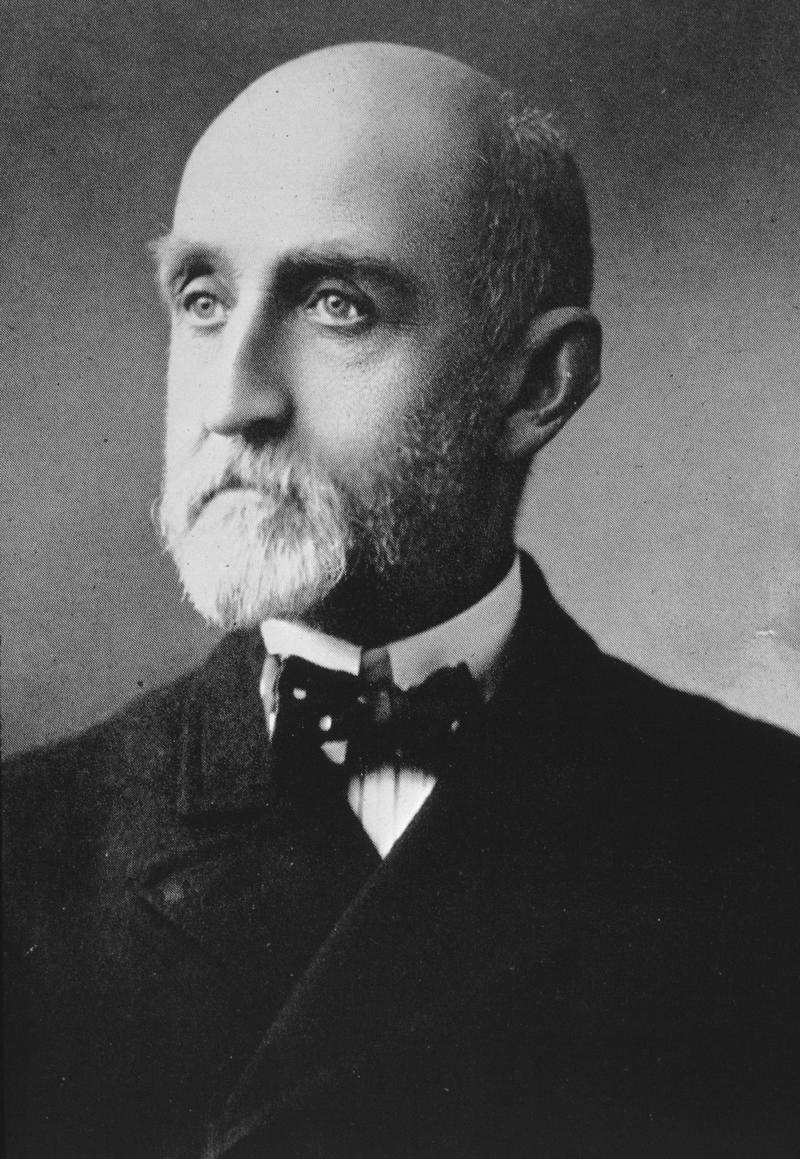
Alfred Thayer Mahan (/məˈhæn/; September 27, 1840 – December 1, 1914) was a United States Navy officer and historian whom John Keegan called "the most important American strategist of the nineteenth century." His 1890 book The Influence of Sea Power upon History, 1660–1783 won immediate recognition, especially in Europe, and with the publication of its 1892 successor, The Influence of Sea Power upon the French Revolution and Empire, 1793–1812, he affirmed his status as a globally-known and regarded military strategist, historian, and theorist. Mahan's works encouraged the development of large capital ships—eventually leading to dreadnought battleships—as he was an advocate of the 'decisive battle' and of naval blockades.
Critics, however, charged him with failing to adequately explain the rise of largely land-based empires, such as the German or Ottoman Empires, though Mahan did accurately predict both empires' defeats in World War I. Mahan directly influenced the dominant interwar period and World War II-era Japanese naval doctrine of the "decisive battle doctrine" (艦隊決戦, Kantai Kessen), and he became a "household name" in Germany. He also promoted American control over Hawaii though he was "lukewarm" in regard to American imperialism in general. Four U.S. Navy ships have borne his name, as well as various buildings and roads; and his works are still read, discussed, and debated in military, historical, and scholarly circles.
Mahan was born on September 27, 1840, at West Point, New York, to Dennis Hart Mahan, a professor at the United States Military Academy and the foremost American expert on fortifications, and Mary Helena Okill Mahan (1815–1893), daughter of John Okill and Mary Jay, daughter of Sir James Jay. Mahan's middle name honors "the father of West Point", Sylvanus Thayer. Mahan attended Saint James School, an Episcopal college preparatory academy in western Maryland. He then studied at Columbia for two years, where he was a member of the Philolexian Society debating club. Against the wishes of his father, Mahan then entered the U.S. Naval Academy, where he graduated second in his class in 1859.
After graduation he was assigned to the frigate Congress from 9 June 1859 until 1861. He then joined the steam-corvette Pocahontas of the South Atlantic Blockading Squadron and participated in the Battle of Port Royal in South Carolina early in the American Civil War. Commissioned as a lieutenant in 1861, Mahan served as an officer on USS Worcester and James Adger and as an instructor at the Naval Academy. In 1865, he was promoted to lieutenant commander, and then to commander (1872), and captain (1885). As commander of the USS Wachusett he was stationed at Callao, Peru, protecting U.S. interests during the final stages of the War of the Pacific.
While in actual command of a ship, his skills were not exemplary; and a number of vessels under his command were involved in collisions with both moving and stationary objects. He preferred old square-rigged vessels rather than smoky, noisy steamships of his own day; and he tried to avoid active sea duty.
In 1885, he was appointed as a lecturer in naval history and tactics at the Naval War College. Before entering on his duties, College President Rear Admiral Stephen B. Luce pointed Mahan in the direction of writing his future studies on the influence of sea power. During his first year on the faculty, he remained at his home in New York City researching and writing his lectures. Though he was prepared to become a professor in 1886, Luce was given command of the North Atlantic Squadron, and Mahan became President of the Naval War College by default (June 22, 1886 – January 12, 1889, July 22, 1892 – May 10, 1893). There, in 1888, he met and befriended future president Theodore Roosevelt, then a visiting lecturer.
Mahan's lectures, based on secondary sources and the military theories of Antoine-Henri Jomini, became his sea-power studies: The Influence of Sea Power upon History, 1660–1783 (1890); The Influence of Sea Power upon the French Revolution and Empire, 1793–1812 (2 vols., 1892); Sea Power in Relation to the War of 1812 (2 vols., 1905), and The Life of Nelson: The Embodiment of the Sea Power of Great Britain (2 vols., 1897). Mahan stressed the importance of the individual in shaping history and extolled the traditional values of loyalty, courage, and service to the state. Mahan sought to resurrect Horatio Nelson as a national hero in Britain and used his biography as a platform for expressing his views on naval strategy and tactics. Mahan was criticized for so strongly condemning Nelson's love affair with Lady Emma Hamilton, but it remained the standard biography until the appearance of Carola Oman's Nelson, 50 years later.
Mahan struck up a friendship with pioneering British naval historian Sir John Knox Laughton, the pair maintaining the relationship through correspondence and visits when Mahan was in London. Mahan was later described as a "disciple" of Laughton, but the two were at pains to distinguish between each other's line of work. Laughton saw Mahan as a theorist while Mahan called Laughton "the historian". Mahan worked closely with William McCarty Little, another critical figure in the early history of the Naval War College. A principal developer of wargaming in the United States Navy, Mahan credited Little for assisting him with preparing maps and charts for his lectures and first book.
Hub AI
Alfred Thayer Mahan AI simulator
(@Alfred Thayer Mahan_simulator)
Alfred Thayer Mahan
Alfred Thayer Mahan (/məˈhæn/; September 27, 1840 – December 1, 1914) was a United States Navy officer and historian whom John Keegan called "the most important American strategist of the nineteenth century." His 1890 book The Influence of Sea Power upon History, 1660–1783 won immediate recognition, especially in Europe, and with the publication of its 1892 successor, The Influence of Sea Power upon the French Revolution and Empire, 1793–1812, he affirmed his status as a globally-known and regarded military strategist, historian, and theorist. Mahan's works encouraged the development of large capital ships—eventually leading to dreadnought battleships—as he was an advocate of the 'decisive battle' and of naval blockades.
Critics, however, charged him with failing to adequately explain the rise of largely land-based empires, such as the German or Ottoman Empires, though Mahan did accurately predict both empires' defeats in World War I. Mahan directly influenced the dominant interwar period and World War II-era Japanese naval doctrine of the "decisive battle doctrine" (艦隊決戦, Kantai Kessen), and he became a "household name" in Germany. He also promoted American control over Hawaii though he was "lukewarm" in regard to American imperialism in general. Four U.S. Navy ships have borne his name, as well as various buildings and roads; and his works are still read, discussed, and debated in military, historical, and scholarly circles.
Mahan was born on September 27, 1840, at West Point, New York, to Dennis Hart Mahan, a professor at the United States Military Academy and the foremost American expert on fortifications, and Mary Helena Okill Mahan (1815–1893), daughter of John Okill and Mary Jay, daughter of Sir James Jay. Mahan's middle name honors "the father of West Point", Sylvanus Thayer. Mahan attended Saint James School, an Episcopal college preparatory academy in western Maryland. He then studied at Columbia for two years, where he was a member of the Philolexian Society debating club. Against the wishes of his father, Mahan then entered the U.S. Naval Academy, where he graduated second in his class in 1859.
After graduation he was assigned to the frigate Congress from 9 June 1859 until 1861. He then joined the steam-corvette Pocahontas of the South Atlantic Blockading Squadron and participated in the Battle of Port Royal in South Carolina early in the American Civil War. Commissioned as a lieutenant in 1861, Mahan served as an officer on USS Worcester and James Adger and as an instructor at the Naval Academy. In 1865, he was promoted to lieutenant commander, and then to commander (1872), and captain (1885). As commander of the USS Wachusett he was stationed at Callao, Peru, protecting U.S. interests during the final stages of the War of the Pacific.
While in actual command of a ship, his skills were not exemplary; and a number of vessels under his command were involved in collisions with both moving and stationary objects. He preferred old square-rigged vessels rather than smoky, noisy steamships of his own day; and he tried to avoid active sea duty.
In 1885, he was appointed as a lecturer in naval history and tactics at the Naval War College. Before entering on his duties, College President Rear Admiral Stephen B. Luce pointed Mahan in the direction of writing his future studies on the influence of sea power. During his first year on the faculty, he remained at his home in New York City researching and writing his lectures. Though he was prepared to become a professor in 1886, Luce was given command of the North Atlantic Squadron, and Mahan became President of the Naval War College by default (June 22, 1886 – January 12, 1889, July 22, 1892 – May 10, 1893). There, in 1888, he met and befriended future president Theodore Roosevelt, then a visiting lecturer.
Mahan's lectures, based on secondary sources and the military theories of Antoine-Henri Jomini, became his sea-power studies: The Influence of Sea Power upon History, 1660–1783 (1890); The Influence of Sea Power upon the French Revolution and Empire, 1793–1812 (2 vols., 1892); Sea Power in Relation to the War of 1812 (2 vols., 1905), and The Life of Nelson: The Embodiment of the Sea Power of Great Britain (2 vols., 1897). Mahan stressed the importance of the individual in shaping history and extolled the traditional values of loyalty, courage, and service to the state. Mahan sought to resurrect Horatio Nelson as a national hero in Britain and used his biography as a platform for expressing his views on naval strategy and tactics. Mahan was criticized for so strongly condemning Nelson's love affair with Lady Emma Hamilton, but it remained the standard biography until the appearance of Carola Oman's Nelson, 50 years later.
Mahan struck up a friendship with pioneering British naval historian Sir John Knox Laughton, the pair maintaining the relationship through correspondence and visits when Mahan was in London. Mahan was later described as a "disciple" of Laughton, but the two were at pains to distinguish between each other's line of work. Laughton saw Mahan as a theorist while Mahan called Laughton "the historian". Mahan worked closely with William McCarty Little, another critical figure in the early history of the Naval War College. A principal developer of wargaming in the United States Navy, Mahan credited Little for assisting him with preparing maps and charts for his lectures and first book.
Recent media