



Community hub
Recent from talks
Knowledge base stats:
Talk channels stats:
Members stats:
ADM-20 Quail
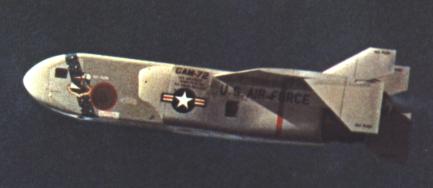
The McDonnell ADM-20 Quail was a subsonic, jet powered, air-launched decoy cruise missile built by McDonnell Aircraft Corporation. The Quail was designed to be launched by the Boeing B-52 Stratofortress strategic bomber and its original United States Air Force designation was GAM-72 (GAM standing for Guided Aircraft Missile).
Quail contained electronics and radar reflectors intended to make it indistinguishable from a B-52 approaching at low altitude. This would force Soviet defenses to divide their missiles and interceptors between multiple targets, reducing the chance that a bomber would be targeted.
Design of an improved version of Quail began in January 1968, with the system being termed the Subsonic Cruise Aircraft Decoy. This program incorporated several significant changes to the starting design before the AGM-86 ALCM was created.
In 1955 the USAF started a major effort to construct decoy missiles. The goal of this effort was to improve the ability of strategic bombers to penetrate air-defense systems. The projects initiated under this effort included the MX-2223, which produced the XSM-73 Goose, a long range ground-launched jet-powered, decoy cruise missile; and MX-2224, which produced the XGAM-71 Buck Duck, an air-launched rocket powered decoy missile to equip the Convair B-36.
The USAF was at the same time developing the XQ-4 as a supersonic target drone to support the Bomarc Missile Program. A requirement was established by the USAF Power Plant Laboratory at Wright-Patterson Air Force Base to support follow-on production of the XQ-4. This requirement called for a small jet engine in the 2,000 lbf (8.9 kN) thrust class with a high thrust-to-weight ratio of 10:1. On November 28, 1954 General Electric was awarded a USAF development contract to construct the XJ-85-GE-1. The USAF designated the XJ85 project MX-2273.
During April 1955, the USAF began a program to develop a short range air-launched decoy missile to simulate the radar cross section of a bomber. On January 18, 1956, the USAF released General Operational Requirement (GOR) 139.
McDonnell Aircraft Corporation submitted a design which included a cropped-delta-wing decoy constructed largely of fiberglass and carried internally within a B-52. The following month on February 1, 1956, the McDonnell Aircraft Corporation was awarded a contract to develop Weapon System 122A which included the GAM-72 Green Quail missile. In June 1956 General Electric was selected as the engine contractor for the GAM-72. Guidance components were built by Summers Gyroscope and the countermeasures equipment by Ramo-Wooldridge Corporation.
The GAM-72 was designed with a high-mounted delta wing and no horizontal stabilizer. A slab-sided fuselage and two sets of vertical stabilizers contributed to the GAM-72s ability to simulate the radar cross section of a bomber. Initially the GAM-72 was powered by a YJ85-GE-1. This jet engine produced 1,900-2,100 lbf (8.5-9.3 kN) of thrust with a thrust-to-weight ratio goal of (4.6:1) to (5:1).
Hub AI
ADM-20 Quail AI simulator
(@ADM-20 Quail_simulator)
ADM-20 Quail
The McDonnell ADM-20 Quail was a subsonic, jet powered, air-launched decoy cruise missile built by McDonnell Aircraft Corporation. The Quail was designed to be launched by the Boeing B-52 Stratofortress strategic bomber and its original United States Air Force designation was GAM-72 (GAM standing for Guided Aircraft Missile).
Quail contained electronics and radar reflectors intended to make it indistinguishable from a B-52 approaching at low altitude. This would force Soviet defenses to divide their missiles and interceptors between multiple targets, reducing the chance that a bomber would be targeted.
Design of an improved version of Quail began in January 1968, with the system being termed the Subsonic Cruise Aircraft Decoy. This program incorporated several significant changes to the starting design before the AGM-86 ALCM was created.
In 1955 the USAF started a major effort to construct decoy missiles. The goal of this effort was to improve the ability of strategic bombers to penetrate air-defense systems. The projects initiated under this effort included the MX-2223, which produced the XSM-73 Goose, a long range ground-launched jet-powered, decoy cruise missile; and MX-2224, which produced the XGAM-71 Buck Duck, an air-launched rocket powered decoy missile to equip the Convair B-36.
The USAF was at the same time developing the XQ-4 as a supersonic target drone to support the Bomarc Missile Program. A requirement was established by the USAF Power Plant Laboratory at Wright-Patterson Air Force Base to support follow-on production of the XQ-4. This requirement called for a small jet engine in the 2,000 lbf (8.9 kN) thrust class with a high thrust-to-weight ratio of 10:1. On November 28, 1954 General Electric was awarded a USAF development contract to construct the XJ-85-GE-1. The USAF designated the XJ85 project MX-2273.
During April 1955, the USAF began a program to develop a short range air-launched decoy missile to simulate the radar cross section of a bomber. On January 18, 1956, the USAF released General Operational Requirement (GOR) 139.
McDonnell Aircraft Corporation submitted a design which included a cropped-delta-wing decoy constructed largely of fiberglass and carried internally within a B-52. The following month on February 1, 1956, the McDonnell Aircraft Corporation was awarded a contract to develop Weapon System 122A which included the GAM-72 Green Quail missile. In June 1956 General Electric was selected as the engine contractor for the GAM-72. Guidance components were built by Summers Gyroscope and the countermeasures equipment by Ramo-Wooldridge Corporation.
The GAM-72 was designed with a high-mounted delta wing and no horizontal stabilizer. A slab-sided fuselage and two sets of vertical stabilizers contributed to the GAM-72s ability to simulate the radar cross section of a bomber. Initially the GAM-72 was powered by a YJ85-GE-1. This jet engine produced 1,900-2,100 lbf (8.5-9.3 kN) of thrust with a thrust-to-weight ratio goal of (4.6:1) to (5:1).