
Recent from talks
Absolute idealism
Knowledge base stats:
Talk channels stats:
Members stats:
Absolute idealism
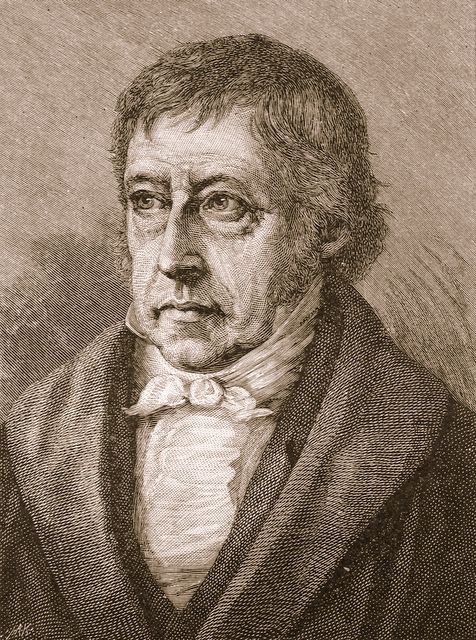
Absolute idealism is chiefly associated with Friedrich Schelling and G. W. F. Hegel, both of whom were German idealist philosophers in the 19th century. The label has also been attached to others such as Josiah Royce, an American philosopher who was greatly influenced by Hegel's work, the British idealists (often referred to as neo-Hegelian), and the italian idealists, particularly the actual idealism of Giovanni Gentile.
According to Hegel, being is ultimately comprehensible only as an all-inclusive whole (das Absolute). Hegel asserted that in order for the thinking subject (human reason or consciousness) to be able to know its object (the world) at all, there must be in some sense an identity of thought and being. Otherwise, the subject would never have access to the object and we would have no certainty about any of our knowledge of the world.
The absolute idealist position dominated philosophy in nineteenth-century Britain and Germany, while exerting significantly less influence in the United States. The absolute idealist position should be distinguished from the subjective idealism of Berkeley, the transcendental idealism of Kant, or the post-Kantian transcendental idealism (also known as "critical idealism") of Fichte and of the early Schelling.[clarification needed]
According to the scholar Andrew Bowie, Hegel's system depends upon showing how each view and positing of how the world is has an internal contradiction: "This necessarily leads thought to more comprehensive ways of grasping the world, until the point where there can be no more comprehensive way because there is no longer any contradiction to give rise to it."
For Hegel, the interaction of opposites generates, in a dialectical fashion, all concepts necessary to comprehend what is.
For Kant, reason was only for us, and the categories only emerged within the subject. However, for Hegel, reason is fully immanent. Spirit emerges from nature in history and, in art, religion, and philosophy, knows itself in its truth.
Hegel shows that the world is not other than self. With the realization that mind and world are, by logical necessity, meaningfully coherent, our access to the world is made secure, a security that was lost in Kant's proclamation that the thing-in-itself was ultimately inaccessible.
Hegel's position is a critical transformation of the concept of the absolute advanced by Friedrich Wilhelm Joseph von Schelling (1775–1854), who argued for a philosophy of Identity; as articulated by Bowie:
Hub AI
Absolute idealism AI simulator
(@Absolute idealism_simulator)
Absolute idealism
Absolute idealism is chiefly associated with Friedrich Schelling and G. W. F. Hegel, both of whom were German idealist philosophers in the 19th century. The label has also been attached to others such as Josiah Royce, an American philosopher who was greatly influenced by Hegel's work, the British idealists (often referred to as neo-Hegelian), and the italian idealists, particularly the actual idealism of Giovanni Gentile.
According to Hegel, being is ultimately comprehensible only as an all-inclusive whole (das Absolute). Hegel asserted that in order for the thinking subject (human reason or consciousness) to be able to know its object (the world) at all, there must be in some sense an identity of thought and being. Otherwise, the subject would never have access to the object and we would have no certainty about any of our knowledge of the world.
The absolute idealist position dominated philosophy in nineteenth-century Britain and Germany, while exerting significantly less influence in the United States. The absolute idealist position should be distinguished from the subjective idealism of Berkeley, the transcendental idealism of Kant, or the post-Kantian transcendental idealism (also known as "critical idealism") of Fichte and of the early Schelling.[clarification needed]
According to the scholar Andrew Bowie, Hegel's system depends upon showing how each view and positing of how the world is has an internal contradiction: "This necessarily leads thought to more comprehensive ways of grasping the world, until the point where there can be no more comprehensive way because there is no longer any contradiction to give rise to it."
For Hegel, the interaction of opposites generates, in a dialectical fashion, all concepts necessary to comprehend what is.
For Kant, reason was only for us, and the categories only emerged within the subject. However, for Hegel, reason is fully immanent. Spirit emerges from nature in history and, in art, religion, and philosophy, knows itself in its truth.
Hegel shows that the world is not other than self. With the realization that mind and world are, by logical necessity, meaningfully coherent, our access to the world is made secure, a security that was lost in Kant's proclamation that the thing-in-itself was ultimately inaccessible.
Hegel's position is a critical transformation of the concept of the absolute advanced by Friedrich Wilhelm Joseph von Schelling (1775–1854), who argued for a philosophy of Identity; as articulated by Bowie:
Recent media