
Recent from talks
Achilles tendon rupture
Knowledge base stats:
Talk channels stats:
Members stats:
Achilles tendon rupture
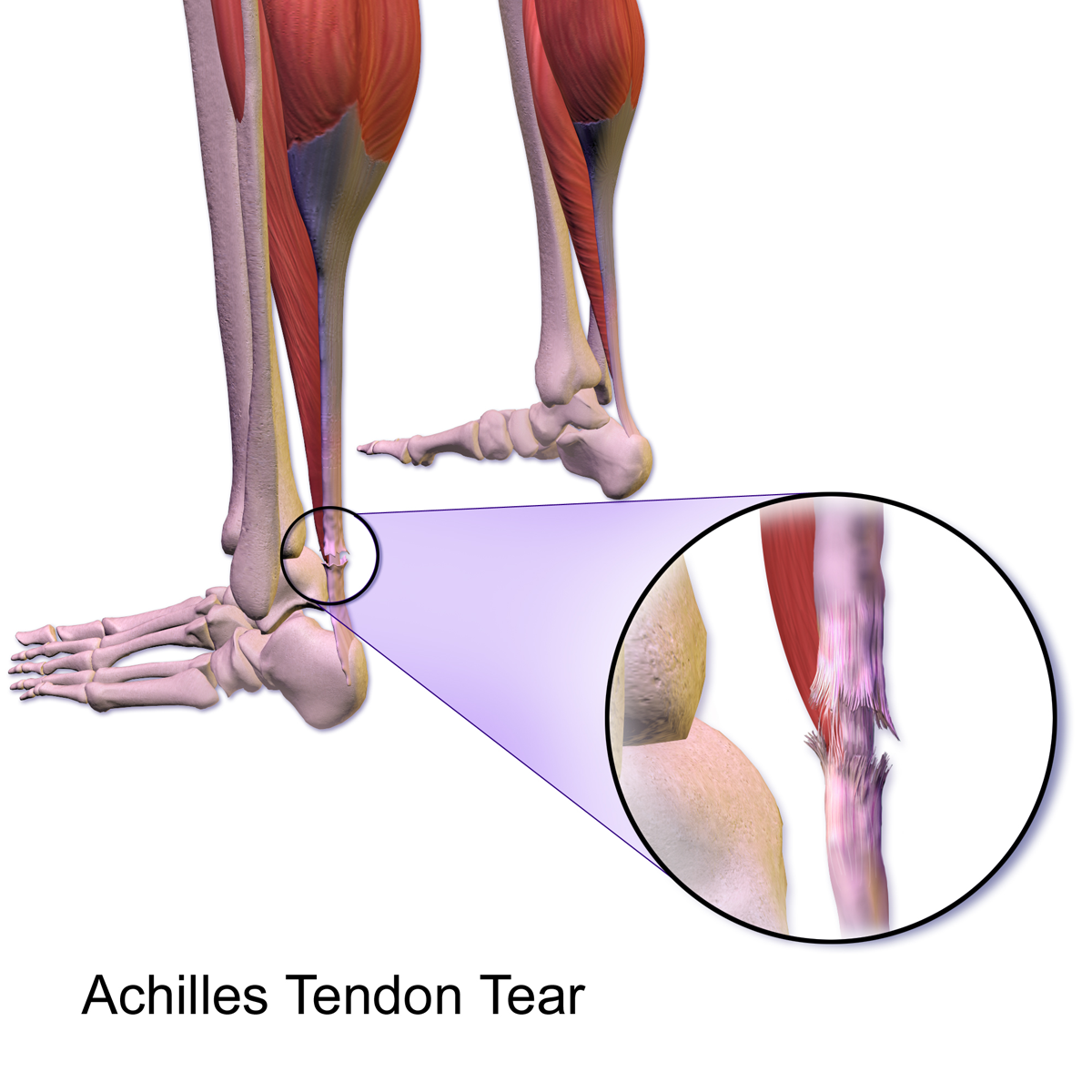
Achilles tendon rupture is the breakage of the Achilles tendon at the back of the ankle. Symptoms include the sudden onset of sharp pain in the heel. A snapping sound may be heard as the tendon breaks and walking becomes difficult.
Rupture of the Achilles tendon usually occurs due to a sudden, forceful push-off movement, an abrupt dorsiflexion of the foot while the calf muscle is engaged, or direct trauma. Chronic degeneration of the tendon, often from tendinosis, also increases the likelihood of rupture. Common risk factors include fluoroquinolone or corticosteroid use, sudden increases in physical activity, inflammatory conditions such as rheumatoid arthritis, gout, and chronic overuse or improper training. Diagnosis is primarily based on clinical symptoms and physical examination, with imaging such as ultrasound or MRI used for confirmation when needed.
Prevention may include stretching before activity and gradual progression of exercise intensity. Treatment may consist of surgical repair or conservative management. Quick return to weight bearing (within 4 weeks) appears acceptable and is often recommended. While surgery traditionally results in a small decrease in the risk of re-rupture, the risk of other complications is greater. Non-surgical treatment is an alternative as there is supporting evidence that rerupture rates and satisfactory outcomes are comparable to surgery. If appropriate treatment does not occur within 4 weeks of the injury outcomes are not as good.
The incidence of Achilles tendon ruptures varies in the literature, with recent studies reporting a rate of up to 40 patients per 100,000 patient population annually. The significant increase in ruptures this past decade is thought to be linked to the increased number of individuals engaging in sporting activities, particularly adults older than 30. During recreational sports, 75% of ruptures occur in men between the third and fourth decades of life.
The main symptom of an Achilles tendon rupture is the sudden onset of sharp pain in the heel. Additionally, a snap or "pop" may be heard as the tendon breaks. Some people describe the pain as a hit or kick behind the lower leg. There is difficulty walking immediately. It may be difficult to push off or stand on the toes of the injured leg. Swelling may be present around the heel.
The Achilles tendon is most often injured by sudden downward or upward movement of the foot, or by forced upward flexion of the foot outside its normal range of motion. Other ways the Achilles tendon can be torn involve sudden direct trauma or damage to the tendon, or sudden use of the Achilles after prolonged periods of inactivity, such as bed rest or leg injury. Some other common tears can happen from intense sports overuse. Twisting or jerking motions can also contribute to injury. Some antibiotics, such as levofloxacin, may increase the risk of tendon injury or rupture. These antibiotics are known as fluoroquinolones. As of 2016 the mechanism through which fluoroquinolones cause this was unclear.
Many people may develop an Achilles rupture or tear, such as recreational athletes, older people, or those with a previous Achilles tendon injury. Tendon injections, quinolone use, and extreme changes in exercise intensity can contribute. Most cases of Achilles tendon rupture are traumatic sports injuries. The average age of patients is 29–40 years with a male-to-female ratio of nearly 20:1. Yet, recent studies have shown that Achilles tendon ruptures are rising in all ages up to 60 years of age. It has been theorized that this is due to the popularity of remaining active with older age. Additionally, even the occasional weekend exercise activity for "weekend warriors" may put one at risk. The risk continues to be higher in people who are older than 60, and also taking corticosteroids, or have kidney disease. Risk also increases with dose amount and for longer periods of time.
The Achilles tendon is the strongest and thickest tendon in the body. It connects the calf muscles to the heel bone of the foot. The calf muscles are the gastrocnemius, soleus and the heel bone is called the calcaneus. It is approximately 15 centimeters (5.9 inches) long and begins near the middle part of the calf. Contraction of the calf muscles flexes the foot down. This is important in activities such as walking, jumping, and running. The Achilles tendon receives its blood supply from its muscular and tendon junction. Its nerve supply is from the sural nerve and to a lesser degree from the tibial nerve.
Hub AI
Achilles tendon rupture AI simulator
(@Achilles tendon rupture_simulator)
Achilles tendon rupture
Achilles tendon rupture is the breakage of the Achilles tendon at the back of the ankle. Symptoms include the sudden onset of sharp pain in the heel. A snapping sound may be heard as the tendon breaks and walking becomes difficult.
Rupture of the Achilles tendon usually occurs due to a sudden, forceful push-off movement, an abrupt dorsiflexion of the foot while the calf muscle is engaged, or direct trauma. Chronic degeneration of the tendon, often from tendinosis, also increases the likelihood of rupture. Common risk factors include fluoroquinolone or corticosteroid use, sudden increases in physical activity, inflammatory conditions such as rheumatoid arthritis, gout, and chronic overuse or improper training. Diagnosis is primarily based on clinical symptoms and physical examination, with imaging such as ultrasound or MRI used for confirmation when needed.
Prevention may include stretching before activity and gradual progression of exercise intensity. Treatment may consist of surgical repair or conservative management. Quick return to weight bearing (within 4 weeks) appears acceptable and is often recommended. While surgery traditionally results in a small decrease in the risk of re-rupture, the risk of other complications is greater. Non-surgical treatment is an alternative as there is supporting evidence that rerupture rates and satisfactory outcomes are comparable to surgery. If appropriate treatment does not occur within 4 weeks of the injury outcomes are not as good.
The incidence of Achilles tendon ruptures varies in the literature, with recent studies reporting a rate of up to 40 patients per 100,000 patient population annually. The significant increase in ruptures this past decade is thought to be linked to the increased number of individuals engaging in sporting activities, particularly adults older than 30. During recreational sports, 75% of ruptures occur in men between the third and fourth decades of life.
The main symptom of an Achilles tendon rupture is the sudden onset of sharp pain in the heel. Additionally, a snap or "pop" may be heard as the tendon breaks. Some people describe the pain as a hit or kick behind the lower leg. There is difficulty walking immediately. It may be difficult to push off or stand on the toes of the injured leg. Swelling may be present around the heel.
The Achilles tendon is most often injured by sudden downward or upward movement of the foot, or by forced upward flexion of the foot outside its normal range of motion. Other ways the Achilles tendon can be torn involve sudden direct trauma or damage to the tendon, or sudden use of the Achilles after prolonged periods of inactivity, such as bed rest or leg injury. Some other common tears can happen from intense sports overuse. Twisting or jerking motions can also contribute to injury. Some antibiotics, such as levofloxacin, may increase the risk of tendon injury or rupture. These antibiotics are known as fluoroquinolones. As of 2016 the mechanism through which fluoroquinolones cause this was unclear.
Many people may develop an Achilles rupture or tear, such as recreational athletes, older people, or those with a previous Achilles tendon injury. Tendon injections, quinolone use, and extreme changes in exercise intensity can contribute. Most cases of Achilles tendon rupture are traumatic sports injuries. The average age of patients is 29–40 years with a male-to-female ratio of nearly 20:1. Yet, recent studies have shown that Achilles tendon ruptures are rising in all ages up to 60 years of age. It has been theorized that this is due to the popularity of remaining active with older age. Additionally, even the occasional weekend exercise activity for "weekend warriors" may put one at risk. The risk continues to be higher in people who are older than 60, and also taking corticosteroids, or have kidney disease. Risk also increases with dose amount and for longer periods of time.
The Achilles tendon is the strongest and thickest tendon in the body. It connects the calf muscles to the heel bone of the foot. The calf muscles are the gastrocnemius, soleus and the heel bone is called the calcaneus. It is approximately 15 centimeters (5.9 inches) long and begins near the middle part of the calf. Contraction of the calf muscles flexes the foot down. This is important in activities such as walking, jumping, and running. The Achilles tendon receives its blood supply from its muscular and tendon junction. Its nerve supply is from the sural nerve and to a lesser degree from the tibial nerve.
Recent media