



Community hub
Recent from talks
Knowledge base stats:
Talk channels stats:
Members stats:
Gastroesophageal reflux disease
Gastroesophageal reflux disease (GERD) or gastro-oesophageal reflux disease (GORD) is a chronic upper gastrointestinal disease in which stomach content persistently and regularly flows up into the esophagus, resulting in symptoms and/or complications. Symptoms include dental corrosion, dysphagia, heartburn, odynophagia, regurgitation, non-cardiac chest pain, extraesophageal symptoms such as chronic cough, hoarseness, reflux-induced laryngitis, or asthma. In the long term, and when not treated, complications such as esophagitis, esophageal stricture, and Barrett's esophagus may arise.
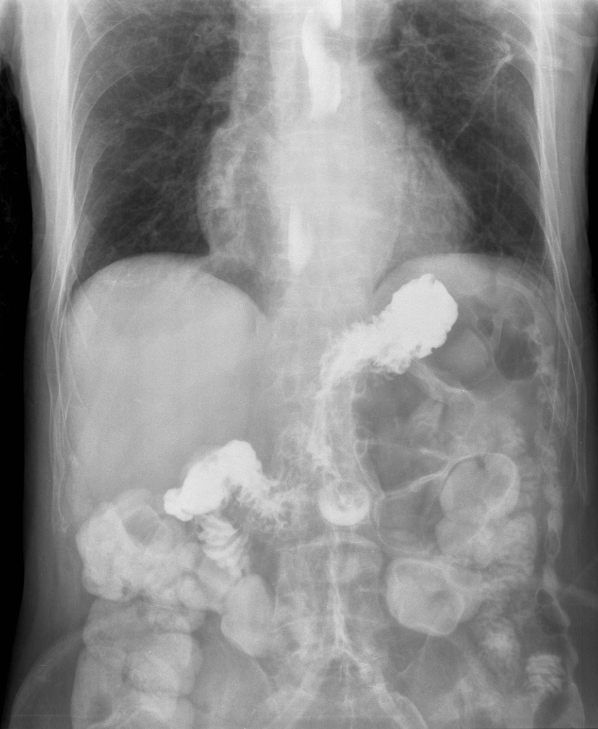
Risk factors include obesity, pregnancy, smoking, hiatal hernia, and taking certain medications. Medications that may cause or worsen the disease include benzodiazepines, calcium channel blockers, tricyclic antidepressants, NSAIDs, and certain asthma medicines. Acid reflux is due to poor closure of the lower esophageal sphincter, which is at the junction between the stomach and the esophagus. Diagnosis among those who do not improve with simpler measures may involve gastroscopy, upper GI series, esophageal pH monitoring, or esophageal manometry.
Treatment options include lifestyle changes, medications, and sometimes surgery for those who do not improve with the first two measures. Lifestyle changes include not lying down for three hours after eating, lying down on the left side, raising the pillow or bedhead height, losing weight, and stopping smoking. Foods that may precipitate GERD symptoms include coffee, alcohol, chocolate, fatty foods, acidic foods, and spicy foods. Medications include antacids, H2 receptor blockers, proton pump inhibitors, and prokinetics.
In the Western world, between 10 and 20% of the population is affected by GERD. It is highly prevalent in North America with 18% to 28% of the population suffering from the condition. Occasional gastroesophageal reflux without troublesome symptoms or complications is even more common. The classic symptoms of GERD were first described in 1925, when Friedenwald and Feldman commented on heartburn and its possible relationship to a hiatal hernia. In 1934, gastroenterologist Asher Winkelstein described reflux and attributed the symptoms to stomach acid.
The most common symptoms of GERD in adults are an acidic taste in the mouth, regurgitation, and heartburn. Less common symptoms include pain with swallowing/sore throat, increased salivation (also known as water brash), nausea, chest pain, coughing, and globus sensation. The acid reflux can induce asthma attack symptoms like shortness of breath, cough, and wheezing in those with underlying asthma.
GERD sometimes causes injury to the esophagus. These injuries may include one or more of the following:
GERD sometimes causes injury of the larynx (LPR). Other complications can include aspiration pneumonia.
GERD may be difficult to detect in infants and children since they cannot describe what they are feeling and indicators must be observed. Symptoms may vary from typical adult symptoms. GERD in children may cause repeated vomiting, effortless spitting up, coughing, and other respiratory problems, such as wheezing. Inconsolable crying, refusing food, crying for food and then pulling off the bottle or breast only to cry for it again, failure to gain adequate weight, bad breath, and burping are also common. Children may have one symptom or many; no single symptom is universal in all children with GERD.[citation needed]
Hub AI
Gastroesophageal reflux disease AI simulator
(@Gastroesophageal reflux disease_simulator)
Gastroesophageal reflux disease
Gastroesophageal reflux disease (GERD) or gastro-oesophageal reflux disease (GORD) is a chronic upper gastrointestinal disease in which stomach content persistently and regularly flows up into the esophagus, resulting in symptoms and/or complications. Symptoms include dental corrosion, dysphagia, heartburn, odynophagia, regurgitation, non-cardiac chest pain, extraesophageal symptoms such as chronic cough, hoarseness, reflux-induced laryngitis, or asthma. In the long term, and when not treated, complications such as esophagitis, esophageal stricture, and Barrett's esophagus may arise.
Risk factors include obesity, pregnancy, smoking, hiatal hernia, and taking certain medications. Medications that may cause or worsen the disease include benzodiazepines, calcium channel blockers, tricyclic antidepressants, NSAIDs, and certain asthma medicines. Acid reflux is due to poor closure of the lower esophageal sphincter, which is at the junction between the stomach and the esophagus. Diagnosis among those who do not improve with simpler measures may involve gastroscopy, upper GI series, esophageal pH monitoring, or esophageal manometry.
Treatment options include lifestyle changes, medications, and sometimes surgery for those who do not improve with the first two measures. Lifestyle changes include not lying down for three hours after eating, lying down on the left side, raising the pillow or bedhead height, losing weight, and stopping smoking. Foods that may precipitate GERD symptoms include coffee, alcohol, chocolate, fatty foods, acidic foods, and spicy foods. Medications include antacids, H2 receptor blockers, proton pump inhibitors, and prokinetics.
In the Western world, between 10 and 20% of the population is affected by GERD. It is highly prevalent in North America with 18% to 28% of the population suffering from the condition. Occasional gastroesophageal reflux without troublesome symptoms or complications is even more common. The classic symptoms of GERD were first described in 1925, when Friedenwald and Feldman commented on heartburn and its possible relationship to a hiatal hernia. In 1934, gastroenterologist Asher Winkelstein described reflux and attributed the symptoms to stomach acid.
The most common symptoms of GERD in adults are an acidic taste in the mouth, regurgitation, and heartburn. Less common symptoms include pain with swallowing/sore throat, increased salivation (also known as water brash), nausea, chest pain, coughing, and globus sensation. The acid reflux can induce asthma attack symptoms like shortness of breath, cough, and wheezing in those with underlying asthma.
GERD sometimes causes injury to the esophagus. These injuries may include one or more of the following:
GERD sometimes causes injury of the larynx (LPR). Other complications can include aspiration pneumonia.
GERD may be difficult to detect in infants and children since they cannot describe what they are feeling and indicators must be observed. Symptoms may vary from typical adult symptoms. GERD in children may cause repeated vomiting, effortless spitting up, coughing, and other respiratory problems, such as wheezing. Inconsolable crying, refusing food, crying for food and then pulling off the bottle or breast only to cry for it again, failure to gain adequate weight, bad breath, and burping are also common. Children may have one symptom or many; no single symptom is universal in all children with GERD.[citation needed]