
Recent from talks
Action off Bastia
Knowledge base stats:
Talk channels stats:
Members stats:
Action off Bastia
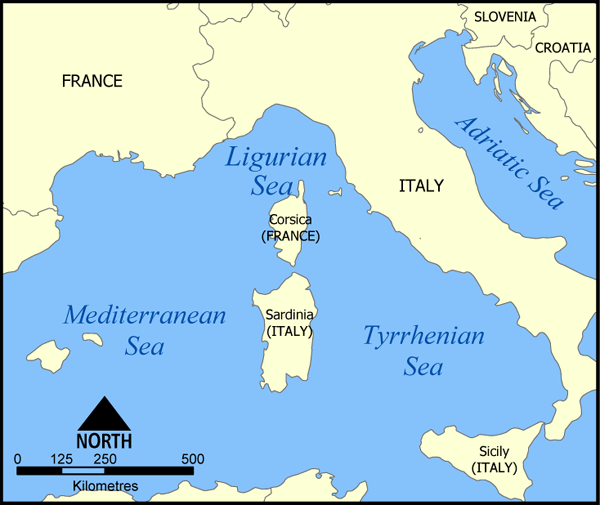
The action off Bastia or battle of Bastia (battaglia di Bastia in Italian; bataille navale de Pietracorbara in French) was a naval engagement fought on 9 September 1943 between German vessels and Italian ships and coastal artillery. Bastia is the main port of Corsica in the Ligurian Sea. Secret negotiations between the Italian government and the Allies led to the Armistice of Cassibile (3 September 1943) and the defection of Italy from the Axis.
The Germans were suspicious of Italian intentions and devised Operation Achse, a coup against the Italian government and the disarming of the Italian armed forces. At midnight on 8/9 September, German marines launched an assault on Bastia harbour and captured the Italian ships moored there except for the torpedo boat Aliseo. At dawn, Italian troops counter-attacked, retook the port and the German vessels sailed to avoid capture.
Aliseo attacked the German vessels as they left port and turned north; Italian coastal guns also engaged the German vessels and when the corvette Cormorano arrived it joined the engagement. Two German vessels and three Marinefährprahme (MFP, ferry barges) were sunk and two MFP were forced aground. The action was one of the first examples of Italian resistance against Nazi Germany.
Corsica was garrisoned by the VII Corps (Generale Giovanni Magli) which was short of weapons, had inadequate transport and suffered from poor morale. Order 111 CT was sent to commanders from 10–15 August and late in the month, the Army General Staff transmitted Memoria 44 to military forces outside Italy which expanded Order 111 CT preventing Italian forces from engaging in hostilities with the Germans. The Armistice of Cassibile was signed on 3 September 1943, in which the Italians withdrew from the Axis and Magli applied Memoria 44.
German forces in Corsica comprised the Brigade Reichsführer SS Sturmbrigade Reichsführer SS, a battalion of the 15th Panzergrenadier Division, two heavy coastal artillery batteries and one of heavy anti-aircraft guns. On 7 September, General Fridolin von Senger und Etterlin arrived to take command. Magli gave assurances that the Italian garrison would continue to fight against the local resistance and not oppose the arrival of German troops from Sardinia. There were about 20,000 French Maquis on the island and the Germans suspected that many of the Italians would defect.
Unternehmen Achse (Operation Axis) a German plan to forestall an Italian surrender and defection to the Allies, began on 8 September and included the evacuation of the garrison of Sardinia to Corsica. When news of the Armistice was announced on 8 September, German forces began to embark from ports on the north coast of Sardinia and land at Corsican ports on the south coast. Italian coastal gunners nearby refrained from firing on the German parties.
Present in Bastia harbour were the Italian Ciclone-class torpedo boats Aliseo (Commander Carlo Fecia di Cossato) and Ardito, the Italian merchant ship Humanitas (7,980 GRT) and a MAS motor torpedo boat. German vessels present were the anti-submarine warfare vessels UJ 2203 (ex-French trawler Austral, 1,096 GRT), UJ 2219 (ex-British, Belgian-built yacht Insuma, 280 GRT), five Marinefährprahme (MFPs) F366, F387, F459, F612, F623 and the motor launch FL.B.412. German marines had prepared a surprise attack on the harbour and the Italian ships there, attacking at midnight on 8/9 September; Ardito was damaged and 70 of her 180 crew were killed. Humanitas and the MAS boat were also damaged. Aliseo managed to cast off in time and got outside the harbour, where Cossato waited for orders. After dawn on 9 September, Italian troops counter-attacked and recaptured the port, Ardito, Humanitas and the MAS.
The Italian port commander ordered Cossato to prevent the German vessels from leaving port. As the German flotilla left harbour, in column to pass through the narrow harbour mouth, the ships were bombarded by the 76 mm guns of Italian coastal batteries, damaging UJ 2203 and some of the MFPs. There was a thin fog along the coast at dawn and the German flotilla could be seen emerging from the harbour and turning north, close to the coast. The German vessels outgunned Aliseo, the two UJ craft carrying an 88 mm gun each and the barges mounting a 75 mm gun and a 37 mm or a 20 mm gun.
Hub AI
Action off Bastia AI simulator
(@Action off Bastia_simulator)
Action off Bastia
The action off Bastia or battle of Bastia (battaglia di Bastia in Italian; bataille navale de Pietracorbara in French) was a naval engagement fought on 9 September 1943 between German vessels and Italian ships and coastal artillery. Bastia is the main port of Corsica in the Ligurian Sea. Secret negotiations between the Italian government and the Allies led to the Armistice of Cassibile (3 September 1943) and the defection of Italy from the Axis.
The Germans were suspicious of Italian intentions and devised Operation Achse, a coup against the Italian government and the disarming of the Italian armed forces. At midnight on 8/9 September, German marines launched an assault on Bastia harbour and captured the Italian ships moored there except for the torpedo boat Aliseo. At dawn, Italian troops counter-attacked, retook the port and the German vessels sailed to avoid capture.
Aliseo attacked the German vessels as they left port and turned north; Italian coastal guns also engaged the German vessels and when the corvette Cormorano arrived it joined the engagement. Two German vessels and three Marinefährprahme (MFP, ferry barges) were sunk and two MFP were forced aground. The action was one of the first examples of Italian resistance against Nazi Germany.
Corsica was garrisoned by the VII Corps (Generale Giovanni Magli) which was short of weapons, had inadequate transport and suffered from poor morale. Order 111 CT was sent to commanders from 10–15 August and late in the month, the Army General Staff transmitted Memoria 44 to military forces outside Italy which expanded Order 111 CT preventing Italian forces from engaging in hostilities with the Germans. The Armistice of Cassibile was signed on 3 September 1943, in which the Italians withdrew from the Axis and Magli applied Memoria 44.
German forces in Corsica comprised the Brigade Reichsführer SS Sturmbrigade Reichsführer SS, a battalion of the 15th Panzergrenadier Division, two heavy coastal artillery batteries and one of heavy anti-aircraft guns. On 7 September, General Fridolin von Senger und Etterlin arrived to take command. Magli gave assurances that the Italian garrison would continue to fight against the local resistance and not oppose the arrival of German troops from Sardinia. There were about 20,000 French Maquis on the island and the Germans suspected that many of the Italians would defect.
Unternehmen Achse (Operation Axis) a German plan to forestall an Italian surrender and defection to the Allies, began on 8 September and included the evacuation of the garrison of Sardinia to Corsica. When news of the Armistice was announced on 8 September, German forces began to embark from ports on the north coast of Sardinia and land at Corsican ports on the south coast. Italian coastal gunners nearby refrained from firing on the German parties.
Present in Bastia harbour were the Italian Ciclone-class torpedo boats Aliseo (Commander Carlo Fecia di Cossato) and Ardito, the Italian merchant ship Humanitas (7,980 GRT) and a MAS motor torpedo boat. German vessels present were the anti-submarine warfare vessels UJ 2203 (ex-French trawler Austral, 1,096 GRT), UJ 2219 (ex-British, Belgian-built yacht Insuma, 280 GRT), five Marinefährprahme (MFPs) F366, F387, F459, F612, F623 and the motor launch FL.B.412. German marines had prepared a surprise attack on the harbour and the Italian ships there, attacking at midnight on 8/9 September; Ardito was damaged and 70 of her 180 crew were killed. Humanitas and the MAS boat were also damaged. Aliseo managed to cast off in time and got outside the harbour, where Cossato waited for orders. After dawn on 9 September, Italian troops counter-attacked and recaptured the port, Ardito, Humanitas and the MAS.
The Italian port commander ordered Cossato to prevent the German vessels from leaving port. As the German flotilla left harbour, in column to pass through the narrow harbour mouth, the ships were bombarded by the 76 mm guns of Italian coastal batteries, damaging UJ 2203 and some of the MFPs. There was a thin fog along the coast at dawn and the German flotilla could be seen emerging from the harbour and turning north, close to the coast. The German vessels outgunned Aliseo, the two UJ craft carrying an 88 mm gun each and the barges mounting a 75 mm gun and a 37 mm or a 20 mm gun.
Recent media