
Recent from talks
Adams George Archibald
Knowledge base stats:
Talk channels stats:
Members stats:
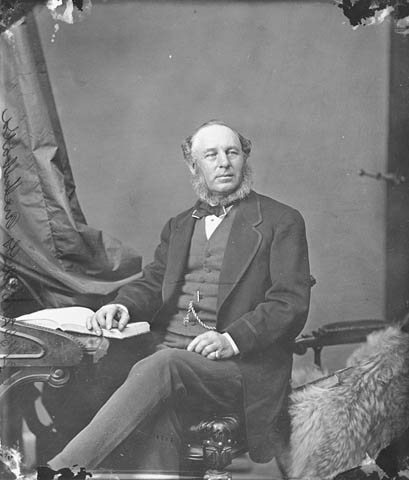
Adams George Archibald
Sir Adams George Archibald PC KCMG QC (May 3, 1814 – December 14, 1892) was a Canadian lawyer and politician, and a Father of Confederation. He was based in Nova Scotia for most of his career, though he also served as first Lieutenant Governor of Manitoba from 1870 to 1872.
Archibald was born in Truro to a prominent family in Nova Scotian politics. He was the son of Samuel Archibald, and grandson of James Archibald, judge of the court of common pleas, Nova Scotia. He was also related to Samuel G. W. Archibald, who had served as the province's Attorney General from 1830 to 1841. Sir Adams Archibald studied science and medicine for a few years, subsequently articled in law, and was called to the Nova Scotia bar in January 1839. He held a number of local offices over the next decade, and was appointed a probate judge in 1848.
Archibald was elected to the Nova Scotia legislature in 1851 as a supporter of Joseph Howe's governing Reformers, topping the poll in the two-member riding of Colchester County. Once in the legislature, Archibald frequently took positions that were opposed by other members of the Liberal caucus. He supported elected municipal governments, for instance, and was a vociferous proponent of taxation for a state-run school system (regarded by many Nova Scotia Liberals as an unnecessary expense). Archibald also supported reciprocity with the United States, and opposed any efforts to expand the province's electoral franchise.
Archibald was re-elected in 1855, and was appointed Solicitor General of Nova Scotia on August 14, 1856. His term in office was cut short by a sectarian quarrel in the legislature, which occurred after the President of the Charitable Irish Society was dismissed from his government job and charged with treason. The Liberal government had previously been supported by a majority of the province's Catholic population, but in early 1857 eight Catholic Liberals and two Protestant Liberals from Catholic ridings defected to the Conservative opposition, which was then able to form government. Archibald was forced to resign his position on February 21, 1857.
In the provincial election of 1859, Howe's Liberals were returned to office on a platform of defending Protestant interests. This was essentially a cynical appeal to popular prejudice, and no significant actions were taken against the province's Catholics following the election. Archibald did not run, but was nevertheless appointed Attorney General in Howe's government on February 10, 1860. He returned to parliament following a by-election victory on March 8, 1860. In his new capacity, Archibald was a leading proponent of provincial railway development, even following the economic downturn of 1862.
In December 1862, Premier Howe was appointed Imperial Fisheries Commissioner by the British government. Archibald succeeded him as Liberal leader, although Howe continued to serve as Premier until the next election was called.
In early 1863, Howe's outgoing ministry passed a bill which re-introduced property qualifications for voters. The bill did not become law before the provincial election of May 1863, however, and it was largely due to the bill's unpopularity that Archibald's Liberals were dealt a crushing defeat. The party won only 14 seats out of 55, though Archibald was personally re-elected in Colchester South.
Despite serving as leader of the opposition from 1863 to 1867, Archibald frequently sided with the Conservative ministry against his own caucus on important legislative initiatives. He supported the education tax plan put forward by Charles Tupper's government, although it was opposed by most members of his own party. Archibald was later the Nova Scotia Liberal Party's representative to the first conference on Canadian Confederation, held at Charlottetown, Prince Edward Island in 1864. Following the conference, he was the only member of the Liberal caucus to support Nova Scotia's entry into confederation.
Hub AI
Adams George Archibald AI simulator
(@Adams George Archibald_simulator)
Adams George Archibald
Sir Adams George Archibald PC KCMG QC (May 3, 1814 – December 14, 1892) was a Canadian lawyer and politician, and a Father of Confederation. He was based in Nova Scotia for most of his career, though he also served as first Lieutenant Governor of Manitoba from 1870 to 1872.
Archibald was born in Truro to a prominent family in Nova Scotian politics. He was the son of Samuel Archibald, and grandson of James Archibald, judge of the court of common pleas, Nova Scotia. He was also related to Samuel G. W. Archibald, who had served as the province's Attorney General from 1830 to 1841. Sir Adams Archibald studied science and medicine for a few years, subsequently articled in law, and was called to the Nova Scotia bar in January 1839. He held a number of local offices over the next decade, and was appointed a probate judge in 1848.
Archibald was elected to the Nova Scotia legislature in 1851 as a supporter of Joseph Howe's governing Reformers, topping the poll in the two-member riding of Colchester County. Once in the legislature, Archibald frequently took positions that were opposed by other members of the Liberal caucus. He supported elected municipal governments, for instance, and was a vociferous proponent of taxation for a state-run school system (regarded by many Nova Scotia Liberals as an unnecessary expense). Archibald also supported reciprocity with the United States, and opposed any efforts to expand the province's electoral franchise.
Archibald was re-elected in 1855, and was appointed Solicitor General of Nova Scotia on August 14, 1856. His term in office was cut short by a sectarian quarrel in the legislature, which occurred after the President of the Charitable Irish Society was dismissed from his government job and charged with treason. The Liberal government had previously been supported by a majority of the province's Catholic population, but in early 1857 eight Catholic Liberals and two Protestant Liberals from Catholic ridings defected to the Conservative opposition, which was then able to form government. Archibald was forced to resign his position on February 21, 1857.
In the provincial election of 1859, Howe's Liberals were returned to office on a platform of defending Protestant interests. This was essentially a cynical appeal to popular prejudice, and no significant actions were taken against the province's Catholics following the election. Archibald did not run, but was nevertheless appointed Attorney General in Howe's government on February 10, 1860. He returned to parliament following a by-election victory on March 8, 1860. In his new capacity, Archibald was a leading proponent of provincial railway development, even following the economic downturn of 1862.
In December 1862, Premier Howe was appointed Imperial Fisheries Commissioner by the British government. Archibald succeeded him as Liberal leader, although Howe continued to serve as Premier until the next election was called.
In early 1863, Howe's outgoing ministry passed a bill which re-introduced property qualifications for voters. The bill did not become law before the provincial election of May 1863, however, and it was largely due to the bill's unpopularity that Archibald's Liberals were dealt a crushing defeat. The party won only 14 seats out of 55, though Archibald was personally re-elected in Colchester South.
Despite serving as leader of the opposition from 1863 to 1867, Archibald frequently sided with the Conservative ministry against his own caucus on important legislative initiatives. He supported the education tax plan put forward by Charles Tupper's government, although it was opposed by most members of his own party. Archibald was later the Nova Scotia Liberal Party's representative to the first conference on Canadian Confederation, held at Charlottetown, Prince Edward Island in 1864. Following the conference, he was the only member of the Liberal caucus to support Nova Scotia's entry into confederation.
Recent media