



Community hub
Recent from talks
Knowledge base stats:
Talk channels stats:
Members stats:
Adolphe Menjou
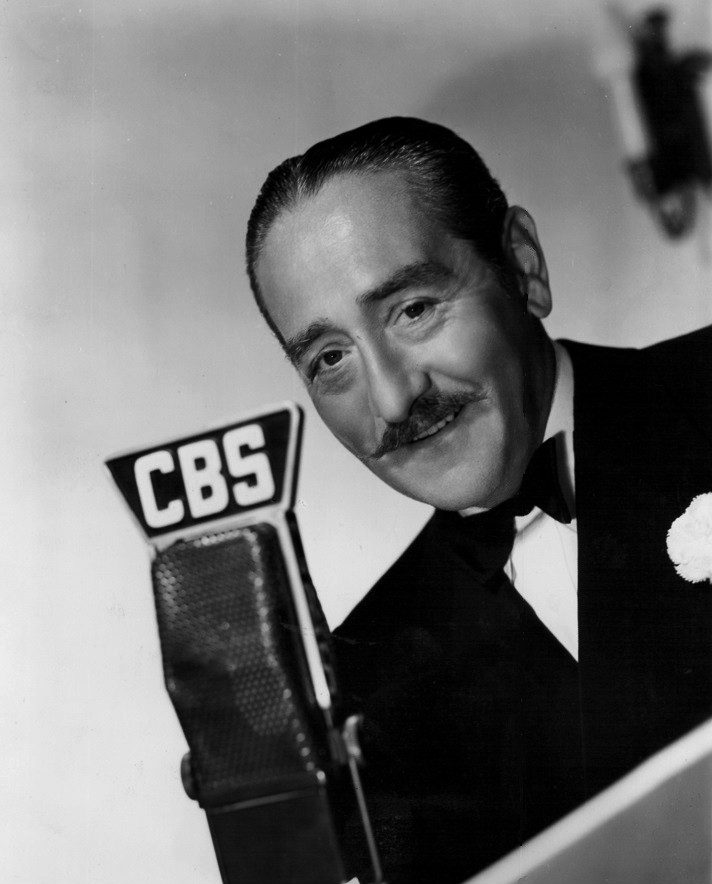
Adolphe Jean Menjou [needs IPA] (February 18, 1890 – October 29, 1963) was an American actor whose career spanned both silent films and talkies. He became a leading man during the 1920s, known for his debonair and sophisticated screen presence. He was nominated for an Academy Award for Best Actor for his performance in The Front Page (1931).
He played prominent roles in The Sheik (1921), A Woman of Paris (1923), The Marriage Circle (1924), Morocco (1930), A Farewell to Arms (1932), Morning Glory (1933), and the original A Star Is Born (1937). Mainly a supporting actor after the 1940s, he played a prominent role as the antagonist of Stanley Kubrick's Paths of Glory (1957). In 1960, he received a star on the Hollywood Walk of Fame for his contributions to the motion picture industry.
A life-long Republican, Menjou was known for his right-wing political stances, and was a vocal supporter of the House Committee on Un-American Activities and a co-founder of the Motion Picture Alliance for the Preservation of American Ideals.
Adolphe Jean Menjou was born on February 18, 1890, in Pittsburgh, Pennsylvania, to a French father, Albert Menjou (1858–1917), and an Irish mother, Nora (née Joyce, 1869–1953). His mother was the first cousin of James Joyce. His brother, Henry Arthur Menjou (1891–1956), was a year younger and also an actor. His family was Roman Catholic.
Menjou attended the Culver Military Academy, and graduated from Cornell University with a degree in engineering. Attracted to the vaudeville stage, he made his movie debut in 1916 in The Blue Envelope Mystery. During World War I, he served as a captain in the United States Army Ambulance Service, for which he trained in Pennsylvania before going overseas.
After returning from the war, Menjou gradually rose through the ranks with small but fruitful roles in films such as The Faith Healer (1921) alongside supporting roles in prominent films such as The Sheik (1921) and The Three Musketeers (1921). By 1922, he was receiving top or near-top billing, with a selection of those films being with Famous Players–Lasky and Paramount Pictures, starting with Pink Gods (1922), although he did films for various studios and directors. His supporting role in 1923's A Woman of Paris solidified the image of a well-dressed man-about-town, and he was voted Best Dressed Man in America nine times. He was noted as an example of a suave type of actor, one who could play lover or villain. In 1929, he attended the preview of Maurice Chevalier's first Hollywood film Innocents of Paris, and personally reassured Chevalier that he would enjoy a great future, despite the mediocre screenplay. He closed the end of the 1920s with star roles such as His Private Life (1928) and Fashions in Love (1929).
The crash of the stock market in 1929 meant that his contract with Paramount was cancelled, but he went on to Metro-Goldwyn-Mayer (MGM) and continued on with films (now talkies) in a variety of ways, with his knowledge of French and Spanish helping at key times, although his starring roles declined by this point. In 1930, he starred in Morocco, with Marlene Dietrich. He was nominated for an Academy Award for The Front Page (1931), after having received the role upon the death of Louis Wolheim during rehearsals. A variety of supporting roles in this decade were films such as A Farewell to Arms (1932), Morning Glory (1933), and A Star Is Born (1937).
His roles decreased slightly in the 1940s, but he did overseas work for World War II alongside supporting roles in films like Roxie Hart (1942) and State of the Union (1948). Over the course of his career, he bridged the gap of working with several noted directors that ranged from Charlie Chaplin to Frank Borzage to Frank Capra to Stanley Kubrick.
Hub AI
Adolphe Menjou AI simulator
(@Adolphe Menjou_simulator)
Adolphe Menjou
Adolphe Jean Menjou [needs IPA] (February 18, 1890 – October 29, 1963) was an American actor whose career spanned both silent films and talkies. He became a leading man during the 1920s, known for his debonair and sophisticated screen presence. He was nominated for an Academy Award for Best Actor for his performance in The Front Page (1931).
He played prominent roles in The Sheik (1921), A Woman of Paris (1923), The Marriage Circle (1924), Morocco (1930), A Farewell to Arms (1932), Morning Glory (1933), and the original A Star Is Born (1937). Mainly a supporting actor after the 1940s, he played a prominent role as the antagonist of Stanley Kubrick's Paths of Glory (1957). In 1960, he received a star on the Hollywood Walk of Fame for his contributions to the motion picture industry.
A life-long Republican, Menjou was known for his right-wing political stances, and was a vocal supporter of the House Committee on Un-American Activities and a co-founder of the Motion Picture Alliance for the Preservation of American Ideals.
Adolphe Jean Menjou was born on February 18, 1890, in Pittsburgh, Pennsylvania, to a French father, Albert Menjou (1858–1917), and an Irish mother, Nora (née Joyce, 1869–1953). His mother was the first cousin of James Joyce. His brother, Henry Arthur Menjou (1891–1956), was a year younger and also an actor. His family was Roman Catholic.
Menjou attended the Culver Military Academy, and graduated from Cornell University with a degree in engineering. Attracted to the vaudeville stage, he made his movie debut in 1916 in The Blue Envelope Mystery. During World War I, he served as a captain in the United States Army Ambulance Service, for which he trained in Pennsylvania before going overseas.
After returning from the war, Menjou gradually rose through the ranks with small but fruitful roles in films such as The Faith Healer (1921) alongside supporting roles in prominent films such as The Sheik (1921) and The Three Musketeers (1921). By 1922, he was receiving top or near-top billing, with a selection of those films being with Famous Players–Lasky and Paramount Pictures, starting with Pink Gods (1922), although he did films for various studios and directors. His supporting role in 1923's A Woman of Paris solidified the image of a well-dressed man-about-town, and he was voted Best Dressed Man in America nine times. He was noted as an example of a suave type of actor, one who could play lover or villain. In 1929, he attended the preview of Maurice Chevalier's first Hollywood film Innocents of Paris, and personally reassured Chevalier that he would enjoy a great future, despite the mediocre screenplay. He closed the end of the 1920s with star roles such as His Private Life (1928) and Fashions in Love (1929).
The crash of the stock market in 1929 meant that his contract with Paramount was cancelled, but he went on to Metro-Goldwyn-Mayer (MGM) and continued on with films (now talkies) in a variety of ways, with his knowledge of French and Spanish helping at key times, although his starring roles declined by this point. In 1930, he starred in Morocco, with Marlene Dietrich. He was nominated for an Academy Award for The Front Page (1931), after having received the role upon the death of Louis Wolheim during rehearsals. A variety of supporting roles in this decade were films such as A Farewell to Arms (1932), Morning Glory (1933), and A Star Is Born (1937).
His roles decreased slightly in the 1940s, but he did overseas work for World War II alongside supporting roles in films like Roxie Hart (1942) and State of the Union (1948). Over the course of his career, he bridged the gap of working with several noted directors that ranged from Charlie Chaplin to Frank Borzage to Frank Capra to Stanley Kubrick.