Hubbry Logo
Leading actorLeading actorMain
Open search
Leading actor
Community hub
Leading actor
logo
8 pages, 0 posts
0 subscribers
Be the first to start a discussion here.
Leading actor
Leading actor
from Wikipedia

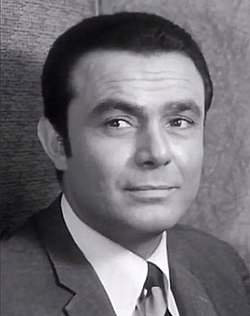
Salah Zulfikar was a leading actor in over 100 major Egyptian productions.

A leading actor, leading actress, or leading man or lady or simply lead (/ˈld/), plays a main role in a film, television show or play.[1] The word lead may also refer to the largest role in the piece, and leading actor may refer to a person who typically plays such parts or an actor with a respected body of work. Some actors are typecast as leads, but most play the lead in some performances and supporting or character roles in others.

Sometimes there is more than one significant leading role in a dramatic piece, and the actors are said to play co-leads; a large supporting role may be considered a secondary lead. Award nominations for acting often reflect such ambiguities. Therefore, sometimes two actors in the same performance piece are nominated Oscars for Best Actor or Best Actress—categories traditionally reserved for leads. For example, in 1935 Clark Gable, Charles Laughton and Franchot Tone were each nominated for the Best Actor Academy Award for Mutiny on the Bounty. There can even be controversy over whether a particular performance should be nominated in the Best Actor/Actress or Best Supporting Actor/Best Supporting Actress category; for instance, The Godfather's Al Pacino boycotted the 45th Academy Awards ceremony since he was insulted at being nominated for the Academy Award for Best Supporting Actor award; he noted that he had more screen time than his co-star and Best Actor winner Marlon Brando and so he should have received an Academy Award nomination for Best Actor.[2]

This chart visualizes the age distribution of Best Actor and Best Actress Academy Award winners from 1928 (1st edition) to 2023 (96th edition).

A title role is often but not necessarily the lead. A lead role must also be differentiated from a starring role, which means that an actor is credited as a part of the main cast but not that they necessarily play the main character.

See also

[edit]

References

[edit]
Revisions and contributorsEdit on WikipediaRead on Wikipedia
from Grokipedia
A leading actor, also known as a lead or principal performer, is the primary individual in a , television production, or stage play who portrays the central character—often the —and drives the forward through their actions, decisions, and extensive . This role demands the most screen or stage time compared to other cast members, typically comprising a significant portion of the story's focus and emotional arc. Leading actors are differentiated from supporting performers by their narrative centrality; while supporting roles enhance or contrast the main storyline, leads shape its overall direction and resolution. Key attributes of effective leading actors include to captivate audiences, versatility to embody complex characters across genres, and unwavering dedication to rehearsals and performance nuances. In theater, the leading actor often receives the final bow, underscoring their prominence, as seen in roles like as in the musical Wicked. Historically, iconic leading performances have influenced acting standards, such as Humphrey Bogart's portrayal of Rick Blaine in (1942), which exemplified brooding intensity in wartime drama, and Marlon Brando's raw authenticity as Terry Malloy in (1954), revolutionizing on screen. In television, series regulars like as in anchor ongoing narratives across multiple seasons. The designation of a leading role can vary by production but is generally determined during casting based on the character's prominence in the script, with leads often listed first in credits to reflect their billing priority.

Definition and Role

Core Definition

A leading actor, also known as a lead performer, is the actor who portrays the central or primary character in a production across media such as , theater, or television, serving as the driving force of the plot and the emotional anchor of the story. This role involves substantial , , and focus, distinguishing the lead from ensemble or secondary parts by their integral contribution to the story's progression and thematic depth. Leading actors typically receive top billing in production credits, meaning their names appear first or in the most prominent position, often accompanied by designations like "starring" to highlight their centrality. This billing practice underscores their status as the production's focal point. The role applies broadly to scripted narratives, including the hero in an who propels the central conflict, or the in a stage tragedy who embodies the dramatic arc.

Key Responsibilities

The leading actor plays a pivotal in propelling the plot forward by embodying the who drives key decisions, conflicts, and resolutions that shape the arc. Through their character's actions and choices, they ensure the story maintains and coherence, often serving as the central force that ties disparate elements together. As the emotional anchor of the production, the leading actor elicits and identification from the , fostering a deep connection that sustains viewer investment throughout the . Their portrayal conveys the core emotional stakes, allowing audiences to relate to the character's journey and internal struggles, which heightens the overall impact of the story. Leading actors collaborate closely with directors to refine character interpretation, often engaging in discussions to align their with the film's vision and incorporating to enhance authenticity in scenes. This partnership involves providing input on emotional nuances and adapting spontaneously to elevate dialogue or actions, contributing to more dynamic and layered portrayals. In terms of presence, leading actors dominate , often appearing in a significant portion of the runtime—averaging around 60-65% in recent Oscar-nominated performances—to maintain focus and centrality. This substantial involvement underscores their role in anchoring the production's pacing and visual emphasis, even in casts where a primary lead may still emerge to guide the storyline.

Historical Development

Origins in Theater

The origins of the leading actor can be traced to ancient Greek tragedy during the 5th century BCE, where the protagonist served as the central narrative driver in performances that combined choral elements with individualized dramatic action. Traditionally, Thespis of Icaria is recognized as the inaugural actor around 534 BCE, who distinguished himself from the chorus by embodying distinct characters and engaging in direct dialogue, thereby establishing the protagonist as the focal point opposite the collective chorus. This innovation transformed ritualistic performances into structured tragedies, with the leading performer embodying heroic or tragic figures central to the plot's emotional and moral conflicts. In the , particularly during the of the late 16th century, the leading actor's role evolved within professional theater companies in , where individual performers began to eclipse ensemble dynamics. , as the principal actor in the , originated iconic leading roles in William Shakespeare's tragedies, such as , , and , which highlighted the performer's interpretive authority and personal charisma. Burbage's prominence helped foster an emerging , where audiences attended plays to see renowned leads rather than solely the works themselves, laying groundwork for actor-centered theater. The marked the solidification of the leading actor through the actor-manager system, which dominated European and American stages and integrated production control with star performance in genres like . Actor-managers oversaw theaters, selected plays, and invariably took the principal roles, allowing them to tailor melodramas—characterized by heightened emotion, moral clarity, and spectacle—to showcase their interpretive skills. exemplified this era as a leading American actor-manager, who managed venues like the and shaped productions around his portrayals in Shakespearean tragedies and melodramas, influencing the transition from bombastic styles to more nuanced characterizations. By the early , Broadway theater increasingly emphasized individual leading actors within a commercial , diverging from the ensemble focus of repertory companies that had prevailed in earlier periods. This shift, accelerated by the decline of and repertory models in favor of combination companies, positioned stars as primary draws for audiences, with figures like those in long-running productions exemplifying the leading actor's commercial dominance. Efforts to sustain repertory, such as Eva Le Gallienne's Civic in the , underscored the tension but ultimately reinforced Broadway's preference for highlighted leads over collective ensembles.

Evolution in Film and Television

The role of the leading actor in film and television emerged from theatrical traditions but quickly adapted to the demands of visual media, emphasizing physical expression and narrative centrality without spoken dialogue or live audience interaction. In the era from the to the , leading actors like became iconic through versatile performances that blended with emotional , relying on mime and gesture to convey complex characters. Chaplin's portrayal of the Little Tramp in shorts such as Easy Street (1917) exemplified this approach, using improvisation to highlight humor and tragedy in everyday struggles, which captivated global audiences and established the lead as a silent storyteller. This era's stars, including Chaplin, performed their own stunts and shaped film narratives around their physicality, setting a precedent for the lead's centrality in early cinema. During the Golden Age of Hollywood from the 1930s to the 1950s, the studio system formalized the leading actor role through exclusive long-term contracts that typecast performers into archetypal "leading man" or "leading lady" personas to maximize box-office appeal. Major studios like MGM, Paramount, and Warner Bros. controlled casting, assigning roles based on market formulas, as seen with Clark Gable, who signed with MGM in 1930 and was groomed for romantic and heroic leads in films such as It Happened One Night (1934) and Gone with the Wind (1939), earning him an Academy Award for the former. These contracts, often lasting up to seven years, limited actors' creative input but created stable star images, with Gable embodying the rugged romantic lead opposite actresses like Joan Crawford and Claudette Colbert. The system's vertical integration ensured leads drove production, from script selection to promotion, solidifying their economic importance. The shift to television in the 1950s onward transformed leading actors into episodic anchors for serialized domestic narratives, adapting film techniques to weekly broadcasts while emphasizing relatable, ongoing character arcs. Lucille Ball's role as Lucy Ricardo in I Love Lucy (1951–1957), the era's most popular sitcom, showcased her as a comedic lead in self-contained episodes centered on marital mishaps, drawing record viewership through physical humor filmed in a three-camera setup. This format, produced by Desilu Studios co-founded by Ball and Desi Arnaz, pioneered syndication and reruns, allowing leads to sustain audience connection across seasons and influencing later series with serialized elements like family dynamics. Ball's pregnancy storyline in 1952–1953 further integrated real-life continuity into the narrative, blurring episodic boundaries and elevating the lead's role in evolving TV storytelling. From the 1980s to the present, leading actors have evolved within blockbuster franchises and ensemble-driven films, where high-stakes narratives often feature diverse casting to reflect global audiences and broaden appeal. Tom Hanks exemplified this shift as a versatile lead in ensemble-heavy blockbusters like Apollo 13 (1995) and Saving Private Ryan (1998), blending heroic centrality with collaborative dynamics in large-scale productions that grossed over $500 million worldwide combined. This era's franchises, such as those from Marvel and Star Wars, have elevated leads like Hanks in voice roles for Toy Story (1995–2019), prioritizing character depth amid spectacle. Concurrently, diversity in leading roles has increased, with films directed by filmmakers of color achieving nearly 90% racially diverse casts by the 2020s, driven by audience demand and initiatives like inclusive casting policies that challenge traditional demographics. However, progress remains uneven, as the proportion of top films with non-diverse casts (less than 11% actors of color) increased to 18.4% in 2024, up from 8.5% in 2023, underscoring ongoing industry efforts.

Characteristics and Qualities

Essential Traits

Leading actors are distinguished by their and commanding presence, which enable them to dominate the screen or and captivate audiences effortlessly. This quality manifests through dynamic vocal projection, expressive physicality, and an innate ability to draw focus in scenes, ensuring the protagonist remains central to the narrative. As noted in analyses of effective performances, a leading actor "doesn’t just act in a scene—they own it," leveraging and magnetic appeal to foster immediate audience connection. Versatility in emotional range is another cornerstone trait, allowing leading actors to portray complex character arcs that evolve from and doubt to resilience and triumph. This proficiency in conveying nuanced emotions—such as , sorrow, , or —lends authenticity to the protagonist's journey, making their development relatable and compelling. Leading actors excel at accessing and expressing these emotions in believable ways, which is essential for sustaining viewer investment across a story's duration. Marketability plays a pivotal role in defining leading actors, encompassing physical appeal and star power that attract audiences and drive box-office success. Historically, under the Hollywood studio system from the to the , studios meticulously groomed contract stars through image crafting, name changes, and persona control to enhance their commercial viability, as seen in the transformation of actors like Lucille LeSueur into marketable icons like . This star power not only boosts but also ensures leading actors embody an aspirational allure that transcends individual roles. Technical proficiency underpins these traits, involving mastery of dialogue delivery, comedic or dramatic timing, and precise reaction shots that highlight the lead's visibility. Leading actors hone these skills through rigorous in voice work, movement, and scene analysis, enabling seamless integration of with directorial vision. Their commitment to craft, often extending to method preparation or physical conditioning, ensures polished executions that elevate the overall production quality.

Archetypes and Variations

Leading actors often embody the archetype of the leading man or leading lady, particularly as romantic protagonists in mid-20th-century Hollywood dramas and comedies, where they represented idealized heroes with charm, wit, and moral uprightness. In the 1940s and 1950s, actors like Cary Grant exemplified the leading man through suave, physically comedic performances that highlighted effortless charisma and romantic pursuit, as seen in his role as a bumbling paleontologist in Bringing Up Baby (1938), which set a template for the era's heartthrob. Similarly, Rock Hudson portrayed the all-American leading man in the 1950s and 1960s, blending masculine confidence with lighthearted flirtation in films like Pillow Talk (1959), which became a box-office hit grossing $18.75 million domestically. For leading ladies, Katharine Hepburn defined the archetype in the 1940s with bold, intelligent heroines who challenged social norms while pursuing romance, such as her Oscar-nominated turn as the spunky Tracy Lord in The Philadelphia Story (1940). Audrey Hepburn extended this in the 1950s, embodying delicate independence and glamour as Princess Ann in Roman Holiday (1953), earning Oscars for her portrayal of a royal escaping into everyday romance. The anti-hero lead emerged as a significant variation during the period, featuring morally ambiguous protagonists who blurred lines between virtue and vice amid societal disillusionment. Al Pacino's in (1972) epitomized this archetype, evolving from a principled war veteran and family outsider into a calculating mafia don, reflecting the era's shift toward complex, flawed central figures rather than clear-cut heroes. This transformation highlighted themes of inevitable corruption and personal sacrifice, influencing subsequent anti-heroes by prioritizing psychological depth over traditional heroism. Genre-specific adaptations further diversify leading actor archetypes, with action leads in superhero films emphasizing high-stakes physicality, resilience, and visual spectacle to drive narratives of epic conflict. Actors in these roles, such as as Thor in the , rely on hyper-muscular physiques and dynamic stunt work to convey invincibility and moral fortitude, aligning with audience expectations for transformative, larger-than-life heroism that evolved alongside CGI advancements in the 2000s. In contrast, comedic leads in sitcoms typically adopt the relatable archetype, portraying ordinary individuals thrust into absurd situations to generate humor through everyday flaws and reactions. Steve Carell's Michael Scott in (2005–2013) exemplifies this, as a well-meaning but socially awkward manager whose bumbling decisions and vulnerability allow audiences to identify with the chaos of routine life. Post- Hollywood has witnessed notable shifts in and diversity within leading actor archetypes, moving from male-dominated representations to more inclusive portrayals across ethnicities and identities. Female leads increased from approximately 20% of starring roles before the 1990s, reaching 40% by and further advancing to 47.6% by , driven by successes in genres like romance and , though action films lagged at only 11% female leads. Ethnic diversity also advanced, with people of color comprising 21.6% of leads in top 2022 theatrical films, rising to 25.2% by , up from lower shares in prior decades, bolstered by films like (2018) featuring as an Afro-futuristic hero. These changes reflect broader industry pressures for equity, positively correlating with international box-office success through more varied casting in leads and ensembles.

Distinctions from Other Acting Roles

Comparison to Supporting Actors

Leading actors and supporting actors differ fundamentally in their narrative weight within a production. Leading actors portray the central protagonists whose journeys drive the primary story arcs, often embodying the emotional and thematic core of the . In contrast, supporting actors typically play secondary characters that facilitate subplots, provide contrast, or enhance the lead's development, such as sidekicks, mentors, or antagonists who interact meaningfully but do not anchor the main plot. These distinctions extend to billing and compensation practices in and theater. Leading actors often receive "above the title" billing, where their names appear prominently before the production's title on posters and credits, signifying their starring status and drawing audience interest. Supporting actors, however, are usually listed below the title in the cast credits, reflecting their secondary prominence. Compensation follows suit, with leading roles commanding significantly higher pay—often ranging from $100,000 to over $500,000 per for established stars—compared to supporting roles; under guidelines as of 2025, principal performers (including leads and major supporting) in run-of-the-picture deals have a minimum of $80,000 for the full shoot duration, though leads typically negotiate much higher. Screen time further delineates these roles, with leading typically appearing in over 50% of a film's runtime to sustain the central , as seen in average Oscar-winning lead performances occupying approximately 58% of the total length. Supporting , by comparison, occupy 10-30% of the , focusing on pivotal but limited scenes that bolster the story without dominating it; for instance, 2024 Best nominees averaged around 20% of their films' duration. Award eligibility reinforces this hierarchy, with separate categories recognizing the distinct contributions since the 1930s. The introduced Best Supporting Actor in 1936—following controversy over the 1935 film , where ensemble performances blurred lines—while has existed since 1929, honoring leads for carrying the film's primary role. This separation ensures supporting performances are evaluated for enhancement rather than leadership of the narrative.

Comparison to Character Actors

Leading actors primarily portray relatable protagonists who drive the narrative and embody central emotional arcs, often drawing on their established personas to connect with audiences on a broad level. In contrast, character actors specialize in eccentric, transformative roles that add depth through distinctive quirks or unconventional traits, typically in supporting capacities that enhance rather than lead the story. For instance, excelled in quirky supporting roles such as the sleazy pornographer Scotty J. in (1997) and the abrasive rock critic in (2000), where his ability to embody offbeat personalities overshadowed any star-like centrality. Character actors often pursue variety in non-lead parts to avoid , embracing a wide array of eccentric characters that allow for creative reinvention across projects, which can lead to longer, more diverse careers compared to the more formulaic trajectories of leads. Leading actors, however, frequently maintain consistent star personas—such as the rugged or romantic —to sustain marketability and audience expectations, sometimes at the expense of broader role experimentation. This distinction highlights how character actors prioritize transformative versatility, while leads leverage familiarity for prominence. In industry perception, leading actors serve as the "faces of the film," receiving top billing and promotional emphasis as the project's commercial anchors, whereas character actors are revered as "scene-stealers" who deliver memorable, nuanced performances without dominating the spotlight or marquee value. Historically, this dynamic is evident in 1930s Hollywood, where character actors like Peter Lorre were typecast in sinister, morally ambiguous supporting roles, such as the menacing villain in M (1931) and various shadowy figures in films like Casablanca (1942), contrasting with Humphrey Bogart's transition from gangster sidekicks in the late 1930s—seen in The Petrified Forest (1936)—to leading man status in The Maltese Falcon (1941), where he embodied the cynical protagonist Sam Spade. These paths underscore occasional overlap with supporting roles, but character actors rarely ascend to sustained lead prominence.

Cultural and Industry Impact

Recognition and Awards

Leading actors receive prominent recognition through major industry awards that honor outstanding performances in principal roles across film, theater, and television. The Academy Awards, presented annually by the Academy of Motion Picture Arts and Sciences, have included the Best Actor and Best Actress categories since the inaugural ceremony in 1929, specifically recognizing exceptional lead performances in motion pictures. These Oscars highlight the actor's ability to drive the narrative as the central figure, with winners such as Daniel Day-Lewis earning three for dramatic leads in films like My Left Foot (1989), There Will Be Blood (2007), and Lincoln (2012). In theater, the , established in 1947 by the , celebrate leading performances on Broadway through categories like Best Performance by a Leading Actor in a Play and Best Performance by a Leading Actress in a Musical. These honors underscore the actor's command of the stage in starring roles, with notable recipients including , who secured five Tonys for lead portrayals in productions such as The Lark (1956). For television, the , first presented in 1949 by the , feature categories for Outstanding Lead Actor and Actress in Drama Series, Comedy Series, and Limited or , acknowledging sustained excellence in lead roles over a season. Actors like have won four Emmys for his lead role as Walter White in Breaking Bad. Career milestones further affirm the stature of leading actors, with the EGOT designation—achieving an Emmy, Grammy, Oscar, and Tony—frequently linked to acclaimed lead performances across mediums. For instance, attained EGOT status partly through her Best Actress Oscar for the lead role in (1953), while earned hers with a Best Supporting Actress Oscar for (1961) alongside Emmy wins for supporting television roles and a Tony win for a lead theater role. More recently, as of 2023, completed her EGOT with a Grammy for a spoken-word album, building on her lead Oscar-nominated performance in Fences (2016). Lifetime achievement awards, such as the American Film Institute's (AFI) Life Achievement Award, bestowed since 1973, honor leading actors for their enduring contributions in principal roles, with recipients including (2009) and (2019). Metrics of success for leading actors often intertwine awards with commercial and critical impact, where draw measures their ability to attract audiences to starring vehicles. Stars like have amassed over $15 billion in worldwide from lead roles in franchises such as the , demonstrating their marketability. Critical acclaim, meanwhile, is quantified through award wins and nominations, reinforcing lead status; for example, actors with multiple Oscar nods for leads, like (six nominations before his 2016 win for The Revenant), exemplify sustained peer recognition. These accolades not only validate individual prowess but also elevate the storytelling potential of lead-driven narratives.

Influence on Storytelling

Leading actors occupy a pivotal position in narrative structures, serving as protagonists who define core themes and propel the story forward through their goals, conflicts, and resolutions. In popular films, these characters are introduced early in the setup phase, committing to action at key turning points that align progression with audience expectations, thereby shaping perceptions of morality and resilience. For instance, in biopics such as (2000), the lead's portrayal as a determined establishes themes of and empowerment, influencing viewers' understanding of ethical dilemmas and personal agency. This centrality fosters emotional engagement, as protagonists' struggles in development acts—often conveyed through dialogue-heavy scenes—build cognitive connections that heighten and thematic resonance. Through their roles, leading actors have historically shaped cultural representations and societal ideals, reflecting and reinforcing prevailing norms. In the 1950s, figures like embodied American heroism and conformity, portraying stoic cowboys and patriots in Westerns that promoted values of individualism within a stable social order, aligning with post-World War II optimism and anti-communist sentiments. By contrast, in recent decades, performers such as have advanced diversity by starring in narratives centered on Black women's experiences, challenging stereotypes and elevating underrepresented voices to mainstream prominence. Her lead role in Fences (2016) highlighted themes of resilience and self-love among African American communities, inspiring broader societal ideals of and empowerment. Leading actors have driven genre innovations by pioneering techniques that enhance narrative depth, particularly through in 1950s Hollywood. This approach, emphasizing emotional authenticity and psychological realism, allowed performers like and to portray complex, vulnerable protagonists, shifting from glamorous archetypes to introspective antiheroes that explored alienation and inner conflict. In films such as (1954) and (1955), these portrayals introduced character-driven stories with naturalistic dialogue and social themes, transforming genres like and the Western by prioritizing verbal tensions and humanist critiques over spectacle. John Garfield's earlier naturalistic style in the laid foundational groundwork, influencing this evolution and enabling deeper narrative explorations of personal and societal issues. The global reach of Hollywood leading actors has extended romantic archetypes to international cinema, exporting ideals of and partnership that adapt to local contexts. Iconic portrayals of passionate, resilient lovers in American films have inspired narratives worldwide, such as Bollywood's Dilwale Dulhania Le Jayenge (1995), which incorporates Hollywood's emphasis on romantic perseverance while infusing Indian cultural elements like family duty and vibrant expression. This cross-pollination has broadened conventions, allowing global audiences to engage with universal themes through culturally resonant lenses.

References

Add your contribution
Related Hubs
User Avatar
No comments yet.