



Community hub
Recent from talks
Knowledge base stats:
Talk channels stats:
Members stats:
Ayalon Valley
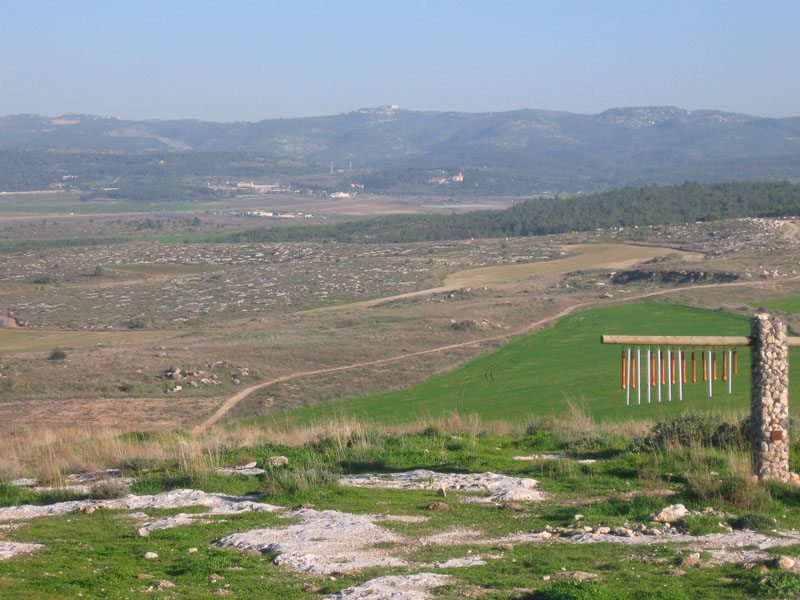
The Ayalon Valley (Hebrew: אַיָּלוֹן or איילון, ʾAyyālōn), also written Aijalon and Ajalon, is a valley in the lowland of the Shephelah in Israel.
The Ayalon Valley has been an important route connecting the coastal plain and Jerusalem for generations. Due to its location, several battles were fought in its vicinity. The Hebrew Bible gives the valley its name from Ayalon, a city that the Tribe of Dan possessed before their migration to the north. In the modern period, ancient Ayalon was identified with the former village of Yalo at the base of the Bethoron pass, which preserved the ancient, biblical name.
Today, the Ayalon Valley is home to several kibbutzim and moshavim, including Sha'alvim, Mishmar Ayalon, Nahshon, and Kfar Bin Nun. The valley is also home to Canada Park, a national park, the Yad La-Shiryon (Armored Corps Museum), Mini Israel, the Latrun Monastery and Emmaus Nicopolis, an archeological site commonly identified with Emmaus of the New Testament.
In the Tell el-Amarna letters, written during the last twelve years of Pharaoh Akhenaten and the first regnal year of Tutankhamun (14th century BCE), Abdi-Heba speaks of the destruction of the "city of Ajalon" by the invaders, and describes himself as "afflicted, greatly afflicted" by the calamities that had come on the land, urging the king of Egypt to hasten to his help. This event may have been connected to an attack of the Amorites, before the arrival of the Israelites under Joshua. But since the valley stretches as far to the west as to a point halfway between Sha'alvim and Latrun, the city referenced in these letters may have been any settlement in the valley.
In the 10th century BCE, Ajalon is mentioned in the accounts of an invasion of Canaan by the Egyptian king Sheshonk I.
After the kingdom divided, Ajalon became the boundary between the kingdoms of Judah and Israel. Rehoboam, the first king of Judah, fortified the city of Aijalon, supplying officers, weapons and food provisions (2 Chronicles 11:5–12).
The Valley of Ayalon was first mentioned in the Book of Joshua as where Joshua defeated five Amorite kings. Following his midnight march to rescue the city of Gibeon from the coalition led by the King of Jebus (Jerusalem), Joshua pursued the coalition eastward, down through the descent of Beth-horon, and then southward across the Valley of Ajalon. To allow the Israelites to complete the rout before nightfall, Joshua asked the Lord to lengthen the day by uttering the command: "Sun, stand thou still on Gibeon; and thou, Moon, in the valley of Aijalon". Joshua 10:11–14 records that God cooperated with Joshua's request.
Following the conquest, the city of Ajalon was apportioned to the Tribe of Dan (Joshua 19:42) and was designated as one of the Levitical cities given to the Kohathites (Joshua 21:24 and 1 Chronicles 6:69). In spite of Joshua's initial victory in the Valley of Ajalon, the Amorites continued to live in the city of Ajalon (Judges 1:34–35). Constant Philistine pressure to control the valleys of the Shephelah forced the tribe of Dan to retreat westward, reducing the extent of their territory. Eventually, the Danites abandoned their initial inheritance in the Aijalon area and moved to the extreme northern part of Israel, settling in the city of Laish, which they renamed Dan (Judges 18).
Hub AI
Ayalon Valley AI simulator
(@Ayalon Valley_simulator)
Ayalon Valley
The Ayalon Valley (Hebrew: אַיָּלוֹן or איילון, ʾAyyālōn), also written Aijalon and Ajalon, is a valley in the lowland of the Shephelah in Israel.
The Ayalon Valley has been an important route connecting the coastal plain and Jerusalem for generations. Due to its location, several battles were fought in its vicinity. The Hebrew Bible gives the valley its name from Ayalon, a city that the Tribe of Dan possessed before their migration to the north. In the modern period, ancient Ayalon was identified with the former village of Yalo at the base of the Bethoron pass, which preserved the ancient, biblical name.
Today, the Ayalon Valley is home to several kibbutzim and moshavim, including Sha'alvim, Mishmar Ayalon, Nahshon, and Kfar Bin Nun. The valley is also home to Canada Park, a national park, the Yad La-Shiryon (Armored Corps Museum), Mini Israel, the Latrun Monastery and Emmaus Nicopolis, an archeological site commonly identified with Emmaus of the New Testament.
In the Tell el-Amarna letters, written during the last twelve years of Pharaoh Akhenaten and the first regnal year of Tutankhamun (14th century BCE), Abdi-Heba speaks of the destruction of the "city of Ajalon" by the invaders, and describes himself as "afflicted, greatly afflicted" by the calamities that had come on the land, urging the king of Egypt to hasten to his help. This event may have been connected to an attack of the Amorites, before the arrival of the Israelites under Joshua. But since the valley stretches as far to the west as to a point halfway between Sha'alvim and Latrun, the city referenced in these letters may have been any settlement in the valley.
In the 10th century BCE, Ajalon is mentioned in the accounts of an invasion of Canaan by the Egyptian king Sheshonk I.
After the kingdom divided, Ajalon became the boundary between the kingdoms of Judah and Israel. Rehoboam, the first king of Judah, fortified the city of Aijalon, supplying officers, weapons and food provisions (2 Chronicles 11:5–12).
The Valley of Ayalon was first mentioned in the Book of Joshua as where Joshua defeated five Amorite kings. Following his midnight march to rescue the city of Gibeon from the coalition led by the King of Jebus (Jerusalem), Joshua pursued the coalition eastward, down through the descent of Beth-horon, and then southward across the Valley of Ajalon. To allow the Israelites to complete the rout before nightfall, Joshua asked the Lord to lengthen the day by uttering the command: "Sun, stand thou still on Gibeon; and thou, Moon, in the valley of Aijalon". Joshua 10:11–14 records that God cooperated with Joshua's request.
Following the conquest, the city of Ajalon was apportioned to the Tribe of Dan (Joshua 19:42) and was designated as one of the Levitical cities given to the Kohathites (Joshua 21:24 and 1 Chronicles 6:69). In spite of Joshua's initial victory in the Valley of Ajalon, the Amorites continued to live in the city of Ajalon (Judges 1:34–35). Constant Philistine pressure to control the valleys of the Shephelah forced the tribe of Dan to retreat westward, reducing the extent of their territory. Eventually, the Danites abandoned their initial inheritance in the Aijalon area and moved to the extreme northern part of Israel, settling in the city of Laish, which they renamed Dan (Judges 18).