
Recent from talks
Albert Jennings Fountain
Knowledge base stats:
Talk channels stats:
Members stats:
Albert Jennings Fountain
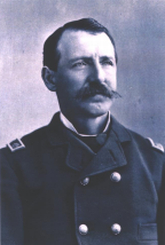
Colonel Albert Jennings Fountain (October 23, 1838 – disappeared February 1, 1896) was an American attorney who served in the Texas Senate and the New Mexico House of Representatives. Following a purge of corruption among cattle rustlers that Fountain investigated and prosecuted, his eight-year-old son Henry and he disappeared near White Sands, New Mexico Territory. Their bloodstained wagon and other evidence of an ambush were recovered, but the bodies were never found. Suspicion centered on two rival landowners, Oliver M. Lee and Albert B. Fall. Lee and two employees were tried for the murder of Henry Fountain, but acquitted after a defense by Fall. No charges were ever filed for the death of Albert Fountain.
Albert Fountain was born on Staten Island, New York, on October 23, 1838, to Solomon Jennings and his wife Catherine de la Fontaine. He went to California as a young man and began calling himself by an Anglicised version of his mother's family name. (Accounts differ as to why he did so.) Fountain studied law in California and was admitted to the bar in 1860. Working as a reporter for The Sacramento Union, he travelled to Nicaragua in 1860 to cover the filibustering expedition of William Walker. Angering Walker by his reports, Fountain was arrested and sentenced to be shot, but he escaped and returned to California.
In August 1861, during the American Civil War, Fountain enlisted in the Company E of the 1st California Infantry Regiment of the Union Army and was elected first sergeant of his company. He took part in the 1862 recapture of the New Mexico Territory as a member of the California Column. In October 1862, he married Mariana Pérez of Mesilla. They became the parents of four sons and two daughters. Later commissioned a second lieutenant, he was discharged on August 31, 1864. Fountain almost immediately joined the New Mexico volunteers because of the ongoing Indian Wars. In June 1865, he was seriously wounded while pursuing hostile Apaches. He spent a night trapped under his dead horse, with a bullet in his thigh, an arrow in his forearm, and another arrow in his shoulder. On his recovery, Fountain was discharged as a brevet captain.
Fountain settled in El Paso, Texas, working for the United States Property Commission, which investigated and disposed of former Confederate property. He was then made the customs collector for the El Paso region. Fountain was next appointed an election judge, and finally became the assessor and collector of internal revenue for the Western District of Texas. In 1870, Fountain became a co-founder of the Church of St. Clement, the first Protestant church in El Paso.
In 1869, Fountain won a seat as a Republican in the Texas Senate, serving in the 12th and 13th Texas Legislatures. He was elected as president pro tempore during the second session of the 12th Legislature and served as lieutenant governor ex officio at the same time, as the office was vacant. Fountain's most notable accomplishment was pushing through the bill that re-established the Texas Rangers, which had been abolished after the Civil War. Fountain's Radical Republican views angered Texas Democrats, and he was challenged to several duels, resulting in his killing os at least one man, Frank Williams.
In 1873, Fountain moved from El Paso to Mesilla with his wife and their five children. There, he again practiced law, using his fluent Spanish to good advantage in jury trials. Fountain was appointed assistant district attorney and also served as probate judge and a deputy court clerk. In 1877, he founded a newspaper, the Mesilla Valley Independent, which was issued in both English and Spanish. He also founded the Mesilla Dramatic Society and the Mesilla Valley Opera House, now the Fountain Theater, both originally operated by his family.
In his law practice in Mesilla, Fountain's most famous client was Billy the Kid. Fountain lost the 1881 case, and Billy the Kid was convicted of murder despite the evidence, though he escaped from jail. In 1888, Fountain was elected to the New Mexico Territorial Legislature, defeating his enemy Albert Bacon Fall. At the time of Fountain's disappearance, he was investigating and prosecuting suspected cattle rustlers, specifically Oliver M. Lee, and he again found himself at odds with Fall, who was Lee's attorney.
On February 1, 1896, Fountain and his eight-year-old son Henry disappeared near White Sands on the way to their home in Mesilla. They were returning from Lincoln, where Fountain had been assisting the prosecution in bringing charges against Lee and William McNew. All that was found at the site of the disappearance were Fountain's buckboard wagon, several empty cartridge cases, his cravat and papers, and two pools of blood. The only sign of Henry was a blood-soaked handkerchief with two powder-blackened coins, the handkerchief still carefully knotted in one corner. Missing were the victims' bodies, a blanket, a quilt, and Fountain's Winchester rifle.
Hub AI
Albert Jennings Fountain AI simulator
(@Albert Jennings Fountain_simulator)
Albert Jennings Fountain
Colonel Albert Jennings Fountain (October 23, 1838 – disappeared February 1, 1896) was an American attorney who served in the Texas Senate and the New Mexico House of Representatives. Following a purge of corruption among cattle rustlers that Fountain investigated and prosecuted, his eight-year-old son Henry and he disappeared near White Sands, New Mexico Territory. Their bloodstained wagon and other evidence of an ambush were recovered, but the bodies were never found. Suspicion centered on two rival landowners, Oliver M. Lee and Albert B. Fall. Lee and two employees were tried for the murder of Henry Fountain, but acquitted after a defense by Fall. No charges were ever filed for the death of Albert Fountain.
Albert Fountain was born on Staten Island, New York, on October 23, 1838, to Solomon Jennings and his wife Catherine de la Fontaine. He went to California as a young man and began calling himself by an Anglicised version of his mother's family name. (Accounts differ as to why he did so.) Fountain studied law in California and was admitted to the bar in 1860. Working as a reporter for The Sacramento Union, he travelled to Nicaragua in 1860 to cover the filibustering expedition of William Walker. Angering Walker by his reports, Fountain was arrested and sentenced to be shot, but he escaped and returned to California.
In August 1861, during the American Civil War, Fountain enlisted in the Company E of the 1st California Infantry Regiment of the Union Army and was elected first sergeant of his company. He took part in the 1862 recapture of the New Mexico Territory as a member of the California Column. In October 1862, he married Mariana Pérez of Mesilla. They became the parents of four sons and two daughters. Later commissioned a second lieutenant, he was discharged on August 31, 1864. Fountain almost immediately joined the New Mexico volunteers because of the ongoing Indian Wars. In June 1865, he was seriously wounded while pursuing hostile Apaches. He spent a night trapped under his dead horse, with a bullet in his thigh, an arrow in his forearm, and another arrow in his shoulder. On his recovery, Fountain was discharged as a brevet captain.
Fountain settled in El Paso, Texas, working for the United States Property Commission, which investigated and disposed of former Confederate property. He was then made the customs collector for the El Paso region. Fountain was next appointed an election judge, and finally became the assessor and collector of internal revenue for the Western District of Texas. In 1870, Fountain became a co-founder of the Church of St. Clement, the first Protestant church in El Paso.
In 1869, Fountain won a seat as a Republican in the Texas Senate, serving in the 12th and 13th Texas Legislatures. He was elected as president pro tempore during the second session of the 12th Legislature and served as lieutenant governor ex officio at the same time, as the office was vacant. Fountain's most notable accomplishment was pushing through the bill that re-established the Texas Rangers, which had been abolished after the Civil War. Fountain's Radical Republican views angered Texas Democrats, and he was challenged to several duels, resulting in his killing os at least one man, Frank Williams.
In 1873, Fountain moved from El Paso to Mesilla with his wife and their five children. There, he again practiced law, using his fluent Spanish to good advantage in jury trials. Fountain was appointed assistant district attorney and also served as probate judge and a deputy court clerk. In 1877, he founded a newspaper, the Mesilla Valley Independent, which was issued in both English and Spanish. He also founded the Mesilla Dramatic Society and the Mesilla Valley Opera House, now the Fountain Theater, both originally operated by his family.
In his law practice in Mesilla, Fountain's most famous client was Billy the Kid. Fountain lost the 1881 case, and Billy the Kid was convicted of murder despite the evidence, though he escaped from jail. In 1888, Fountain was elected to the New Mexico Territorial Legislature, defeating his enemy Albert Bacon Fall. At the time of Fountain's disappearance, he was investigating and prosecuting suspected cattle rustlers, specifically Oliver M. Lee, and he again found himself at odds with Fall, who was Lee's attorney.
On February 1, 1896, Fountain and his eight-year-old son Henry disappeared near White Sands on the way to their home in Mesilla. They were returning from Lincoln, where Fountain had been assisting the prosecution in bringing charges against Lee and William McNew. All that was found at the site of the disappearance were Fountain's buckboard wagon, several empty cartridge cases, his cravat and papers, and two pools of blood. The only sign of Henry was a blood-soaked handkerchief with two powder-blackened coins, the handkerchief still carefully knotted in one corner. Missing were the victims' bodies, a blanket, a quilt, and Fountain's Winchester rifle.
Recent media