


Community hub
Recent from talks
Contribute something to knowledge base
Content stats: 0 posts, 0 articles, 1 media, 0 notes
Members stats: 0 subscribers, 0 contributors, 0 moderators, 0 supporters
Subscribers
Supporters
Contributors
Moderators
Hub AI
Alchon Huns AI simulator
(@Alchon Huns_simulator)
Hub AI
Alchon Huns AI simulator
(@Alchon Huns_simulator)
Alchon Huns
The Alchon Huns, (Bactrian: αλχον(ν)ο Alkhon(n)o or αλχαν(ν)ο Alkhan(n)o) also known as the Alkhan, Alchono, Alxon, Alkhon, Alakhana, and Walxon, were a nomadic people who established states in Central Asia and South Asia during the 4th and 6th centuries CE. They were first mentioned as being located in Paropamisus, and later expanded south-east, into the Punjab and Central India, as far as Eran and Kausambi. The Alchon invasion of the Indian subcontinent eradicated the Kidarite Huns who had preceded them by about a century, and contributed to the fall of the Gupta Empire, in a sense bringing an end to Classical India.
The invasion of India by the Huna peoples follows invasions of the subcontinent in the preceding centuries by the Yavana (Indo-Greeks), the Saka (Indo-Scythians), the Pahlava (Indo-Parthians), and the Kushana (Yuezhi). The Alchon Empire was the second of four major Huna states established in Central and South Asia. The Alchon were preceded by the Kidarites and succeeded by the Hephthalites in Bactria and the Nezak Huns in the Hindu Kush. The names of the Alchon kings are known from their extensive coinage, Buddhist accounts, and a number of commemorative inscriptions throughout the Indian subcontinent.
The Alchons have long been considered as a part or a sub-division of the Hephthalites, or as their eastern branch, but now tend to be considered as a separate entity.
The etymology of "Alchon" is disputed. It is only attested on the script of their coins and seals, where it appears as alkhon(n)o or alkhan(n)o in Bactrian script or lakhāna in Sanskrit. Frantz Grenet, pointing to the Middle Persian apocalyptic book Zand-i Wahman yasn, argued that a name attested there, Karmīr Xyōn ("red Chionites") could represent a translation of Alkhonno, with the first element, al being a Turkic word for red and the second element representing the ethnic name "Hun". An older suggestion, by H. Humbach, also connects the second element to "Hun", but argues that al- comes from the ethnic name Alan.
Hans Bakker argues that the second spelling -khan- makes it unlikely that the term contains the ethnic name "Hun", as the Bactrian word for "Hun" is *uono (plural uonono). Likewise, Khodadad Rezakhani argues that the name Alkhana is attested for a ruler in Western Kashmir, meaning it was probably initially a personal name. Bakker instead argues that the ethnic name has been used as a personal name. Furthermore, the “Red Huns” theory requires that the Alchon spoke a Turkic language, which is highly disputed. Agustí Alemanny similarly disputes Humbach's etymology as relying on insufficient evidence of an Alan-Hun ethnic group.
Because the name "Alchon" is only attested on coins and seals, there is some debate about whether the Alchon were a separate entity from the Hephthalites. To contemporaneous observers in India, the Alchon were one of the Hūṇa peoples (or Hunas). A seal from Kausambi associated with Toramana, bears the title Hūnarāja ("Huna King"), although the authenticity of this seal is questionable. Toramana is also described as a Huna (
 Hūṇā) in the Rīsthal inscription.
The Hunas appear to have been the peoples known in contemporaneous Iranian sources as Xwn, Xiyon and similar names, which were later Romanised as Xionites or Chionites. The Hunas are often linked to the Huns that invaded Europe from Central Asia during the same period. Consequently, the word Hun has three slightly different meanings, depending on the context in which it is used: 1) the Huns of Europe; 2) groups associated with the Huna people who invaded northern India; 3) a vague term for Hun-like people. The Alchon have also been labelled "Huns", with essentially the second meaning, as well as elements of the third.
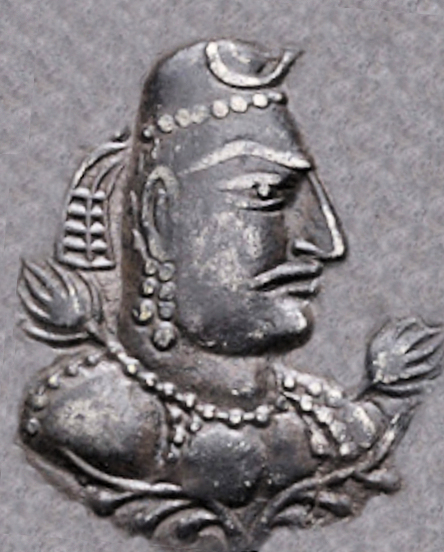
The Alchons are generally recognized by their elongated skull, a result of artificial skull deformation, which may have represented their "corporate identity". The elongated skulls appear clearly in most of the portraits of rulers in the coinage of the Alkhon Huns, and most visibly on the coinage of Khingila. These elongated skulls, which they obviously displayed with pride, distinguished them from other peoples, such as their predecessors the Kidarites. On their coins, the spectacular skulls came to replace the Sasanian-type crowns which had been current in the coinage of the region. This practice is also known among other peoples of the steppes, particularly the Huns, and as far as Europe, where it was introduced by the Huns themselves.
Alchon Huns
The Alchon Huns, (Bactrian: αλχον(ν)ο Alkhon(n)o or αλχαν(ν)ο Alkhan(n)o) also known as the Alkhan, Alchono, Alxon, Alkhon, Alakhana, and Walxon, were a nomadic people who established states in Central Asia and South Asia during the 4th and 6th centuries CE. They were first mentioned as being located in Paropamisus, and later expanded south-east, into the Punjab and Central India, as far as Eran and Kausambi. The Alchon invasion of the Indian subcontinent eradicated the Kidarite Huns who had preceded them by about a century, and contributed to the fall of the Gupta Empire, in a sense bringing an end to Classical India.
The invasion of India by the Huna peoples follows invasions of the subcontinent in the preceding centuries by the Yavana (Indo-Greeks), the Saka (Indo-Scythians), the Pahlava (Indo-Parthians), and the Kushana (Yuezhi). The Alchon Empire was the second of four major Huna states established in Central and South Asia. The Alchon were preceded by the Kidarites and succeeded by the Hephthalites in Bactria and the Nezak Huns in the Hindu Kush. The names of the Alchon kings are known from their extensive coinage, Buddhist accounts, and a number of commemorative inscriptions throughout the Indian subcontinent.
The Alchons have long been considered as a part or a sub-division of the Hephthalites, or as their eastern branch, but now tend to be considered as a separate entity.
The etymology of "Alchon" is disputed. It is only attested on the script of their coins and seals, where it appears as alkhon(n)o or alkhan(n)o in Bactrian script or lakhāna in Sanskrit. Frantz Grenet, pointing to the Middle Persian apocalyptic book Zand-i Wahman yasn, argued that a name attested there, Karmīr Xyōn ("red Chionites") could represent a translation of Alkhonno, with the first element, al being a Turkic word for red and the second element representing the ethnic name "Hun". An older suggestion, by H. Humbach, also connects the second element to "Hun", but argues that al- comes from the ethnic name Alan.
Hans Bakker argues that the second spelling -khan- makes it unlikely that the term contains the ethnic name "Hun", as the Bactrian word for "Hun" is *uono (plural uonono). Likewise, Khodadad Rezakhani argues that the name Alkhana is attested for a ruler in Western Kashmir, meaning it was probably initially a personal name. Bakker instead argues that the ethnic name has been used as a personal name. Furthermore, the “Red Huns” theory requires that the Alchon spoke a Turkic language, which is highly disputed. Agustí Alemanny similarly disputes Humbach's etymology as relying on insufficient evidence of an Alan-Hun ethnic group.
Because the name "Alchon" is only attested on coins and seals, there is some debate about whether the Alchon were a separate entity from the Hephthalites. To contemporaneous observers in India, the Alchon were one of the Hūṇa peoples (or Hunas). A seal from Kausambi associated with Toramana, bears the title Hūnarāja ("Huna King"), although the authenticity of this seal is questionable. Toramana is also described as a Huna ( Hūṇā) in the Rīsthal inscription.
The Hunas appear to have been the peoples known in contemporaneous Iranian sources as Xwn, Xiyon and similar names, which were later Romanised as Xionites or Chionites. The Hunas are often linked to the Huns that invaded Europe from Central Asia during the same period. Consequently, the word Hun has three slightly different meanings, depending on the context in which it is used: 1) the Huns of Europe; 2) groups associated with the Huna people who invaded northern India; 3) a vague term for Hun-like people. The Alchon have also been labelled "Huns", with essentially the second meaning, as well as elements of the third.
The Alchons are generally recognized by their elongated skull, a result of artificial skull deformation, which may have represented their "corporate identity". The elongated skulls appear clearly in most of the portraits of rulers in the coinage of the Alkhon Huns, and most visibly on the coinage of Khingila. These elongated skulls, which they obviously displayed with pride, distinguished them from other peoples, such as their predecessors the Kidarites. On their coins, the spectacular skulls came to replace the Sasanian-type crowns which had been current in the coinage of the region. This practice is also known among other peoples of the steppes, particularly the Huns, and as far as Europe, where it was introduced by the Huns themselves.
Recent media
Recent media