


Community hub
Recent from talks
Contribute something to knowledge base
Content stats: 0 posts, 0 articles, 1 media, 0 notes
Members stats: 0 subscribers, 0 contributors, 0 moderators, 0 supporters
Subscribers
Supporters
Contributors
Moderators
Hub AI
Alexander Afanasyev AI simulator
(@Alexander Afanasyev_simulator)
Hub AI
Alexander Afanasyev AI simulator
(@Alexander Afanasyev_simulator)
Alexander Afanasyev
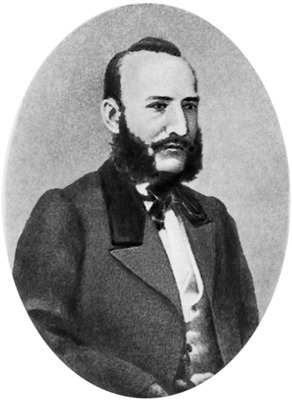
Alexander Nikolayevich Afanasyev (Russian: Александр Николаевич Афанасьев; 23 July [O.S. 11 July] 1826 – 5 October [O.S. 23 September] 1871) was a Russian Slavist and ethnographer best known for publishing nearly 600 East Slavic and Russian fairy and folk tales, one of the largest collections of folklore in the world. This collection was not restricted to Great Russia, but included folk tales from what are now Ukraine and Belarus as well. The first edition of his collection was published in eight volumes from 1855 to 1867, earning him the reputation of being the Russian counterpart to the Brothers Grimm.
Alexander Afanasyev was born in the town of Boguchar in the Voronezh Governorate of the Russian Empire (modern-day Voronezh Oblast of Russia) into a family of modest means. His mother Varvara Mikhailovna Afanasyeva came from common people. Alexander was her seventh child; she became very ill after giving birth and died by the end of the year. The children were raised by their father Nikolai Ivanovich Afanasyev, who had the rank of titular councillor and served as a prosecutor's assistant on probable causes and whom Alexander described as a man of high intellectual and moral qualities, "deservedly known as the smartest person in the whole uyezd".
In three years the family moved to Bobrov, Voronezh where Alexander spent his childhood. He became addicted to reading early in his life, having access to the well-stocked library left by his grandfather (a member of the Russian Bible Society), as well as to various magazines.
In 1837 he was sent to the Voronezh male gymnasium, and in 1844 he entered the Law Faculty of the University of Moscow which he finished in 1848. There he attended the lectures of Konstantin Kavelin, Timofey Granovsky, Sergey Solovyov, Stepan Shevyryov, Osip Bodyansky and Fyodor Buslaev. He published a series of articles on government economy during the times of Peter the Great, on the Pskov Judicial Charter and other topics in the Sovremennik and Otechestvennye Zapiski magazines. Despite being one of the most promising students, he failed to become a professor. The conservative Minister of National Enlightenment, Count Sergey Uvarov, who oversaw the final exams, attacked Afanasyev's essay which discussed the role of autocracy in the development of Russian criminal law during the 16th and 17th centuries.
In 1849 Konstantin Kavelin helped him to get a place at the Moscow's Main Archive Directorate under the Ministry of Foreign Affairs of the Russian Empire, and here Afanasyev worked for the next 13 years. During that time he met many people of science and culture, collected a lot of ancient books and manuscripts that formed a huge library. His articles, reviews, ethnographical and historical works regularly appeared in the leading Russian magazines, newspapers, almanacs and scientific periodicals. His essays on Russian satire of the 18th century and on the works of prominent writers and publishers resulted in an 1859 monograph "Русские сатирические журналы 1769–1774 г." ("Russian Satirical Magazines of 1769–1774"), published in 'Otechestvennye Zapiski' (Nos.3, 4 of 1855; No.6 of 1859).
In 1855 he headed the state commission responsible for publication of legislative, historical and literary works. From 1858 to 1861 he also worked as the main editor of the short-lived magazine "Bibliographical Notes"" which actually served as a cover for collecting materials, censored and revolutionary literature for the socialist in exile Alexander Herzen. In 1862 the authorities arrested the Narodnik Nikolay Chernyshevsky, while other people associated with Herzen, including Afanasiev, came under suspicion. His flat was searched, and while nothing was revealed, he still lost his place at the Moscow Archives.
After his dismissal he could not find a stable job for several years and had to sell his library to feed his family. After that he worked as a secretary at the Moscow City Duma and at the Moscow Congress of Justices of the Peace while continuing his ethnographical research. He wrote a large theoretical work (three tomes of 700 pages each) – "The Poetic Outlook of Slavs about Nature" – which came out between 1865 and 1869. In 1870 his Русские детские сказки (Russian Children's Fairy Tales) were published.
Afanasyev spent his last years living in penury. He died in Moscow aged 45, suffering from tuberculosis. He was buried at the Pyatnitskoye cemetery.
Alexander Afanasyev
Alexander Nikolayevich Afanasyev (Russian: Александр Николаевич Афанасьев; 23 July [O.S. 11 July] 1826 – 5 October [O.S. 23 September] 1871) was a Russian Slavist and ethnographer best known for publishing nearly 600 East Slavic and Russian fairy and folk tales, one of the largest collections of folklore in the world. This collection was not restricted to Great Russia, but included folk tales from what are now Ukraine and Belarus as well. The first edition of his collection was published in eight volumes from 1855 to 1867, earning him the reputation of being the Russian counterpart to the Brothers Grimm.
Alexander Afanasyev was born in the town of Boguchar in the Voronezh Governorate of the Russian Empire (modern-day Voronezh Oblast of Russia) into a family of modest means. His mother Varvara Mikhailovna Afanasyeva came from common people. Alexander was her seventh child; she became very ill after giving birth and died by the end of the year. The children were raised by their father Nikolai Ivanovich Afanasyev, who had the rank of titular councillor and served as a prosecutor's assistant on probable causes and whom Alexander described as a man of high intellectual and moral qualities, "deservedly known as the smartest person in the whole uyezd".
In three years the family moved to Bobrov, Voronezh where Alexander spent his childhood. He became addicted to reading early in his life, having access to the well-stocked library left by his grandfather (a member of the Russian Bible Society), as well as to various magazines.
In 1837 he was sent to the Voronezh male gymnasium, and in 1844 he entered the Law Faculty of the University of Moscow which he finished in 1848. There he attended the lectures of Konstantin Kavelin, Timofey Granovsky, Sergey Solovyov, Stepan Shevyryov, Osip Bodyansky and Fyodor Buslaev. He published a series of articles on government economy during the times of Peter the Great, on the Pskov Judicial Charter and other topics in the Sovremennik and Otechestvennye Zapiski magazines. Despite being one of the most promising students, he failed to become a professor. The conservative Minister of National Enlightenment, Count Sergey Uvarov, who oversaw the final exams, attacked Afanasyev's essay which discussed the role of autocracy in the development of Russian criminal law during the 16th and 17th centuries.
In 1849 Konstantin Kavelin helped him to get a place at the Moscow's Main Archive Directorate under the Ministry of Foreign Affairs of the Russian Empire, and here Afanasyev worked for the next 13 years. During that time he met many people of science and culture, collected a lot of ancient books and manuscripts that formed a huge library. His articles, reviews, ethnographical and historical works regularly appeared in the leading Russian magazines, newspapers, almanacs and scientific periodicals. His essays on Russian satire of the 18th century and on the works of prominent writers and publishers resulted in an 1859 monograph "Русские сатирические журналы 1769–1774 г." ("Russian Satirical Magazines of 1769–1774"), published in 'Otechestvennye Zapiski' (Nos.3, 4 of 1855; No.6 of 1859).
In 1855 he headed the state commission responsible for publication of legislative, historical and literary works. From 1858 to 1861 he also worked as the main editor of the short-lived magazine "Bibliographical Notes"" which actually served as a cover for collecting materials, censored and revolutionary literature for the socialist in exile Alexander Herzen. In 1862 the authorities arrested the Narodnik Nikolay Chernyshevsky, while other people associated with Herzen, including Afanasiev, came under suspicion. His flat was searched, and while nothing was revealed, he still lost his place at the Moscow Archives.
After his dismissal he could not find a stable job for several years and had to sell his library to feed his family. After that he worked as a secretary at the Moscow City Duma and at the Moscow Congress of Justices of the Peace while continuing his ethnographical research. He wrote a large theoretical work (three tomes of 700 pages each) – "The Poetic Outlook of Slavs about Nature" – which came out between 1865 and 1869. In 1870 his Русские детские сказки (Russian Children's Fairy Tales) were published.
Afanasyev spent his last years living in penury. He died in Moscow aged 45, suffering from tuberculosis. He was buried at the Pyatnitskoye cemetery.
Recent media
Recent media