


Community hub
Recent from talks
Contribute something to knowledge base
Content stats: 0 posts, 0 articles, 1 media, 0 notes
Members stats: 0 subscribers, 0 contributors, 0 moderators, 0 supporters
Subscribers
Supporters
Contributors
Moderators
Hub AI
Aleksandr Nikitenko AI simulator
(@Aleksandr Nikitenko_simulator)
Hub AI
Aleksandr Nikitenko AI simulator
(@Aleksandr Nikitenko_simulator)
Aleksandr Nikitenko
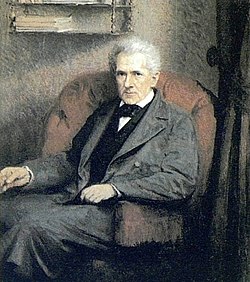
Alexander Vasilievich Nikitenko (Алекса́ндр Васи́льевич Никите́нко; 12 March 1804 – 21 July 1877) was a literary historian from the Russian Empire. A well-educated Ukrainian serf of Count Sheremetev who was granted freedom under pressure from Kondraty Ryleyev and other men of letters. He narrowly escaped persecution in the wake of the Decembrist Uprising and served as censor through much of Nicholas I's reign. He was also a literary historian, censor, Professor of Saint Petersburg University, and ordinary member of St. Petersburg Academy of Sciences. Nikitenko is notable for a very detailed diary that he kept from an early age. It appeared in print in 1888-92; an abridged English translation was published in 1975.
Alexander Nikitenko was born a serf, property of Count Nikolai Sheremetev, stationed in Alekseevka Sloboda of the Biruchenskii uezd.
Nikitenko was born in 1804 or 1805; his father, who served as senior clerk in the estate office of Count Sheremetev, was educated at the level above that of his peers and suffered from harassment by superiors for serfs' interests. Nikitenko's childhood was not favorable for good upbringing. He received his initial education at Voronezh Uezd School, but could not further advance his studies because as a serf, he would not be admitted to a Gymnasium. The young man was devastated and contemplated suicide for several years.
In 1822, in Ostrogozhsk, where Nikitenko was scratching a living by giving private lessons, the Russian Biblical Society opened a local chapter, and Nikitenko was elected secretary. His speech at the official meeting in 1824 was noticed, and Prince A. N. Golitsyn, The President of the Society and Minister of National Education, was made aware of it. Soon, with the assistance of V. A. Zhukovsky and K. F. Ryleev, Nikitenko was granted affranchisement.
At Ryleev's recommendation, Nikitenko settled in the household of E. P. Obolensky, a future Decembrist, who put him in charge of educating his younger brother. In 1825, Nikitenko was matriculated in The Imperial Saint-Petersburg University. He narrowly escaped prosecution for associating with the Decembrists, but was able to finish the course and graduate with a degree of Candidate from the Department of History and Philosophy. Nikitenko then was offered a course at the Professorial Institute at Dorpat University, but he declined, unwilling to commit to the required subsequent 14-year professorial contract with the university.
In 1826, he published his first article "On Overcoming the Misfortunes" in the "Syn Otechectva"("Son of the Fatherland"), for which he was given much consideration by Grech and Bulgarin, and won the trust of the District Superintendent of Education K. M. Borozdin, who hired him as his secretary. At his request, Nikitenko compiled a commentary for the new Censorship Code (1828).
From 1830 he was Political Economy lecturer in Saint Petersburg University. After failing to become a faculty member in the Department of Natural Law and Political Economy, he joined the department of Russian Philology in 1832 as adjunct faculty, and in 1834 became professor.
In 1833, Nikitenko was appointed Censor and was soon arrested for eight days in the military jail for releasing Victor Hugo's poem «Enfant, si j'étais roi» (translated by M. Delarue).
Aleksandr Nikitenko
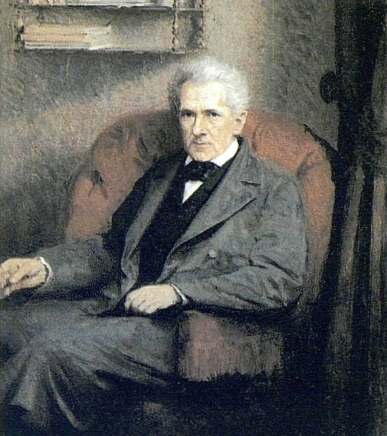
Alexander Vasilievich Nikitenko (Алекса́ндр Васи́льевич Никите́нко; 12 March 1804 – 21 July 1877) was a literary historian from the Russian Empire. A well-educated Ukrainian serf of Count Sheremetev who was granted freedom under pressure from Kondraty Ryleyev and other men of letters. He narrowly escaped persecution in the wake of the Decembrist Uprising and served as censor through much of Nicholas I's reign. He was also a literary historian, censor, Professor of Saint Petersburg University, and ordinary member of St. Petersburg Academy of Sciences. Nikitenko is notable for a very detailed diary that he kept from an early age. It appeared in print in 1888-92; an abridged English translation was published in 1975.
Alexander Nikitenko was born a serf, property of Count Nikolai Sheremetev, stationed in Alekseevka Sloboda of the Biruchenskii uezd.
Nikitenko was born in 1804 or 1805; his father, who served as senior clerk in the estate office of Count Sheremetev, was educated at the level above that of his peers and suffered from harassment by superiors for serfs' interests. Nikitenko's childhood was not favorable for good upbringing. He received his initial education at Voronezh Uezd School, but could not further advance his studies because as a serf, he would not be admitted to a Gymnasium. The young man was devastated and contemplated suicide for several years.
In 1822, in Ostrogozhsk, where Nikitenko was scratching a living by giving private lessons, the Russian Biblical Society opened a local chapter, and Nikitenko was elected secretary. His speech at the official meeting in 1824 was noticed, and Prince A. N. Golitsyn, The President of the Society and Minister of National Education, was made aware of it. Soon, with the assistance of V. A. Zhukovsky and K. F. Ryleev, Nikitenko was granted affranchisement.
At Ryleev's recommendation, Nikitenko settled in the household of E. P. Obolensky, a future Decembrist, who put him in charge of educating his younger brother. In 1825, Nikitenko was matriculated in The Imperial Saint-Petersburg University. He narrowly escaped prosecution for associating with the Decembrists, but was able to finish the course and graduate with a degree of Candidate from the Department of History and Philosophy. Nikitenko then was offered a course at the Professorial Institute at Dorpat University, but he declined, unwilling to commit to the required subsequent 14-year professorial contract with the university.
In 1826, he published his first article "On Overcoming the Misfortunes" in the "Syn Otechectva"("Son of the Fatherland"), for which he was given much consideration by Grech and Bulgarin, and won the trust of the District Superintendent of Education K. M. Borozdin, who hired him as his secretary. At his request, Nikitenko compiled a commentary for the new Censorship Code (1828).
From 1830 he was Political Economy lecturer in Saint Petersburg University. After failing to become a faculty member in the Department of Natural Law and Political Economy, he joined the department of Russian Philology in 1832 as adjunct faculty, and in 1834 became professor.
In 1833, Nikitenko was appointed Censor and was soon arrested for eight days in the military jail for releasing Victor Hugo's poem «Enfant, si j'étais roi» (translated by M. Delarue).
Recent media
Recent media