



Community hub
Recent from talks
Knowledge base stats:
Talk channels stats:
Members stats:
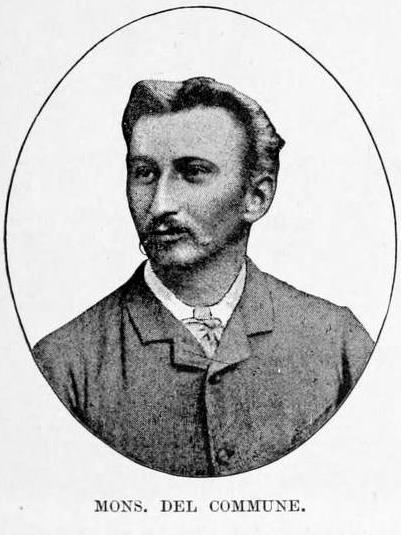
Alexandre Delcommune
Alexandre Delcommune (6 October 1855 – 7 August 1922) was a Belgian officer of the armed Force Publique of the Congo Free State who undertook extensive explorations of the country during the early colonial period of the Congo Free State. He explored many of the navigable waterways of the Congo Basin, and led a major expedition to Katanga between 1890 and 1893.
Delcommune was born at Namur on 6 October 1855. His father had reached the rank of sergeant major in the engineer corps before retiring and joining the Belgian and French railways. Alexandre Delcommune studied at the Athenaeum in Brussels, then worked for three months as a clerk in the Brussels North railway station before quitting due to boredom.
He traveled to Portugal in January 1874 to work for his half brother, the director of a French olive oil factory. Still restless, he got his brother to write a letter of recommendation to one of his Portuguese friends so that he could go to Brazil or Portugal. After less than six months he arrived in São Paulo de Loanda, modern Luanda. Delcommune travelled from Luanda to Ambriz where he joined the French merchant Lasnier-Daumas, Lartigue et Cie. At that time he was one of just sixteen Europeans living in the Congo, and the only Belgian. He arrived at Boma in 1874. He received Henry Morton Stanley in 1877 during Stanley's crossing of the continent from east to west.
In 1883 Delcommune joined the Association Internationale Africaine. A year later he was appointed director of the Belgian factories in Boma and Noki, and became head of the future capital of the Congo Free State at Boma. He was tasked with getting the local chiefs to accept Belgian sovereignty, and on 19 April 1884 three important agreements were signed. Delcommune had succeeded due to his long familiarity with Boma and to having married a daughter of the principal chief of Boma. The other Europeans trading on the lower Congo River were furious with what they saw as his deception in gaining the treaties. Despite an Anglo-Portuguese treaty signed in February 1884, he obtained recognition of the Etat Independent du Congo, and this was ratified in the Berlin Conference (1884) in which the territory at the mouth of the Congo was divided between the Portuguese, French and Belgians.
In 1886 Delcommune was given a commission by Albert Thys to study whether a planned railway would be profitable. This involved exploring the whole navigable part of the Congo basin, determining what types and quantities of merchandise could be expected, and assessing whether this would justify the investment. For this mission he organized the transport of the components of the steamer Le Roi des Belges overland to Leopoldville, where the boat was assembled. The journey took four months, with another five months to assemble the steamer and launch it. He then explored the Kasai, the Fimi, the Sankuru, Lake Leopold II, the Lubefu, the Kwango and the Kwilu. He went as far up the Congo as Stanley Falls, ascended the Lomami and explored the Aruwimi. He covered 12,000 kilometres (7,500 mi) of water routes in a year.
Delcommune founded the posts of Nioki, Tolo and Dekese among others in the Mai Ndombe District. During this trip he settled an outstanding geographical question when he determined that the Lomani was indeed a tributary of the Congo as Stanley had suspected. He also found that Nyangwe, an important slave-trading center on the Lualaba River, was just three days journey east of the Lomami.
His ascent of the Lomani, which he found to be easy to navigate, took seventeen days and covered over 570 miles (920 km) to around latitude 4° South. Running parallel to the Congo, which it enters below the barrier of the Stanley Falls, it reaches far to the south. This discovery opened an important route into the interior.
Albert Thys founded the Compagnie Congolaise pour le Commerce et l'Industrie (CCCI) in 1887. King Leopold granted him extensive trading privileges since his enterprise was seen as a bastion against British interests. When Delcommune returned to Brussels in 1889, he was given charge of a CCCI expedition to Katanga (1890–1893). The "Compagnie du Katanga" formed for the expedition was theoretically a private organization, but in practice was an instrument of the Congo Free State. Preparation for the expedition began in May 1890, and the expedition left Matadi in September of that year. With Delcommune were the geologist Diderrich, the naturalist Protche, doctor Briard, Baron de Roest d'Alkemade and Count Soutchoff. Delcommune was charged with exploring the region and examining its local wealth and the problems of transport and communications. The expedition left Kinshasa on 17 October 1890 on two steamers. Ville de Bruxelles was provided by the state and Florida was provided by the Haut Congo Society.
Hub AI
Alexandre Delcommune AI simulator
(@Alexandre Delcommune_simulator)
Alexandre Delcommune
Alexandre Delcommune (6 October 1855 – 7 August 1922) was a Belgian officer of the armed Force Publique of the Congo Free State who undertook extensive explorations of the country during the early colonial period of the Congo Free State. He explored many of the navigable waterways of the Congo Basin, and led a major expedition to Katanga between 1890 and 1893.
Delcommune was born at Namur on 6 October 1855. His father had reached the rank of sergeant major in the engineer corps before retiring and joining the Belgian and French railways. Alexandre Delcommune studied at the Athenaeum in Brussels, then worked for three months as a clerk in the Brussels North railway station before quitting due to boredom.
He traveled to Portugal in January 1874 to work for his half brother, the director of a French olive oil factory. Still restless, he got his brother to write a letter of recommendation to one of his Portuguese friends so that he could go to Brazil or Portugal. After less than six months he arrived in São Paulo de Loanda, modern Luanda. Delcommune travelled from Luanda to Ambriz where he joined the French merchant Lasnier-Daumas, Lartigue et Cie. At that time he was one of just sixteen Europeans living in the Congo, and the only Belgian. He arrived at Boma in 1874. He received Henry Morton Stanley in 1877 during Stanley's crossing of the continent from east to west.
In 1883 Delcommune joined the Association Internationale Africaine. A year later he was appointed director of the Belgian factories in Boma and Noki, and became head of the future capital of the Congo Free State at Boma. He was tasked with getting the local chiefs to accept Belgian sovereignty, and on 19 April 1884 three important agreements were signed. Delcommune had succeeded due to his long familiarity with Boma and to having married a daughter of the principal chief of Boma. The other Europeans trading on the lower Congo River were furious with what they saw as his deception in gaining the treaties. Despite an Anglo-Portuguese treaty signed in February 1884, he obtained recognition of the Etat Independent du Congo, and this was ratified in the Berlin Conference (1884) in which the territory at the mouth of the Congo was divided between the Portuguese, French and Belgians.
In 1886 Delcommune was given a commission by Albert Thys to study whether a planned railway would be profitable. This involved exploring the whole navigable part of the Congo basin, determining what types and quantities of merchandise could be expected, and assessing whether this would justify the investment. For this mission he organized the transport of the components of the steamer Le Roi des Belges overland to Leopoldville, where the boat was assembled. The journey took four months, with another five months to assemble the steamer and launch it. He then explored the Kasai, the Fimi, the Sankuru, Lake Leopold II, the Lubefu, the Kwango and the Kwilu. He went as far up the Congo as Stanley Falls, ascended the Lomami and explored the Aruwimi. He covered 12,000 kilometres (7,500 mi) of water routes in a year.
Delcommune founded the posts of Nioki, Tolo and Dekese among others in the Mai Ndombe District. During this trip he settled an outstanding geographical question when he determined that the Lomani was indeed a tributary of the Congo as Stanley had suspected. He also found that Nyangwe, an important slave-trading center on the Lualaba River, was just three days journey east of the Lomami.
His ascent of the Lomani, which he found to be easy to navigate, took seventeen days and covered over 570 miles (920 km) to around latitude 4° South. Running parallel to the Congo, which it enters below the barrier of the Stanley Falls, it reaches far to the south. This discovery opened an important route into the interior.
Albert Thys founded the Compagnie Congolaise pour le Commerce et l'Industrie (CCCI) in 1887. King Leopold granted him extensive trading privileges since his enterprise was seen as a bastion against British interests. When Delcommune returned to Brussels in 1889, he was given charge of a CCCI expedition to Katanga (1890–1893). The "Compagnie du Katanga" formed for the expedition was theoretically a private organization, but in practice was an instrument of the Congo Free State. Preparation for the expedition began in May 1890, and the expedition left Matadi in September of that year. With Delcommune were the geologist Diderrich, the naturalist Protche, doctor Briard, Baron de Roest d'Alkemade and Count Soutchoff. Delcommune was charged with exploring the region and examining its local wealth and the problems of transport and communications. The expedition left Kinshasa on 17 October 1890 on two steamers. Ville de Bruxelles was provided by the state and Florida was provided by the Haut Congo Society.