
Recent from talks
Force Publique
Knowledge base stats:
Talk channels stats:
Members stats:
Force Publique
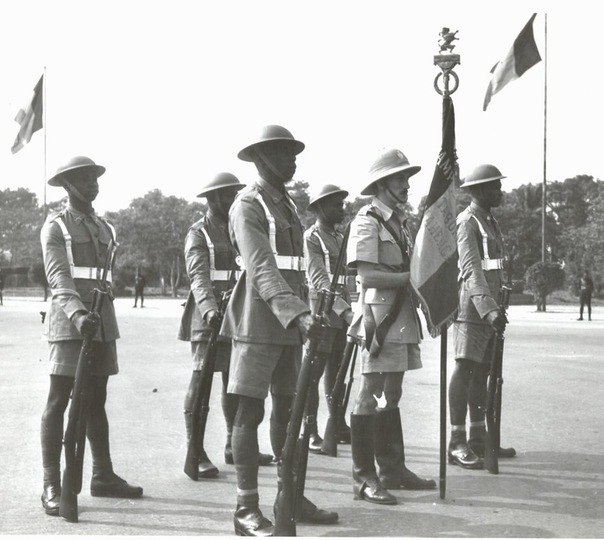
The Force Publique (French: [fɔʁs pyblik], "Public Force"; Dutch: Openbare Weermacht) was the military of the Congo Free State and the Belgian Congo from 1885 to 1960. It was established after Belgian Army officers travelled to the Free State to found an armed force in the colony on Leopold II of Belgium's orders. The Force Publique was heavily involved in atrocities in the Congo Free State, and also saw action in the Congo Arab war, World War I and World War II. It was renamed to the Congolese National Army in July 1960 after Congo gained independence from Belgian colonial rule.
The Force Publique was initially conceived in 1885 when Leopold II of Belgium, who established the Congo Free State as his private colony, ordered the Belgian Secretary of the Interior to create a military for the Free State. Soon afterwards, in early 1886, Captain Léon Roger (of the Belgian Army's Regiment of Carabiniers) was sent to the Congo with orders to establish the force. A few months later, on 17 August, he was promoted to "Commandant of the Force Publique". A number of other Belgian officers and non-commissioned officers were also dispatched to the territory as the nucleus of the officer corps. The officers of the Force Publique were entirely European. They comprised a mixture of Belgian regular soldiers and mercenaries from other countries who were drawn by the prospect of wealth or simply attracted to the adventure of service in Africa.
To command his Force Publique, Leopold II was able to rely on a mixture of volunteers (regular officers detached from the Belgian Army), mercenaries and former officers from the armies of other European nations, especially those of Scandinavia, Italy and Switzerland. To these men, service in the Congo Free State offered military experience, adventure and—as they saw it—an opportunity to participate in a humanitarian endeavour. From 1885 to 1908 the officer corps consisted of hundreds of Belgians and dozens of Scandinavians, with smaller numbers recruited from other nations.
Serving under these European officers was an ethnically-mixed African soldiery, who eventually became comparable to the askaris fielded by other European colonial powers. Many were recruited or conscripted from “warrior tribes” in the Upper Congo, others were mercenaries drawn from Zanzibar and West Africa (Nigerian Hausas). The role required of the Force Publique was that of both defending Free State territory and of internal pacification. In the 1890s, the Force Publique defeated the African and Arab slavers in the course of the Congo Arab war (1892–1894), which resulted in tens of thousands of casualties. In 1896, an expedition of several hundred Force Publique soldiers entered the territory of the Kingdom of Rwanda in an attempt to claim the area for the Congo Free State, setting up a camp at Shangi. This operation culminated in the Battle of Shangi, with the Force Publique winning a major victory over the Rwandan royal army. Regardless, the Force Publique subsequently withdrew due to internal problems as well as diplomatic pressure by the German Empire.
As time went on, the Force Publique began to increasingly recruit and to rely on Belgian officers and native Congolese soldiers, so that the white and black foreign mercenaries had been mostly phased out by 1908.
Under Leopold II the Force Publique was described as an "exceptionally brutal army". One major purpose of the Force was to enforce the rubber quotas and other forms of forced labour. Armed with modern weapons and the chicote—a bull whip made of hippopotamus hide—soldiers of the FP often took and mistreated hostages. Reports from foreign missionaries and consular officials detail a number of instances where Congolese men and women were flogged or raped by soldiers of the Force Publique, unrestrained by their officers and NCOs. They burned villages they viewed as recalcitrant. There is evidence, including photographs, that FP soldiers cut off human hands, either as trophies, or to show that bullets had not been wasted, or (by cutting off the limbs of children) to punish parents viewed as not working hard enough in the rubber plantations.
During the Free State period, the Force Publique suffered from institutional problems. During the early years of the force, mutinies of black soldiers occurred several times. By the early 1890s, much of the eastern portion of the Free State was under the control of Arab ivory and slave traders (though the Government was able to re-establish control over the east by the mid-1890s). Organizational problems were also quite prevalent during the Free State era. With many Force Publique detachments being stationed in remote areas of the territory, some officers took to using soldiers under their control to further private economic agendas rather than focusing on military concerns. By the end of 1891, the force had 60 officers, 60 non-commissioned officers, and 3,500 black soldiers. Friendly tribes and militias were often used to help exert control over the outermost parts of the Free State. By 1900, the Force Publique numbered 19,000 men.
Following the takeover of the Free State by the Belgian government in 1908, the new authorities reorganised the Force Publique. This process was rather slow, however, and was only completed during the First World War. Though the new Belgian administration was "more enlightened" than its predecessor, it still tried to keep the cost of the colonial army low. As result, the proportion of commissioned Belgian officers to askaris (about one to a hundred) was very low by the standards of most colonial armies of this period. The weaponry of the Force Publique also remained mostly outdated due to the tight budgetary constraints on the colonial administration. Most askaris were armed with single shot 11 mm Albini-Braendlin rifles, though the white cadres and units in Katanga were given better Mauser Model 1889 rifles. Other weapons included Maxim machine guns, smaller numbers of Madsen machine guns, Nordenfelt 4.7 cm and Krupp 7.5 cm cannons.
Hub AI
Force Publique AI simulator
(@Force Publique_simulator)
Force Publique
The Force Publique (French: [fɔʁs pyblik], "Public Force"; Dutch: Openbare Weermacht) was the military of the Congo Free State and the Belgian Congo from 1885 to 1960. It was established after Belgian Army officers travelled to the Free State to found an armed force in the colony on Leopold II of Belgium's orders. The Force Publique was heavily involved in atrocities in the Congo Free State, and also saw action in the Congo Arab war, World War I and World War II. It was renamed to the Congolese National Army in July 1960 after Congo gained independence from Belgian colonial rule.
The Force Publique was initially conceived in 1885 when Leopold II of Belgium, who established the Congo Free State as his private colony, ordered the Belgian Secretary of the Interior to create a military for the Free State. Soon afterwards, in early 1886, Captain Léon Roger (of the Belgian Army's Regiment of Carabiniers) was sent to the Congo with orders to establish the force. A few months later, on 17 August, he was promoted to "Commandant of the Force Publique". A number of other Belgian officers and non-commissioned officers were also dispatched to the territory as the nucleus of the officer corps. The officers of the Force Publique were entirely European. They comprised a mixture of Belgian regular soldiers and mercenaries from other countries who were drawn by the prospect of wealth or simply attracted to the adventure of service in Africa.
To command his Force Publique, Leopold II was able to rely on a mixture of volunteers (regular officers detached from the Belgian Army), mercenaries and former officers from the armies of other European nations, especially those of Scandinavia, Italy and Switzerland. To these men, service in the Congo Free State offered military experience, adventure and—as they saw it—an opportunity to participate in a humanitarian endeavour. From 1885 to 1908 the officer corps consisted of hundreds of Belgians and dozens of Scandinavians, with smaller numbers recruited from other nations.
Serving under these European officers was an ethnically-mixed African soldiery, who eventually became comparable to the askaris fielded by other European colonial powers. Many were recruited or conscripted from “warrior tribes” in the Upper Congo, others were mercenaries drawn from Zanzibar and West Africa (Nigerian Hausas). The role required of the Force Publique was that of both defending Free State territory and of internal pacification. In the 1890s, the Force Publique defeated the African and Arab slavers in the course of the Congo Arab war (1892–1894), which resulted in tens of thousands of casualties. In 1896, an expedition of several hundred Force Publique soldiers entered the territory of the Kingdom of Rwanda in an attempt to claim the area for the Congo Free State, setting up a camp at Shangi. This operation culminated in the Battle of Shangi, with the Force Publique winning a major victory over the Rwandan royal army. Regardless, the Force Publique subsequently withdrew due to internal problems as well as diplomatic pressure by the German Empire.
As time went on, the Force Publique began to increasingly recruit and to rely on Belgian officers and native Congolese soldiers, so that the white and black foreign mercenaries had been mostly phased out by 1908.
Under Leopold II the Force Publique was described as an "exceptionally brutal army". One major purpose of the Force was to enforce the rubber quotas and other forms of forced labour. Armed with modern weapons and the chicote—a bull whip made of hippopotamus hide—soldiers of the FP often took and mistreated hostages. Reports from foreign missionaries and consular officials detail a number of instances where Congolese men and women were flogged or raped by soldiers of the Force Publique, unrestrained by their officers and NCOs. They burned villages they viewed as recalcitrant. There is evidence, including photographs, that FP soldiers cut off human hands, either as trophies, or to show that bullets had not been wasted, or (by cutting off the limbs of children) to punish parents viewed as not working hard enough in the rubber plantations.
During the Free State period, the Force Publique suffered from institutional problems. During the early years of the force, mutinies of black soldiers occurred several times. By the early 1890s, much of the eastern portion of the Free State was under the control of Arab ivory and slave traders (though the Government was able to re-establish control over the east by the mid-1890s). Organizational problems were also quite prevalent during the Free State era. With many Force Publique detachments being stationed in remote areas of the territory, some officers took to using soldiers under their control to further private economic agendas rather than focusing on military concerns. By the end of 1891, the force had 60 officers, 60 non-commissioned officers, and 3,500 black soldiers. Friendly tribes and militias were often used to help exert control over the outermost parts of the Free State. By 1900, the Force Publique numbered 19,000 men.
Following the takeover of the Free State by the Belgian government in 1908, the new authorities reorganised the Force Publique. This process was rather slow, however, and was only completed during the First World War. Though the new Belgian administration was "more enlightened" than its predecessor, it still tried to keep the cost of the colonial army low. As result, the proportion of commissioned Belgian officers to askaris (about one to a hundred) was very low by the standards of most colonial armies of this period. The weaponry of the Force Publique also remained mostly outdated due to the tight budgetary constraints on the colonial administration. Most askaris were armed with single shot 11 mm Albini-Braendlin rifles, though the white cadres and units in Katanga were given better Mauser Model 1889 rifles. Other weapons included Maxim machine guns, smaller numbers of Madsen machine guns, Nordenfelt 4.7 cm and Krupp 7.5 cm cannons.
Recent media