
Recent from talks
Alexandre Lacassagne
Knowledge base stats:
Talk channels stats:
Members stats:
Alexandre Lacassagne
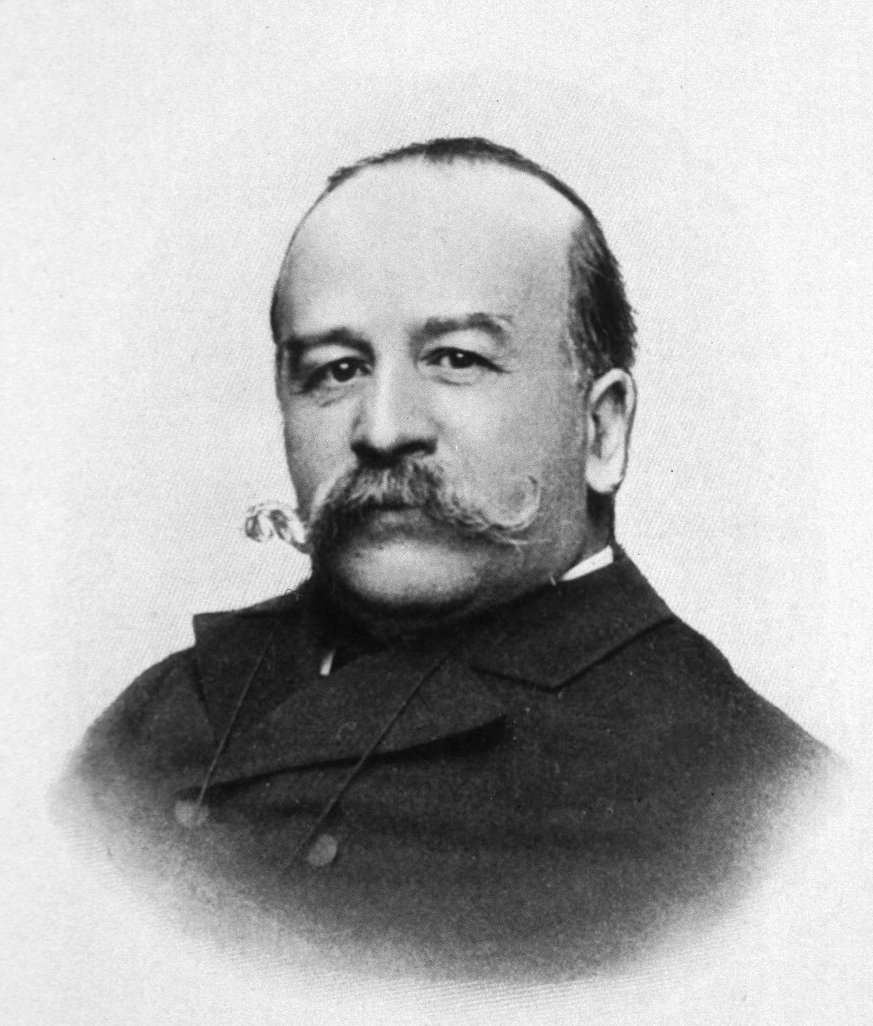
Alexandre Lacassagne (French pronunciation: [alɛksɑ̃dʁ(ə) lakasaɲ]; 17 August 1843 – 24 September 1924) was a French physician and criminologist who was a native of Cahors. He was the founder of the Lacassagne school of criminology, based in Lyon and influential from 1885 to 1914, and the main rival to Lombroso's Italian school.
Lacassagne wrote "Every society gets the kind of criminal it deserves".
Lacassagne studied at the military school in Strasbourg, and for a period of time worked at Val-de-Grâce military hospital in Paris. Later he attained the chair of Médecine Légale de la Faculté de Lyon (Forensic medicine of the Lyon Faculty), and was also founder of the journal Archives de l'Anthropologie Criminelle. Among his assistants was famed forensics scientist Edmund Locard (1877–1966).
Lacassagne was a principal founder in the fields of medical jurisprudence and criminal anthropology. He was a specialist in the field of toxicology, and was a pioneer regarding bloodstain pattern analysis and the research of bullet markings and their relationship to specific weapons. While he did not come up with a system to classify these markings, Lacassagne's research and study is considered the beginning of the science of ballistics.
He had a keen interest in sociology and psychology, and the correlation of these disciplines to criminal and "deviant" behaviour. He considered an individual's biological predisposition and social environment to be important factors in criminal behaviour.
Lacassagne became famous because of his expertise in various criminal affairs, including the "malle à Gouffé" in 1889, the assassination of President Sadi Carnot, stabbed in 1894 by the Italian anarchist Caserio, and the case of Joseph Vacher (1869–1898), one of the first known French serial killers.
Politically, Lacassagne supported the initiative of his friend Léon Gambetta, an Opportunist Republican, in favour of the 27 May 1885 Act establishing penal colonies, dubbed "Law on relegation of recidivists" (the bill had been introduced by Pierre Waldeck-Rousseau and Martin Feuillée). He also opposed the abolition of death penalty, proposed in 1906 by an alliance of Radicals and Socialists and rejected in 1908, as he considered that some criminals were irredeemable.
In 1877, with Apollinaire Bouchardat and Émile Vallin, he was a founding member of the "Société de Médecine publique et d'Hygiène professionnelle".
Hub AI
Alexandre Lacassagne AI simulator
(@Alexandre Lacassagne_simulator)
Alexandre Lacassagne
Alexandre Lacassagne (French pronunciation: [alɛksɑ̃dʁ(ə) lakasaɲ]; 17 August 1843 – 24 September 1924) was a French physician and criminologist who was a native of Cahors. He was the founder of the Lacassagne school of criminology, based in Lyon and influential from 1885 to 1914, and the main rival to Lombroso's Italian school.
Lacassagne wrote "Every society gets the kind of criminal it deserves".
Lacassagne studied at the military school in Strasbourg, and for a period of time worked at Val-de-Grâce military hospital in Paris. Later he attained the chair of Médecine Légale de la Faculté de Lyon (Forensic medicine of the Lyon Faculty), and was also founder of the journal Archives de l'Anthropologie Criminelle. Among his assistants was famed forensics scientist Edmund Locard (1877–1966).
Lacassagne was a principal founder in the fields of medical jurisprudence and criminal anthropology. He was a specialist in the field of toxicology, and was a pioneer regarding bloodstain pattern analysis and the research of bullet markings and their relationship to specific weapons. While he did not come up with a system to classify these markings, Lacassagne's research and study is considered the beginning of the science of ballistics.
He had a keen interest in sociology and psychology, and the correlation of these disciplines to criminal and "deviant" behaviour. He considered an individual's biological predisposition and social environment to be important factors in criminal behaviour.
Lacassagne became famous because of his expertise in various criminal affairs, including the "malle à Gouffé" in 1889, the assassination of President Sadi Carnot, stabbed in 1894 by the Italian anarchist Caserio, and the case of Joseph Vacher (1869–1898), one of the first known French serial killers.
Politically, Lacassagne supported the initiative of his friend Léon Gambetta, an Opportunist Republican, in favour of the 27 May 1885 Act establishing penal colonies, dubbed "Law on relegation of recidivists" (the bill had been introduced by Pierre Waldeck-Rousseau and Martin Feuillée). He also opposed the abolition of death penalty, proposed in 1906 by an alliance of Radicals and Socialists and rejected in 1908, as he considered that some criminals were irredeemable.
In 1877, with Apollinaire Bouchardat and Émile Vallin, he was a founding member of the "Société de Médecine publique et d'Hygiène professionnelle".
Recent media