


Community hub
Recent from talks
Contribute something
Nothing was collected or created yet.
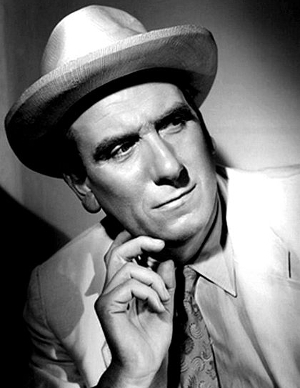
Alexandre Rignault
View on Wikipedia | This article has multiple issues. Please help improve it or discuss these issues on the talk page. (Learn how and when to remove these messages)
|


Alexandre Rignault (14 February 1901 – 2 April 1985) was a French actor. He appeared in more than a hundred films between 1931 and 1985.[1]
Key Information


Biography
[edit]He was born on February 14, 1901 in Paris 5th, at his parents' home, rue Guy-de-La-Brosse. His father was a mechanic, and his mother was a housewife. In the mid-1920s, after having worked in various professions, he desired to become an actor. Attracted to the theater, he wrote to Louis Jouvet to offer his services. Jouvet received him and hired him to play the utility in his troupe. For about fifteen years, Rignault was cast in works by Nicolas Gogol, Marcel Achard and Jules Romains, and participated in the creation of three plays by Jean Giraudoux: Amphitryon 38 (1929), Intermezzo (1933), at the Comédie des Champs-Élysées, and Ondine (1939) at the Théâtre de l'Athénée. After World War II, he was still seen in several plays, by Paul Claudel among others, presented at the Théâtre du Vieux-Colombier.
For his film debut in 1931, he played the art critic Langelard in Jean Renoir's La Chienne, a social drama with Janie Marèse and Michel Simon. Rignault, although he never had leading roles, happily played all sorts of jobs on screen: foreman, innkeeper, postman, policeman, doctor, gamekeeper, priest, notary, sharecropper, barker, peasant, etc.
He became known to the general public in 1937, playing King Henry VIII in Christian-Jaque's François Ier, starring Fernandel. From the end of the 1950s, Alexandre Rignault made frequent appearances on television. He played, among others, Count Robert de Clermont in Les Rois maudits (1972) by Claude Barma and the patriarch Gregor Kovalic in the Châteauvallon saga (1985), a role that closed his prolific career.
He is buried in the Montparnasse cemetery (25th division, large cemetery, 15 west, 6 north).
Selected filmography
[edit]References
[edit]- ^ "ARCHIVES PARIS". canadp-archivesenligne.paris.fr. Archived from the original on 2016-03-03. Retrieved 2025-01-21.
External links
[edit]| International | |
|---|---|
| National | |
| People | |
| Other | |

Alexandre Rignault
View on GrokipediaEarly life
Birth and family background
Alexandre Rignault was born on 14 February 1901 at his parents' home on rue Guy-de-La-Brosse in the 5th arrondissement of Paris. [2] His father worked as a mechanic, while his mother was a housewife, reflecting the modest family origins typical of working-class households in the French Third Republic. [3] This background in early 20th-century Paris provided the foundation for his later life before he entered the performing arts. [3]Path to acting career
Alexandre Rignault worked various manual jobs in his youth, including as an employee of a gas company, before deciding to pursue a career in acting during the mid-1920s. [4] [3] Without any formal training in drama, he boldly took the initiative to contact the renowned director and actor Louis Jouvet by sending him a letter offering his services. [3] Jouvet, impressed by the determination and imposing stature of the young man, hired him as a utility player in his theater company around 1926, marking the self-initiated beginning of Rignault's professional acting career at the Comédie des Champs-Élysées. [4] [3] This direct approach allowed him to enter the profession through practical experience within Jouvet's troupe rather than through traditional academic channels. [3]Theatre career
Beginnings with Louis Jouvet
Alexandre Rignault joined Louis Jouvet's theatre company at the Comédie des Champs-Élysées around 1926, beginning a formative collaboration that lasted approximately 15 years. [5] [6] He participated in a range of productions, often in supporting roles, as the troupe staged both classic revivals and new works by leading French playwrights. [5] Among his early appearances was Nicolas Gogol's Le Revizor in 1927. [5] Rignault also took part in premieres of plays by Marcel Achard and Jules Romains, contributing to the dynamic repertoire of Jouvet's company during the late 1920s and 1930s. [5] [7] A significant aspect of this period was his involvement in the original productions of three major works by Jean Giraudoux under Jouvet's direction: Amphitryon 38 in 1929 (where he played Le Guerrier), Intermezzo in 1933, and Ondine in 1939 (where he played Le premier juge). [8] [5] [9] These creations highlighted Rignault's role in bringing Giraudoux's poetic and innovative theatre to the stage. [5]Post-war stage work
After the Second World War, Alexandre Rignault continued to appear on stage, though his theatrical activity was reduced in frequency compared to his pre-war period as he concentrated primarily on film and television roles.[10] He participated in a range of productions from 1945 onward, working with various directors and interpreting diverse characters into the early 1980s.[10] One of the most notable episodes of his post-war stage career occurred during the 1962–1963 season at the Théâtre du Vieux-Colombier, where he was part of the troupe performing Paul Claudel's trilogy—L’Otage, Le Pain dur, and Le Père humilié—presented in alternation under the direction of Bernard Jenny.[11][12] In L’Otage, Rignault portrayed the curé Badilon (also listed as Monsieur Badillon).[11] He appeared in the casts of Le Pain dur and Le Père humilié as well, contributing to the shared ensemble across the three plays.[13][14][12] Rignault also performed in works by several major playwrights during this period, including Molière's Tartuffe (directed by Bernard Jenny in 1969), Anton Chekhov's Ce fou de Platonov (1969), Euripides' Les Bacchantes (1969), Maxime Gorki's Les Ennemis (1965), and Henry de Montherlant's Don Juan (1958) and La Guerre civile (1966).[10] These engagements demonstrated his sustained, if selective, commitment to theatre alongside his screen work, extending his stage presence well into later decades.[10]Film career
Debut and pre-war roles
Alexandre Rignault made his film debut in 1931, playing the art critic Hector Langelard in Jean Renoir's La Chienne, a realist social drama starring Michel Simon and Janie Marèse. [2] This role marked his transition from theatre to cinema during the early sound era in France. [2] In the subsequent years, he took on supporting character parts in notable films, including Joseph Heurtin in Julien Duvivier's La tête d'un homme (A Man's Head) in 1933 [1] and Hollinger in Fritz Lang's Liliom in 1934. [1] These performances showcased his versatility in dramatic roles within French cinema's pre-war landscape. [1] Rignault achieved greater public visibility in 1937 with his portrayal of King Henry VIII in Christian-Jaque's historical comedy François Ier, where he appeared opposite Fernandel in the lead role. [15] This part allowed him to demonstrate comedic timing in a high-profile supporting capacity. [15]Character actor in post-war French cinema
After World War II, Alexandre Rignault established himself as one of the most prolific character actors in French cinema, contributing supporting performances to numerous productions throughout the 1950s and 1960s. [7] [16] He specialized in embodying working-class and rural archetypes, frequently appearing as foremen, innkeepers, policemen, priests, and peasants who added authentic texture to ensemble casts. [7] [16] Rignault often collaborated with directors such as Julien Duvivier, Robert Vernay, and Marcel L'Herbier, appearing in their films during this productive phase of his screen career. [7] Among his most memorable post-war roles were commissioner Juve in Fantômas contre Fantômas (1949), where he reprised the determined police inspector from the earlier Fantômas (1947), and Inspector Parot in Georges Franju's Eyes Without a Face (1960), a key authority figure investigating the central mystery. [1] [16] [17] These performances exemplified his reliability in portraying grounded, often authoritative figures within popular French genre films and literary adaptations. [7] Throughout his career, Rignault accumulated over 150 film credits, with his post-war output forming a substantial portion of his legacy as a versatile supporting player in French cinema. [7] His activity extended into the 1970s and 1980s, though his defining character work remained rooted in the post-war era. [7]Later films and collaborations
In the 1970s and 1980s, Alexandre Rignault's film activity decreased compared to earlier decades, yet he maintained a persistent presence through selective supporting roles, often collaborating with acclaimed auteurs. [18] [7] He portrayed the grandfather in Jean-Luc Godard's experimental feature Numéro deux (1975). [19] [20] [18] Rignault later appeared as the grandfather of Jean in Alain Resnais' Mon oncle d'Amérique (1980). [21] His final film role came in Partenaires (1984). [22] [23] His film work during this period overlapped with continued activity in television. [16]Television career
Transition to television
Alexandre Rignault began making frequent appearances on television from the end of the 1950s. [2] This shift coincided with the growing prominence of television as a medium for dramatic performances in France, enabling him to sustain an active acting presence in his later career alongside his ongoing but less prolific film work. [7] His television engagements became a significant aspect of his professional output during the 1960s, 1970s, and into the 1980s, reflecting the medium's expansion and appeal for character actors of his generation. [4]Notable television roles
Alexandre Rignault appeared in several notable French television productions during the later stages of his career, particularly in miniseries and serial formats. [1] He portrayed Count Robert de Clermont in the acclaimed historical miniseries Les Rois maudits (1972), directed by Claude Barma, an adaptation of Maurice Druon's novels chronicling the French monarchy in the 14th century. [24] In the 1980s, Rignault took on the role of patriarch Gregor Kovalic in the primetime soap opera Châteauvallon (1985), appearing in 7 episodes as a central figure in the multi-generational family saga. [1] This performance in Châteauvallon marked his final on-screen work before his death later that year. [1]Personal life
Marriage and private life
Alexandre Rignault married the actress Eugénie Gayet on 6 June 1922. [3] [7] Described as a man of great constancy, he had only one wife throughout his life. [3] The couple remained united for sixty-three years until Rignault's death in 1985. [3] [1] No documented children or additional family details from this marriage are recorded in available sources.Death
Final years and passing
In his final years, Alexandre Rignault continued his acting work with a role in the television series Châteauvallon, where he portrayed Gregor Kovalic in seven episodes broadcast in 1985.[1] He died on 31 March 1985 in a hospital in Saint-Mandé, Val-de-Marne, at the age of 84.[25][26] Rignault was buried in the Cimetière du Montparnasse, in division 25.[27]References
- https://fr.wikisource.org/wiki/Page:Giraudoux_-_Ondine.djvu/17