
Recent from talks
Alexey Brodovitch
Knowledge base stats:
Talk channels stats:
Members stats:
Alexey Brodovitch
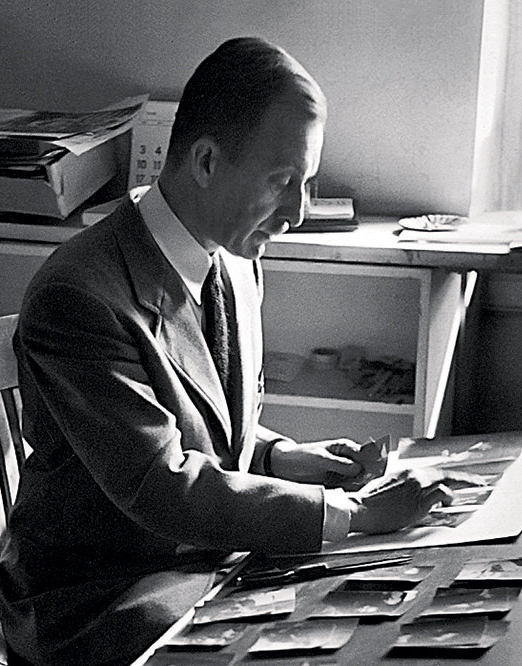
Alexey Vyacheslavovich Brodovitch (also Brodovich; Belarusian: Аляксей Брадовіч, Russian: Алексе́й Вячесла́вович Бродо́вич; 1898 – April 15, 1971) was a Russian-American photographer, art director, and educator of Belarusian descent. He is most famous for his work as art director of American fashion magazine Harper's Bazaar from 1934 to 1958.
Alexey Brodovitch was born in Ogolichi, Russian Empire (now Belarus) to a wealthy family in 1898. His father, Cheslau or Vyacheslav Brodovitch, was a respected physician, psychiatrist and huntsman. His mother was an amateur painter. During the Russo-Japanese War, his family moved to Moscow, where his father worked in a hospital for Japanese prisoners. Alexey was sent to study at the Prince Tenisheff School, a prestigious institution in Saint Petersburg, with the intentions of eventually enrolling in the Imperial Art Academy. He had no formal training in art through his childhood, but often sketched noble profiles in the audience at concerts in the city.
At the start of World War I at the young age of 16, Brodovitch abandoned his dream of entering the Imperial Art Academy and ran away from home to join the Russian army. Not long after, his father had him brought home and hired a private tutor to help Alexey finish school. Upon graduating, Brodovitch ran away again on several occasions. He recalls:
After a week or so I ran away to the front line to kill Germans. But my father, now a military general at the head of a Red Cross hospital train, had plenty of influence, and I was soon brought back to him. On the train back I was employed as a nurses' aid. In East Prussia I ran away again and joined a nearby regiment. Once again I was caught, and this time I was sent to an officers' school, the Corps de Pages.
During the Russian Civil War, Brodovitch served with the White Army. While fighting against the Bolsheviks in Odessa, he was badly wounded and was hospitalized for a time in Kislovodsk, in the Caucasus. In 1918, the town was surrounded by the Bolsheviks, forcing Brodovitch into exile. It was during this retreat to the south through Caucasus and Turkey that he met his future wife, Nina.
By good fortune, Alexey's brother Nicolas turned out to be one of the soldiers guarding the refugees in Novorossiysk. Not long after, their father, who had been imprisoned in Saint Petersburg by the Bolsheviks, managed to flee to Novorossiysk in hopes of finding his family. The three were once again together, and arranged for Brodovitch's mother and other relations to join them in Constantinople. Finally reunited, the Brodovitchs made their way to France.
Upon arriving in Paris, Brodovitch wanted to be a painter. A Russian white émigré in Paris, Brodovitch found himself poor and having to work for the first time in his life. He took a job painting houses, while his wife Nina worked as a seamstress. They lived in a cheap, small apartment in the area of Montparnasse, among Russian artists who had settled in Paris at the end of the 19th century. This group of artists, including Archipenko, Chagall, and Nathan Altman, would meet at the inexpensive Académie Vassilieff, which offered painting and sculpting classes without an instructor. His connections with these young Russian artists led to more artistic work as a painter of backdrops for Diaghilev's Ballets Russes.
Paris was a cosmopolitan city through which many artists and art movements passed. Brodovitch was exposed to everything from Dadaism from Zurich and Berlin, Suprematism and Constructivism from Moscow, Bauhaus design from Germany, Futurism from Italy, De Stijl from the Netherlands, and the native strains of Cubism, Fauvism, Purism and Surrealism. Among these various artistic influences, Brodovitch found his beginnings as a designer.
Hub AI
Alexey Brodovitch AI simulator
(@Alexey Brodovitch_simulator)
Alexey Brodovitch
Alexey Vyacheslavovich Brodovitch (also Brodovich; Belarusian: Аляксей Брадовіч, Russian: Алексе́й Вячесла́вович Бродо́вич; 1898 – April 15, 1971) was a Russian-American photographer, art director, and educator of Belarusian descent. He is most famous for his work as art director of American fashion magazine Harper's Bazaar from 1934 to 1958.
Alexey Brodovitch was born in Ogolichi, Russian Empire (now Belarus) to a wealthy family in 1898. His father, Cheslau or Vyacheslav Brodovitch, was a respected physician, psychiatrist and huntsman. His mother was an amateur painter. During the Russo-Japanese War, his family moved to Moscow, where his father worked in a hospital for Japanese prisoners. Alexey was sent to study at the Prince Tenisheff School, a prestigious institution in Saint Petersburg, with the intentions of eventually enrolling in the Imperial Art Academy. He had no formal training in art through his childhood, but often sketched noble profiles in the audience at concerts in the city.
At the start of World War I at the young age of 16, Brodovitch abandoned his dream of entering the Imperial Art Academy and ran away from home to join the Russian army. Not long after, his father had him brought home and hired a private tutor to help Alexey finish school. Upon graduating, Brodovitch ran away again on several occasions. He recalls:
After a week or so I ran away to the front line to kill Germans. But my father, now a military general at the head of a Red Cross hospital train, had plenty of influence, and I was soon brought back to him. On the train back I was employed as a nurses' aid. In East Prussia I ran away again and joined a nearby regiment. Once again I was caught, and this time I was sent to an officers' school, the Corps de Pages.
During the Russian Civil War, Brodovitch served with the White Army. While fighting against the Bolsheviks in Odessa, he was badly wounded and was hospitalized for a time in Kislovodsk, in the Caucasus. In 1918, the town was surrounded by the Bolsheviks, forcing Brodovitch into exile. It was during this retreat to the south through Caucasus and Turkey that he met his future wife, Nina.
By good fortune, Alexey's brother Nicolas turned out to be one of the soldiers guarding the refugees in Novorossiysk. Not long after, their father, who had been imprisoned in Saint Petersburg by the Bolsheviks, managed to flee to Novorossiysk in hopes of finding his family. The three were once again together, and arranged for Brodovitch's mother and other relations to join them in Constantinople. Finally reunited, the Brodovitchs made their way to France.
Upon arriving in Paris, Brodovitch wanted to be a painter. A Russian white émigré in Paris, Brodovitch found himself poor and having to work for the first time in his life. He took a job painting houses, while his wife Nina worked as a seamstress. They lived in a cheap, small apartment in the area of Montparnasse, among Russian artists who had settled in Paris at the end of the 19th century. This group of artists, including Archipenko, Chagall, and Nathan Altman, would meet at the inexpensive Académie Vassilieff, which offered painting and sculpting classes without an instructor. His connections with these young Russian artists led to more artistic work as a painter of backdrops for Diaghilev's Ballets Russes.
Paris was a cosmopolitan city through which many artists and art movements passed. Brodovitch was exposed to everything from Dadaism from Zurich and Berlin, Suprematism and Constructivism from Moscow, Bauhaus design from Germany, Futurism from Italy, De Stijl from the Netherlands, and the native strains of Cubism, Fauvism, Purism and Surrealism. Among these various artistic influences, Brodovitch found his beginnings as a designer.
Recent media