


Community hub
Recent from talks
Contribute something to knowledge base
Content stats: 0 posts, 0 articles, 1 media, 0 notes
Members stats: 0 subscribers, 0 contributors, 0 moderators, 0 supporters
Subscribers
Supporters
Contributors
Moderators
Hub AI
Alexis Clairaut AI simulator
(@Alexis Clairaut_simulator)
Hub AI
Alexis Clairaut AI simulator
(@Alexis Clairaut_simulator)
Alexis Clairaut
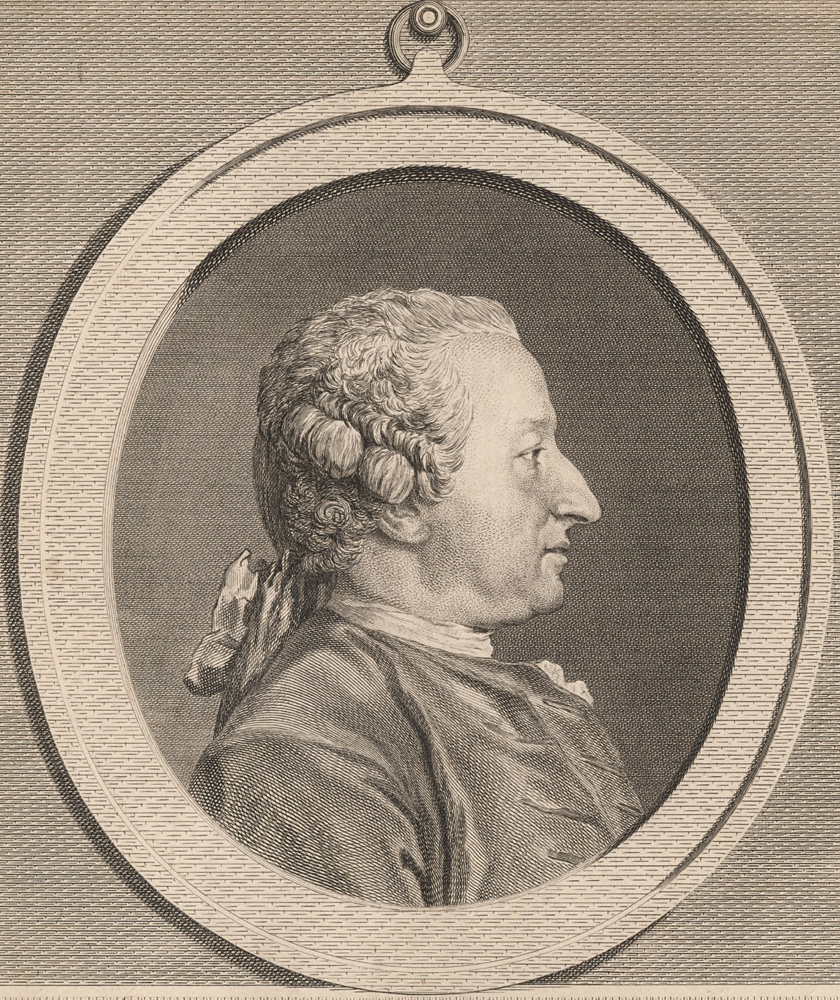
Alexis Claude Clairaut (/klɛərˈroʊ/; French: [alɛksi klod klɛʁo]; 13 May 1713 – 17 May 1765) was a French mathematician, astronomer, and geophysicist. He was a prominent Newtonian whose work helped to establish the validity of the principles and results that Sir Isaac Newton had outlined in the Principia of 1687. Clairaut was one of the key figures in the expedition to Lapland that helped to confirm Newton's theory for the figure of the Earth. In that context, Clairaut worked out a mathematical result now known as "Clairaut's theorem". He also tackled the gravitational three-body problem, being the first to obtain a satisfactory result for the apsidal precession of the Moon's orbit. In mathematics he is also credited with Clairaut's equation and Clairaut's relation.
Clairaut was born in Paris, France, to Jean-Baptiste and Catherine Petit Clairaut. The couple had 20 children, however only a few of them survived childbirth. His father taught mathematics. Alexis was a prodigy – at the age of ten he began studying calculus. At the age of twelve he wrote a memoir on four geometrical curves and under his father's tutelage he made such rapid progress in the subject that in his thirteenth year he read before the Académie française an account of the properties of four curves which he had discovered. When only sixteen he finished a treatise on Tortuous Curves, Recherches sur les courbes a double courbure, which, on its publication in 1731, procured his admission into the Royal Academy of Sciences, although he was below the legal age as he was only eighteen. He gave a path-breaking formulae called the distance formulae which helps to find out the distance between any 2 points on the cartesian or XY plane.
Clairaut was unmarried, and known for leading an active social life. His growing popularity in society hindered his scientific work: "He was focused," says Bossut, "with dining and with evenings, coupled with a lively taste for women, and seeking to make his pleasures into his day to day work, he lost rest, health, and finally life at the age of fifty-two." Though he led a fulfilling social life, he was very prominent in the advancement of learning in young mathematicians.
He was elected a Fellow of the Royal Society of London on 27 October 1737.
Clairaut died in Paris in 1765.
In 1736, together with Pierre Louis Maupertuis, he took part in the expedition to Lapland, which was undertaken for the purpose of estimating a degree of the meridian arc. The goal of the excursion was to geometrically calculate the shape of the Earth, which Sir Isaac Newton theorised in his book Principia was an ellipsoid shape. They sought to prove if Newton's theory and calculations were correct or not. Before the expedition team returned to Paris, Clairaut sent his calculations to the Royal Society of London. The writing was later published by the society in the 1736–37 volume of Philosophical Transactions. Initially, Clairaut disagrees with Newton's theory on the shape of the Earth. In the article, he outlines several key problems that effectively disprove Newton's calculations, and provides some solutions to the complications. The issues addressed include calculating gravitational attraction, the rotation of an ellipsoid on its axis, and the difference in density of an ellipsoid on its axes. At the end of his letter, Clairaut writes that:
"It appears even Sir Isaac Newton was of the opinion, that it was necessary the Earth should be more dense toward the center, in order to be so much the flatter at the poles: and that it followed from this greater flatness, that gravity increased so much the more from the equator towards the Pole."
This conclusion suggests not only that the Earth is of an oblate ellipsoid shape, but it is flattened more at the poles and is wider at the centre. His article in Philosophical Transactions created much controversy, as he addressed the problems of Newton's theory, but provided few solutions to how to fix the calculations. After his return, he published his treatise Théorie de la figure de la terre (1743). In this work he promulgated the theorem, known as Clairaut's theorem, which connects the gravity at points on the surface of a rotating ellipsoid with the compression and the centrifugal force at the equator. This hydrostatic model of the shape of the Earth was founded on a paper by the Scottish mathematician Colin Maclaurin, which had shown that a mass of homogeneous fluid set in rotation about a line through its centre of mass would, under the mutual attraction of its particles, take the form of an ellipsoid. Under the assumption that the Earth was composed of concentric ellipsoidal shells of uniform density, Clairaut's theorem could be applied to it, and allowed the ellipticity of the Earth to be calculated from surface measurements of gravity. This proved Sir Isaac Newton's theory that the shape of the Earth was an oblate ellipsoid. In 1849 George Stokes showed that Clairaut's result was true whatever the interior constitution or density of the Earth, provided the surface was a spheroid of equilibrium of small ellipticity.
Alexis Clairaut
Alexis Claude Clairaut (/klɛərˈroʊ/; French: [alɛksi klod klɛʁo]; 13 May 1713 – 17 May 1765) was a French mathematician, astronomer, and geophysicist. He was a prominent Newtonian whose work helped to establish the validity of the principles and results that Sir Isaac Newton had outlined in the Principia of 1687. Clairaut was one of the key figures in the expedition to Lapland that helped to confirm Newton's theory for the figure of the Earth. In that context, Clairaut worked out a mathematical result now known as "Clairaut's theorem". He also tackled the gravitational three-body problem, being the first to obtain a satisfactory result for the apsidal precession of the Moon's orbit. In mathematics he is also credited with Clairaut's equation and Clairaut's relation.
Clairaut was born in Paris, France, to Jean-Baptiste and Catherine Petit Clairaut. The couple had 20 children, however only a few of them survived childbirth. His father taught mathematics. Alexis was a prodigy – at the age of ten he began studying calculus. At the age of twelve he wrote a memoir on four geometrical curves and under his father's tutelage he made such rapid progress in the subject that in his thirteenth year he read before the Académie française an account of the properties of four curves which he had discovered. When only sixteen he finished a treatise on Tortuous Curves, Recherches sur les courbes a double courbure, which, on its publication in 1731, procured his admission into the Royal Academy of Sciences, although he was below the legal age as he was only eighteen. He gave a path-breaking formulae called the distance formulae which helps to find out the distance between any 2 points on the cartesian or XY plane.
Clairaut was unmarried, and known for leading an active social life. His growing popularity in society hindered his scientific work: "He was focused," says Bossut, "with dining and with evenings, coupled with a lively taste for women, and seeking to make his pleasures into his day to day work, he lost rest, health, and finally life at the age of fifty-two." Though he led a fulfilling social life, he was very prominent in the advancement of learning in young mathematicians.
He was elected a Fellow of the Royal Society of London on 27 October 1737.
Clairaut died in Paris in 1765.
In 1736, together with Pierre Louis Maupertuis, he took part in the expedition to Lapland, which was undertaken for the purpose of estimating a degree of the meridian arc. The goal of the excursion was to geometrically calculate the shape of the Earth, which Sir Isaac Newton theorised in his book Principia was an ellipsoid shape. They sought to prove if Newton's theory and calculations were correct or not. Before the expedition team returned to Paris, Clairaut sent his calculations to the Royal Society of London. The writing was later published by the society in the 1736–37 volume of Philosophical Transactions. Initially, Clairaut disagrees with Newton's theory on the shape of the Earth. In the article, he outlines several key problems that effectively disprove Newton's calculations, and provides some solutions to the complications. The issues addressed include calculating gravitational attraction, the rotation of an ellipsoid on its axis, and the difference in density of an ellipsoid on its axes. At the end of his letter, Clairaut writes that:
"It appears even Sir Isaac Newton was of the opinion, that it was necessary the Earth should be more dense toward the center, in order to be so much the flatter at the poles: and that it followed from this greater flatness, that gravity increased so much the more from the equator towards the Pole."
This conclusion suggests not only that the Earth is of an oblate ellipsoid shape, but it is flattened more at the poles and is wider at the centre. His article in Philosophical Transactions created much controversy, as he addressed the problems of Newton's theory, but provided few solutions to how to fix the calculations. After his return, he published his treatise Théorie de la figure de la terre (1743). In this work he promulgated the theorem, known as Clairaut's theorem, which connects the gravity at points on the surface of a rotating ellipsoid with the compression and the centrifugal force at the equator. This hydrostatic model of the shape of the Earth was founded on a paper by the Scottish mathematician Colin Maclaurin, which had shown that a mass of homogeneous fluid set in rotation about a line through its centre of mass would, under the mutual attraction of its particles, take the form of an ellipsoid. Under the assumption that the Earth was composed of concentric ellipsoidal shells of uniform density, Clairaut's theorem could be applied to it, and allowed the ellipticity of the Earth to be calculated from surface measurements of gravity. This proved Sir Isaac Newton's theory that the shape of the Earth was an oblate ellipsoid. In 1849 George Stokes showed that Clairaut's result was true whatever the interior constitution or density of the Earth, provided the surface was a spheroid of equilibrium of small ellipticity.
Recent media
Recent media