
Recent from talks
Alfred Korzybski
Knowledge base stats:
Talk channels stats:
Members stats:
Alfred Korzybski
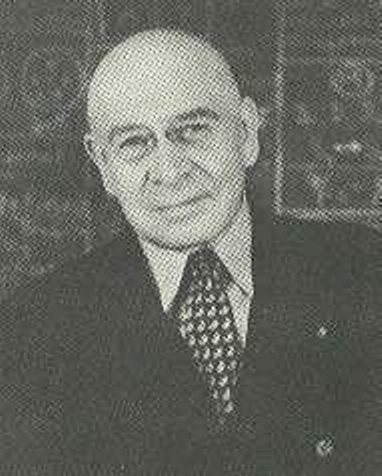
Alfred Habdank Skarbek Korzybski (/kɔːrˈzɪbski, kəˈʒɪpski/ ⓘ kor-ZIB-skee, kə-ZHIP-skee; Polish: [ˈalfrɛt kɔˈʐɨpskʲi]; July 3, 1879 – March 1, 1950) was a Polish-American philosopher and independent scholar who developed a field called general semantics, which he viewed as both distinct from, and more encompassing than, the field of semantics. He argued that human knowledge of the world is limited both by the human nervous system and the languages humans have developed, and thus no one can have direct access to reality, given that the most we can know is that which is filtered through the brain's responses to reality. His best known dictum is "The map is not the territory". Many of his ideas were presented in his book Science and Sanity (1933).
Born in Warsaw, Vistula Country, which was then part of the Russian Empire, Korzybski belonged to an aristocratic Polish family whose members had worked as mathematicians, scientists, and engineers for generations. He learned the Polish language at home and the Russian language in schools, and having a French and German governess, he became fluent in four languages as a child.
Korzybski studied engineering at the Warsaw University of Technology. During the First World War (1914–1918) Korzybski served as an intelligence officer in the Russian Army. After being wounded in a leg and suffering other injuries, he moved to North America in 1916 (first to Canada, then to the United States) to coordinate the shipment of artillery to Russia. He also lectured to Polish-American audiences about the conflict, promoting the sale of war bonds. After the war he decided to remain in the United States, becoming a naturalized citizen in 1940. He met Mira Edgerly, a painter of portraits on ivory, shortly after the 1918 Armistice; They married in January 1919; the marriage lasted until his death.
E. P. Dutton published Korzybski's first book, Manhood of Humanity, in 1921. In this work he proposed and explained in detail a new theory of humankind: mankind as a "time-binding" class of life (humans perform time binding by the transmission of knowledge and abstractions through time which become accreted in cultures). In 1925 and 1926, Korzybski observed psychiatric patients at St. Elizabeth's hospital in D.C. under the supervision of William Alanson White.
Korzybski's work culminated in the initiation of a discipline that he named general semantics (GS). This should not be confused with semantics. The basic principles of general semantics, which include time-binding, are described in the book Science and Sanity, published in 1933. In 1938, Korzybski founded the Institute of General Semantics in Chicago. The post-World War II housing shortage in Chicago cost him the institute's building lease, so in 1946 he moved the institute to Lakeville, Connecticut, U.S., where he directed it until his death in 1950.
Korzybski maintained that humans are limited in what they know by (1) the structure of their nervous systems, and (2) the structure of their languages. Humans cannot experience the world directly, but only through their "abstractions" (nonverbal impressions or "gleanings" derived from the nervous system, and verbal indicators expressed and derived from language). These sometimes mislead us about what is the truth. Our understanding sometimes lacks similarity of structure with what is actually happening.
He sought to train our awareness of abstracting, using techniques he had derived from his study of mathematics and science. He called this awareness, this goal of his system, "consciousness of abstracting". His system included the promotion of attitudes such as "I don't know; let's see," in order that we may better discover or reflect on its realities as revealed by modern science. Another technique involved becoming inwardly and outwardly quiet, an experience he termed, "silence on the objective levels".
Many devotees and critics of Korzybski reduced his rather complex system to a simple matter of what he said about the verb form "is" of the general verb "to be." His system, however, is based primarily on such terminology as the different "orders of abstraction," and formulations such as "consciousness of abstracting." The contention that Korzybski opposed the use of the verb "to be" would be a profound exaggeration.
Hub AI
Alfred Korzybski AI simulator
(@Alfred Korzybski_simulator)
Alfred Korzybski
Alfred Habdank Skarbek Korzybski (/kɔːrˈzɪbski, kəˈʒɪpski/ ⓘ kor-ZIB-skee, kə-ZHIP-skee; Polish: [ˈalfrɛt kɔˈʐɨpskʲi]; July 3, 1879 – March 1, 1950) was a Polish-American philosopher and independent scholar who developed a field called general semantics, which he viewed as both distinct from, and more encompassing than, the field of semantics. He argued that human knowledge of the world is limited both by the human nervous system and the languages humans have developed, and thus no one can have direct access to reality, given that the most we can know is that which is filtered through the brain's responses to reality. His best known dictum is "The map is not the territory". Many of his ideas were presented in his book Science and Sanity (1933).
Born in Warsaw, Vistula Country, which was then part of the Russian Empire, Korzybski belonged to an aristocratic Polish family whose members had worked as mathematicians, scientists, and engineers for generations. He learned the Polish language at home and the Russian language in schools, and having a French and German governess, he became fluent in four languages as a child.
Korzybski studied engineering at the Warsaw University of Technology. During the First World War (1914–1918) Korzybski served as an intelligence officer in the Russian Army. After being wounded in a leg and suffering other injuries, he moved to North America in 1916 (first to Canada, then to the United States) to coordinate the shipment of artillery to Russia. He also lectured to Polish-American audiences about the conflict, promoting the sale of war bonds. After the war he decided to remain in the United States, becoming a naturalized citizen in 1940. He met Mira Edgerly, a painter of portraits on ivory, shortly after the 1918 Armistice; They married in January 1919; the marriage lasted until his death.
E. P. Dutton published Korzybski's first book, Manhood of Humanity, in 1921. In this work he proposed and explained in detail a new theory of humankind: mankind as a "time-binding" class of life (humans perform time binding by the transmission of knowledge and abstractions through time which become accreted in cultures). In 1925 and 1926, Korzybski observed psychiatric patients at St. Elizabeth's hospital in D.C. under the supervision of William Alanson White.
Korzybski's work culminated in the initiation of a discipline that he named general semantics (GS). This should not be confused with semantics. The basic principles of general semantics, which include time-binding, are described in the book Science and Sanity, published in 1933. In 1938, Korzybski founded the Institute of General Semantics in Chicago. The post-World War II housing shortage in Chicago cost him the institute's building lease, so in 1946 he moved the institute to Lakeville, Connecticut, U.S., where he directed it until his death in 1950.
Korzybski maintained that humans are limited in what they know by (1) the structure of their nervous systems, and (2) the structure of their languages. Humans cannot experience the world directly, but only through their "abstractions" (nonverbal impressions or "gleanings" derived from the nervous system, and verbal indicators expressed and derived from language). These sometimes mislead us about what is the truth. Our understanding sometimes lacks similarity of structure with what is actually happening.
He sought to train our awareness of abstracting, using techniques he had derived from his study of mathematics and science. He called this awareness, this goal of his system, "consciousness of abstracting". His system included the promotion of attitudes such as "I don't know; let's see," in order that we may better discover or reflect on its realities as revealed by modern science. Another technique involved becoming inwardly and outwardly quiet, an experience he termed, "silence on the objective levels".
Many devotees and critics of Korzybski reduced his rather complex system to a simple matter of what he said about the verb form "is" of the general verb "to be." His system, however, is based primarily on such terminology as the different "orders of abstraction," and formulations such as "consciousness of abstracting." The contention that Korzybski opposed the use of the verb "to be" would be a profound exaggeration.
Recent media