
Recent from talks
Alfred Loisy
Knowledge base stats:
Talk channels stats:
Members stats:
Alfred Loisy
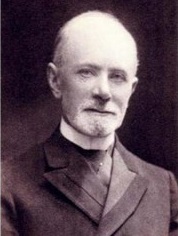
Alfred Firmin Loisy (French: [lwazi]) (28 February 1857 – 1 June 1940) was a French Catholic priest, theologian, and academic, generally regarded as one of the leading figures of the modernist movement within the Roman Catholic Church. He was a critic of traditional views on the interpretation of the Bible, and argued that the methods of modern biblical criticism could aid theology. He famously wrote that "Jesus announced the kingdom, and it is the Church that came".
Loisy's views brought him into conflict with the Catholic hierarchy, including Popes Leo XIII and Pius X. In 1893, he was dismissed from his position as professor of the Catholic University of Paris. Several of his works were placed in the Index of Forbidden Books, and in 1908 he was formally excommunicated. He was never reconciled with the official church, and from 1909 to 1932 he held the chair of history of religions at the Collège de France. He also taught at the École pratique des hautes études and at the Faculty of Letters of the University of Paris, and was made an officer of the Legion of Honour in 1932.
Born on 28 February 1857 at Ambrières, Loisy was put into the ecclesiastical school of Saint-Dizier at four years old. He decided for the priesthood and was educated from 1874 to 1879 at the Grand séminaire de Châlons-en-Champagne; he entered the Institut Catholique de Paris in 1878/1879. Prior to his ordination to the subdiaconate, he had experienced doubts regarding the soundness of the Catholic faith. After an illness he returned to the Institut and was ordained a priest on 29 June 1879. Initially assigned parish work, in 1881 he requested to be reassigned to the Institut to complete his baccalauréat in theology. That autumn he became instructor in Hebrew. From 1882 to 1885 he took additional courses in Hebrew with Ernest Renan at the Collège de France, and began teaching Assyrian in 1886. He was also influenced, as to biblical languages and textual criticism, by the Abbé Paulin Martin, and as to a consciousness of the biblical problems and a sense of form by the historical intuition and irony of Abbé Louis Duchesne. He took his theological degree in March 1890, by the oral defense of forty Latin scholastic theses and by a French dissertation, Histoire du canon de l'ancien testament, published as his first book in that year.
Some of his work appeared in the bi-monthly L'Enseignement biblique, a periodical written throughout and published by himself. In November 1893, Loisy published the last lecture of his course, in which he summed up his position on Biblical criticism in five propositions: the Pentateuch was not the work of Moses, the first five chapters of Genesis were not literal history, the New Testament and the Old Testament did not possess equal historical value, there was a development in scriptural doctrine, and Biblical writings were subject to the same limitations as those by other authors of the ancient world. This resulted in Loisy's dismissal from his teaching position. A few days later Pope Leo XIII published the encyclical Providentissimus Deus, which indirectly condemned Abbé Loisy's and Mgr d'Hulst's position, and rendered the continued publication of consistently critical work so difficult that Loisy himself suppressed his Enseignement at the end of 1893.
His 1908 Les Évangiles Synoptiques would cause his excommunication. In his works he argued against the views of Adolf von Harnack, the German Lutheran theologian, who was trying to show that it was necessary and inevitable for the Catholic Church to form as it did. In doing so, Loisy implicitly accepted the eschatology of Johannes Weiss (this eschatology is named consistent eschatology): Jesus thought the coming of the Kingdom was imminent, so there was no point in founding a Church. Only after his death and resurrection was his original proclamation of the Kingdom transformed into this sense by his disciples, and legitimately so, as Loisy pointed out against Harnack's conception of Christianity:
It is certain, for instance, that Jesus did not systematize beforehand the constitution of the Church as that of a government established on earth and destined to endure for a long series of centuries. But a conception far more foreign still to His thoughts and to His authentic teaching is that of an invisible society formed for ever of those who have in their hearts faith in the goodness of God [Harnack]. We have seen that the gospel of Jesus already contained a rudiment of social organization, and that the Kingdom also was announced as a society. Jesus foretold the Kingdom, and it was the Church that came; she came, enlarging the form of the gospel, which it was impossible to preserve as it was, as soon as the Passion closed the ministry of Jesus. There is no institution on the earth or in history whose status and value may not be questioned if the principle is established that nothing may exist except in its original form. Such a principle is contrary to the law of life, which is movement and a continual effort of adaptation to conditions always new and perpetually changing. Christianity has not escaped this law, and cannot be reproached for submission to it. It could not do otherwise than it has done.
The second part of the quotation echoes Cardinal Newman's theory on the development of Christian doctrine which Loisy had studied in his time at Neuilly. Although L'Évangile et L'Église in particular was condemned by Cardinal Richard, Pope Leo consistently refused to interfere directly. It was his successor, Pope Pius X who would later condemn these works.
Another controversial thesis of Loisy, developed in La Religion d'Israël, is the distinction between a pre-Moses period, when the Hebrews worshipped the god El, also known by the plural of this name, Elohim, and a later stage, when Yahweh gradually became the only deity of the Jews.
Hub AI
Alfred Loisy AI simulator
(@Alfred Loisy_simulator)
Alfred Loisy
Alfred Firmin Loisy (French: [lwazi]) (28 February 1857 – 1 June 1940) was a French Catholic priest, theologian, and academic, generally regarded as one of the leading figures of the modernist movement within the Roman Catholic Church. He was a critic of traditional views on the interpretation of the Bible, and argued that the methods of modern biblical criticism could aid theology. He famously wrote that "Jesus announced the kingdom, and it is the Church that came".
Loisy's views brought him into conflict with the Catholic hierarchy, including Popes Leo XIII and Pius X. In 1893, he was dismissed from his position as professor of the Catholic University of Paris. Several of his works were placed in the Index of Forbidden Books, and in 1908 he was formally excommunicated. He was never reconciled with the official church, and from 1909 to 1932 he held the chair of history of religions at the Collège de France. He also taught at the École pratique des hautes études and at the Faculty of Letters of the University of Paris, and was made an officer of the Legion of Honour in 1932.
Born on 28 February 1857 at Ambrières, Loisy was put into the ecclesiastical school of Saint-Dizier at four years old. He decided for the priesthood and was educated from 1874 to 1879 at the Grand séminaire de Châlons-en-Champagne; he entered the Institut Catholique de Paris in 1878/1879. Prior to his ordination to the subdiaconate, he had experienced doubts regarding the soundness of the Catholic faith. After an illness he returned to the Institut and was ordained a priest on 29 June 1879. Initially assigned parish work, in 1881 he requested to be reassigned to the Institut to complete his baccalauréat in theology. That autumn he became instructor in Hebrew. From 1882 to 1885 he took additional courses in Hebrew with Ernest Renan at the Collège de France, and began teaching Assyrian in 1886. He was also influenced, as to biblical languages and textual criticism, by the Abbé Paulin Martin, and as to a consciousness of the biblical problems and a sense of form by the historical intuition and irony of Abbé Louis Duchesne. He took his theological degree in March 1890, by the oral defense of forty Latin scholastic theses and by a French dissertation, Histoire du canon de l'ancien testament, published as his first book in that year.
Some of his work appeared in the bi-monthly L'Enseignement biblique, a periodical written throughout and published by himself. In November 1893, Loisy published the last lecture of his course, in which he summed up his position on Biblical criticism in five propositions: the Pentateuch was not the work of Moses, the first five chapters of Genesis were not literal history, the New Testament and the Old Testament did not possess equal historical value, there was a development in scriptural doctrine, and Biblical writings were subject to the same limitations as those by other authors of the ancient world. This resulted in Loisy's dismissal from his teaching position. A few days later Pope Leo XIII published the encyclical Providentissimus Deus, which indirectly condemned Abbé Loisy's and Mgr d'Hulst's position, and rendered the continued publication of consistently critical work so difficult that Loisy himself suppressed his Enseignement at the end of 1893.
His 1908 Les Évangiles Synoptiques would cause his excommunication. In his works he argued against the views of Adolf von Harnack, the German Lutheran theologian, who was trying to show that it was necessary and inevitable for the Catholic Church to form as it did. In doing so, Loisy implicitly accepted the eschatology of Johannes Weiss (this eschatology is named consistent eschatology): Jesus thought the coming of the Kingdom was imminent, so there was no point in founding a Church. Only after his death and resurrection was his original proclamation of the Kingdom transformed into this sense by his disciples, and legitimately so, as Loisy pointed out against Harnack's conception of Christianity:
It is certain, for instance, that Jesus did not systematize beforehand the constitution of the Church as that of a government established on earth and destined to endure for a long series of centuries. But a conception far more foreign still to His thoughts and to His authentic teaching is that of an invisible society formed for ever of those who have in their hearts faith in the goodness of God [Harnack]. We have seen that the gospel of Jesus already contained a rudiment of social organization, and that the Kingdom also was announced as a society. Jesus foretold the Kingdom, and it was the Church that came; she came, enlarging the form of the gospel, which it was impossible to preserve as it was, as soon as the Passion closed the ministry of Jesus. There is no institution on the earth or in history whose status and value may not be questioned if the principle is established that nothing may exist except in its original form. Such a principle is contrary to the law of life, which is movement and a continual effort of adaptation to conditions always new and perpetually changing. Christianity has not escaped this law, and cannot be reproached for submission to it. It could not do otherwise than it has done.
The second part of the quotation echoes Cardinal Newman's theory on the development of Christian doctrine which Loisy had studied in his time at Neuilly. Although L'Évangile et L'Église in particular was condemned by Cardinal Richard, Pope Leo consistently refused to interfere directly. It was his successor, Pope Pius X who would later condemn these works.
Another controversial thesis of Loisy, developed in La Religion d'Israël, is the distinction between a pre-Moses period, when the Hebrews worshipped the god El, also known by the plural of this name, Elohim, and a later stage, when Yahweh gradually became the only deity of the Jews.
Recent media