
Recent from talks
Alfred Lunt
Knowledge base stats:
Talk channels stats:
Members stats:
Alfred Lunt
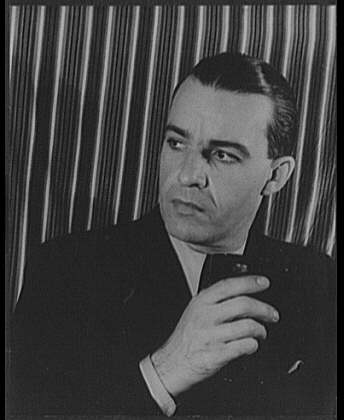
Alfred David Lunt (August 12, 1892 – August 3, 1977) was an American actor and director, best known for his long stage partnership with his wife, Lynn Fontanne, from the 1920s to 1960, co-starring in Broadway and West End productions. After their marriage, they nearly always appeared together. They became known as "the Lunts" and were celebrated on both sides of the Atlantic.
Although they appeared in classics including The Taming of the Shrew, The Seagull and Pygmalion, and dark comedy by Friedrich Dürrenmatt, The Lunts were best known for their stylish performances in light comedies by Noël Coward, S. N. Behrman, Terence Rattigan and others, and romantic plays by writers such as Robert E. Sherwood. Lunt directed some of the couple's productions, and staged plays for other managements. Though they rarely acted for the camera, The Lunts each received an Emmy Award and were nominated for an Academy Award.
The Lunts retired from the stage in 1960, and lived at their home in Genesee Depot, Wisconsin. Lunt died in 1977 and Fontanne in 1983.
Alfred David Lunt Jr., was born in Milwaukee, Wisconsin, on August 12, 1892, the son of Alfred David Lunt and his wife Harriet Washburn née Briggs. Alfred senior was a prosperous lumberman and land agent. He died in 1894, leaving more than $500,000 to his family. His widow, an eccentric and willful woman, gradually lost all the money, and the family moved to Waukesha, where they ran a boarding house. From an early age, Lunt had a fascination with the theatre. He began acting in high school and at Carroll College in Waukesha. Considering a career as an architect, he transferred to Emerson College, Boston, in 1912. His biographer Jared Brown writes that Lunt "rarely attended classes, having found a job as a minor actor and assistant stage manager with the Castle Square Theatre in Boston". He made his first professional stage appearance there on October 7, 1912, as the Sheriff in The Aviator, and remained as a member of the stock company for two years.
In 1914, Lunt toured with Margaret Anglin in Beverley's Balance, remaining with her company for eighteen months, appearing in Green Stockings, As You Like It, Iphigenia in Tauris and Medea. He then toured with, successively, Lillie Langtry, Laura Hope Crews and Anglin again. In 1917, he made his Broadway debut with Crews's company, playing Claude Estabrook in Romance and Arabella. He then appeared in a summer stock season in Washington, D.C., where he met Lynn Fontanne, a rising young English actress. They fell in love, although at first Lunt's wooing was more hesitant than Fontanne would have wished.
In 1919, Lunt had his first important leading part. He played the title role in Booth Tarkington's comedy Clarence (1919), which ran on Broadway for 323 performances. In May 1922, he married Fontanne, and in 1923 they made their first appearance together in a Broadway production, a revival of Paul Kester's 1900 costume drama Sweet Nell of Old Drury.
In 1924, the Lunts joined the company of the Theatre Guild, which, as Brown puts it, "staged plays on Broadway but defied Broadway conventions by offering serious and innovative plays that were regularly rejected by commercial managements". The first play in which the couple appeared for the Guild was Ferenc Molnár's The Guardsman, in which they established a reputation for playing light comedy. They acted together in three plays by Shaw: Arms and the Man (as Bluntschli and Raina, 1925), Pygmalion (as Higgins and Eliza, 1926) and The Doctor's Dilemma (as the Dubedats, 1927). Lunt's other roles in his early years with the Guild included Dmitri Karamazov in The Brothers Karamazov, Marco Polo in Marco Millions and Mosca in Volpone.
Lunt and Fontanne introduced a naturalistic new way of delivering dialogue, building on a technique Fontanne had begun to explore when acting with Laurette Taylor, earlier in her career. It was unheard of for an actor to speak while another was still speaking, but, in Brown's words:
Hub AI
Alfred Lunt AI simulator
(@Alfred Lunt_simulator)
Alfred Lunt
Alfred David Lunt (August 12, 1892 – August 3, 1977) was an American actor and director, best known for his long stage partnership with his wife, Lynn Fontanne, from the 1920s to 1960, co-starring in Broadway and West End productions. After their marriage, they nearly always appeared together. They became known as "the Lunts" and were celebrated on both sides of the Atlantic.
Although they appeared in classics including The Taming of the Shrew, The Seagull and Pygmalion, and dark comedy by Friedrich Dürrenmatt, The Lunts were best known for their stylish performances in light comedies by Noël Coward, S. N. Behrman, Terence Rattigan and others, and romantic plays by writers such as Robert E. Sherwood. Lunt directed some of the couple's productions, and staged plays for other managements. Though they rarely acted for the camera, The Lunts each received an Emmy Award and were nominated for an Academy Award.
The Lunts retired from the stage in 1960, and lived at their home in Genesee Depot, Wisconsin. Lunt died in 1977 and Fontanne in 1983.
Alfred David Lunt Jr., was born in Milwaukee, Wisconsin, on August 12, 1892, the son of Alfred David Lunt and his wife Harriet Washburn née Briggs. Alfred senior was a prosperous lumberman and land agent. He died in 1894, leaving more than $500,000 to his family. His widow, an eccentric and willful woman, gradually lost all the money, and the family moved to Waukesha, where they ran a boarding house. From an early age, Lunt had a fascination with the theatre. He began acting in high school and at Carroll College in Waukesha. Considering a career as an architect, he transferred to Emerson College, Boston, in 1912. His biographer Jared Brown writes that Lunt "rarely attended classes, having found a job as a minor actor and assistant stage manager with the Castle Square Theatre in Boston". He made his first professional stage appearance there on October 7, 1912, as the Sheriff in The Aviator, and remained as a member of the stock company for two years.
In 1914, Lunt toured with Margaret Anglin in Beverley's Balance, remaining with her company for eighteen months, appearing in Green Stockings, As You Like It, Iphigenia in Tauris and Medea. He then toured with, successively, Lillie Langtry, Laura Hope Crews and Anglin again. In 1917, he made his Broadway debut with Crews's company, playing Claude Estabrook in Romance and Arabella. He then appeared in a summer stock season in Washington, D.C., where he met Lynn Fontanne, a rising young English actress. They fell in love, although at first Lunt's wooing was more hesitant than Fontanne would have wished.
In 1919, Lunt had his first important leading part. He played the title role in Booth Tarkington's comedy Clarence (1919), which ran on Broadway for 323 performances. In May 1922, he married Fontanne, and in 1923 they made their first appearance together in a Broadway production, a revival of Paul Kester's 1900 costume drama Sweet Nell of Old Drury.
In 1924, the Lunts joined the company of the Theatre Guild, which, as Brown puts it, "staged plays on Broadway but defied Broadway conventions by offering serious and innovative plays that were regularly rejected by commercial managements". The first play in which the couple appeared for the Guild was Ferenc Molnár's The Guardsman, in which they established a reputation for playing light comedy. They acted together in three plays by Shaw: Arms and the Man (as Bluntschli and Raina, 1925), Pygmalion (as Higgins and Eliza, 1926) and The Doctor's Dilemma (as the Dubedats, 1927). Lunt's other roles in his early years with the Guild included Dmitri Karamazov in The Brothers Karamazov, Marco Polo in Marco Millions and Mosca in Volpone.
Lunt and Fontanne introduced a naturalistic new way of delivering dialogue, building on a technique Fontanne had begun to explore when acting with Laurette Taylor, earlier in her career. It was unheard of for an actor to speak while another was still speaking, but, in Brown's words:
Recent media