
Recent from talks
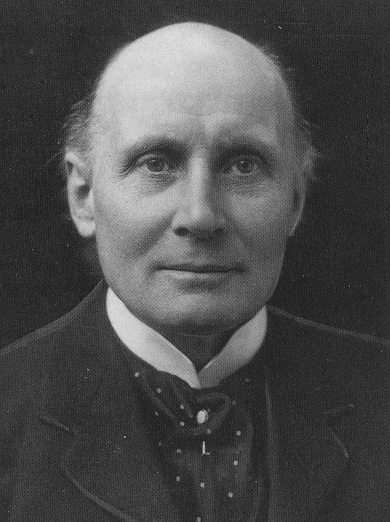
Alfred North Whitehead
Knowledge base stats:
Talk channels stats:
Members stats:
Alfred North Whitehead
Alfred North Whitehead OM FRS FBA (15 February 1861 – 30 December 1947) was an English mathematician and philosopher. He created the philosophical school known as process philosophy, which has been applied in a wide variety of disciplines, including ecology, theology, education, physics, biology, economics, and psychology.
In his early career Whitehead wrote primarily on mathematics, logic, and physics. He wrote the three-volume Principia Mathematica (1910–1913), with his former student Bertrand Russell. Principia Mathematica is considered one of the twentieth century's most important works in mathematical logic, and placed 23rd in a list of the top 100 English-language nonfiction books of the twentieth century by Modern Library.
Beginning in the late 1910s and early 1920s, Whitehead gradually turned his attention from mathematics to philosophy of science, and finally to metaphysics. He developed a comprehensive metaphysical system which radically departed from most of Western philosophy. Whitehead argued that reality consists of processes rather than material objects, and that processes are best defined by their relations with other processes, thus rejecting the theory that reality is fundamentally constructed by bits of matter that exist independently of one another. Whitehead's philosophical works – particularly Process and Reality – are regarded as the foundational texts of process philosophy.
Whitehead's process philosophy argues that "there is urgency in coming to see the world as a web of interrelated processes of which we are integral parts, so that all of our choices and actions have consequences for the world around us." For this reason, one of the most promising applications of Whitehead's thought in the 21st century has been in the area of ecological civilization and environmental ethics pioneered by John B. Cobb.
Alfred North Whitehead was born in Ramsgate, Kent, England, in 1861. His father, Alfred Whitehead, became an Anglican minister after being headmaster of Chatham House Academy, a school for boys previously headed by Alfred's father, Thomas Whitehead. Whitehead himself recalled both of them as being very successful schoolmasters, with his grandfather being the more "remarkable" man.
Whitehead's mother was Maria Sarah Buckmaster. Her maternal great-grandmother was Jane North (1776–1847), whose maiden surname was given to Whitehead, and several other members of his family over time. His mother, Maria Buckmaster had eleven siblings. The son of her brother Thomas, Walter Selby Buckmaster, was twice an Olympics silver medal winner for Polo (1900, 1908) for Britain, and is said to be "one of the finest polo players England has ever produced". Whitehead does not appear to have been close to his mother, although he and Evelyn (full name: Evelyn Ada Maud Rice Willoughby Wade), whom he married in 1890, are recorded in the English Census of 1891 as living with Alfred's mother and father. Lowe notes that there appears to have been mutual dislike between Whitehead's wife, Evelyn, and his mother, Maria.
Griffin relates how Bertrand Russell, a colleague and collaborator of Whitehead, was a very close friend of Whitehead and of his wife, Evelyn. Griffin retells Russell's story of how, one evening in 1901, "they found Evelyn Whitehead in the middle of what appeared to be a dangerous and acutely painful angina attack. ... [but] It seems that she suffered from a psychosomatic disorder ... [and] the danger was illusory." Griffin posits that Russell exaggerated the drama of her illness, and that both Evelyn and Russell were habitually given to melodrama. Intensity of emotion was encouraged by their avant-garde associates in the turbulent Bloomsbury Group which "discussed aesthetic and philosophical questions in a spirit of agnosticism and were strongly influenced by G.E. Moore's Principia Ethica (1903) and by A. N. Whitehead's and Bertrand Russell's Principia Mathematica (1910–13), in the light of which they searched for definitions of the good, the true, and the beautiful".
Alfred's brother Henry became Bishop of Madras and wrote the closely observed ethnographic account Village Gods of South-India (Calcutta: Association Press, 1921).
Hub AI
Alfred North Whitehead AI simulator
(@Alfred North Whitehead_simulator)
Alfred North Whitehead
Alfred North Whitehead OM FRS FBA (15 February 1861 – 30 December 1947) was an English mathematician and philosopher. He created the philosophical school known as process philosophy, which has been applied in a wide variety of disciplines, including ecology, theology, education, physics, biology, economics, and psychology.
In his early career Whitehead wrote primarily on mathematics, logic, and physics. He wrote the three-volume Principia Mathematica (1910–1913), with his former student Bertrand Russell. Principia Mathematica is considered one of the twentieth century's most important works in mathematical logic, and placed 23rd in a list of the top 100 English-language nonfiction books of the twentieth century by Modern Library.
Beginning in the late 1910s and early 1920s, Whitehead gradually turned his attention from mathematics to philosophy of science, and finally to metaphysics. He developed a comprehensive metaphysical system which radically departed from most of Western philosophy. Whitehead argued that reality consists of processes rather than material objects, and that processes are best defined by their relations with other processes, thus rejecting the theory that reality is fundamentally constructed by bits of matter that exist independently of one another. Whitehead's philosophical works – particularly Process and Reality – are regarded as the foundational texts of process philosophy.
Whitehead's process philosophy argues that "there is urgency in coming to see the world as a web of interrelated processes of which we are integral parts, so that all of our choices and actions have consequences for the world around us." For this reason, one of the most promising applications of Whitehead's thought in the 21st century has been in the area of ecological civilization and environmental ethics pioneered by John B. Cobb.
Alfred North Whitehead was born in Ramsgate, Kent, England, in 1861. His father, Alfred Whitehead, became an Anglican minister after being headmaster of Chatham House Academy, a school for boys previously headed by Alfred's father, Thomas Whitehead. Whitehead himself recalled both of them as being very successful schoolmasters, with his grandfather being the more "remarkable" man.
Whitehead's mother was Maria Sarah Buckmaster. Her maternal great-grandmother was Jane North (1776–1847), whose maiden surname was given to Whitehead, and several other members of his family over time. His mother, Maria Buckmaster had eleven siblings. The son of her brother Thomas, Walter Selby Buckmaster, was twice an Olympics silver medal winner for Polo (1900, 1908) for Britain, and is said to be "one of the finest polo players England has ever produced". Whitehead does not appear to have been close to his mother, although he and Evelyn (full name: Evelyn Ada Maud Rice Willoughby Wade), whom he married in 1890, are recorded in the English Census of 1891 as living with Alfred's mother and father. Lowe notes that there appears to have been mutual dislike between Whitehead's wife, Evelyn, and his mother, Maria.
Griffin relates how Bertrand Russell, a colleague and collaborator of Whitehead, was a very close friend of Whitehead and of his wife, Evelyn. Griffin retells Russell's story of how, one evening in 1901, "they found Evelyn Whitehead in the middle of what appeared to be a dangerous and acutely painful angina attack. ... [but] It seems that she suffered from a psychosomatic disorder ... [and] the danger was illusory." Griffin posits that Russell exaggerated the drama of her illness, and that both Evelyn and Russell were habitually given to melodrama. Intensity of emotion was encouraged by their avant-garde associates in the turbulent Bloomsbury Group which "discussed aesthetic and philosophical questions in a spirit of agnosticism and were strongly influenced by G.E. Moore's Principia Ethica (1903) and by A. N. Whitehead's and Bertrand Russell's Principia Mathematica (1910–13), in the light of which they searched for definitions of the good, the true, and the beautiful".
Alfred's brother Henry became Bishop of Madras and wrote the closely observed ethnographic account Village Gods of South-India (Calcutta: Association Press, 1921).
Recent media