
Recent from talks
Alfred Noyes
Knowledge base stats:
Talk channels stats:
Members stats:
Alfred Noyes
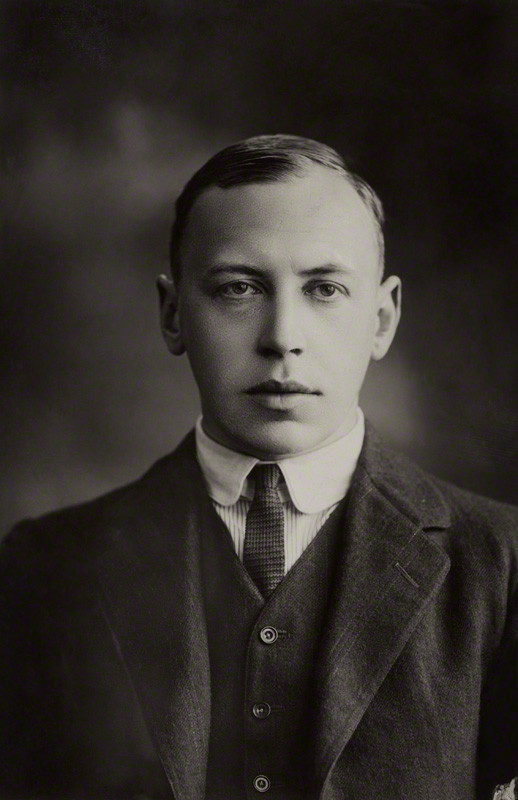
Alfred Noyes CBE (16 September 1880 – 25 June 1958) was an English poet, short-story writer and playwright.
Noyes was born in Wolverhampton, England the son of Alfred and Amelia Adams Noyes. When he was four, the family moved to Aberystwyth, Wales, where his father taught Latin and Greek. The Welsh coast and mountains were an inspiration to Noyes.
In 1898, he left Aberystwyth for Exeter College, Oxford, where he distinguished himself at rowing, but failed to get his degree because he was meeting his publisher to arrange publication of his first volume of poems, The Loom of Years (1902), on a crucial day of his finals in 1903. On publication, The Loom of Years was lauded by W. B. Yeats and George Meredith. Noyes' poetry also proved popular with the book-buying public, and for the first two decades of his career his books sold well.
Noyes published five more volumes of poetry from 1903 to 1913, among them The Flower of Old Japan (1903) and Poems (1904). Poems included "The Barrel-Organ". "The Highwayman" was first published in the August 1906 issue of Blackwood's Magazine, and included the following year in Forty Singing Seamen and Other Poems. In a nationwide poll conducted by the BBC in 1995 to find Britain's favourite poem, "The Highwayman" was voted the nation's 15th favourite poem. This poem was also the inspiration for name of the American folk music revival group, The Highwaymen.
Another major work in this phase of his career was Drake, a 200-page epic in blank verse about the Elizabethan naval commander Sir Francis Drake, which was published in two volumes (1906 and 1908). The poem shows the clear influence of Romantic poets such as Tennyson and Wordsworth, both in style and subject. Both volumes of Drake were the subjects of articles in The Times Literary Supplement.
Noyes' only full-length play, Sherwood, was published in 1911; it was reissued in 1926, with alterations, as Robin Hood. One of his most popular poems, "A Song of Sherwood", also dates from 1911. Eventually, one of the more popular ballads dating from this period, "Bacchus and the Pirates", was set to music for two voices and piano by Michael Brough, and first performed at the Swaledale Festival in 2012.
Noyes stated that Geoffrey Chaucer, William Shakespeare, John Milton, Samuel Johnson and Alfred, Lord Tennyson were the greatest writers in the English language. Noyes modelled his poetry after Tennyson's, and published a critical study of Tennyson in 1932. Noyes also admired the work of William Morris; his study of that writer was published in 1908. It was praised by Andrew Lang and later by C. S. Lewis.
By contrast, Noyes disliked most works of literary modernism. Noyes disdained the poetry of T. S. Eliot, regarding it as abstruse and pretentious. Noyes expressed contempt for Arnold Bennett, H. L. Mencken and Marcel Proust in his book The Edge of the Abyss, describing their works as salacious, irreligious and harmful to society as a whole. Noyes also had a special hatred for the work of James Joyce, calling it "filth". Noyes decried Joyce's Ulysses, claiming that the novel was obscure and gratuitously vulgar. In a 1922 article for the Sunday Chronicle, Noyes called Ulysses "Literary Bolshevism" and "the foulest book that has ever found its way into print." When Lord Birkenhead died in 1930, Noyes, in collaboration with Lord Darling, obtained the withdrawal of a copy of Ulysses (at that time, banned in the UK) from the auction sale of Birkenhead's effects.
Hub AI
Alfred Noyes AI simulator
(@Alfred Noyes_simulator)
Alfred Noyes
Alfred Noyes CBE (16 September 1880 – 25 June 1958) was an English poet, short-story writer and playwright.
Noyes was born in Wolverhampton, England the son of Alfred and Amelia Adams Noyes. When he was four, the family moved to Aberystwyth, Wales, where his father taught Latin and Greek. The Welsh coast and mountains were an inspiration to Noyes.
In 1898, he left Aberystwyth for Exeter College, Oxford, where he distinguished himself at rowing, but failed to get his degree because he was meeting his publisher to arrange publication of his first volume of poems, The Loom of Years (1902), on a crucial day of his finals in 1903. On publication, The Loom of Years was lauded by W. B. Yeats and George Meredith. Noyes' poetry also proved popular with the book-buying public, and for the first two decades of his career his books sold well.
Noyes published five more volumes of poetry from 1903 to 1913, among them The Flower of Old Japan (1903) and Poems (1904). Poems included "The Barrel-Organ". "The Highwayman" was first published in the August 1906 issue of Blackwood's Magazine, and included the following year in Forty Singing Seamen and Other Poems. In a nationwide poll conducted by the BBC in 1995 to find Britain's favourite poem, "The Highwayman" was voted the nation's 15th favourite poem. This poem was also the inspiration for name of the American folk music revival group, The Highwaymen.
Another major work in this phase of his career was Drake, a 200-page epic in blank verse about the Elizabethan naval commander Sir Francis Drake, which was published in two volumes (1906 and 1908). The poem shows the clear influence of Romantic poets such as Tennyson and Wordsworth, both in style and subject. Both volumes of Drake were the subjects of articles in The Times Literary Supplement.
Noyes' only full-length play, Sherwood, was published in 1911; it was reissued in 1926, with alterations, as Robin Hood. One of his most popular poems, "A Song of Sherwood", also dates from 1911. Eventually, one of the more popular ballads dating from this period, "Bacchus and the Pirates", was set to music for two voices and piano by Michael Brough, and first performed at the Swaledale Festival in 2012.
Noyes stated that Geoffrey Chaucer, William Shakespeare, John Milton, Samuel Johnson and Alfred, Lord Tennyson were the greatest writers in the English language. Noyes modelled his poetry after Tennyson's, and published a critical study of Tennyson in 1932. Noyes also admired the work of William Morris; his study of that writer was published in 1908. It was praised by Andrew Lang and later by C. S. Lewis.
By contrast, Noyes disliked most works of literary modernism. Noyes disdained the poetry of T. S. Eliot, regarding it as abstruse and pretentious. Noyes expressed contempt for Arnold Bennett, H. L. Mencken and Marcel Proust in his book The Edge of the Abyss, describing their works as salacious, irreligious and harmful to society as a whole. Noyes also had a special hatred for the work of James Joyce, calling it "filth". Noyes decried Joyce's Ulysses, claiming that the novel was obscure and gratuitously vulgar. In a 1922 article for the Sunday Chronicle, Noyes called Ulysses "Literary Bolshevism" and "the foulest book that has ever found its way into print." When Lord Birkenhead died in 1930, Noyes, in collaboration with Lord Darling, obtained the withdrawal of a copy of Ulysses (at that time, banned in the UK) from the auction sale of Birkenhead's effects.
Recent media