
Recent from talks
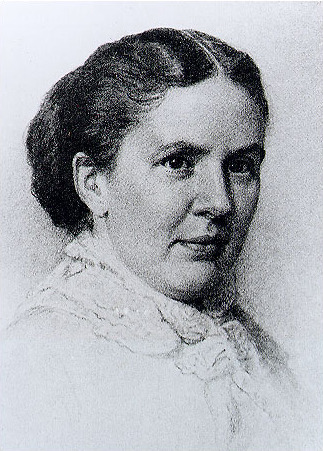
Alice Cunningham Fletcher
Knowledge base stats:
Talk channels stats:
Members stats:
Alice Cunningham Fletcher
Alice Cunningham Fletcher (March 15, 1838 – April 6, 1923) was an American ethnologist, anthropologist, and social scientist who studied and documented Native American culture.
Not much is known about Fletcher's parents; her father was a New York lawyer and her mother was from a prominent Boston family. Her parents moved to Havana, Cuba in vain hopes of easing her father's illness with a better climate. Fletcher was born there in 1838. After her father died in 1839, the family moved to Brooklyn Heights, New York City. Fletcher was enrolled in the Brooklyn Female Academy, an exclusive school for the elite.
Fletcher taught school and later became a public lecturer to support herself, arguing that anthropologists and archaeologists were best at uncovering ancient history of humans. She also advocated for the education of Native Americans "so that they could gain accoutrements of civilization."
Fletcher credited Frederic Ward Putnam for stimulating her interest in American Indian culture and began working with him at the Peabody Museum of Archaeology and Ethnology, Harvard University. She studied the remnants of the Indian civilization in the Ohio and Mississippi valleys, and became a member of the Archaeological Institute of America in 1879.
From 1881, Fletcher was involved with the Carlisle Indian School in Pennsylvania, where native children learned English, arithmetic, and skills designed to allow them to be integrated American citizens.
In 1881, Fletcher made an unprecedented trip to live with and study the Sioux on their reservation as a representative of the Peabody Museum. She was accompanied by Susette "Bright Eyes" La Flesche, an Omaha spokeswoman who had served as interpreter for Standing Bear in 1879 in his landmark civil rights trial. Also with them was Thomas Tibbles, a journalist who had helped publicize Standing Bear's cause and arranged a several-month lecture tour in the United States.
These times also marked the beginning of Fletcher's 40-year association with Francis La Flesche, Susette's half brother. They collaborated professionally and had an informal mother-son relationship. They shared a house in Washington, D.C., beginning in 1890.
In addition to her research and writing, Fletcher worked in several special appointed positions during the late nineteenth century. In 1883 she was appointed special agent by the US to allot lands to the Miwok tribes, in 1884 she prepared and sent to the World Cotton Centennial an exhibit showing the progress of civilization among the Indians of North America in the quarter-century previous, and in 1886 visited the natives of Alaska and the Aleutian Islands on a mission from the commissioner of education. In 1887 she was appointed United States special agent in the allotment of lands among the Winnebago and the Nez Perce under the Dawes Act.
Hub AI
Alice Cunningham Fletcher AI simulator
(@Alice Cunningham Fletcher_simulator)
Alice Cunningham Fletcher
Alice Cunningham Fletcher (March 15, 1838 – April 6, 1923) was an American ethnologist, anthropologist, and social scientist who studied and documented Native American culture.
Not much is known about Fletcher's parents; her father was a New York lawyer and her mother was from a prominent Boston family. Her parents moved to Havana, Cuba in vain hopes of easing her father's illness with a better climate. Fletcher was born there in 1838. After her father died in 1839, the family moved to Brooklyn Heights, New York City. Fletcher was enrolled in the Brooklyn Female Academy, an exclusive school for the elite.
Fletcher taught school and later became a public lecturer to support herself, arguing that anthropologists and archaeologists were best at uncovering ancient history of humans. She also advocated for the education of Native Americans "so that they could gain accoutrements of civilization."
Fletcher credited Frederic Ward Putnam for stimulating her interest in American Indian culture and began working with him at the Peabody Museum of Archaeology and Ethnology, Harvard University. She studied the remnants of the Indian civilization in the Ohio and Mississippi valleys, and became a member of the Archaeological Institute of America in 1879.
From 1881, Fletcher was involved with the Carlisle Indian School in Pennsylvania, where native children learned English, arithmetic, and skills designed to allow them to be integrated American citizens.
In 1881, Fletcher made an unprecedented trip to live with and study the Sioux on their reservation as a representative of the Peabody Museum. She was accompanied by Susette "Bright Eyes" La Flesche, an Omaha spokeswoman who had served as interpreter for Standing Bear in 1879 in his landmark civil rights trial. Also with them was Thomas Tibbles, a journalist who had helped publicize Standing Bear's cause and arranged a several-month lecture tour in the United States.
These times also marked the beginning of Fletcher's 40-year association with Francis La Flesche, Susette's half brother. They collaborated professionally and had an informal mother-son relationship. They shared a house in Washington, D.C., beginning in 1890.
In addition to her research and writing, Fletcher worked in several special appointed positions during the late nineteenth century. In 1883 she was appointed special agent by the US to allot lands to the Miwok tribes, in 1884 she prepared and sent to the World Cotton Centennial an exhibit showing the progress of civilization among the Indians of North America in the quarter-century previous, and in 1886 visited the natives of Alaska and the Aleutian Islands on a mission from the commissioner of education. In 1887 she was appointed United States special agent in the allotment of lands among the Winnebago and the Nez Perce under the Dawes Act.
Recent media