Recent from talks
Nothing was collected or created yet.
Alsergrund
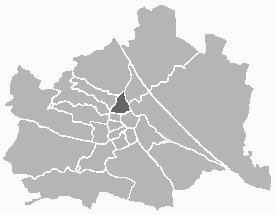
View on WikipediaAlsergrund (Austrian German pronunciation: [ˈalsɐˌɡrʊnd] ⓘ; Viennese: Oisagrund) is the ninth district of Vienna, Austria (German: 9. Bezirk, Alsergrund). It is located just north of the first, central district, Innere Stadt. Alsergrund was incorporated in 1862, with seven suburbs. As a central district, the area is densely populated. According to the census of 2001, there were 37,816 inhabitants over 2.99 square km (1.15 sq. mi).
Key Information
Many departments of the University of Vienna (main university), TU Wien and the University of Natural Resources and Life Sciences (BOKU) are located in Alsergrund. Until 2013 the University of Economics and Business (Wirtschaftsuniversität Wien) was also located in the 9th district, but eventually moved to the 2nd district. There are also many large hospitals, including the biggest in Vienna, the AKH (Allgemeines Krankenhaus, "General Hospital").
Alsergrund is associated with many notable names of Viennese art and science. It is the birthplace of Romantic composer Franz Schubert. Classic music composer Ludwig van Beethoven died here in his apartment at Schwarzspanierstraße 15. Berggasse 19 is the former residence and office of Sigmund Freud. It was Freud's home from 1891 until his flight to England in 1938, and is currently the site of the Vienna Sigmund Freud Museum. Most of the patients Freud treated during the development of his theories of psychoanalysis visited him at his Alsergrund office.
In addition, the park in front of the Votivkirche, on the corner of Währingerstrasse and Schottenring, was named after Freud, in memory of his frequent visits there.


Geography
[edit]Alsergrund is situated in north-central Vienna. It covers 2.99 km2 (1.15 sq mi) making it the seventh smallest district of Vienna. North to South the district covers 2.35 km (1.46 mi) from the northernmost point of the Gürtel boulevard down towards the first district. The main east–west axis is located between Augarten Brücke and Zimmermannplatz (2 km (1.2 mi).[2] The district is delimited by: Gürtel in the west, the Danube Canal in the east, as well as the Maria-Theresien-Straße, Universitätsstraße and Alserstraße in the south. Neighbouring districts are Döbling in the north, Währing and Hernals in the west, Josefstadt and Innere Stadt in the south. In the east, Alsergrund is separated by the Danube Canal from Brigittenau and Leopoldstadt.
Topography
[edit]The natural topography of the district area has been covered by centuries of construction. Alesergrund's lowest point at 163 meters can be found near Bauernfeldplatz, its highest near Michelbeuern (202 meters).[2] The branches of the Danube played a significant part in shaping the general lay of the land.[3]
The waterfront edge is still recognizable, through the waste ground between the Nußdorfer Straße, Währinger Straße, and Lichtenstein-Straße. There are also minor rivers: Wienerwald streams, all of which were bricked over in the 19th century. The main stream, the Als, used to cause frequent flooding.
The foothills of the Vienna Woods reach into Alsergrund. In the Middle Ages, these were used for vineyards.
Sections
[edit]The Alsergrund was formed, in 1850, from seven suburbs. The names of the suburbs have remained in section names but also in the awareness of many residents. In the northeast area of the district is the Althangrund, mostly with public facilities and infrastructure constructions built, such as the Franz Josef station, the Vienna University of Economics, the geosciences, mathematics, pharmacology and biology faculties of the University of Vienna, the Transport and postal and Telegraph Directorate. In the north is also the Spittelau with the incinerator Spittelau. South of Althangrund, joins the Rossau, which is mostly covered with residential buildings. Among the main installations include Rossauer barracks, the Servitenkloster, the Jewish cemetery. Even the Palais Liechtenstein belongs to Rossau, not northern Lichtental, a residential area in the parish.
In the south is the Alser suburb, whose southern part was added to the 8th district, Josefstadt. The district is established, in large part, with academic institutions such as the Old AKH and the Medical University of Vienna. In addition, in the suburb Alser, are the Vienna University and the St. Anna Children's Hospital. In the east is the part of the Michelbeuern, whose southern part is taken almost entirely by the Vienna AKH, north of Himmelpfortgrund. The district is almost exclusively populated residential houses and also the Hera Sanatorium.
A breakdown of the district area is also in the Zählbezirken of the official statistics, in which the census district of the municipality are combined. The six Zähl areas in Alsergrund are Lichtental-Spittelau, Rossau, General Hospital, Nußdorferstraße-Volksoper, Liechtenstein Street, and University Quarter.
Education
[edit]
Gymnasium Wasagasse, an Austrian secondary school

Lycée Français de Vienne, a French curriculum school, is located in Alsergrund.
Notable residents
[edit]
- Peter Alexander (1926–2011), actor, singer and entertainer
- Franz Alt (1821–1914), landscape painter
- Rudolf von Alt (1812–1905)
- Ludwig van Beethoven (1770–1827), German composer and pianist, lived and died here
- Heimito von Doderer (1896–1966), writer, lived and died here
- Karl Farkas (1893–1971), actor and cabaret performer
- Viktor Frankl (1905–1997), neurologist and psychiatrist
- Sigmund Freud (1856–1939), neurologist who founded the discipline of psychoanalysis, lived here
- Erich Fried (1921–1988), poet
- Eugene Gendlin (1926–2017), philosopher and psychologist
- Theodor Herzl (1860–1904), Jewish Austro-Hungarian journalist and the father of modern political Zionism, lived here
- Franz Löblich (1827–1897), entrepreneur
- Franz Matsch (1861–1942), painter and sculptor (Art Nouveau)
- Jörg Mauthe (1924–1986), journalist, writer and politician
- Wolfgang Amadeus Mozart (1756–1791), composer of the Classical era, lived here in 1788/89
- Günther Paal (born 1962), Kabarett artist
- Leo Perutz (1882–1957), Austrian novelist and mathematician
- Rudolf Prikryl (1896–1965), "three days' mayor"of Vienna in 1945, raised here
- Günther Schifter (1923–2008), journalist and radio presenter
- Arnold Schoenberg (1874–1951), lived here
- Arthur Schnitzler (1862–1931)
- Franz Schubert (1797–1828), an Austrian composer, was born here.
- Erwin Steinhauer (born 1951)
- Julius Tandler (1869–1936)
- Friedrich Torberg (1908–1979)
Sister cities
[edit]- Takarazuka (Japan) since 1994
- Dongcheng District in Beijing, People's Republic of China
See also
[edit]References
[edit]- ^ Statistik Austria - Bevölkerung zu Jahresbeginn 2002-2016 nach Gemeinden (Gebietsstand 1.1.2016), Statistik Austria.
- ^ a b Wolf: Alsergrund. Bezirk der Dichter und Denker ("Alsergrund: District of Talkers and Thinkers"), p.77.
- ^ Christian Gantner. Vom Bach zum Bachkanal ("From Bach to Bach-Canal"). Vienna 2004, ISBN 3-200-00259-X, S. 44 ff.
Sources
[edit]- "Wien - 9. Bezirk/Alsergrund", Wien.gv.at, 2008, webpage (15 subpages): Wien.gv.at-alsergrund (in German).
- Felix Czeike: Wiener Bezirkskulturführer: IX. Alsergrund ("Vienna District Cultural Guide: IX. Alsergrund"). Jugend und Volk, Vienna 1979, ISBN 3-7141-6219-4.
- Carola Leitner (Hg.): Alsergrund: Wiens 9. Bezirk in alten Fotografien ("Alsergrund: Vienna's 9th District in Old Photographs"). Ueberreuter, Vienna 2006, ISBN 3-8000-7176-2.
- Hans Mück: Quellen zur Geschichte des Bezirks Alsergrund ("Sources on the History of the Alsergrund District"). Verein für Geschichte der Stadt Wien, Vienna 1978.
- Alfred Wolf: Alsergrund. Bezirk der Dichter und Denker ("Alsergrund: District of Poets and Thinkers"). Mohl, Vienna 1993, ISBN 3-900272-48-4.
- Alfred Wolf: Alsergrund-Chronik. Von der Römerzeit bis zum Ende der Monarchie ("Alsergrund Chronicle: From the Roman era until the end of the monarchy"). Vienna 1981.
- Alfred Wolf: Wien Alsergrund (Vienna Alsergrund). Sutton Verlag, Erfurt 2007, ISBN 978-3-86680-174-5.
External links
[edit]- "Wien - 9. Bezirk/Alsergrund", website Wien.gv.at, 2008, webpage has over 15 subpages (in German).
Alsergrund
View on GrokipediaAlsergrund is the ninth municipal district of Vienna, Austria, situated directly north of the historic Innere Stadt and encompassing the city's primary academic and medical precincts. Formed in 1850 through the amalgamation of suburbs including Althan, Himmelpfortgrund, and Rossau along the former Alserbach stream, it spans 2.99 square kilometers with a densely populated estimated 41,664 residents as of 2025.[1][2] The district is characterized by its concentration of higher education institutions, notably the University of Vienna and the Medical University of Vienna, alongside major hospitals like the Allgemeines Krankenhaus, fostering a vibrant intellectual environment dominated by students, academics, and medical professionals.[3] Key cultural landmarks include the Volksoper, Palais Liechtenstein, and the Sigmund Freud Museum, reflecting Alsergrund's blend of Gründerzeit architecture, bourgeois heritage, and ongoing role as an affluent, centrally located residential area.[4]
History
Origins and medieval period
The area encompassing modern Alsergrund originated as low-lying, marshy terrain along the Als brook (Alserbach), a stream rising in the Vienna Woods and flowing toward the Danube. This brook, the second-longest after the Wien River originating in the same woods, shaped the region's hydrology and gave rise to its name, with "Alsergrund" denoting the surrounding grounds or meadows. The locale was first documented in 1044, appearing in records as the zone around the Als brook, indicating early awareness of its distinct geographical features amid Vienna's expanding hinterlands.[5] In the early medieval period, following the decline of Roman Vindobona—whose core lay in present-day Innere Stadt but whose influence extended to peripheral areas—Alsergrund saw minimal structured settlement, functioning primarily as flood-prone alluvial land used for grazing and rudimentary agriculture. The terrain's alder-dominated wetlands, reflected in etymological roots linking "Als" or "Else" to alder trees (Ellern in German), limited dense habitation, though scattered farms and paths connected it to the fortified core of medieval Vienna. Archaeological evidence of pre-medieval activity remains sparse, with the area's role subordinated to the city's defensive walls, which excluded suburbs like Alsergrund from intramural protections against invasions, such as the Mongol incursion of 1241.[6] By the high medieval era, particularly from the 13th century, monastic foundations began fostering more organized development. Orders including the Augustinians established priories and cultivated lands, introducing systematic drainage and viticulture that mitigated flooding and supported subsistence economies. These religious institutions, often endowed by Babenberg and early Habsburg rulers, marked Alsergrund's transition from peripheral wilderness to a proto-suburban extension of Vienna, though it retained a rural character with vineyards, mills, and seasonal inundations until the late Middle Ages. Population estimates for such Vorstädte (suburbs) hovered below 1,000 in the 15th century, dwarfed by the walled city's 20,000–30,000 inhabitants, underscoring its marginal yet strategically vital position for provisioning.[4]Incorporation into Vienna and 19th-century urbanization
In 1850, the area comprising modern Alsergrund was incorporated into Vienna through the merger of seven suburbs located within the Linienwall tariff barrier: Alservorstadt, Althan (also known as Althangrund), Himmelpfortgrund, Lichtental, Michelbeuern, Roßau, and Thury.[1] This incorporation, enacted under the Provisorische Gemeindeordnung of March 9, 1850, expanded Vienna's administrative boundaries to include these inner suburbs, forming the basis for the city's inner districts (Innenbezirke).[7] The suburbs had previously functioned as semi-autonomous entities outside the medieval city walls but within the Linienwall, which had been constructed in the early 18th century for customs collection.[1] Following the incorporation, Alsergrund was officially designated as Vienna's 9th district in 1862, receiving its numerical identifier amid refinements to the municipal structure.[8] The mid-19th century marked the onset of rapid urbanization, driven by Vienna's economic recovery after the 1848 revolutions and the abolition of guild restrictions, which spurred industrial and residential development. The demolition of the Linienwall beginning in 1858 facilitated the construction of the Gürtel (belt road) ring boulevard, opening the area to systematic urban planning and infrastructure expansion.[1] The Gründerzeit era (roughly 1860s–1890s), characterized by speculative building booms fueled by industrialization and population influx, transformed Alsergrund from meadowlands and scattered settlements into a densely built district of multi-story tenements and institutional complexes. Key developments included the expansion of medical facilities, such as the Allgemeine Poliklinik (founded 1788 but significantly enlarged in the 1860s–1880s) and university-affiliated clinics including psychiatric, neurological, and surgical departments tied to the Medical University of Vienna.[1] Architectural landmarks like the Votivkirche (construction 1856–1879), commissioned after an assassination attempt on Emperor Franz Joseph I, exemplified the era's neoclassical and historicist styles, while barracks (e.g., Roßauer and Elisabeth-Kasernen) and academies (e.g., Konsularakademie) underscored the district's role in military, diplomatic, and educational functions.[1] Residential construction emphasized sturdy, ornate facades with inner courtyards, accommodating a growing middle-class and student population drawn to nearby institutions like the University of Vienna.[4] This urbanization reflected broader Viennese trends, with the district's integration into the city's sewerage, gas lighting, and horse-drawn tram networks by the 1870s–1880s enhancing livability and connectivity. However, rapid densification also led to overcrowding in rental barracks, precursors to later social housing reforms.[1] By the late 19th century, Alsergrund had evolved into a hub for intelligentsia, professionals, and public administration, with preserved Gründerzeit structures attesting to the era's architectural legacy.[4]20th-century transformations and World War II impacts
In the early 20th century, Alsergrund solidified its role as a hub for medical and cultural institutions, with facilities like the Allgemeine Poliklinik expanding healthcare services and the Volksoper serving as a key venue for opera performances since its opening in 1898.[1] Urban development continued amid Vienna's growth, though the district retained its bourgeois character amid rising proletarian influences from adjacent areas. World War I brought mobilization through the Roßauer Kaserne, with local impacts including a fire at the Servitenkirche on July 8, 1917.[1] The interwar period under "Red Vienna" marked significant transformations through social democratic initiatives, including municipal housing projects (Gemeindebauten) such as the Gall-Hof (1924–1925) and Sigmund-Freud-Hof (1925), which provided affordable apartments with modern amenities like communal facilities.[9] These efforts, led by figures like Julius Tandler, who opened the Julius-Tandler-Heim in 1925 for welfare and healthcare, aimed to address post-World War I housing shortages and poverty.[9] Political tensions peaked with the June 1919 communist putsch attempt, resulting in 20 deaths in the district, and the 1934 Austrofascist suppression, including the occupation of the Arbeiterheim.[1] Alsergrund's substantial Jewish population, second only to Leopoldstadt's around the turn of the century, faced growing antisemitic pressures.[10] The 1938 Anschluss integrated Alsergrund into the Nazi regime, triggering immediate persecution of its approximately 12,000 Jewish residents, many of whom were forced to emigrate or were murdered in the Holocaust; synagogues, such as the one in Müllnergasse, were burned during the November 1938 pogroms.[1] Nazi policies disrupted institutions, with school enrollments like at the Erich Fried Realgymnasium dropping by over half from 529 students in 1937/38 to fewer by 1940/41 due to expulsions and flight.[9] During World War II, Alsergrund suffered from Allied bombings targeting infrastructure like the Franz-Josef-Bahnhof and Umspannwerk Michelbeuern, damaging around 560 houses and striking the Neue Kliniken hospital complex, with heavy casualties reported east and west of the Währinger Gürtel.[1] Specific sites hit included the Schwarzspanierkirche in 1944, the Tandelmarkt (heavily bombed in 1944), and the Erich Fried Realgymnasium (11 grenade impacts causing ceiling collapses); the Augartenbrücke was demolished by retreating German forces in 1945, and the Roßauer Kaserne sustained damage requiring post-war rebuilding.[9] These attacks contributed to Vienna's overall loss of 20% of its housing stock across 52 raids.Post-war reconstruction and modern developments
Following the end of World War II in 1945, Alsergrund fell within the American occupation zone of Vienna, where initial reconstruction efforts prioritized clearing debris from Allied bombings and repurposing facilities for military use. The Colosseum cinema was converted into the "Yanks" theater for U.S. soldiers, while an officers' casino was established at Roßauer Lände.[1] Bomb damage in the district, consistent with Vienna's overall losses of approximately 20% of housing stock from 52 air raids, necessitated repairs to Gründerzeit-era buildings and infrastructure, though specific crater counts for Alsergrund remain undocumented in available records. City-wide reconstruction emphasized functionalist architecture and rapid housing provision, with Alsergrund benefiting from these efforts through infill repairs rather than wholesale demolition, preserving much of its 19th-century urban fabric amid broader Viennese priorities for utility restoration.[11] In the mid-20th century, Alsergrund underwent significant institutional modernization, exemplified by the development of the new campus for the Medical University of Vienna at the Allgemeines Krankenhaus (AKH). Planning for this expansive facility began in the postwar period, with construction advancing through the 1960s and 1970s as a modernist response to prewar overcrowding and outdated infrastructure, culminating in operational phases by the 1980s and embodying Austria's shift toward functional, large-scale public architecture.[12] This project integrated the district's role as an academic hub, adjacent to the University of Vienna, fostering continued emphasis on educational and medical facilities over residential expansion during the occupation and early republic years. Since the 1990s, Alsergrund has experienced incremental urban infill and gentrification, with approximately 120 new residential buildings constructed after 1991 amid its total of around 1,600 structures, reflecting demand from students, professionals, and cultural institutions in this densely built area.[13] Notable contemporary developments include the Althan Quartier Francis, completed in 2024 near Franz-Josefs-Bahnhof, which features multilevel volumes blending housing, offices, and public spaces in a sustainable design.[14] Similarly, the Kolpinghaus Alsergrund project incorporates mixed-use elements for students, elderly residents, and community facilities, prioritizing green roofs and multifunctional bases to address housing shortages without altering the district's historic scale.[15] These initiatives, spurred by Vienna's economic integration post-EU accession in 1995, have enhanced connectivity via public transport while maintaining Alsergrund's character as a scholarly and cultural enclave, though they have also driven property values upward in select neighborhoods.Geography and Environment
Location and boundaries
Alsergrund, the ninth district of Vienna, occupies a central position in the city's northern inner zone, directly adjoining the Innere Stadt to the south. This placement positions it within Vienna's historic core, shaped by 19th-century urban expansion following the removal of medieval fortifications.[4] The district's boundaries encompass neighboring areas including Josefstadt (8th district) to the southwest, Hernals (17th) and Währing (18th) to the west and north, Leopoldstadt (2nd) to the northeast, and Landstraße (3rd) to the east, with the Innere Stadt forming the southeastern limit.[13] These borders are delineated by prominent infrastructural features: the Ringstraße serves as the southern edge, a monumental boulevard developed between 1858 and 1865 in place of the former city walls; the Gürtel, constructed concurrently as an outer ring road, marks the northern perimeter; the Donaukanal (Danube Canal) partially defines the eastern boundary, separating it from Leopoldstadt; and western limits follow alignments such as Alserstraße and adjacent thoroughfares. This configuration results in a compact urban territory integral to Vienna's administrative and cultural fabric.[16]Topography, hydrology, and urban landscape
Alsergrund lies within the flat alluvial plain of the Vienna Basin, with elevations averaging around 180 meters above sea level and minimal topographic variation, typically ranging from 175 to 190 meters.[17] [18] This low-relief terrain stems from sedimentary deposits laid down by ancient Danube river courses, which once meandered through the area prior to 19th-century channeling and embankment works.[19] The district's hydrology is dominated by its eastern boundary along the Donaukanal, a 17.3-kilometer regulated arm of the Danube River engineered between 1598 and 1800 for navigation, milling, and flood mitigation, with modern reinforcements completed in the mid-19th century.[20] Historically, the unchannelized Danube's side arms and seasonal floods inundated much of Alsergrund, as mapped in 1865 inundation plans showing extensive flood-prone zones extending westward from the canal. Today, the Donaukanal's concrete-lined banks and upstream reservoirs provide robust flood protection, though groundwater levels remain influenced by Danube fluctuations and local precipitation, with no major surface streams crossing the district interior.[21] The urban landscape reflects 19th-century planned expansion, featuring broad, rectilinear streets such as Alser Straße and Rossauer Lände, flanked by densely packed Gründerzeit buildings constructed primarily between 1860 and 1914 in eclectic historicist styles with ornate facades and high ceilings.[4] [22] Approximately 1,600 residential and mixed-use structures dominate, with about 120 post-1991 additions introducing contemporary infill amid the historic fabric; institutional anchors like university complexes and hospitals further define a compact, pedestrian-oriented environment with limited green spaces but integrated pocket parks.[13] This layout prioritizes density and connectivity, shaped by the district's role as an extension of Vienna's inner core rather than expansive suburban development.[23]Administrative Divisions
Sub-districts and neighborhoods
Alsergrund is subdivided into six statistical quarters, known as Zählbezirke, which serve as the primary units for census data collection and urban planning analysis by the City of Vienna's statistical office. These quarters reflect historical and functional divisions within the district, encompassing residential, institutional, and commercial zones. The quarters are Lichtental-Spittelau, Rossau, Allgemeines Krankenhaus, Nußdorfer Straße–Volksoper, Liechtensteinstraße, and Universitätsviertel.[24][25]- Lichtental-Spittelau: This northern quarter includes the Spittelau area along the Danube Canal, featuring mixed residential buildings and industrial remnants, such as the historic Spittelau incineration plant redesigned by Friedensreich Hundertwasser in 1988–1992. It recorded a population decline from 11,026 in 1971 to 8,596 in 1991, indicative of post-war densification and later stabilization.[24]
- Rossau: A prestigious residential enclave in the southwest, known for its 18th- and 19th-century villas and proximity to the Volksgarten, Rossau maintains a low-density, upscale character with green spaces like the Rossau Cemetery established in 1826. It borders the 1st district and hosts diplomatic residences.
- Allgemeines Krankenhaus: Centered on the vast Allgemeines Krankenhaus (AKH) complex, Austria's largest hospital built between 1964 and 1987 on the site of the former general hospital dating to 1784, this quarter is dominated by medical facilities, medical university buildings, and associated housing, occupying a significant portion of the district's central area.[26]
- Nußdorfer Straße–Volksoper: This eastern quarter along Nußdorfer Straße includes the Volksoper opera house, opened in 1898 as the Kaiser-Jubiläums-Stadttheater, and features dense urban fabric with theaters, shops, and residential blocks; it showed a birth rate increase of 10.6 per mille in recent statistical tracking.[25]
- Liechtensteinstraße: Oriented along Liechtensteinstraße, this quarter combines academic and residential uses, with a birth rate of 9.3 per mille noted in demographic analyses, and includes mid-19th-century Gründerzeit architecture amid institutional developments.[25]
- Universitätsviertel: The southern core houses much of the University of Vienna's historic campus, founded in 1365, along the Ringstraße, with faculties, libraries, and student housing; it exhibits the highest concentration of academic institutions, contributing to the district's intellectual profile.[26]
Demographics
Population trends and statistics
As of January 1, 2024, Alsergrund had a population of 41,631 residents, representing 2.1% of Vienna's total population.[28] The district covers 2.99 square kilometers, yielding a population density of 14,030 inhabitants per square kilometer as measured on October 31, 2021.[28] This density reflects its status as a compact, central urban area with limited expansion potential. Population trends indicate modest overall growth in recent decades, driven by net migration amid stagnant or negative natural increase. From 2014 to 2023, the resident count rose by 1,103 persons (2.7%), at an average annual rate of 0.5%.[28] However, this upward trajectory reversed slightly in the subsequent year, with a 1.4% decline from 2023 to 2024.[28] In 2023, births totaled 312 while deaths numbered 328, resulting in a natural population balance of -16.[28] Earlier data from Statistik Austria show the population increasing from approximately 37,800 in 2001 to around 39,900 by 2012, consistent with gradual urbanization and in-migration to Vienna's inner districts.[29] The age structure underscores an aging yet working-age dominant profile:| Age Group | Residents (2024) |
|---|---|
| 0–14 years | 4,460 |
| 15–64 years | 30,399 |
| 65+ years | 6,772 |
Ethnic and cultural composition
As of early 2024, 35.4 percent of Alsergrund's residents, or 14,956 individuals, held foreign citizenship, a proportion slightly below that of Vienna's more peripheral high-migration districts like Favoriten (56.2 percent) or Rudolfsheim-Fünfhaus (56.4 percent) but aligned with the city's overall rate of 36.4 percent foreign citizenship at the start of 2025.[31][30] This share has risen gradually from 34.5 percent in 2018, when 13,800 foreign nationals resided in the district amid a total population of approximately 40,000.[32] The foreign population in Alsergrund is shaped by the district's function as an academic and medical hub, drawing EU citizens and international students to institutions such as the University of Vienna and the Medical University of Vienna, alongside professionals in healthcare and research.[26] Data on country of birth indicate a sustained influx from abroad, with non-Austrian births comprising a growing segment of the population between 2002 and 2024, though specific breakdowns by origin country for the district remain limited in public statistics, which prioritize citizenship over self-reported ethnicity.[26] Culturally, the district reflects a predominantly German-speaking Austrian core, tempered by multicultural influences from its transient student and expatriate communities, fostering a cosmopolitan yet integrated urban fabric less dominated by large non-EU enclaves compared to Vienna's outer districts.[33] Historical Jewish settlement in the 19th century contributed to early diversity, but current religious affiliations show a secular tilt, with over 24 percent unaffiliated and minimal organized Jewish presence.[34] Migration background—defined as foreign birth or at least one foreign-born parent—likely exceeds 40 percent, mirroring Vienna's 46.3 percent citywide rate, though district-specific figures for this broader metric are not granularly tracked in annual reports.[30]Economy and Infrastructure
Economic profile and key industries
Alsergrund functions primarily as a service-oriented economic hub within Vienna, characterized by high concentrations of employment in professional and public sectors rather than manufacturing or trade. As of October 31, 2021, the district hosted 46,666 workplace-based jobs, significantly exceeding the number of local residents employed there (4,720), reflecting substantial in-commuting from other areas of the city and beyond.[28] This imbalance underscores Alsergrund's role as a specialized employment center, with low industrial activity (4% of jobs) and negligible agriculture (<0.1%), aligning with its central urban location and historical development as a residential and institutional quarter.[28] The district's key industries are dominated by healthcare and education, which together account for 44% of total employment. Healthcare employs 23% of the workforce, driven by the Allgemeines Krankenhaus der Stadt Wien (AKH), Austria's largest hospital complex, and the adjacent Medical University of Vienna (MedUni Wien), a leading institution for medical research and training with over 8,000 students.[28][35] Education follows closely at 21%, bolstered by the University of Vienna's campus facilities in the area, contributing to research, administrative, and support roles. Other notable sectors include finance, real estate, and freelance professions (16%), public administration (11%), and general services (11%), with emerging growth in consulting firms, as evidenced by 273 new business registrations in 2023, many in business advisory.[28][36] These sectors reflect Alsergrund's integration into Vienna's knowledge economy, with limited heavy industry but a diverse base of small-to-medium enterprises in trade (5%), hospitality (4%), and IT (3%). The emphasis on health and education not only provides stable employment but also fosters innovation linkages, though the district's economy remains vulnerable to public funding fluctuations in these institutionally anchored fields.[28]Transportation and urban connectivity
Alsergrund benefits from Vienna's integrated public transportation network, operated primarily by Wiener Linien, which includes U-Bahn (subway), trams, buses, and regional trains, facilitating efficient movement within the district and to adjacent areas.[37] The system's single-ticket validity across modes, priced at €2.40 as of recent updates, supports seamless travel without transfers in many cases.[37] The U-Bahn provides rapid north-south and east-west links, with multiple stations in Alsergrund serving high daily volumes due to the district's proximity to educational and medical institutions. Key stations include Friedensbrücke on the U4 line, opened in 1976; Alser Straße on the U6 line, operational since 1989; and interchanges at Spittelau (U4/U6), Schottenring (U2/U4), Rossauer Lände (U4), Schottentor (U2), and Michelbeuern-AKH (U6), which connects to the Vienna General Hospital.[4] These lines enable journeys to Vienna's city center in under 5 minutes, such as from Friedensbrücke to Schwedenplatz.[38] Tram lines offer extensive surface coverage, with routes D, 5, 33, 37, 38, 40, 41, 42, 43, and 44 traversing the district, providing frequent service to landmarks like the University of Vienna and connections to outer districts.[4] For instance, tram line 38 links Schottentor to the Innere Stadt in approximately 4 minutes.[39] Bus line 40A supplements these, targeting local routes, while the introduction of tram line 12 in September 2025 enhanced tangential connectivity to neighboring Leopoldstadt and Brigittenau.[40] Urban connectivity is bolstered by Alsergrund's central position bordering the Innere Stadt, allowing pedestrian access to the Ringstraße and Gürtel thoroughfares, which integrate with major road networks like the A22 Danube Expressway nearby.[4] The district's dense infrastructure supports high modal share for public transport, with trams and subways handling peak student and commuter flows, though car usage remains low citywide at about 25% of trips as of 2022 data.[41]Education and Intellectual Life
Universities, research institutions, and schools
Alsergrund hosts the Medical University of Vienna (MedUni Wien), Austria's largest medical university, established as an independent institution in 2004 from the former medical faculty of the University of Vienna, with its main campus at Spitalgasse 23 in the district. The university encompasses over 20 clinical and basic research departments, serving more than 7,400 students and conducting extensive medical research, including in oncology and immunology. Several departments and institutes of the University of Vienna, such as those along Währingerstraße, are also situated in Alsergrund, contributing to the district's academic density.[13] The St. Anna Children's Cancer Research Institute (CCRI), located at Zimmermannplatz 10, specializes in pediatric oncology research, focusing on basic, translational, and clinical studies to improve treatments for childhood cancers, and operates in proximity to the Medical University and the city's general hospital.[42] Prominent secondary schools in Alsergrund include the Gymnasium Wasagasse, a historic federal gymnasium founded in 1871 with a humanist educational focus, emphasizing modern languages alongside classical subjects, and serving around 1,000 students.[43] The Lycée Français de Vienne, an international French-language school accredited by the Agency for French Education Abroad, enrolls over 2,000 students from preschool to high school, following the French national curriculum.[44] Additionally, the Erich Fried Realgymnasium, housed in a protected heritage building at Glasergasse 25, provides secondary education to approximately 500 students with an emphasis on sciences and modern languages.[45] These institutions underscore Alsergrund's role as a hub for diverse educational offerings in Vienna.Culture, Landmarks, and Society
Architectural and historical landmarks
The Liechtenstein Garden Palace in Alsergrund's Rossau quarter exemplifies Baroque architecture, commissioned around 1700 by Prince Johann Adam Andreas I von Liechtenstein on land acquired in 1687, with construction completed by 1709 under Italian and Swiss architects.[46][47] Originally a summer residence, it served as the Liechtenstein Museum until 2011 and features extensive gardens and interiors housing princely collections.[48] The Volksoper, Vienna's second-largest opera house, stands as a key cultural landmark built in 1898-1899 by architects Alexander Graf and Franz von Krauß in a neo-Renaissance style, completed in just ten months despite cost overruns.[49] Located near the Gürtel, it hosts operas, operettas, and musicals, with its facade and interiors reflecting fin-de-siècle Viennese design integrated with adjacent Otto Wagner railway architecture.[50] St. Canisius's Church (Canisiuskirche), a Roman Catholic parish church in the Spittelau area, was constructed from 1899 to 1903 in Historicist style, featuring a presbytery and monastery complex dedicated to St. Peter Canisius.[51] Its imposing tower and ornate interiors highlight late 19th-century ecclesiastical architecture amid urban development.[52] Other historical structures include the Strudlhofstiege, an Art Nouveau staircase built in 1910 connecting Strudlhofgasse and Sprechgasse, praised in Heimito von Doderer's novel Die Dämonen for its dramatic urban integration.[53] The Votivkirche, a neo-Gothic twin-towered basilica erected 1856-1879 on the Ringstraße border, commemorates the survival of Emperor Franz Joseph I from an 1853 assassination attempt, with its intricate spires and marble interiors symbolizing Gründerzeit grandeur.[54][53] These landmarks underscore Alsergrund's blend of aristocratic estates, cultural venues, and religious sites shaped by Habsburg-era patronage and 19th-century urbanization.[4]
Cultural institutions and events
The Volksoper Wien, situated at Währinger Straße 78 in Alsergrund, functions as Vienna's primary venue for operettas, operas, musicals, and ballets, delivering over 300 performances of approximately 25 productions each season.[55] Established in 1898, it emphasizes German-language works and has maintained a tradition of accessible musical theater for more than 125 years. The 2025/26 season includes 12 premieres, two revivals, 17 repertoire pieces, and various special events.[56] The Sigmund Freud Museum, housed in Freud's former residence at Berggasse 19, operates as a center for psychoanalytic studies, featuring permanent exhibitions on Freud's life, work, and legacy, alongside temporary displays and lectures.[54] Opened in 1971, it draws visitors interested in the history of psychology and hosts scholarly events exploring Freudian theory.[57] The Bezirksmuseum Alsergrund documents the district's history, art, and traditions through exhibits on local architecture, daily life, and notable events from the 19th century onward.[58] It serves as a repository for artifacts and narratives specific to Alsergrund's development as an intellectual and residential hub. The Palais Liechtenstein Garden Palace in Rossau hosts art exhibitions and cultural gatherings, including the "NOBLE DESIRES: A History of the European Art Market" display scheduled from January 30 to April 6, 2026, with free daily admission from 10 a.m. to 6 p.m.[59] The venue also accommodates concerts, guided tours, and private events amid its Baroque interiors and gardens.[60] WUK, at Währinger Straße 59, acts as a multifaceted cultural hub offering live music performances, workshops, exhibitions, and community-driven programs focused on contemporary arts and social engagement.[61] These activities foster an inclusive environment for artistic expression and cultural exchange within the district.[54]Social dynamics and resident life
Alsergrund's resident population of 41,631 as of January 1, 2024, features a relatively young median age of 41 years, with 52.5% women and a notable presence of students numbering 6,302, or 5% of Vienna's total student body, largely due to the district's proximity to major universities like the Medical University of Vienna.[28] This academic concentration fosters a dynamic social environment characterized by high educational attainment, with 53% of residents aged 25-64 holding a Matura qualification and 21% possessing university degrees, contributing to a professional and intellectually oriented community.[28] The district's ethnic composition includes significant foreign-born residents, with the largest groups from Germany (7.7%), Ukraine (2.9%), Serbia (2.2%), Italy (1.6%), and Syria (1.5%), reflecting Vienna's broader migration patterns but with a predominance of EU nationals facilitating smoother social integration compared to districts with higher non-EU proportions.[28] Housing patterns underscore social stability, with 63% of residents in private rentals, 12% in public housing, and 12% as owners, alongside an average living space of 43 m² per person in a densely populated area of 14,030 persons per km²; this mix supports a balanced resident profile without the concentrated poverty seen in some subsidized-heavy locales.[28] Daily life revolves around vibrant student-oriented amenities, including cozy cafés, modern bars, and cultural landmarks that encourage social interaction, particularly among younger residents and international academics.[62] The district maintains low crime rates consistent with Vienna's overall safety profile, where violent incidents and theft have declined in recent years, enabling residents to enjoy walkable neighborhoods and community cohesion emphasized in local governance priorities like equal opportunities and neighborhood solidarity.[4][28] Integration efforts align with Vienna's municipal policies promoting respect and equal access, bolstered by Alsergrund's high education levels and EU migrant dominance, which correlate with lower social friction; district budgeting allocates 19% of its €5.7 million 2023 funds to culture, youth, and elderly programs, supporting intergenerational and diverse community building without reported systemic tensions.[63][28] While population growth remains modest at +2.7% over the 2014-2024 decade, driven by net migration of -542 in 2023 amid stable natural change, the area's central location sustains a lively yet orderly resident experience focused on professional pursuits and casual social exchanges rather than overt communal events.[28]Notable Residents and Contributions
Historical figures
Franz Schubert, the Austrian composer renowned for his lieder and symphonies, was born on January 31, 1797, at Nußdorfer Straße 54 in Himmelpfortgrund, a suburb that was later incorporated into Alsergrund as part of Vienna's 9th district.[64] Schubert spent his early childhood there, receiving initial musical training from his father before entering the Stadtkonvikt boarding school, laying the foundation for his prolific output of over 600 songs and major works like the "Unfinished" Symphony.[65] Ludwig van Beethoven, the German composer who spent much of his career in Vienna, maintained multiple residences in Alsergrund, including his first lodgings upon arriving in 1792 near the General Hospital in the former Alservorstadt area.[66] He returned to the district several times, notably living in a house owned by his patron Prince Karl Lichnowsky around 1804 and dying at Schwarzspanierstraße 15 on March 26, 1827, where he completed late works amid deteriorating health and deafness.[66][67] Sigmund Freud, the founder of psychoanalysis, resided and practiced at Berggasse 19 in Alsergrund from 1891 until his exile in 1938, developing key theories on the unconscious, dream interpretation, and psychosexual development during this period.[4] The apartment served as both home and professional office, hosting sessions that advanced his seminal works like The Interpretation of Dreams (1899) and influencing modern psychology despite later controversies over empirical validation.[68]Modern influencers
Heimito von Doderer (1896–1966), a prominent Austrian novelist known for works exploring psychological depth and historical themes such as Die Dämonen (1956), resided in Alsergrund and drew inspiration from Vienna's intellectual milieu during his career spanning the interwar and post-World War II periods.[69] His contributions to modern German-language literature emphasized narrative innovation and critique of ideology, influencing subsequent generations of writers amid Austria's turbulent 20th-century transitions.[69] Erich Fried (1921–1988), a poet, essayist, and translator who emigrated to London during the Nazi era, maintained strong ties to Alsergrund as a former resident and returned thematically in his works addressing exile, pacifism, and social justice.[70] His poetry collections, including War, Wörter, Wunden (1978), reflected empirical observations of political upheaval, establishing him as an influential voice in post-1945 European leftist intellectual discourse despite criticisms of his ideological commitments.[70] Friedrich Torberg (1908–1979), a satirist and critic, lived in Alsergrund and produced works like Sünderin, aber keine Heilige (1955), targeting Austrian cultural complacency and émigré experiences.[70] His essays and novels, grounded in firsthand encounters with Vienna's literary scene, advanced conservative critiques of modernism and socialism, shaping debates on national identity through the mid-20th century.[70] Julius Tandler (1869–1936), a physician and social reformer, practiced and advocated in Alsergrund, pioneering public health initiatives during Vienna's "Red" socialist era from 1919 to 1934, including welfare reforms that expanded access to medical care for the urban poor based on data-driven assessments of social determinants.[69] His policies, implemented as municipal councillor, influenced early 20th-century European social medicine, though later suppressed under Austrofascism, highlighting causal links between policy and population health outcomes.[69]Politics and Governance
Local administration and political trends
Alsergrund's local administration is headed by Bezirksvorsteherin Saya Ahmad of the Social Democratic Party of Austria (SPÖ), who assumed the role following the 2015 district elections and was reelected in both the 2020 and 2025 Bezirksvertretungswahlen.[71][72] The district executive (Bezirksvorstehung) operates under the framework of Vienna's municipal governance, handling local matters such as urban planning, social services, and community initiatives, while subordinate to the city-wide Landtag and Gemeinderat.[73] In the April 27, 2025, Bezirksvertretungswahl, the SPÖ secured 34.7% of the vote in Alsergrund, maintaining its position as the leading party and expanding its share from prior elections, amid a city-wide voter turnout of approximately 62.7%.[74][75] This outcome reflects the district's 43-member Bezirksvertretung composition, where the SPÖ holds the plurality, supported by coalition arrangements typical in Vienna's districts.[76] The Greens (Grüne) and NEOS also polled competitively, consistent with Alsergrund's demographics featuring a high concentration of university students and academics, which favor center-left and liberal parties.[77] Political trends in Alsergrund underscore a persistent SPÖ dominance since the post-World War II era, bolstered by the district's role as Vienna's intellectual hub, though national shifts toward the Freedom Party of Austria (FPÖ) have exerted marginal pressure in urban constituencies like this one.[78] Unlike outer districts with stronger FPÖ gains, Alsergrund's 2025 results showed limited far-right inroads, with the SPÖ's focus on education, housing affordability, and cultural preservation resonating among residents—over 25,000 eligible voters in a population exceeding 23,000.[79] This stability contrasts with Vienna's broader 2025 election, where SPÖ retained city governance despite FPÖ advances elsewhere.[80]References
- https://commons.wikimedia.org/wiki/File:Wien_Alsergrund_Canisiuskirche_Spittelau.jpg
