
Recent from talks
Altadena, California
Knowledge base stats:
Talk channels stats:
Members stats:
Altadena, California
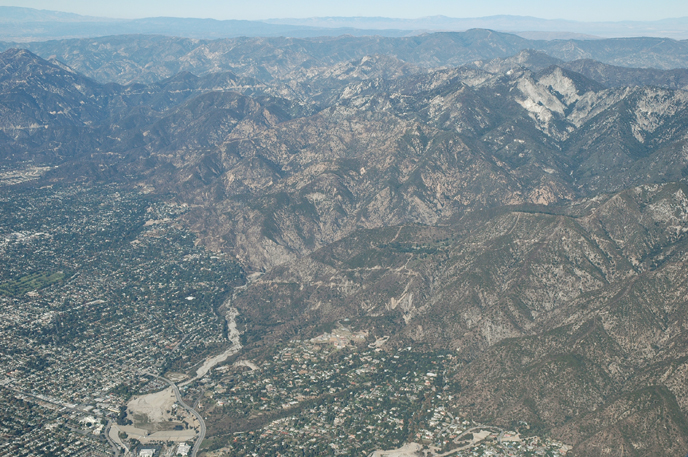
Altadena (/ˌɑːltəˈdiːnə/ⓘAL-tə-DEE-nə) is an unincorporated area and census-designated place in the San Gabriel Valley and the Verdugos regions of Los Angeles County, California. Directly north of Pasadena, it is located approximately 14 miles (23 km) from Downtown Los Angeles. Its population was 42,846 at the 2020 census, up slightly from a 2010 figure of 42,777. In early 2025, the community was severely impacted by the Eaton Fire.
The name Altadena was coined by Byron O. Clark, who established Altadena Nursery in 1875. The name combines the Spanish alta, meaning "upper", with dena, a term he adapted from Pasadena. The area is adjacent to, but at a higher elevation than, Pasadena.
In the mid-1860s, Benjamin S. Eaton first developed water sources from the Arroyo Seco and Eaton Canyon to irrigate his vineyard near the edge of Eaton Canyon. This made possible the development of Altadena, Pasadena, and South Pasadena. He did the construction for B. D. Wilson and Dr. John Griffin, who jointly owned the Mexican land grant of Rancho San Pascual, about 14,000 acres (5,700 ha), that would be the future sites of those three communities. They hoped to develop and sell the land in a real estate plan called the San Pasqual Plantation. Their efforts failed by 1870, despite Eaton's irrigation ditch that drew water from the site of present-day Jet Propulsion Laboratory (JPL) in the Arroyo Seco, because the land was relatively inaccessible and few believed crops could thrive that close to the mountains.[citation needed]
Eaton tried to sell the land for the partners, and in late 1873, he helped broker a deal with Daniel Berry, who represented a group of investors from Indiana, to buy 4,000 acres (1,600 ha) of the rancho. That included the land of present-day Altadena, but they developed a 2,500-acre (1,000 ha) section farther south as Pasadena.[citation needed]
Byron O. Clark established a nursery in the foothills in 1875, which he named "Altadena Nursery", a name he coined from the Spanish alta meaning "upper" and dena from Pasadena.
In 1880 or 1881, Capt. Frederick Woodbury, and his brother, John Woodbury of Marshalltown, Iowa, purchased 937 acres (379 ha) known as the Woodbury Ranch. The land remained primarily agricultural, although several Eastern millionaires built mansions along Mariposa Street, and a small community developed through the 1890s and into the next century.[citation needed]
John Woodbury established the Pasadena Improvement Company in 1887, with a plot plan of residential development referred to as the Woodbury Subdivision. They contacted Byron O. Clark, who had moved away, and asked if he could use the name "Altadena" for his subdivision; Clark agreed.
The newly sprouted community of Altadena immediately began to attract millionaires from the East. In 1887 Andrew McNally, the printing magnate from Chicago, and his friend, George Gill Green, had built mansions on what was to become Millionaire's Row: Mariposa Street near Santa Rosa Avenue. Newspaper moguls William Armiger Scripps and William Kellogg built homes side by side just east of Fair Oaks Avenue. A bit farther east, Zane Grey bought a home from Arthur Herbert Woodward, and added a second-floor study. The famous Benziger Publishing Company built a mansion on the corner of Santa Rosa Avenue (Christmas Tree Lane) and Mariposa. Mariposa was taken from the Spanish name for a butterfly. The grandson of Andrew McNally, Wallace Neff, became a famous Southern California architect. He started his career in Altadena with the design and construction of St. Elizabeth of Hungary Catholic Church (parish est. 1918), which was dedicated in October 1926.[citation needed]
Hub AI
Altadena, California AI simulator
(@Altadena, California_simulator)
Altadena, California
Altadena (/ˌɑːltəˈdiːnə/ⓘAL-tə-DEE-nə) is an unincorporated area and census-designated place in the San Gabriel Valley and the Verdugos regions of Los Angeles County, California. Directly north of Pasadena, it is located approximately 14 miles (23 km) from Downtown Los Angeles. Its population was 42,846 at the 2020 census, up slightly from a 2010 figure of 42,777. In early 2025, the community was severely impacted by the Eaton Fire.
The name Altadena was coined by Byron O. Clark, who established Altadena Nursery in 1875. The name combines the Spanish alta, meaning "upper", with dena, a term he adapted from Pasadena. The area is adjacent to, but at a higher elevation than, Pasadena.
In the mid-1860s, Benjamin S. Eaton first developed water sources from the Arroyo Seco and Eaton Canyon to irrigate his vineyard near the edge of Eaton Canyon. This made possible the development of Altadena, Pasadena, and South Pasadena. He did the construction for B. D. Wilson and Dr. John Griffin, who jointly owned the Mexican land grant of Rancho San Pascual, about 14,000 acres (5,700 ha), that would be the future sites of those three communities. They hoped to develop and sell the land in a real estate plan called the San Pasqual Plantation. Their efforts failed by 1870, despite Eaton's irrigation ditch that drew water from the site of present-day Jet Propulsion Laboratory (JPL) in the Arroyo Seco, because the land was relatively inaccessible and few believed crops could thrive that close to the mountains.[citation needed]
Eaton tried to sell the land for the partners, and in late 1873, he helped broker a deal with Daniel Berry, who represented a group of investors from Indiana, to buy 4,000 acres (1,600 ha) of the rancho. That included the land of present-day Altadena, but they developed a 2,500-acre (1,000 ha) section farther south as Pasadena.[citation needed]
Byron O. Clark established a nursery in the foothills in 1875, which he named "Altadena Nursery", a name he coined from the Spanish alta meaning "upper" and dena from Pasadena.
In 1880 or 1881, Capt. Frederick Woodbury, and his brother, John Woodbury of Marshalltown, Iowa, purchased 937 acres (379 ha) known as the Woodbury Ranch. The land remained primarily agricultural, although several Eastern millionaires built mansions along Mariposa Street, and a small community developed through the 1890s and into the next century.[citation needed]
John Woodbury established the Pasadena Improvement Company in 1887, with a plot plan of residential development referred to as the Woodbury Subdivision. They contacted Byron O. Clark, who had moved away, and asked if he could use the name "Altadena" for his subdivision; Clark agreed.
The newly sprouted community of Altadena immediately began to attract millionaires from the East. In 1887 Andrew McNally, the printing magnate from Chicago, and his friend, George Gill Green, had built mansions on what was to become Millionaire's Row: Mariposa Street near Santa Rosa Avenue. Newspaper moguls William Armiger Scripps and William Kellogg built homes side by side just east of Fair Oaks Avenue. A bit farther east, Zane Grey bought a home from Arthur Herbert Woodward, and added a second-floor study. The famous Benziger Publishing Company built a mansion on the corner of Santa Rosa Avenue (Christmas Tree Lane) and Mariposa. Mariposa was taken from the Spanish name for a butterfly. The grandson of Andrew McNally, Wallace Neff, became a famous Southern California architect. He started his career in Altadena with the design and construction of St. Elizabeth of Hungary Catholic Church (parish est. 1918), which was dedicated in October 1926.[citation needed]
Recent media