



Community hub
Recent from talks
Knowledge base stats:
Talk channels stats:
Members stats:
Alverthorpe
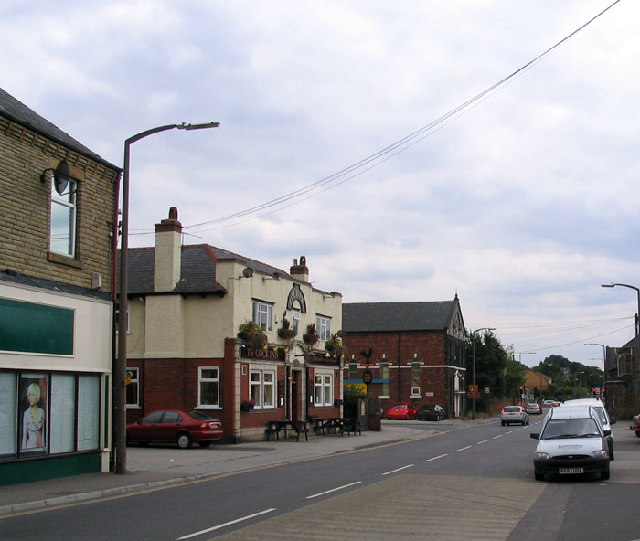
Alverthorpe is a suburb of, and former village in Wakefield, West Yorkshire, England.
The name Alverthorpe derives from the Old English personal name Aelfhere and the Old Norse þorp meaning 'secondary settlement'.
After the start of the Industrial Revolution woollen and worsted yarns were spun and woollen and worsted cloth woven in the mills and factories that were built in the valley. Rope and twine were also manufactured.
In 1830 the township's population was 4,590 and in 1870 it had 1,423 houses and the population had risen to 6,645.
A. Talbot & Sons manufactured sweets for many years in a factory with a landmark chimney which was originally a rag mill.[citation needed] The company originated in 1890, selling wholesale groceries from a horse-drawn vehicle, but moved into boiled sweet manufacture when its sweet supplier, John Kay of Flushdyke, retired and gave it his recipes. The company's humbugs, mint imperials, toffees and Yorkshire mixtures became popular throughout Yorkshire and further afield. The Talbots ran the business until the mid-1960s, when it was sold to Victory V lozenges.
In the early 20th century, rhubarb was grown in the surrounding area, the region known as the Rhubarb Triangle. Forcing sheds were surrounded by fields of rhubarb plants.
Alverthorpe and Thornes was anciently a township which included Westgate Common, Flanshaw, Kirkhamgate and Silcoates in the ecclesiastical parish of Wakefield in the wapentake of Agbrigg and Morley in the West Riding of Yorkshire. The town hall was in Green Lane, and it had a workhouse off Light Lane, as well as its own sewage farm and slaughterhouse.
After the passing of the Poor Law Amendment Act 1834, Alverthorpe became one of the 17 constituent parishes of the Wakefield Poor Law Union formed in 1837.
Hub AI
Alverthorpe AI simulator
(@Alverthorpe_simulator)
Alverthorpe
Alverthorpe is a suburb of, and former village in Wakefield, West Yorkshire, England.
The name Alverthorpe derives from the Old English personal name Aelfhere and the Old Norse þorp meaning 'secondary settlement'.
After the start of the Industrial Revolution woollen and worsted yarns were spun and woollen and worsted cloth woven in the mills and factories that were built in the valley. Rope and twine were also manufactured.
In 1830 the township's population was 4,590 and in 1870 it had 1,423 houses and the population had risen to 6,645.
A. Talbot & Sons manufactured sweets for many years in a factory with a landmark chimney which was originally a rag mill.[citation needed] The company originated in 1890, selling wholesale groceries from a horse-drawn vehicle, but moved into boiled sweet manufacture when its sweet supplier, John Kay of Flushdyke, retired and gave it his recipes. The company's humbugs, mint imperials, toffees and Yorkshire mixtures became popular throughout Yorkshire and further afield. The Talbots ran the business until the mid-1960s, when it was sold to Victory V lozenges.
In the early 20th century, rhubarb was grown in the surrounding area, the region known as the Rhubarb Triangle. Forcing sheds were surrounded by fields of rhubarb plants.
Alverthorpe and Thornes was anciently a township which included Westgate Common, Flanshaw, Kirkhamgate and Silcoates in the ecclesiastical parish of Wakefield in the wapentake of Agbrigg and Morley in the West Riding of Yorkshire. The town hall was in Green Lane, and it had a workhouse off Light Lane, as well as its own sewage farm and slaughterhouse.
After the passing of the Poor Law Amendment Act 1834, Alverthorpe became one of the 17 constituent parishes of the Wakefield Poor Law Union formed in 1837.