


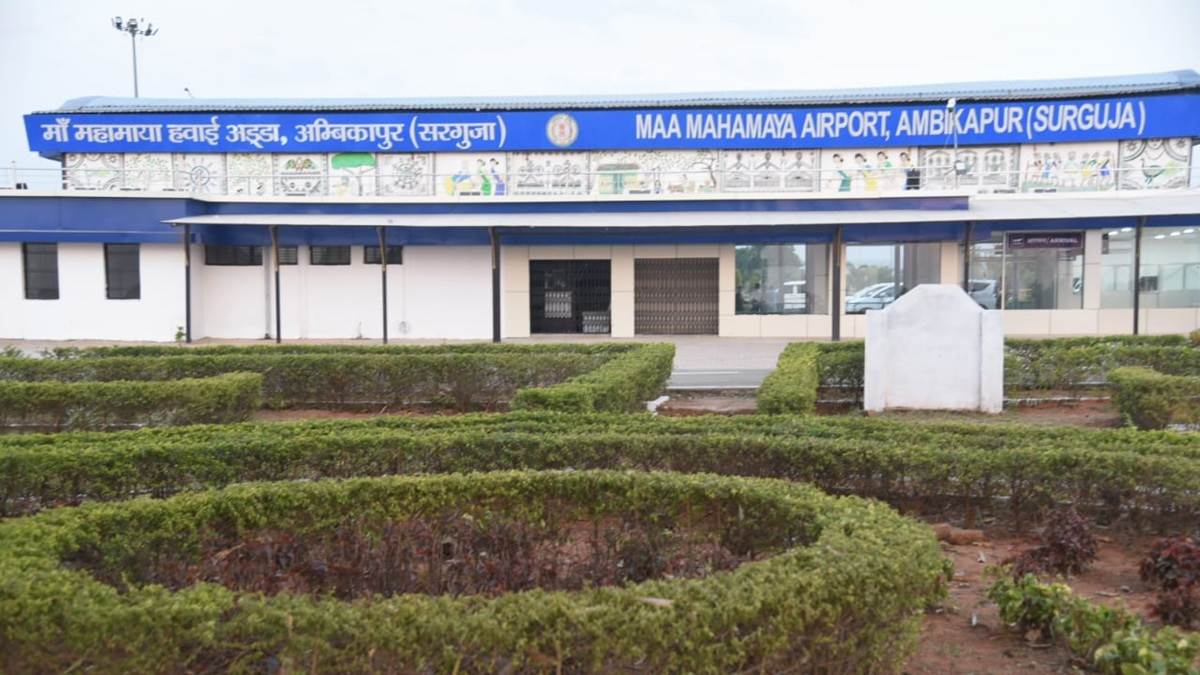

Community hub
Community hub
Recent from talks
Knowledge base stats:
Talk channels stats:
Members stats:
Ambikapur, Chhattisgarh
Ambikapur is a city and headquarters of Surguja district in the Indian state of Chhattisgarh. It is one of the oldest cities in the state, in east-central India. Ambikapur is also the divisional headquarters of Surguja Division which consists of the six districts of Surguja, Korea, Manendragarh, Balrampur, Surajpur and Jashpur.
Ambikapur was the capital of the princely state of Surguja before Indian Independence. The name of the city is derived from the Hindu goddess Ambika (Mahamaya) Devi, who is the central figure of worship for the Hindus in the area. The area under Ambikapur Municipal Corporation is 35.360 km2.
Ambikapur is located at 23°12′N 83°2′E / 23.200°N 83.033°E. It has an average elevation of 623 metres (2078 feet). The district is spread over a forest-rich area of 22,237 km2. Most of the district's terrain is forested and hilly. Natural resources include bauxite, forest products and paddy crops.
The land is classified into six categories. About 41.67% is under agriculture, while about 5.70% remains fallow. A further 11.44% of the land could be brought under cultivation by improvements in farming techniques and reclamation of marginal areas [citation needed]. A further 1.27% is barren and uncultivated while 33.09% is forest cover and 6.83% is covered by buildings, roads and other infrastructure.[citation needed]
This distribution of cultivated land reflects the patterns and intensity of early agricultural practices and the extent of the population, combined with physical factors. Areas with a high concentration of cultivated land are generally those with longer histories of settlement and agricultural use.
As per the[update] 2011 census, Ambikapur had a population of 121,071. The municipality had a sex ratio of 920 females per 1,000 males and 11.3% of the population was under six years old. Effective literacy was 88.20%; male literacy was 92.73% and female literacy was 83.29%.
Ambikapur is inhabited by people from across India. Moderate weather makes it an attractive place for settlement. Unlike the capital, the district population comprises aboriginal populations including the Pandos and Korwas, who still live in rural areas.
Mainpat near Ambikapur is home to a significant number of Tibetan migrants who took refuge in India after the Chinese annexation of Tibet in 1959.
Hub AI
Ambikapur, Chhattisgarh AI simulator
(@Ambikapur, Chhattisgarh_simulator)
Ambikapur, Chhattisgarh
Ambikapur is a city and headquarters of Surguja district in the Indian state of Chhattisgarh. It is one of the oldest cities in the state, in east-central India. Ambikapur is also the divisional headquarters of Surguja Division which consists of the six districts of Surguja, Korea, Manendragarh, Balrampur, Surajpur and Jashpur.
Ambikapur was the capital of the princely state of Surguja before Indian Independence. The name of the city is derived from the Hindu goddess Ambika (Mahamaya) Devi, who is the central figure of worship for the Hindus in the area. The area under Ambikapur Municipal Corporation is 35.360 km2.
Ambikapur is located at 23°12′N 83°2′E / 23.200°N 83.033°E. It has an average elevation of 623 metres (2078 feet). The district is spread over a forest-rich area of 22,237 km2. Most of the district's terrain is forested and hilly. Natural resources include bauxite, forest products and paddy crops.
The land is classified into six categories. About 41.67% is under agriculture, while about 5.70% remains fallow. A further 11.44% of the land could be brought under cultivation by improvements in farming techniques and reclamation of marginal areas [citation needed]. A further 1.27% is barren and uncultivated while 33.09% is forest cover and 6.83% is covered by buildings, roads and other infrastructure.[citation needed]
This distribution of cultivated land reflects the patterns and intensity of early agricultural practices and the extent of the population, combined with physical factors. Areas with a high concentration of cultivated land are generally those with longer histories of settlement and agricultural use.
As per the[update] 2011 census, Ambikapur had a population of 121,071. The municipality had a sex ratio of 920 females per 1,000 males and 11.3% of the population was under six years old. Effective literacy was 88.20%; male literacy was 92.73% and female literacy was 83.29%.
Ambikapur is inhabited by people from across India. Moderate weather makes it an attractive place for settlement. Unlike the capital, the district population comprises aboriginal populations including the Pandos and Korwas, who still live in rural areas.
Mainpat near Ambikapur is home to a significant number of Tibetan migrants who took refuge in India after the Chinese annexation of Tibet in 1959.