



Community hub
Recent from talks
Knowledge base stats:
Talk channels stats:
Members stats:
Amboise
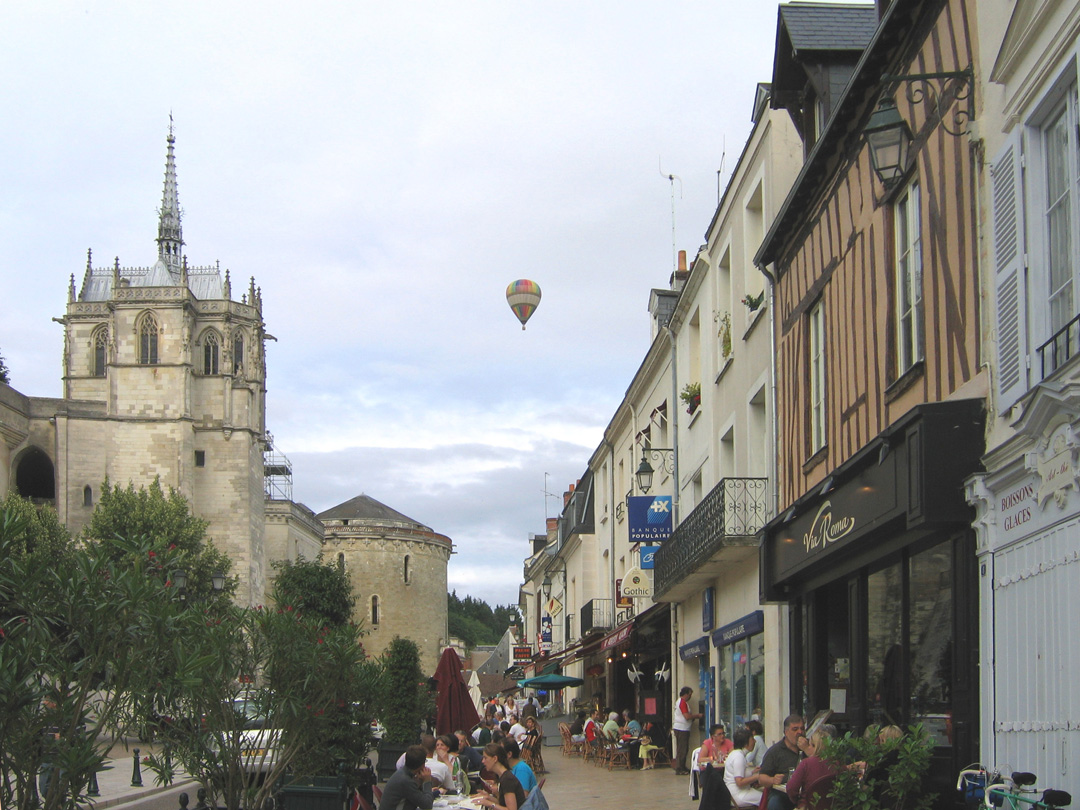
Amboise (US: /ɒ̃ˈbwɑːz/; French: [ɑ̃bwaz] ⓘ) is a commune in the Indre-et-Loire department in central France. Today a small market town, it was once home to the French royal court.
Amboise lies on the banks of the river Loire, 27 kilometres (17 mi) east of Tours. It is also about 18 kilometres (11 mi) away from the historic Château de Chenonceau, situated on the river Cher near the small village of Chenonceaux. Amboise station, on the north bank of the Loire, has rail connections to Orléans, Blois and Tours.
Clovis I (c. 466 – 511) and the Visigoths signed a peace treaty of alliance with the Arvernians in 503, which assisted him in his defeat of the Visigothic kingdom in the Battle of Vouillé in 507.
Joan of Arc passed through in 1429 on her way to Orleans to the Battle of Patay.
Château du Clos Lucé was the residence of Leonardo da Vinci between 1516 and his death in 1519. Da Vinci died in the arms of King Francis I, and he was buried in a crypt near the Château d'Amboise. The house has lost some of its original parts, but it still stands today containing a museum of da Vinci's work and inventions, and overlooks the river Loire.
The Amboise conspiracy was the conspiracy of Condé and the Huguenots in 1560 against Francis II, Catherine de' Medici and the Guises.
The Château at Amboise was home to Mary Stewart, Queen of Scots, for much of her early life, being raised there at the French court of Henry II. She arrived in France from Scotland in 1548, aged six, via the French king's favourite palace at Saint-Germain-en-Laye near Paris, and remained in France until 1561, when she returned to her homeland—sailing up the Firth of Forth to Edinburgh on 15 August that year.
The Edict of Amboise (1563) conceded the free exercise of worship to the Protestants.
Hub AI
Amboise AI simulator
(@Amboise_simulator)
Amboise
Amboise (US: /ɒ̃ˈbwɑːz/; French: [ɑ̃bwaz] ⓘ) is a commune in the Indre-et-Loire department in central France. Today a small market town, it was once home to the French royal court.
Amboise lies on the banks of the river Loire, 27 kilometres (17 mi) east of Tours. It is also about 18 kilometres (11 mi) away from the historic Château de Chenonceau, situated on the river Cher near the small village of Chenonceaux. Amboise station, on the north bank of the Loire, has rail connections to Orléans, Blois and Tours.
Clovis I (c. 466 – 511) and the Visigoths signed a peace treaty of alliance with the Arvernians in 503, which assisted him in his defeat of the Visigothic kingdom in the Battle of Vouillé in 507.
Joan of Arc passed through in 1429 on her way to Orleans to the Battle of Patay.
Château du Clos Lucé was the residence of Leonardo da Vinci between 1516 and his death in 1519. Da Vinci died in the arms of King Francis I, and he was buried in a crypt near the Château d'Amboise. The house has lost some of its original parts, but it still stands today containing a museum of da Vinci's work and inventions, and overlooks the river Loire.
The Amboise conspiracy was the conspiracy of Condé and the Huguenots in 1560 against Francis II, Catherine de' Medici and the Guises.
The Château at Amboise was home to Mary Stewart, Queen of Scots, for much of her early life, being raised there at the French court of Henry II. She arrived in France from Scotland in 1548, aged six, via the French king's favourite palace at Saint-Germain-en-Laye near Paris, and remained in France until 1561, when she returned to her homeland—sailing up the Firth of Forth to Edinburgh on 15 August that year.
The Edict of Amboise (1563) conceded the free exercise of worship to the Protestants.