
Recent from talks
Libertarianism in the United States
Knowledge base stats:
Talk channels stats:
Members stats:
Libertarianism in the United States
In the United States, libertarianism is a political philosophy promoting individual liberty. Libertarianism has been described as laissez-faire on economic issues while supporting civil liberties and personal freedom. The movement is often associated with a foreign policy of non-interventionism. Broadly, there are four principal traditions within libertarianism, namely the libertarianism that developed in the mid-20th century out of the revival tradition of classical liberalism in the United States after liberalism associated with the New Deal; the libertarianism developed in the 1950s by anarcho-capitalist author Murray Rothbard, who based it on the anti-New Deal Old Right and 19th-century libertarianism and American individualist anarchists such as Benjamin Tucker and Lysander Spooner while rejecting the labor theory of value in favor of Austrian School economics and the subjective theory of value; the libertarianism developed in the 1970s by Robert Nozick and founded in American and European classical liberal traditions; and the libertarianism associated with the Libertarian Party, which was founded in 1971, including politicians such as David Nolan and Ron Paul.
The right-libertarianism associated with people such as Murray Rothbard and Robert Nozick, whose book Anarchy, State, and Utopia received significant attention in academia according to David Lewis Schaefer, is the dominant form of libertarianism in the United States, compared to that of left-libertarianism. The latter is associated with the left-wing of the modern libertarian movement and more recently to the political positions associated with academic philosophers Hillel Steiner, Philippe Van Parijs and Peter Vallentyne that combine self-ownership with an egalitarian approach to natural resources; it is also related to anti-capitalist, free-market anarchist strands such as left-wing market anarchism, referred to as market-oriented left-libertarianism to distinguish itself from other forms of libertarianism.
Libertarianism includes anarchist and libertarian socialist tendencies, although they are not as widespread as in other countries. Murray Bookchin, a libertarian within this socialist tradition, argued that anarchists, libertarian socialists and the left should reclaim libertarian as a term, suggesting these other self-declared libertarians to rename themselves propertarians instead. Although all libertarians oppose government intervention, there is a division between those anarchist or socialist libertarians as well as anarcho-capitalists such as Rothbard and David D. Friedman who adhere to the anti-state position, viewing the state as an unnecessary evil; minarchists such as Nozick who advocate a minimal state, often referred to as a night-watchman state; and classical liberals who support a minimized small government and a major reversal of the welfare state.
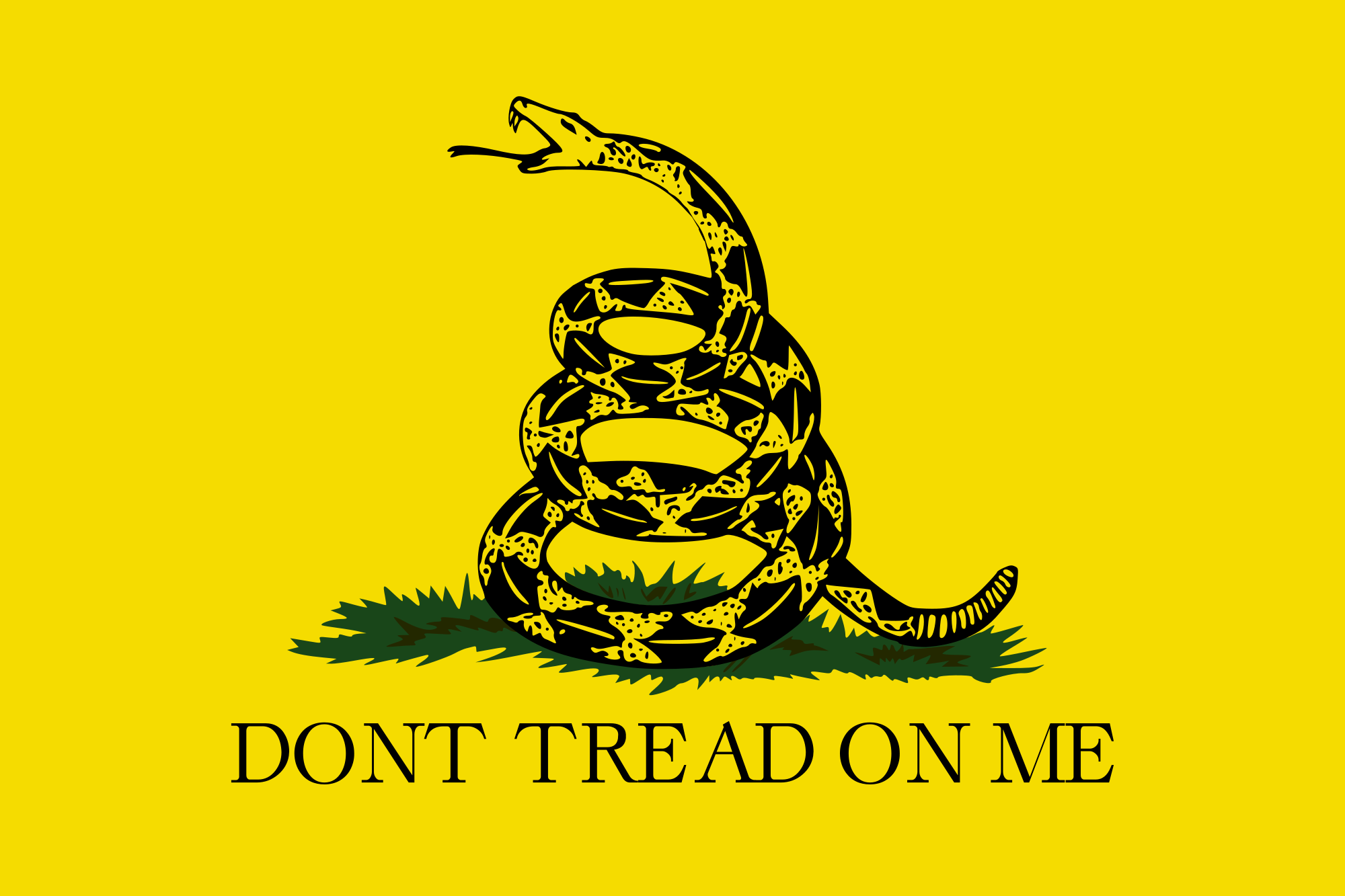
The major libertarian party in the United States is the Libertarian Party. However, libertarians are also represented within the Democratic and Republican parties, while others are independent. Gallup found that voters who identify as libertarians ranged from 17 to 23% of the American electorate. Yellow, a political color associated with liberalism worldwide, has also been used as a political color for modern libertarianism in the United States. The Gadsden flag and Pine Tree flag, symbols first used by American revolutionaries, are frequently used by libertarians and the libertarian-leaning Tea Party movement.
Although libertarian continues to be widely used to refer to anti-state socialists internationally, its meaning in the United States has deviated from its political origins to the extent that the common meaning of libertarian in the United States is different from elsewhere. The Libertarian Party asserts the following core beliefs of libertarianism: "Libertarians support maximum liberty in both personal and economic matters. They advocate a much smaller government; one that is limited to protecting individuals from coercion and violence. Libertarians tend to embrace individual responsibility, oppose government bureaucracy and taxes, promote private charity, tolerate diverse lifestyles, support the free market, and defend civil liberties." Libertarians have worked to implement their ideas through the Libertarian Party, the Free State Project, agorism, and other forms of activism.
Since the 19th century, the term libertarian has referred to advocates for freedom of the will, or anyone who generally advocated for liberty, but its long association with anarchism extends at least as far back as 1858, when it was used for the title of New York anarchist journal Le Libertaire. In the late 19th century (around the 1880s and 1890s), Anarchist Sébastien Faure used the term libertarian to differentiate between anarchists and authoritarian socialists. While the term libertarian has been largely synonymous with anarchism, its meaning has more recently diluted with wider adoption from ideologically disparate groups. As a term, libertarian can include both the New Left and libertarian Marxists (who do not associate with a vanguard party) as well as extreme liberals (primarily concerned with civil liberties). Additionally, some anarchists use the term libertarian socialist to avoid anarchism's negative connotations and emphasize its connections with socialism.
The revival of free-market ideologies during the mid-to-late 20th century came with disagreement over what to call the movement. While many of its adherents prefer the term libertarian, many conservative libertarians reject the term's association with the 1960s New Left and its connotations of libertine hedonism. The movement is divided over the use of conservatism as an alternative. Those who seek both economic and social liberty within a capitalist order would be known as liberals, but that term developed associations opposite of the limited government, low-taxation, minimal state advocated by the movement. Name variants of the free-market revival movement include classical liberalism, economic liberalism, free-market liberalism and neoliberalism. As a term, libertarian or economic libertarian has the most colloquial acceptance to describe a member of the movement, with the latter term being based on both the ideology's primacy of economics and its distinction from libertarians of the New Left.
According to Ian Adams: "Ideologically, all US parties are liberal and always have been. Essentially they espouse classical liberalism, that is a form of democratised Whig constitutionalism plus the free market. The point of difference comes with the influence of social liberalism" and the proper role of government. Some modern American libertarians are distinguished from the dominant libertarian tradition by their relation to property and capital. While both historical libertarianism and contemporary economic libertarianism share general antipathy towards power by government authority, the latter exempts power wielded through free-market capitalism. Historically, libertarians including Herbert Spencer and Max Stirner have to some degree supported the protection of an individual's freedom from powers of both government and private property owners. In contrast, while condemning governmental encroachment on personal liberties, some modern American libertarians support freedoms based on private property rights. Anarcho-capitalist theorist Murray Rothbard argued that protesters should rent a street for protest from its owners. The abolition of public amenities is a common theme in some modern American libertarian writings.
Hub AI
Libertarianism in the United States AI simulator
(@Libertarianism in the United States_simulator)
Libertarianism in the United States
In the United States, libertarianism is a political philosophy promoting individual liberty. Libertarianism has been described as laissez-faire on economic issues while supporting civil liberties and personal freedom. The movement is often associated with a foreign policy of non-interventionism. Broadly, there are four principal traditions within libertarianism, namely the libertarianism that developed in the mid-20th century out of the revival tradition of classical liberalism in the United States after liberalism associated with the New Deal; the libertarianism developed in the 1950s by anarcho-capitalist author Murray Rothbard, who based it on the anti-New Deal Old Right and 19th-century libertarianism and American individualist anarchists such as Benjamin Tucker and Lysander Spooner while rejecting the labor theory of value in favor of Austrian School economics and the subjective theory of value; the libertarianism developed in the 1970s by Robert Nozick and founded in American and European classical liberal traditions; and the libertarianism associated with the Libertarian Party, which was founded in 1971, including politicians such as David Nolan and Ron Paul.
The right-libertarianism associated with people such as Murray Rothbard and Robert Nozick, whose book Anarchy, State, and Utopia received significant attention in academia according to David Lewis Schaefer, is the dominant form of libertarianism in the United States, compared to that of left-libertarianism. The latter is associated with the left-wing of the modern libertarian movement and more recently to the political positions associated with academic philosophers Hillel Steiner, Philippe Van Parijs and Peter Vallentyne that combine self-ownership with an egalitarian approach to natural resources; it is also related to anti-capitalist, free-market anarchist strands such as left-wing market anarchism, referred to as market-oriented left-libertarianism to distinguish itself from other forms of libertarianism.
Libertarianism includes anarchist and libertarian socialist tendencies, although they are not as widespread as in other countries. Murray Bookchin, a libertarian within this socialist tradition, argued that anarchists, libertarian socialists and the left should reclaim libertarian as a term, suggesting these other self-declared libertarians to rename themselves propertarians instead. Although all libertarians oppose government intervention, there is a division between those anarchist or socialist libertarians as well as anarcho-capitalists such as Rothbard and David D. Friedman who adhere to the anti-state position, viewing the state as an unnecessary evil; minarchists such as Nozick who advocate a minimal state, often referred to as a night-watchman state; and classical liberals who support a minimized small government and a major reversal of the welfare state.
The major libertarian party in the United States is the Libertarian Party. However, libertarians are also represented within the Democratic and Republican parties, while others are independent. Gallup found that voters who identify as libertarians ranged from 17 to 23% of the American electorate. Yellow, a political color associated with liberalism worldwide, has also been used as a political color for modern libertarianism in the United States. The Gadsden flag and Pine Tree flag, symbols first used by American revolutionaries, are frequently used by libertarians and the libertarian-leaning Tea Party movement.
Although libertarian continues to be widely used to refer to anti-state socialists internationally, its meaning in the United States has deviated from its political origins to the extent that the common meaning of libertarian in the United States is different from elsewhere. The Libertarian Party asserts the following core beliefs of libertarianism: "Libertarians support maximum liberty in both personal and economic matters. They advocate a much smaller government; one that is limited to protecting individuals from coercion and violence. Libertarians tend to embrace individual responsibility, oppose government bureaucracy and taxes, promote private charity, tolerate diverse lifestyles, support the free market, and defend civil liberties." Libertarians have worked to implement their ideas through the Libertarian Party, the Free State Project, agorism, and other forms of activism.
Since the 19th century, the term libertarian has referred to advocates for freedom of the will, or anyone who generally advocated for liberty, but its long association with anarchism extends at least as far back as 1858, when it was used for the title of New York anarchist journal Le Libertaire. In the late 19th century (around the 1880s and 1890s), Anarchist Sébastien Faure used the term libertarian to differentiate between anarchists and authoritarian socialists. While the term libertarian has been largely synonymous with anarchism, its meaning has more recently diluted with wider adoption from ideologically disparate groups. As a term, libertarian can include both the New Left and libertarian Marxists (who do not associate with a vanguard party) as well as extreme liberals (primarily concerned with civil liberties). Additionally, some anarchists use the term libertarian socialist to avoid anarchism's negative connotations and emphasize its connections with socialism.
The revival of free-market ideologies during the mid-to-late 20th century came with disagreement over what to call the movement. While many of its adherents prefer the term libertarian, many conservative libertarians reject the term's association with the 1960s New Left and its connotations of libertine hedonism. The movement is divided over the use of conservatism as an alternative. Those who seek both economic and social liberty within a capitalist order would be known as liberals, but that term developed associations opposite of the limited government, low-taxation, minimal state advocated by the movement. Name variants of the free-market revival movement include classical liberalism, economic liberalism, free-market liberalism and neoliberalism. As a term, libertarian or economic libertarian has the most colloquial acceptance to describe a member of the movement, with the latter term being based on both the ideology's primacy of economics and its distinction from libertarians of the New Left.
According to Ian Adams: "Ideologically, all US parties are liberal and always have been. Essentially they espouse classical liberalism, that is a form of democratised Whig constitutionalism plus the free market. The point of difference comes with the influence of social liberalism" and the proper role of government. Some modern American libertarians are distinguished from the dominant libertarian tradition by their relation to property and capital. While both historical libertarianism and contemporary economic libertarianism share general antipathy towards power by government authority, the latter exempts power wielded through free-market capitalism. Historically, libertarians including Herbert Spencer and Max Stirner have to some degree supported the protection of an individual's freedom from powers of both government and private property owners. In contrast, while condemning governmental encroachment on personal liberties, some modern American libertarians support freedoms based on private property rights. Anarcho-capitalist theorist Murray Rothbard argued that protesters should rent a street for protest from its owners. The abolition of public amenities is a common theme in some modern American libertarian writings.
Recent media