Hubbry Logo
Anarcho-capitalismAnarcho-capitalismMain
Open search
Anarcho-capitalism
Community hub
Anarcho-capitalism
logo
8 pages, 0 posts
0 subscribers
Be the first to start a discussion here.
Anarcho-capitalism
Anarcho-capitalism
from Wikipedia

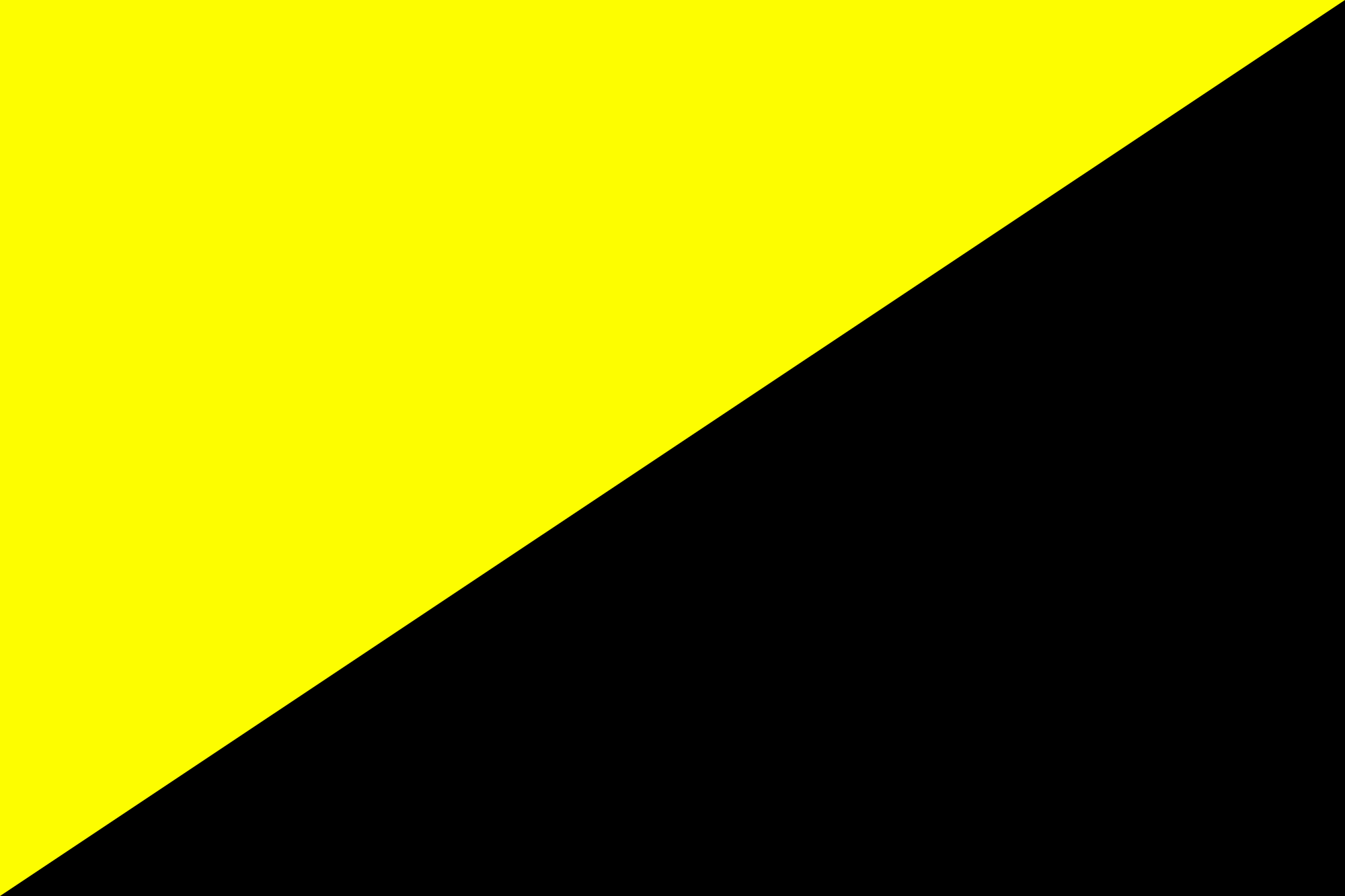
A two-colored flag, split diagonally, with yellow at the top and black at the bottom
The black and gold flag, a symbol of anarchism (black) and capitalism (gold) which according to Murray Rothbard was first flown in 1963 in Colorado[1] and is also used by the Swedish AnarkoKapitalistisk Front[2]

Anarcho-capitalism (colloquially: ancap or an-cap) is a political philosophy and economic theory that advocates for the abolition of centralized states in favor of stateless societies, where systems of private property are enforced by private agencies.[3] Anarcho-capitalists argue that society can self-regulate and civilize through the voluntary exchange of goods and services. This would ideally result in a voluntary society[4][5][6][7] based on concepts such as the non-aggression principle, free markets, and self-ownership. In the absence of statute, private defence agencies and/or insurance companies would operate competitively in a market and fulfill the roles of courts and the police, similar to a state apparatus.

According to its proponents, various historical theorists have espoused philosophies similar to anarcho-capitalism.[8] While the earliest extant attestation of "anarchocapitalism" [sic] is in Karl Hess's essay "The Death of Politics" published by Playboy in March 1969,[9][10] American economist Murray Rothbard was credited with coining the terms anarcho-capitalist[11][12] and anarcho-capitalism in 1971.[13] A leading figure in the 20th-century American libertarian movement,[7] Rothbard synthesized elements from the Austrian School, classical liberalism and 19th-century American individualist anarchists and mutualists Lysander Spooner and Benjamin Tucker, while rejecting the labour theory of value.[14][15][16] Rothbard's anarcho-capitalist society would operate under a mutually agreed-upon "legal code which would be generally accepted, and which the courts would pledge themselves to follow".[17] This legal code would recognize contracts between individuals, private property, self-ownership and tort law in keeping with the non-aggression principle.[7][17][18] Unlike a state, enforcement measures would only apply to those who initiated force or fraud.[19] Rothbard views the power of the state as unjustified, arguing that it violates individual rights and reduces prosperity, and creates social and economic problems.[7]

Anarcho-capitalists and right-libertarians cite several historical precedents of what they believe to be examples of quasi-anarcho-capitalism,[24] including the Republic of Cospaia,[25] Acadia,[26] Anglo-Saxon England,[27][4] Medieval Iceland,[26] the American Old West,[26] Gaelic Ireland,[7] and merchant law, admiralty law, and early common law.

Anarcho-capitalism is distinguished from Minarchism, which advocates a minimal governing body (typically a night-watchman state limited to protecting individuals from aggression and enforcing private property) and from objectivism (which is a broader philosophy advocating a limited role, yet unlimited size, of said government).[28] Anarcho-capitalists consider themselves to be anarchists despite supporting private property and private institutions.[27]

Classification

[edit]

Anarcho-capitalism developed from Austrian School-neoliberalism and individualist anarchism.[a] Almost all anarchist movements do not consider anarcho-capitalism to be anarchist because it lacks the historically central anti-capitalist emphasis of anarchism. They also argue that anarchism is incompatible with capitalist structures.[b] According to several scholars, Anarcho-capitalism lies outside the tradition of the vast majority of anarchist schools of thought and is more closely affiliated with capitalism, right-libertarianism and neoliberalism.[c] Traditionally, anarchists oppose and reject capitalism, and consider "anarcho-capitalism" to be a contradiction in terms,[47][48][49] although anarcho-capitalists and some right-libertarians consider anarcho-capitalism to be a form of anarchism, with others considering it the only form.[50][51][52][53]

According to the Encyclopædia Britannica:[7]

Anarcho-capitalism challenges other forms of anarchism by supporting private property and private institutions with significant economic power.

Anarcho-capitalism is occasionally seen as part of the New Right.[54][55]

Philosophy

[edit]
Murray Rothbard in the 1970s
Murray Rothbard (1926–1995), who is credited with coining the words anarcho-capitalist[11][12] and anarcho-capitalism.[13]

Author J Michael Oliver says that during the 1960s, a philosophical movement arose in the US that championed "reason, ethical egoism, and free-market capitalism". According to Oliver, anarcho-capitalism is a political theory which follows Objectivism, a philosophical system developed by Ayn Rand. However, he acknowledges that his advocacy of anarcho-capitalism is "quite at odds with Rand's ardent defence of 'limited government'".[56] Professor Lisa Duggan also says that Rand's anti-statist, pro–free market stances went on to shape the politics of anarcho-capitalism.[57]

According to Patrik Schumacher, the political ideology and programme of anarcho-capitalism envisages the radicalization of the neoliberal "rollback of the state." It also calls for the extension of "entrepreneurial freedom" and "competitive market rationality" to the point where the scope for private enterprise is all-encompassing and "leaves no space for state action whatsoever".[58]

On the state

[edit]

Anarcho-capitalists oppose the state and seek to privatize any service the government presently provides, such as education, infrastructure, or the enforcement of law.[58][59] They see capitalism and the free market as the basis for a free and prosperous society. Murray Rothbard stated that the difference between free-market capitalism and state capitalism is the difference between "peaceful, voluntary exchange" and a "collusive partnership" between business and government that "uses coercion to subvert the free market".[60] Rothbard argued that all government services, including defence, are inefficient because they lack a market-based pricing mechanism regulated by "the voluntary decisions of consumers purchasing services that fufill their highest-priority needs" and by investors seeking the most profitable enterprises to invest in.[61]: 1051

Rothbard used the term anarcho-capitalism to distinguish his philosophy from anarchism that opposes private property[62] as well as to distinguish it from individualist anarchism.[63] Other terms sometimes used by proponents of the philosophy include:

  • Individualist anarchism[64][65]
  • Natural order[8]
  • Ordered anarchy[8]
  • Private-law society[8]
  • Private-property anarchy[8]
  • Radical capitalism[8]

Maverick Edwards of the Liberty University describes anarcho-capitalism as a political, social, and economic theory that places markets as the central "governing body" and where government no longer "grants" rights to its citizenry.[66]

Non-aggression principle

[edit]

Writer Stanisław Wójtowicz says that although anarcho-capitalists are against centralized states, they believe that all people would naturally share and agree to a specific moral theory based on the non-aggression principle.[67] While the Friedmanian formulation of anarcho-capitalism considers the presence of violence and assumes some degree of violence will occur,[68] anarcho-capitalism as formulated by thinkers such as Rothbard holds strongly to the central libertarian nonaggression axiom,[67] sometimes non-aggression principle. Rothbard wrote:

The basic axiom of libertarian political theory holds that every man is a self-owner, having absolute jurisdiction over his own body. In effect, this means that no one else may justly invade, or aggress against, another's person. It follows then that each person justly owns whatever previously unowned resources he appropriates or "mixes his labor with". From these twin axioms – self-ownership and "homesteading" – stem the justification for the entire system of property rights titles in a free-market society. This system establishes the right of every man to his own person, the right of donation, of bequest (and, concomitantly, the right to receive the bequest or inheritance), and the right of contractual exchange of property titles.[18]

Rothbard's defence of the self-ownership principle stems from what he believed to be his falsification of all other alternatives, namely that either a group of people can own another group of people, or that no single person has full ownership over one's self. Rothbard dismisses these two cases on the basis that they cannot result in a universal ethic, i.e. a just natural law that can govern all people, independent of place and time. The only alternative that remains to Rothbard is self-ownership which he believes is both axiomatic and universal.[69]

In general, Rothbard describes the non-aggression axiom as a prohibition against initiating force—or the threat of force—against persons (including direct violence, assault, and murder) or property (including fraud, burglary, theft, and taxation).[17]: 24–25  The initiation of force is usually referred to as aggression or coercion. The difference between anarcho-capitalists and other libertarians is largely one of the degree to which they take this axiom. Minarchist libertarians such as libertarian political parties would retain the state in some smaller and less invasive form, retaining at the very least public police, courts, and military. However, others might give further allowance for other government programs. In contrast, Rothbard rejects any level of "state intervention", defining the state as a coercive monopoly and as the only entity in human society, excluding acknowledged criminals, that derives its income entirely from coercion, in the form of taxation, which Rothbard describes as "compulsory seizure of the property of the State's inhabitants, or subjects."[69]

Some anarcho-capitalists such as Rothbard accept the non-aggression axiom on an intrinsic moral or natural law basis. It is in terms of the non-aggression principle that Rothbard defined his interpretation of anarchism, "a system which provides no legal sanction for such aggression ['against person and property']"; and wrote that "what anarchism proposes to do, then, is to abolish the State, i.e. to abolish the regularized institution of aggressive coercion".[70] In an interview published in the American libertarian journal The New Banner, Rothbard stated that "capitalism is the fullest expression of anarchism, and anarchism is the fullest expression of capitalism".[50]

Property

[edit]

Private property

[edit]

Anarcho-capitalists postulate the privatization of everything, including cities with all their infrastructures, public spaces, streets and urban management systems.[58][71]

Central to Rothbardian anarcho-capitalism are the concepts of self-ownership and original appropriation that combines personal and private property. Hans-Hermann Hoppe wrote:

Everyone is the proper owner of his own physical body as well as of all places and nature-given goods that he occupies and puts to use by means of his body, provided only that no one else has already occupied or used the same places and goods before him. This ownership of "originally appropriated" places and goods by a person implies his right to use and transform these places and goods in any way he sees fit, provided only that he does not change thereby uninvitedly the physical integrity of places and goods originally appropriated by another person. In particular, once a place or good has been first appropriated by, in John Locke's phrase, 'mixing one's labor' with it, ownership in such places and goods can be acquired only by means of a voluntary – contractual – transfer of its property title from a previous to a later owner.[72]

Rothbard however rejected the Lockean proviso, and followed the rule of "first come, first served", without any consideration of how much resources are left for other individuals.[73][74]

Anarcho-capitalists advocate private ownership of the means of production and the allocation of the product of labour created by workers within the context of wage labour and the free market – that is through decisions made by property and capital owners, regardless of what an individual needs or does not need.[75] Original appropriation allows an individual to claim any never-before-used resources, including land and by improving or otherwise using it, own it with the same "absolute right" as their own body, and retaining those rights forever, regardless of whether the resource is still being used by them. According to Rothbard, property can only come about through labour, therefore original appropriation of land is not legitimate by merely claiming it or building a fence around it – it is only by using land and by mixing one's labour with it that original appropriation is legitimized: "Any attempt to claim a new resource that someone does not use would have to be considered invasive of the property right of whoever the first user will turn out to be". Rothbard argued that the resource need not continue to be used in order for it to be the person's property as "for once his labour is mixed with the natural resource, it remains his owned land. His labour has been irretrievably mixed with the land, and the land is therefore his or his assigns' in perpetuity".[76]: 170 

Rothbard also spoke about a theory of justice in property rights:

It is not enough to call simply for the defense of "the rights of private property"; there must be an adequate theory of justice in property rights, else any property that some State once decreed to be "private" must now be defended by libertarians, no matter how unjust the procedure or how mischievous its consequences.[63]

In Justice and Property Rights, Rothbard wrote that "any identifiable owner (the original victim of theft or his heir) must be accorded his property".[77][78] In the case of slavery, Rothbard claimed that in many cases "the old plantations and the heirs and descendants of the former slaves can be identified, and the reparations can become highly specific indeed". Rothbard believed slaves rightfully own any land they were forced to work on under the homestead principle. If property is held by the state, Rothbard advocated its confiscation and "return to the private sector",[79] writing that "any property in the hands of the State is in the hands of thieves, and should be liberated as quickly as possible".[80] Rothbard proposed that state universities be seized by the students and faculty under the homestead principle. Rothbard also supported the expropriation of nominally "private property" if it is the result of state-initiated force such as businesses that receive grants and subsidies.[81] Rothbard further proposed that businesses who receive at least 50% of their funding from the state be confiscated by the workers,[82][83] writing: "What we libertarians object to, then, is not government per se but crime, what we object to is unjust or criminal property titles; what we are for is not 'private' property per se but just, innocent, non-criminal private property".[80]

Similarly, Karl Hess wrote that "libertarianism wants to advance principles of property but that it in no way wishes to defend, willy nilly, all property which now is called private ... Much of that property is stolen. Much is of dubious title. All of it is deeply intertwined with an immoral, coercive state system".[84]

Anarchists view capitalism as an inherently authoritarian and hierarchical system and seek the abolishment of private property.[85] There is disagreement between anarchists and anarcho-capitalists[86] as the former generally rejects anarcho-capitalism as a form of anarchism and considers anarcho-capitalism a contradiction in terms,[87][88] while the latter holds that the abolishment of private property would require expropriation which is "counterproductive to order" and would require a state.[89]

Common property

[edit]

As opposed to anarchists,[90] most anarcho-capitalists reject the commons.[91] However, some of them propose that non-state public or community property can also exist in an anarcho-capitalist society.[91] For anarcho-capitalists, what is important is that it is "acquired" and transferred without help or hindrance from what they call the "compulsory state". Deontological anarcho-capitalists believe that the only just and most economically beneficial way to acquire property is through voluntary trade, gift, or labour-based original appropriation, rather than through aggression or fraud.[92]

Anarcho-capitalists state that there could be cases where common property may develop in a Lockean natural rights framework. Anarcho-capitalists make the example of a number of private businesses which may arise in an area, each owning the land and buildings that they use, but they argue that the paths between them become clear through customer and commercial movement. These paths may become valuable to the community, but according to them ownership cannot be attributed to any single person and original appropriation does not apply because many contributed the labour necessary to create them. In order to prevent it from falling to the "tragedy of the commons", anarcho-capitalists suggest transitioning from common to private property, wherein an individual would make a homesteading claim based on disuse, acquire title by the assent of the community consensus, form a corporation with other involved parties, or other means.[91]

American economist Randall G. Holcombe sees challenges stemming from the idea of common property under anarcho-capitalism, such as whether an individual might claim fishing rights in the area of a major shipping lane and thereby forbid passage through it.[91] In contrast, Hoppe's work on anarcho-capitalist theory is based on the assumption that all property is privately held, "including all streets, rivers, airports, and harbors" which forms the foundation of his views on immigration.[91]

Intellectual property

[edit]

Most anarcho-capitalists strongly oppose intellectual property (i.e., trademarks, patents, copyrights). Intellectual property is typically opposed because ideas are seen as lacking scarcity; and implementing an idea does not prevent B from implementing the same idea. Further the arbitrary nature of intellectual property is commonly criticized.[93] Stephan N. Kinsella argues that ownership only relates to tangible assets.[94]

Contractual society

[edit]

The society envisioned by anarcho-capitalists has been labelled by them as a "contractual society" which Rothbard described as "a society based purely on voluntary action, entirely unhampered by violence or threats of violence"[76]: 84  The system relies on contracts between individuals as the legal framework which would be enforced by private police and security forces as well as private arbitrations.[95][96][97]

Rothbard argues that limited liability for corporations could also exist through contract, arguing that "[c]orporations are not at all monopolistic privileges; they are free associations of individuals pooling their capital. On the purely free market, those men would simply announce to their creditors that their liability is limited to the capital specifically invested in the corporation".[61]

There are limits to the right to contract under some interpretations of anarcho-capitalism. Rothbard believes that the right to contract is based in inalienable rights[69] and because of this any contract that implicitly violates those rights can be voided at will, preventing a person from permanently selling himself or herself into unindentured slavery. That restriction aside, the right to contract under anarcho-capitalist order would be pretty broad. For example, Rothbard went as far as to justify stork markets, arguing that a market in guardianship rights would facilitate the transfer of guardianship from abusive or neglectful parents to those more interested or suited to raising children.[98][99] Other anarcho-capitalists have also suggested the legalization of organ markets, as in Iran's renal market. Other interpretations conclude that banning such contracts would in itself be an unacceptably invasive interference in the right to contract.[100] Some anarcho-capitalist philosophies understand control of private property as part of the self, and some permit voluntary slavery.[101][102][103] The vast majority of anarcho‑capitalists deny this, and critics of capitalism argue that this minority opinion is not unique to anarcho-capitalists, but is an essential consequence of the capitalist contract theory (wage slavery).[104]

Included in the right of contract is "the right to contract oneself out for employment by others". While anarchists criticize wage labour describing it as wage slavery, anarcho-capitalists view it as a consensual contract.[105] Some anarcho-capitalists prefer to see self-employment prevail over wage labour. David D. Friedman has expressed a preference for a society where "almost everyone is self-employed" and "instead of corporations there are large groups of entrepreneurs related by trade, not authority. Each sells not his time, but what his time produces".[105]

Law and order and the use of violence

[edit]

Different anarcho-capitalists propose different forms of anarcho-capitalism and one area of disagreement is in the area of law. In The Market for Liberty, Morris and Linda Tannehill object to any statutory law whatsoever. They argue that all one has to do is ask if one is aggressing against another in order to decide if an act is right or wrong.[106] However, while also supporting a natural prohibition on force and fraud, Rothbard supports the establishment of a mutually agreed-upon centralized libertarian legal code which private courts would pledge to follow, as he presumes a high degree of convergence amongst individuals about what constitutes natural justice.[107]

Unlike both the Tannehills and Rothbard who see an ideological commonality of ethics and morality as a requirement, David D. Friedman proposes that "the systems of law will be produced for profit on the open market, just as books and bras are produced today. There could be competition among different brands of law, just as there is competition among different brands of cars".[108] Friedman says whether this would lead to a libertarian society "remains to be proven". He says it is a possibility that very un-libertarian laws may result, such as laws against drugs, but he thinks this would be rare. He reasons that "if the value of a law to its supporters is less than its cost to its victims, that law ... will not survive in an anarcho-capitalist society".[109]

Anarcho-capitalists only accept the collective defence of individual liberty (i.e. courts, military, or police forces) insofar as such groups are formed and paid for on an explicitly voluntary basis. However, their complaint is not just that the state's defensive services are funded by taxation, but that the state assumes it is the only legitimate practitioner of physical force – that is, they believe it forcibly prevents the private sector from providing comprehensive security, such as a police, judicial and prison systems to protect individuals from aggressors. Anarcho-capitalists believe that there is nothing morally superior about the state which would grant it, but not private individuals, a right to use physical force to restrain aggressors. If competition in security provision were allowed to exist, prices would also be lower and services would be better according to anarcho-capitalists. According to Molinari: "Under a regime of liberty, the natural organization of the security industry would not be different from that of other industries".[110] Proponents believe that private systems of justice and defence already exist, naturally forming where the market is allowed to "compensate for the failure of the state", namely private arbitration, security guards, neighbourhood watch groups and so on.[111][112][113][114] These private courts and police are sometimes referred to generically as private defence agencies. The defence of those unable to pay for such protection might be financed by charitable organizations relying on voluntary donation rather than by state institutions relying on taxation, or by cooperative self-help by groups of individuals.[17]: 223  Edward Stringham argues that private adjudication of disputes could enable the market to internalize externalities and provide services that customers desire.[115][116]

The death of General Joseph Warren at the Battle of Bunker Hill during the American Revolutionary War, a war which anarcho-capitalists such as Murray Rothbard admired and believed was the only American war that could be justified[117]

Rothbard stated that the American Revolutionary War and the American Civil War were the only two just wars in American military history.[118] Some anarcho-capitalists such as Rothbard feel that violent revolution is counter-productive and prefer voluntary forms of economic secession to the extent possible.[119] Retributive justice is often a component of the contracts imagined for an anarcho-capitalist society. According to Matthew O'Keefee, some anarcho-capitalists believe prisons or indentured servitude would be justifiable institutions to deal with those who violate anarcho-capitalist property relations while others believe exile or forced restitution are sufficient.[120] Rothbard stressed the importance of restitution as the primary focus of a libertarian legal order[73] and advocated for corporal punishment for petty vandals and the death penalty for murders.

American economist Bruce L. Benson argues that legal codes may impose punitive damages for intentional torts in the interest of deterring crime. Benson gives the example of a thief who breaks into a house by picking a lock. Even if caught before taking anything, Benson argues that the thief would still owe the victim for violating the sanctity of his property rights. Benson opines that despite the lack of objectively measurable losses in such cases, "standardized rules that are generally perceived to be fair by members of the community would, in all likelihood, be established through precedent, allowing judgments to specify payments that are reasonably appropriate for most criminal offenses".[121]

Morris and Linda Tannehill raise a similar example, saying that a bank robber who had an attack of conscience and returned the money would still owe reparations for endangering the employees' and customers' lives and safety, in addition to the costs of the defence agency answering the teller's call for help. However, they believe that the robber's loss of reputation would be even more damaging. They suggest that specialized companies would list aggressors so that anyone wishing to do business with a man could first check his record, provided they trust the veracity of the companies' records. They further theorise that the bank robber would find insurance companies listing him as a very poor risk and other firms would be reluctant to enter into contracts with him.[122]

Fraud and breach of contract

[edit]

The problem is in most people’s minds “fraud” basically means misrepresenting the truth—i.e., lying. But clearly merely lying is not a rights violation. I think imprecise use of “fraud” permits it to be used to arrive at unlibertarian conclusions. It is imperative to understand it properly and to integrate it into libertarian theory in a way that is compatible with our notions of property and rights and aggression.

— Stephan Kinsella, The Problem with “Fraud”:[123]

There is a debate among anarcho-capitalists about how to codify the concepts and standards for 'fraud' and 'breach of contract'.[124][125][126][127] Mark D. Friedman has argued that most right-libertarian theories on this topic are unconvincing because 'he has been duped, he nevertheless elects to entrust his property'.[128] Benjamin Ferguson writes that virtually all libertarians have a standard of fraud, but while libertarians will typically invoke the power of a state to prohibit such acts, libertarians who are anarchists may deny that prohibition of such immoral acts is enforceable by a state. Alternatively, they may take the weaker position that state-like collectives may be formed in order to enforce prohibitions, but the collective must dissolve once its purpose is fulfilled.[129]

Influences

[edit]

Murray Rothbard has listed different ideologies of which his interpretations have influenced anarcho-capitalism.[14][15] This includes his interpretation of anarchism, and more precisely individualist anarchism; classical liberalism and the Austrian School of economic thought. Scholars additionally associate anarcho-capitalism with neo-classical liberalism, radical neoliberalism and right-libertarianism.[42][45][130]

Anarchism

[edit]

In both its social and individualist forms, anarchism is usually considered an anti-capitalist[131][132] and radical left-wing or far-left[133][134][53] movement that promotes libertarian socialist economic theories such as collectivism, communism, individualism, mutualism and syndicalism.[135] Because anarchism is usually described alongside libertarian Marxism as the libertarian wing of the socialist movement and as having a historical association with anti-capitalism and socialism, anarchists believe that capitalism is incompatible with social and economic equality and therefore do not recognize anarcho-capitalism as an anarchist school of thought.[42][130][45] In particular, anarchists argue that capitalist transactions are not voluntary and that maintaining the class structure of a capitalist society requires coercion which is incompatible with an anarchist society.[136][137] The usage of libertarian is also in dispute.[138] While both anarchists and anarcho-capitalists have used it, libertarian was synonymous with anarchist until the mid-20th century, when anarcho-capitalist theory developed.[130][139]

Anarcho-capitalists are distinguished from the dominant anarchist tradition by their relation to property and capital. While both anarchism and anarcho-capitalism share general antipathy towards government authority, anarcho-capitalism favours free-market capitalism. Anarchists, including egoists such as Max Stirner, have supported the protection of an individual's freedom from powers of both government and private property owners.[140] In contrast, while condemning governmental encroachment on personal liberties, anarcho-capitalists support freedoms based on private property rights. Anarcho-capitalist theorist Murray Rothbard argued that protesters should rent a street for protest from its owners. The abolition of public amenities is a common theme in some anarcho-capitalist writings.[141]

As anarcho-capitalism puts laissez-faire economics before economic equality, it is commonly viewed as incompatible with the anti-capitalist and egalitarian tradition of anarchism. Although anarcho-capitalist theory implies the abolition of the state in favour of a fully laissez-faire economy,[142] it lies outside the tradition of anarchism.[144] While using the language of anarchism,[145] anarcho-capitalism only shares anarchism's antipathy towards the state[142] and not anarchism's antipathy towards hierarchy as theorists expect from anarcho-capitalist economic power relations.[145] It follows a different paradigm from anarchism and has a fundamentally different approach and goals.[145] In spite of the anarcho- in its title,[145] anarcho-capitalism is more closely affiliated with capitalism, right-libertarianism, and liberalism than with anarchism.[46][146] Some within this laissez-faire tradition reject the designation of anarcho-capitalism, believing that capitalism may either refer to the laissez-faire market they support or the government-regulated system that they oppose.[147]

Rothbard argued that anarcho-capitalism is the only true form of anarchism – the only form of anarchism that could possibly exist in reality as he maintained that any other form presupposes authoritarian enforcement of a political ideology such as "redistribution of private property", which he attributed to anarchism.[50] According to this argument, the capitalist free market is "the natural situation" that would result from people being free from state authority and entails the establishment of all voluntary associations in society such as cooperatives, non-profit organizations, businesses and so on. Moreover, anarcho-capitalists, as well as classical liberal minarchists, argue that the application of anarchist ideals as advocated by what they term "left-wing anarchists" would require an authoritarian body of some sort to impose it. Based on their understanding and interpretation of anarchism, in order to forcefully prevent people from accumulating capital, which they believe is a goal of anarchists, there would necessarily be a redistributive organization of some sort which would have the authority to in essence exact a tax and re-allocate the resulting resources to a larger group of people. They conclude that this theoretical body would inherently have political power and would be nothing short of a state. The difference between such an arrangement and an anarcho-capitalist system is what anarcho-capitalists see as the voluntary nature of organization within anarcho-capitalism contrasted with a "centralized ideology" and a "paired enforcement mechanism" which they believe would be necessary under what they describe as a "coercively" egalitarian-anarchist system.[136]

Rothbard also argued that the capitalist system of today is not properly anarchistic because it often colludes with the state. According to Rothbard, "what Marx and later writers have done is to lump together two extremely different and even contradictory concepts and actions under the same portmanteau term. These two contradictory concepts are what I would call 'free-market capitalism' on the one hand, and 'state capitalism' on the other". "The difference between free-market capitalism and state capitalism", writes Rothbard, "is precisely the difference between, on the one hand, peaceful, voluntary exchange, and on the other, violent expropriation". He continues: "State capitalism inevitably creates all sorts of problems which become insoluble".[50]

Traditional anarchists reject the notion of capitalism, hierarchies and private property.[148][149][47] Albert Meltzer argued that anarcho-capitalism simply cannot be anarchism because capitalism and the state are inextricably interlinked and because capitalism exhibits domineering hierarchical structures such as that between an employer and an employee.[150] Anna Morgenstern approaches this topic from the opposite perspective, arguing that anarcho-capitalists are not really capitalists because "mass concentration of capital is impossible" without the state.[151] According to Jeremy Jennings, "[i]t is hard not to conclude that these ideas," referring to anarcho-capitalism, have "roots deep in classical liberalism" and "are described as anarchist only on the basis of a misunderstanding of what anarchism is." For Jennings, "anarchism does not stand for the untrammelled freedom of the individual (as the 'anarcho-capitalists' appear to believe) but, as we have already seen, for the extension of individuality and community."[152] Similarly, Barbara Goodwin, Emeritus Professor of Politics at the University of East Anglia, Norwich, argues that anarcho-capitalism's "true place is in the group of right-wing libertarians", not in anarchism.[153]

Some right-libertarian scholars like Michael Huemer, who identify with the ideology, describe anarcho-capitalism as a "variety of anarchism".[51] British author Andrew Heywood also believes that "individualist anarchism overlaps with libertarianism and is usually linked to a strong belief in the market as a self-regulating mechanism, most obviously manifest in the form of anarcho-capitalism".[52] Frank H. Brooks, author of The Individualist Anarchists: An Anthology of Liberty (1881–1908), believes that "anarchism has always included a significant strain of radical individualism, from the hyperrationalism of Godwin, to the egoism of Stirner, to the libertarians and anarcho-capitalists of today".[53]

While both anarchism and anarcho-capitalism are in opposition to the state, they nevertheless interpret state-rejection differently.[154][155][156][157] Austrian school economist David Prychitko, in the context of anarcho-capitalism says that "while society without a state is necessary for full-fledged anarchy, it is nevertheless insufficient".[157] According to Ruth Kinna, anarcho-capitalists are anti-statists who draw more on right-wing liberal theory and the Austrian School than anarchist traditions. Kinna writes that "[i]n order to highlight the clear distinction between the two positions", anarchists describe anarcho-capitalists as "propertarians".[59] Anarcho-capitalism is usually seen as part of the New Right.[54][55]

Some anarcho-capitalists understand anarchism to mean something other than "opposition to hierarchy" and therefore consider the two traditions to be philosophically distinct. Therefore, the anarchist critique that anarcho-capitalist societies would necessarily contain hierarchies is not concerning to these anarcho-capitalists.[6][158][159] Additionally, Rothbard discusses the difference between "government" and "governance"[160] thus, proponents of anarcho-capitalism think the philosophy's common name is indeed consistent, as it promotes private governance, but is vehemently anti-government.[115][116]

"I define anarchist society as one where there is no legal possibility for coercive aggression against the person or property of any individual. Anarchists oppose the State because it has its very being in such aggression, namely, the expropriation of private property through taxation, the coercive exclusion of other providers of defense service from its territory, and all of the other depredations and coercions that are built upon these twin foci of invasions of individual rights." —Murray Rothbard in Society Without a State[160]

Classical liberalism

[edit]

Historian and libertarian Ralph Raico argued that what liberal philosophers "had come up with was a form of individualist anarchism, or, as it would be called today, anarcho-capitalism or market anarchism".[161] He also said that Gustave de Molinari was proposing a doctrine of the private production of security, a position which was later taken up by Murray Rothbard.[161] Some anarcho-capitalists consider Molinari to be the first proponent of anarcho-capitalism.[162] In the preface to the 1977 English translation by Murray Rothbard called The Production of Security the "first presentation anywhere in human history of what is now called anarcho-capitalism", although admitting that "Molinari did not use the terminology, and probably would have balked at the name".[163] Hans-Hermann Hoppe said that "the 1849 article 'The Production of Security' is probably the single most important contribution to the modern theory of anarcho-capitalism". According to Hans-Hermann Hoppe, one of the 19th century precursors of anarcho-capitalism were philosopher Herbert Spencer, classical liberal Auberon Herbert and liberal socialist Franz Oppenheimer.[8]

Ruth Kinna credits Murray Rothbard with coining the term anarcho-capitalism, which is – Kinna proposes – to describe "a commitment to unregulated private property and laissez-faire economics, prioritizing the liberty-rights of individuals, unfettered by government regulation, to accumulate, consume and determine the patterns of their lives as they see fit". According to Kinna, anarcho-capitalists "will sometimes label themselves market anarchists because they recognize the negative connotations of 'capitalism'. But the literature of anarcho-capitalism draws on classical liberal theory, particularly the Austrian SchoolFriedrich von Hayek and Ludwig von Mises – rather than recognizable anarchist traditions. Ayn Rand's laissez-faire, anti-government, corporate philosophy – Objectivism – is sometimes associated with anarcho-capitalism".[59] Other scholars similarly associate anarcho-capitalism with anti-state classical liberalism, neo-classical liberalism, radical neoliberalism and right-libertarianism.[42][130][45][164]

Paul Dragos Aligica writes that there is a "foundational difference between the classical liberal and the anarcho-capitalist positions". Classical liberalism, while accepting critical arguments against collectivism, acknowledges a certain level of public ownership and collective governance as necessary to provide practical solutions to political problems. In contrast anarcho-capitalism, according to Aligica, denies any requirement for any form of public administration, and allows no meaningful role for the public sphere, which is seen as sub-optimal and illegitimate.[165]

Individualist anarchism

[edit]
Lysander Spooner, an American individualist anarchist and mutualist, who is claimed to have influenced anarcho-capitalism

Murray Rothbard, a student of Ludwig von Mises, stated that he was influenced by the work of the 19th-century American individualist anarchists.[166] In the winter of 1949, Rothbard decided to reject minimal state laissez-faire and embrace his interpretation of individualist anarchism.[167] In 1965, Rothbard wrote that "Lysander Spooner and Benjamin R. Tucker were unsurpassed as political philosophers and nothing is more needed today than a revival and development of the largely forgotten legacy they left to political philosophy".[168] However, Rothbard thought that they had a faulty understanding of economics as the 19th-century individualist anarchists had a labour theory of value as influenced by the classical economists, while Rothbard was a student of Austrian School economics which does not agree with the labour theory of value.[14] Rothbard sought to meld 19th-century American individualist anarchists' advocacy of economic individualism and free markets with the principles of Austrian School economics, arguing that "[t]here is, in the body of thought known as 'Austrian economics', a scientific explanation of the workings of the free market (and of the consequences of government intervention in that market) which individualist anarchists could easily incorporate into their political and social Weltanschauung".[169] Rothbard held that the economic consequences of the political system they advocate would not result in an economy with people being paid in proportion to labor amounts, nor would profit and interest disappear as they expected. Tucker thought that unregulated banking and money issuance would cause increases in the money supply so that interest rates would drop to zero or near to it.[168] Peter Marshall states that "anarcho-capitalism overlooks the egalitarian implications of traditional individualist anarchists like Spooner and Tucker".[42] Stephanie Silberstein states that "While Spooner was no free-market capitalist, nor an anarcho-capitalist, he was not as opposed to capitalism as most socialists were."[75]

In "The Spooner-Tucker Doctrine: An Economist's View", Rothbard explained his disagreements. Rothbard disagreed with Tucker that it would cause the money supply to increase because he believed that the money supply in a free market would be self-regulating. If it were not, then Rothbard argued inflation would occur so it is not necessarily desirable to increase the money supply in the first place. Rothbard claimed that Tucker was wrong to think that interest would disappear regardless because he believed people, in general, do not wish to lend their money to others without compensation, so there is no reason why this would change just because banking was unregulated.[168] Tucker held a labor theory of value and thought that in a free market people would be paid in proportion to how much labor they exerted and that exploitation or usury was taking place if they were not. As Tucker explained in State Socialism and Anarchism, his theory was that unregulated banking would cause more money to be available and that this would allow the proliferation of new businesses which would, in turn, raise demand for labor.[170] This led Tucker to believe that the labor theory of value would be vindicated and equal amounts of labor would receive equal pay. As an Austrian School economist, Rothbard did not agree with the labor theory and believed that prices of goods and services are proportional to marginal utility rather than to labor amounts in the free market. As opposed to Tucker he did not think that there was anything exploitative about people receiving an income according to how much "buyers of their services value their labor" or what that labor produces.[168]

Benjamin Tucker, another individualist anarchist, who identified as a socialist and his individualist anarchism as anarchistic socialism versus state socialism, said to have influenced anarcho-capitalism

Without the labor theory of value,[64] some argue that 19th-century individualist anarchists approximate the modern movement of anarcho-capitalism,[14][15][16] although this has been contested[44] or rejected.[171][172][173] As economic theory changed, the popularity of the labor theory of classical economics was superseded by the subjective theory of value of neoclassical economics and Rothbard combined Mises' Austrian School of economics with the absolutist views of human rights and rejection of the state he had absorbed from studying the individualist American anarchists of the 19th century such as Tucker and Spooner.[174] In the mid-1950s, Rothbard wrote an unpublished article named "Are Libertarians 'Anarchists'?" under the pseudonym "Aubrey Herbert", concerned with differentiating himself from communist and socialistic economic views of anarchists, including the individualist anarchists of the 19th century, concluding that "we are not anarchists and that those who call us anarchists are not on firm etymological ground and are being completely unhistorical. On the other hand, it is clear that we are not archists either: we do not believe in establishing a tyrannical central authority that will coerce the noninvasive as well as the invasive. Perhaps, then, we could call ourselves by a new name: nonarchist."[175] Joe Peacott, an American individualist anarchist in the mutualist tradition, criticizes anarcho-capitalists for trying to hegemonize the individualist anarchism label and make appear as if all individualist anarchists are in favor of capitalism.[172] Peacott states that "individualists, both past and present, agree with the communist anarchists that present-day capitalism is based on economic coercion, not on voluntary contract. Rent and interest are the mainstays of modern capitalism and are protected and enforced by the state. Without these two unjust institutions, capitalism could not exist".[176]

Anarchist activists and scholars do not consider anarcho-capitalism as a part of the anarchist movement, arguing that anarchism has historically been an anti-capitalist movement and see it as incompatible with capitalist forms.[178] Although some regard anarcho-capitalism as a form of individualist anarchism,[14][15][16] many others disagree or contest the existence of an individualist–socialist divide.[44][179] In coming to terms that anarchists mostly identified with socialism, Rothbard wrote that individualist anarchism is different from anarcho-capitalism and other capitalist theories due to the individualist anarchists retaining the labor theory of value and socialist doctrines.[175] Similarly, many writers deny that anarcho-capitalism is a form of anarchism or that capitalism is compatible with anarchism.[180]

The Palgrave Handbook of Anarchism writes that "[a]s Benjamin Franks rightly points out, individualisms that defend or reinforce hierarchical forms such as the economic-power relations of anarcho-capitalism are incompatible with practices of social anarchism based on developing immanent goods which contest such as inequalities". Laurence Davis cautiously asks "[I]s anarcho-capitalism really a form of anarchism or instead a wholly different ideological paradigm whose adherents have attempted to expropriate the language of anarchism for their own anti-anarchist ends?" Davis cites Iain McKay, "whom Franks cites as an authority to support his contention that 'academic analysis has followed activist currents in rejecting the view that anarcho-capitalism has anything to do with social anarchism'", as arguing "quite emphatically on the very pages cited by Franks that anarcho-capitalism is by no means a type of anarchism". McKay writes that "[i]t is important to stress that anarchist opposition to the so-called capitalist 'anarchists' does not reflect some kind of debate within anarchism, as many of these types like to pretend, but a debate between anarchism and its old enemy capitalism. ... Equally, given that anarchists and 'anarcho'-capitalists have fundamentally different analyses and goals it is hardly 'sectarian' to point this out".[145]

Davis writes that "Franks asserts without supporting evidence that most major forms of individualist anarchism have been largely anarcho-capitalist in content, and concludes from this premise that most forms of individualism are incompatible with anarchism". Davis argues that "the conclusion is unsustainable because the premise is false, depending as it does for any validity it might have on the further assumption that anarcho-capitalism is indeed a form of anarchism. If we reject this view, then we must also reject the individual anarchist versus the communal anarchist 'chasm' style of argument that follows from it".[145] Davis maintains that "the ideological core of anarchism is the belief that society can and should be organised without hierarchy and domination. Historically, anarchists have struggles against a wide range of regimes of domination, from capitalism, the state system, patriarchy, heterosexism, and the domination of nature to colonialism, the war system, slavery, fascism, white supremacy, and certain forms of organised religion". According to Davis, "[w]hile these visions range from the predominantly individualistic to the predominantly communitarian, features common to virtually all include an emphasis on self-management and self-regulatory methods of organisation, voluntary association, decentralised society, based on the principle of free association, in which people will manage and govern themselves".[145] Finally, Davis includes a footnote stating that "[i]ndividualist anarchism may plausibly be re regarded as a form of both socialism and anarchism. Whether the individualist anarchists were consistent anarchists (and socialists) is another question entirely. ... McKay comments as follows: 'any individualist anarchism which supports wage labour is inconsistent anarchism. It can easily be made consistent anarchism by applying its own principles consistently. In contrast 'anarcho'-capitalism rejects so many of the basic, underlying, principles of anarchism ... that it cannot be made consistent with the ideals of anarchism'".[145]

Historical precedents

[edit]

Several anarcho-capitalists and right-libertarians have discussed historical precedents of what they believe were examples of anarcho-capitalism.[181]

Free cities of medieval Europe

[edit]

Economist and libertarian scholar Bryan Caplan considers the free cities of medieval Europe as examples of "anarchist" or "nearly anarchistic" societies,[20] further arguing:

One case that has inspired both sorts of anarchists is that of the free cities of medieval Europe. The first weak link in the chain of feudalism, these free cities became Europe's centers of economic development, trade, art, and culture. They provided a haven for runaway serfs, who could often legally gain their freedom if they avoided re-capture for a year and a day. And they offer many examples of how people can form mutual-aid associations for protection, insurance, and community. Of course, left-anarchists and anarcho-capitalists take a somewhat different perspective on the free cities: the former emphasize the communitarian and egalitarian concerns of the free cities, while the latter point to the relatively unregulated nature of their markets and the wide range of services (often including defense, security, and legal services) which were provided privately or semi-privately.[20]

Medieval Iceland

[edit]
19th-century interpretation of the Althing in the Icelandic Commonwealth which authors such as David D. Friedman believe to have some features of anarcho-capitalist society

According to the libertarian theorist David D. Friedman, "[m]edieval Icelandic institutions have several peculiar and interesting characteristics; they might almost have been invented by a mad economist to test the lengths to which market systems could supplant government in its most fundamental functions".[21] While not directly labeling it anarcho-capitalist, Friedman argues that the legal system of the Icelandic Commonwealth comes close to being a real-world anarcho-capitalist legal system.[182] Although noting that there was a single legal system, Friedman argues that enforcement of the law was entirely private and highly capitalist, providing some evidence of how such a society would function. Friedman further wrote that "[e]ven where the Icelandic legal system recognized an essentially 'public' offense, it dealt with it by giving some individual (in some cases chosen by lot from those affected) the right to pursue the case and collect the resulting fine, thus fitting it into an essentially private system".[21]

Friedman and Bruce L. Benson argued that the Icelandic Commonwealth saw significant economic and social progress in the absence of systems of criminal law, an executive, or bureaucracy. This commonwealth was led by chieftains, whose position could be bought and sold like that of private property. Being a member of the chieftainship was also completely voluntary.[7]

American Old West

[edit]

According to Terry L. Anderson and P. J. Hill, the Old West in the United States in the period of 1830 to 1900 was similar to anarcho-capitalism in that "private agencies provided the necessary basis for an orderly society in which property was protected and conflicts were resolved" and that the common popular perception that the Old West was chaotic with little respect for property rights is incorrect.[183] Since squatters had no claim to western lands under federal law, extra-legal organizations formed to fill the void. Benson explains:

The land clubs and claim associations each adopted their own written contract setting out the laws that provided the means for defining and protecting property rights in the land. They established procedures for registration of land claims, as well as for the protection of those claims against outsiders, and for adjudication of internal disputes that arose. The reciprocal arrangements for protection would be maintained only if a member complied with the association's rules and its court's rulings. Anyone who refused would be ostracized. A boycott by a land club meant that an individual had no protection against aggression other than what he could provide himself.[184]

According to Anderson, "[d]efining anarcho-capitalist to mean minimal government with property rights developed from the bottom up, the western frontier was anarcho-capitalistic. People on the frontier invented institutions that fit the resource constraints they faced".[185]

Gaelic Ireland

[edit]
Provinces of Ireland in 900

In his work For a New Liberty, Murray Rothbard has claimed ancient Gaelic Ireland as an example of nearly anarcho-capitalist society.[17] In his depiction, citing the work of Professor Joseph Peden,[186] the basic political unit of ancient Ireland was the tuath, which is portrayed as "a body of persons voluntarily united for socially beneficial purposes" with its territorial claim being limited to "the sum total of the landed properties of its members".[17] Civil disputes were settled by private arbiters called "brehons" and the compensation to be paid to the wronged party was insured through voluntary surety relationships. Commenting on the "kings" of tuaths,[17] Rothbard stated:

The king was elected by the tuath from within a royal kin group (the derbfine), which carried the hereditary priestly function. Politically, however, the king had strictly limited functions: he was the military leader of the tuath, and he presided over the tuath assemblies. But he could only conduct war or peace negotiations as an agent of the assemblies, and he was in no sense sovereign and had no rights of administering justice over tuath members. He could not legislate, and when he himself was party to a lawsuit, he had to submit his case to an independent judicial arbiter.[17]

Law merchant, admiralty law, and early common law

[edit]

Some libertarians have cited law merchant, admiralty law and early common law as examples of anarcho-capitalism.[187][188][failed verification][189]

In his work Power and Market,[61] Rothbard stated:

The law merchant, admiralty law, and much of the common law began to be developed by privately competitive judges, who were sought out by litigants for their expertise in understanding the legal areas involved. The fairs of Champagne and the great marts of international trade in the Middle Ages enjoyed freely competitive courts, and people could patronize those that they deemed most accurate and efficient.[61]: 1051 

Somalia from 1991 to 2012

[edit]

Economist Alex Tabarrok argued that Somalia in its stateless period provided a "unique test of the theory of anarchy", in some aspects near of that espoused by anarcho-capitalists David D. Friedman and Murray Rothbard.[23] Nonetheless, both anarchists and some anarcho-capitalists argue that Somalia was not an anarchist society.[190][191]

Analysis and criticism

[edit]

State, justice and defense

[edit]

Anarchists such as Brian Morris argue that anarcho-capitalism does not in fact get rid of the state. He says that anarcho-capitalists "simply replaced the state with private security firms, and can hardly be described as anarchists as the term is normally understood".[192] In "Libertarianism: Bogus Anarchy", anarchist Peter Sabatini notes:

Within Libertarianism, Rothbard represents a minority perspective that actually argues for the total elimination of the state. However, Rothbard's claim as an anarchist is quickly voided when it is shown that he only wants an end to the public state. In its place he allows countless private states, with each person supplying their own police force, army, and law, or else purchasing these services from capitalist vendors. ... Rothbard sees nothing at all wrong with the amassing of wealth, therefore those with more capital will inevitably have greater coercive force at their disposal, just as they do now.[193]

Similarly, Bob Black argues that an anarcho-capitalist wants to "abolish the state to his own satisfaction by calling it something else". He states that they do not denounce what the state does, they just "object to who's doing it".[194]

Paul Birch argues that legal disputes involving several jurisdictions and different legal systems will be too complex and costly. He therefore argues that anarcho-capitalism is inherently unstable, and would evolve, entirely through the operation of free market forces, into either a single dominant private court with a natural monopoly of justice over the territory (a de facto state), a society of multiple city states, each with a territorial monopoly, or a 'pure anarchy' that would rapidly descend into chaos.[195]

Randall G. Holcombe argues that anarcho-capitalism turns justice into a commodity as private defense and court firms would favour those who pay more for their services.[196] He argues that defense agencies could form cartels and oppress people without fear of competition.[196] Philosopher Albert Meltzer argued that since anarcho-capitalism promotes the idea of private armies, it actually supports a "limited State". He contends that it "is only possible to conceive of Anarchism which is free, communistic and offering no economic necessity for repression of countering it".[197]

Libertarian Robert Nozick argues that a competitive legal system would evolve toward a monopoly government – even without violating individuals' rights in the process.[198] In Anarchy, State, and Utopia, Nozick defends minarchism and argues that an anarcho-capitalist society would inevitably transform into a minarchist state through the eventual emergence of a monopolistic private defense and judicial agency that no longer faces competition. He argues that anarcho-capitalism results in an unstable system that would not endure in the real world. While anarcho-capitalists such as Roy Childs and Murray Rothbard have rejected Nozick's arguments,[199] with Rothbard arguing that the process described by Nozick, with the dominant protection agency outlawing its competitors, in fact violates its own clients' rights,[200] John Jefferson actually advocates Nozick's argument and states that such events would best operate in laissez-faire.[201] Robert Ellickson presented a Hayekian case against anarcho-capitalism, calling it a "pipe-dream" and stating that anarcho-capitalists "by imagining a stable system of competing private associations, ignore both the inevitability of territorial monopolists in governance, and the importance of institutions to constrain those monopolists' abuses".[202]

Some libertarians argue that anarcho-capitalism would result in different standards of justice and law due to relying too much on the market. Friedman responded to this criticism by arguing that it assumes the state is controlled by a majority group that has similar legal ideals. If the populace is diverse, different legal standards would therefore be appropriate.[7]

Rights and freedom

[edit]

Negative and positive rights are rights that oblige either action (positive rights) or inaction (negative rights). Anarcho-capitalists believe that negative rights should be recognized as legitimate, but positive rights should be rejected as an intrusion. Some critics reject the distinction between positive and negative rights.[203] Peter Marshall also states that the anarcho-capitalist definition of freedom is entirely negative and that it cannot guarantee the positive freedom of individual autonomy and independence.[42] Anarcho-syndicalist and anti-capitalist intellectual Noam Chomsky argues that anarcho-capitalism would be highly oppressive rather than guaranteeing freedom:

Anarcho-capitalism, in my opinion, is a doctrinal system that, if ever implemented, would lead to forms of tyranny and oppression that have few counterparts in human history. There isn't the slightest possibility that its (in my view, horrendous) ideas would be implemented because they would quickly destroy any society that made this colossal error. The idea of "free contract" between the potentate and his starving subject is a sick joke, perhaps worth some moments in an academic seminar exploring the consequences of (in my view, absurd) ideas, but nowhere else.[204]

American philosopher Jason Brennan, a supporter of anarcho-capitalism, argues that common anarcho-capitalist arguments based solely on the non-aggression principle fail, as they beg the question. A statist could argue that a state does not violate the non-aggression principle by collecting taxes, as the money rightfully belongs to the state.[205] Similarly, a socialist could argue that in order to adhere to the non-aggression principle, capitalist property owners must relinquish their property to the public, as the capitalist property owners violate the principle by withholding property from its rightful owners. As such, a libertarian, statist, and socialist would agree on the non-aggression principle, but disagree on what constitutes aggression or who is the rightful owner of something.[206]

Economics and property

[edit]

Social anarchists argue that anarcho-capitalism allows individuals to accumulate significant power through free markets and private property.[4] Friedman responded by arguing that the Icelandic Commonwealth was able to prevent the wealthy from abusing the poor by requiring individuals who engaged in acts of violence to compensate their victims financially.[7]

Anarchists argue that certain capitalist transactions are not voluntary and that maintaining the class structure of a capitalist society requires coercion which violates anarchist principles.[207][208][209][210][211]

Some critics argue that the anarcho-capitalist concept of voluntary choice ignores constraints due to both human and non-human factors such as the need for food and shelter as well as active restriction of both used and unused resources by those enforcing property claims.[212] If a person requires employment in order to feed and house himself, the employer-employee relationship could be considered involuntary. Another criticism is that employment is involuntary because the economic system that makes it necessary for some individuals to serve others is supported by the enforcement of coercive private property relations.[212] Some philosophies view any ownership claims on land and natural resources as immoral and illegitimate.[213] Objectivist philosopher Harry Binswanger criticizes anarcho-capitalism by arguing that "capitalism requires government", questioning who or what would enforce treaties and contracts.[214]

Some right-libertarian critics of anarcho-capitalism who support the full privatization of capital such as geolibertarians argue that land and the raw materials of nature remain a distinct factor of production and cannot be justly converted to private property because they are not products of human labor. Some socialists, including individualist anarchists and mutualist anarchists who advocate market anarchism, adamantly oppose absentee ownership.[215][216] Anarcho-capitalists have strong abandonment criteria, namely that one maintains ownership until one agrees to trade or gift it. Anti-state critics of this view posit comparatively weak abandonment criteria, arguing that one loses ownership when one stops personally occupying and using it as well as the idea of perpetually binding original appropriation is anathema to traditional schools of anarchism.[195]

Propertarianism

[edit]

Critics charge that the Propertarianist perspective prevents freedom from making sense as an independent value in anarcho-capitalist theory:[217]

Looking at Rothbard’s definition of "liberty" quoted above, we can see that freedom is actually no longer considered to be a fundamental, independent concept. Instead, freedom is a derivative of something more fundamental, namely the "legitimate rights" of an individual, which are identified as property rights. In other words, given that "anarcho"-capitalists and right libertarians in general consider the right to property as "absolute," it follows that freedom and property become one and the same. This suggests an alternative name for the right Libertarian, namely "Propertarian." And, needless to say, if we do not accept the right-libertarians’ view of what constitutes "legitimate" "rights," then their claim to be defenders of liberty is weak.

— Iain Mckay.(2008/2012), Appendix: Anarchism and "Anarcho"-capitalism.

Matt Zwolinski has argued that scholars influenced by Rothbard could be called "propertarians" because the concept that really plays a central role in their research is property rather than liberty.[218][219]

Literature

[edit]

The following is a partial list of notable nonfiction works discussing anarcho-capitalism.

See also

[edit]

Notes

[edit]

References

[edit]

Further reading

[edit]
[edit]
Revisions and contributorsEdit on WikipediaRead on Wikipedia
from Grokipedia
Anarcho-capitalism is a libertarian political philosophy advocating the abolition of the state in favor of a society organized through private property, voluntary contracts, and free-market competition for all services. Developed primarily by Murray Rothbard in the mid-20th century, it integrates Austrian economics with individualist anarchism to argue that stateless order emerges from self-ownership, homesteading, and the non-aggression principle.

Definition and Philosophical Foundations

Defining Anarcho-Capitalism

Anarcho-capitalism is a political philosophy advocating the complete elimination of the state and its replacement with private institutions operating through free markets, private property rights, and voluntary contracts. This system posits that all services conventionally monopolized by government—including law, defense, and arbitration—would be supplied competitively through private market mechanisms via voluntary contracts (see "Contractualism and Voluntary Exchange" for detailed mechanisms). The philosophy emphasizes individual sovereignty, where interpersonal relations are governed solely by mutual consent, eschewing coercive hierarchies imposed by centralized authority. , an economist and libertarian theorist associated with the , is recognized as the primary architect and popularizer of anarcho-capitalism. Rothbard articulated its framework in works such as For a New Liberty (1973), where he argued that the state's inherent coerciveness violates natural rights, proposing instead a society sustained by self-ownership, homesteading, and the (see subsections below). He adopted the term "anarcho-capitalism" around 1971 to distinguish his pro-property variant of anarchism from collectivist strains, rooting it in classical liberal traditions while extending them to reject minimal-state . Proponents contend that market competition would yield more efficient, responsive, and just outcomes than state monopolies, as evidenced by historical precedents like private arbitration in medieval Iceland or merchant law in international trade. Critics from within libertarianism argue it overlooks risks of cartelization or power vacuums, though advocates counter that reputation and consumer choice prevent such failures absent state privileges. Empirical support draws from economic analyses showing government failures in provision, contrasted with voluntary cooperation in unregulated spheres like cryptocurrencies or private toll roads.

Self-Ownership, Homesteading, and Property Rights

In anarcho-capitalist theory, self-ownership constitutes the foundational axiom asserting that every individual possesses absolute sovereignty over their own body and life, deriving from the inherent right to control one's actions without interference from others. Murray Rothbard articulated this principle as self-evident and axiomatic, arguing that denial leads to contradictions in categorizing alternative ownership forms, while Hans-Hermann Hoppe elaborated that assertions of collective or state ownership presuppose the arguer's self-ownership via argumentation ethics. This precludes slavery or involuntary servitude and grounds the non-aggression principle in natural rights, rejecting taxation or conscription as aggression against personal autonomy. Self-ownership extends to the products of one's labor, permitting retention and voluntary exchange without societal or governmental grants. Homesteading serves as the mechanism for extending self-ownership to unowned external resources, whereby individuals acquire property title by first occupying and transforming unused natural materials through labor, such as clearing land, extracting minerals, fencing territory, or building structures. Rothbard, inspired by John Locke's labor theory of property, applied this to original appropriation without state validation but rejected the Lockean proviso requiring "enough and as good" for others, emphasizing unlimited private ownership as essential for liberty and economic coordination. This doctrine prioritizes chronological labor investment over mere discovery to resolve scarce resource disputes, promoting efficient allocation via market incentives; for instance, Rothbard advocated homesteading abandoned state assets post-abolition to establish enforceable claims through productive use. Property rights thus constitute the cornerstone of social order, encompassing full-spectrum dominion: to use, exclude others, transfer via voluntary contract, and defend against aggression, adjudicated by competing private institutions rather than state monopolies. Lysander Spooner grounded these in natural law as the science of "mine and thine," emerging from individual effort and immune to collective overrides. David Friedman, from a consequentialist perspective, argued that robust private property minimizes conflicts and enables efficient allocation, as in historical customary law systems. Critics, including left-libertarians invoking stricter Lockean provisos, contend unrestricted homesteading risks over-appropriation of scarce resources like land, disadvantaging latecomers; proponents counter that market prices and voluntary exchange address scarcity without state redistribution, preserving productive incentives. Empirical precedents, such as medieval Iceland's private legal enforcement, American frontier homesteads under minimal governance (though critiqued for state distortions like the Homestead Act of 1862), and 19th-century common-law traditions, demonstrate functional regimes without centralized authority. Anarcho-capitalists emphasize modern scalability through market mechanisms for title registration and arbitration. Absolute property thus provides the institutional framework for non-aggressive cooperation, subordinating other rights to contractual enforcement.

Non-Aggression Principle

The Non-Aggression Principle (NAP) constitutes the core ethical foundation of anarcho-capitalism, asserting that no individual or entity may initiate force, fraud, or coercion against the person or justly acquired property of another. Formulated by Murray Rothbard in his 1982 work The Ethics of Liberty, the NAP defines aggression as "the initiation of the use or threat of physical violence against the person or property of another," permitting only defensive or retaliatory force in response. This axiom derives from the premise of self-ownership, wherein individuals possess absolute sovereignty over their bodies and the fruits of their labor, rendering any unconsented interference illegitimate. In anarcho-capitalist theory, the NAP delineates permissible interactions, mandating that all associations, exchanges, and dispute resolutions occur voluntarily through contracts, without coercive monopolies. It underpins the rejection of state authority, as governmental functions such as taxation—compulsory extraction of resources—and regulation are viewed as systematic violations of the principle, equivalent to theft and aggression by private actors. Enforcement would rely on private defense agencies and insurance firms competing in a market, adjudicating conflicts via polycentric legal systems bound by NAP-compliant arbitration. Rothbard argued that this framework aligns with natural law traditions, tracing influences to thinkers like John Locke, while emphasizing its compatibility with capitalist property norms over statist alternatives. Critics within libertarian circles, including some Objectivists, contend that the NAP's absolutism overlooks contextual necessities like quarantine enforcement during pandemics, potentially conflicting with broader rational self-interest. Nonetheless, proponents maintain its universality as derived from axiomatic self-ownership, rejecting consequentialist overrides in favor of deontological consistency, with historical precedents in voluntaryist societies demonstrating feasibility absent empirical state failures. The principle's application extends to prohibiting intellectual property claims grounded in force, favoring perpetual copyright through contractual means rather than statutory monopolies.

Contractualism and Voluntary Exchange

In anarcho-capitalist theory, contractualism serves as the foundational mechanism for organizing society, positing that all interpersonal relations, including the provision of law, security, and dispute resolution, arise solely from voluntary agreements between self-owning individuals. This approach rejects any monopolistic authority, such as the state, in favor of decentralized, market-driven contracts that enforce property rights and mutual obligations through consent rather than coercion. Murray Rothbard articulated this vision of a contractual society in For a New Liberty (1973), describing a society where "all services, including police and judicial, would be supplied on the market," with individuals subscribing to competing private agencies bound by contractual terms to uphold the non-aggression principle. Similarly, David Friedman in The Machinery of Freedom (1973, revised 1989) emphasizes consequentialist outcomes, arguing that voluntary contracts enable efficient cooperation by aligning incentives, as parties select counterparties based on enforceable reputations rather than imposed uniformity. Voluntary exchange underpins both economic transactions and institutional functions, extending free-market principles to areas traditionally monopolized by government. Individuals exchange not only goods and labor but also rights to protection and adjudication, with contracts specifying terms for performance, penalties for breach, and arbitration procedures. Rothbard contended in The Ethics of Liberty (1982) that legitimate law emerges from such exchanges, as "the only enforceable obligations are those voluntarily incurred," preventing aggression while permitting defensive alliances. Friedman complements this by modeling how insurers and courts compete: a protection agency failing to honor contracts risks customer exodus and financial ruin, fostering reliability without centralized edicts, as evidenced by his analysis of historical merchant guilds where voluntary covenants resolved international disputes effectively. Enforcement relies on reputational mechanisms and economic disincentives within a polycentric legal order, where overlapping jurisdictions negotiate outcomes to minimize violence. Contracts often include clauses for third-party arbitration, with dominant firms standardizing compatible rules through market pressures, akin to international commercial arbitration today. Proponents like Rothbard project that this system scales via specialization—individuals contracting for tailored services, such as insurance-backed defense—yielding lower costs and higher accountability than state alternatives, as private incentives deter malfeasance more rigorously than political bureaucracy. Friedman quantifies potential efficiencies, noting that competing agencies would avoid wars by preferring binding adjudication, with empirical precedents in medieval Iceland's chieftaincy system where voluntary allegiances maintained order absent a sovereign. Critics, however, question scalability amid power asymmetries, though anarcho-capitalists counter that market dynamics, including boycotts and alliances, constrain dominant actors more effectively than democratic majorities.

Rejection of the State

Given the non-aggression principle, anarcho-capitalists view the state as an illegitimate institution that monopolizes the initiation of force within a territory, coercing individuals through taxation, conscription, and regulatory mandates. This rejection stems from the assertion that no entity has the moral right to impose unchosen obligations on others, as self-ownership precludes such aggression. Murray Rothbard formalized this critique in his 1974 essay Anatomy of the State, portraying the state not as a social contract but as a predatory gang that sustains itself by confiscating wealth from productive actors via political means rather than market exchange. Rothbard argued that states originate historically from conquest, where victorious bandits transition to rulers by extracting tribute, lacking any voluntary foundation. The absence of explicit consent undermines the state's legitimacy, as tacit agreement or birth within borders does not constitute binding endorsement. Lysander Spooner advanced this in his 1867–1870 essays No Treason, particularly No Treason VI: The Constitution of No Authority, where he dissected the U.S. Constitution as a document signed by few, never ratified by the populace at large, and thus devoid of authority over non-signatories. Spooner likened voting to aiding a robbery, not implying consent to the entire governmental apparatus, and emphasized that true contracts require individual, informed agreement, which governments universally fail to obtain. This contractual deficiency extends to all states, rendering their edicts akin to those of highwaymen, enforceable only through superior might rather than justice. Beyond moral illegitimacy, anarcho-capitalists contend that the state's monopoly produces inferior outcomes compared to competitive markets. David D. Friedman, in The Machinery of Freedom (first published 1973, with subsequent editions), illustrates how private enterprises could deliver defense, adjudication, and other "public" goods without coercion, citing historical examples like medieval Iceland's voluntary legal systems and Anglo-Saxon England’s private oath networks. Friedman's consequentialist approach posits that state monopolies stifle innovation and efficiency, as evidenced by persistent failures in state-provided services like postal delivery, where private competitors historically outperformed official entities when permitted. Empirical data, such as the U.S. government's inability to prevent fraud in its own operations—losing billions annually to internal waste—supports the claim that unaccountable monopolies breed abuse, whereas market incentives align providers with consumer demands.

Theoretical Institutions

Polycentric Law and Dispute Resolution

In anarcho-capitalist theory, polycentric law replaces the state's monopolistic control over adjudication and enforcement with competing private providers of legal services, allowing individuals and firms to select rules, courts, and arbitrators via voluntary contracts. This system draws from customary and commercial law traditions, where law evolves through market competition rather than legislative fiat, fostering diverse norms suited to specific communities or transactions. Proponents maintain that such competition incentivizes efficiency, as providers gain or lose customers based on their track record in delivering just and predictable outcomes. Dispute resolution operates through layered mechanisms beginning with negotiation or mediation, escalating to binding arbitration where parties pre-specify governing rules and forums in agreements. Private courts, often affiliated with defense agencies, issue decisions enforced via reputational sanctions, asset seizures, or defensive force, with insurance companies frequently subrogating claims to resolve inter-client conflicts economically. In cases involving subscribers to rival agencies, agencies assess the relative strengths of their clients and opt for arbitration over warfare, as the latter's costs—measured in potential boycotts, lost business, and retaliatory violence—exceed negotiated compromises under shared liability principles. Murray Rothbard describes judicial services as market-driven, with "higher" courts emerging from appeals to more reputable arbitrators, ensuring accountability without hierarchical state oversight. Bruce L. Benson emphasizes restitution over punishment, where offenders compensate victims directly, enforced by community networks and exclusion from trade, reducing recidivism through self-interest rather than incarceration. Critics of state law argue polycentric systems minimize errors via iterative feedback, as unsuccessful arbitrators face bankruptcy, contrasting with insulated bureaucracies; empirical analogs include international commercial arbitration, which operates without sovereign compulsion, as detailed in the Rebuttals and Evidence from Market Mechanisms section.

Private Defense and Security

In anarcho-capitalist theory, private defense agencies replace state monopolies on security by offering competing services to individuals and firms through voluntary contracts, enforcing the non-aggression principle via market incentives rather than coercive taxation. These agencies, akin to insurance companies combined with investigative and enforcement capabilities, assess risks, provide protection, and pursue restitution for violations of clients' rights, with profitability depending on effective deterrence and resolution of threats. Murray Rothbard argued that such agencies would operate as profit-maximizing entities, investing in advanced technology and personnel to minimize client losses from aggression, while competing on price, reputation, and reliability. Disputes between clients of rival agencies would be resolved through pre-established arbitration protocols embedded in contracts, incentivizing peaceful negotiation over violence due to the high costs of conflict, including potential boycotts by insurers and reputational damage. David D. Friedman posits that agencies, acting as rational actors, would prioritize mutual standoff agreements or third-party adjudication, as empirical game theory models demonstrate that iterated interactions favor cooperation when reputation and future business are at stake; for instance, if two agencies' clients clash, the firms could agree to binding verdicts from neutral arbitrators to avoid escalating to force, which would erode their market share. This system extends to larger-scale defense, where alliances form voluntarily among agencies for collective deterrence against external threats, funded by premiums rather than conscription. Empirical data from contemporary private security markets supports the viability of such arrangements, as the global industry was valued at approximately USD 245 billion in 2024, outnumbering public police officers in many jurisdictions and demonstrating scalability without state oversight. Studies indicate private guards reduce against-person crimes by up to 31% and theft by 22% in deployed areas, often at lower costs than public policing, due to localized accountability and performance-based contracts. In the United States, private security personnel exceed sworn officers by ratios as high as 3:1 in some urban settings, filling gaps left by understaffed police departments through targeted patrols and surveillance, with lower misconduct rates tied to civil liability. Historical precedents, such as medieval Iceland's commonwealth (930–1262 CE), illustrate private enforcement mechanisms resembling anarcho-capitalist ideals, where chieftains (goðar) provided legal representation, arbitration, and armed defense on a fee-for-service basis, sustaining low homicide rates relative to contemporaneous Europe through reputational enforcement and outlawry penalties. David Friedman contends this system endured for over three centuries without a centralized state, relying on overlapping jurisdictions and market-like competition among godar to align incentives toward justice, though critics note eventual concentration of power among wealthy chieftains as a caution against unchecked market failures. Overall, these elements underscore how private defense leverages economic incentives to achieve security outcomes comparable to or exceeding state provisions, contingent on robust property rights and dispute resolution frameworks.

Market Provision of Public Goods

Anarcho-capitalists argue that goods conventionally classified as public—those that are non-excludable and non-rivalrous in consumption, such as lighthouses, roads, or national defense—can be supplied efficiently by competitive markets without state monopoly, as entrepreneurs develop mechanisms to overcome free-rider incentives through excludability, bundling, or voluntary contracts. This view challenges the orthodox economic assumption that market failure necessitates government provision, positing instead that state intervention distorts incentives and leads to inefficiency. Historical precedents illustrate private initiative filling these roles, with theorists like David Friedman and Murray Rothbard emphasizing that demand revelation occurs via profit-seeking firms anticipating consumer needs rather than coercive taxation. A prominent example is the private operation of lighthouses in England from the 17th to 19th centuries, where owners financed construction and maintenance through light dues levied on ships at ports, effectively making the service excludable despite its apparent non-excludability at sea; Ronald Coase's 1974 analysis documented over 600 such private lighthouses by 1840, contradicting claims of inherent market failure. Similarly, turnpike trusts in 18th- and 19th-century Britain built and tolled over 22,000 miles of roads, funded by user fees and shareholder investments, outperforming parish-maintained alternatives in speed and condition until government nationalization in the early 19th century displaced them. In the United States, private fire insurance companies in the 19th century provided firefighting services exclusively to policyholders, installing hooks and ladders on insured buildings and refusing aid to non-subscribers, thus resolving coordination issues through selective protection. For national defense, anarcho-capitalists propose market-based solutions where insurance firms and protection agencies, acting as profit-maximizers, fund defensive capabilities to safeguard clients' property; David Friedman argues in The Machinery of Freedom (1973, revised 1989) that large-scale threats would prompt coalitions among agencies, with reputation and bonding mechanisms deterring aggression, as unchecked predation would erode customer bases and insurer solvency. Murray Rothbard, in For a New Liberty (1973), extends this by suggesting that voluntary associations and assurance contracts could finance fortifications or fleets, drawing on historical precedents like medieval merchant guilds organizing convoy defense against pirates. Critics of the public goods paradigm, such as Walter Block, contend that true non-excludability is rare, as innovative pricing—like advance subscriptions or penalties for non-payment—emerges under competition, rendering state monopoly unnecessary and counterproductive. Empirical analysis of these cases indicates that private provision often scales with demand and innovates faster than bureaucratic alternatives, though scalability for existential threats like invasion remains theoretically debated among proponents.

Intellectual Influences

Austrian Economics and Classical Liberalism

Anarcho-capitalism derives significant theoretical support from the of economics, which emphasizes methodological individualism, subjective value, and the praxeological deduction of economic laws from the axiom of human action. , in his 1922 work Socialism: An Economic and Sociological Analysis, demonstrated that the absence of private property in factors of production renders rational economic calculation impossible, a critique extended by anarcho-capitalists to oppose state monopolies in money, law, and security. , a disciple of Mises, integrated these principles into a comprehensive framework for stateless markets in Man, Economy, and State (1962), arguing that competitive private provision could efficiently supply all goods previously attributed to the state, including defense agencies operating under market incentives rather than coercive taxation. This application of Austrian insights underscores anarcho-capitalism's rejection of central planning, positing that only decentralized, price-driven coordination can allocate resources effectively, as evidenced by historical failures of socialist experiments where calculational chaos led to inefficiencies and shortages. furnishes anarcho-capitalism's foundational commitment to individual rights, private property, and voluntary exchange, tracing back to John Locke's assertion in Two Treatises of Government (1689) that self-ownership and homesteading establish absolute property titles prior to any civil society. Anarcho-capitalists build on this by applying liberal non-aggression principles without exception, contending that even minimal states infringe on these rights through involuntary funding and monopolistic claims to jurisdiction. Whereas classical liberals like Adam Smith in The Wealth of Nations (1776) advocated laissez-faire within a governmental framework to protect commerce, anarcho-capitalism views such compromises as inconsistent, maintaining that market competition among private arbiters and insurers would better enforce contracts and resolve disputes than a state apparatus prone to expansion and abuse. This extension aligns with Herbert Spencer's "law of equal freedom" and his essay "The Right to Ignore the State," which argues for individuals' moral prerogative to disregard coercive institutions, prioritizing liberty but, in anarcho-capitalist interpretation, precluding state coercion as the ultimate violation of equal liberty. Precursors within classical liberalism include Gustave de Molinari, who in his 1849 essay "The Production of Security" argued that security and defense should be supplied competitively by private enterprises rather than monopolized by the state. Empirical observations of government overreach, such as regulatory capture and fiscal deficits exceeding 100% of GDP in many nations by 2023, reinforce the anarcho-capitalist case that classical liberal safeguards fail against state growth, necessitating a fully private alternative.

Individualist Anarchism and Key Thinkers

Individualist anarchism, emerging in the mid-19th century United States, advocated the abolition of the state in favor of voluntary associations, private property, and free exchange, distinguishing itself from collectivist strands by prioritizing individual sovereignty and market mechanisms over communal ownership. This tradition influenced anarcho-capitalism by providing an anti-statist framework that emphasized contractual relations and opposition to coercive monopolies, though it diverged on property norms, adhering to occupation-and-use standards rather than absentee ownership. Historical precursors trace to 19th-century figures like and , whose mutualist ideas emphasized contract over compulsion, though anarcho-capitalism distinctly upholds absolute private property as the foundation of rights, as well as European thinkers like Paul Émile de Puydt, who proposed panarchy allowing voluntary selection among competing governance systems, and Julius Faucher along with members of the Abendpost group, who advanced free-market individualist anarchism. (1798–1874), often credited as the first self-described anarchist, developed the principle of "cost the limit of price" in his 1846 book Equitable Commerce, proposing labor-based exchange to eliminate exploitation without state intervention, while upholding individual property rights acquired through personal labor. He experimented with intentional communities like Utopia (1836) and Modern Times (1851–1864), where private ownership and voluntary contracts governed social and economic life, demonstrating practical alternatives to centralized authority. (1808–1887) advanced individualist thought through legal challenges to state legitimacy, arguing in No Treason (1867–1870) that the U.S. Constitution lacked binding consent from individuals, rendering taxation and governance voluntary at best. His establishment of the American Letter Mail Company in 1844 competed directly with the U.S. Post Office, illustrating market provision of services traditionally monopolized by government, until suppressed by federal legislation in 1845. Spooner also defended natural rights against slavery and vice laws, insisting in Vices Are Not Crimes (1875) that only aggression against persons or property justifies coercion. (1854–1939), editor of the newspaper Liberty (1881–1908), synthesized egoist and mutualist ideas into a free-market anarchism that condemned "capitalism" as state-privileged usury, interest, and rent, advocating instead unregulated competition to abolish privileges and achieve "the fullest possible freedom for each." Influenced by Warren and Spooner, Tucker supported labor notes and mutual banking to counter banking monopolies, viewing absolute free markets as the antidote to exploitation rather than its enabler. Voluntaryist thinkers, emphasizing fully voluntary funding and rejection of all coercion, contributed precursors to anarcho-capitalism's framework. Auberon Herbert advocated voluntary taxation and private alternatives to state functions in his essays on anarchism and compulsion by the state. promoted individual conscience over governmental authority in "Civil Disobedience" (1849). Charles Lane participated in voluntary communal experiments like Fruitlands, critiquing state involvement in social organization. Raymond C. Hoiles, through his publishing efforts, campaigned for voluntary provision of education and other services traditionally monopolized by government. (1926–1995) later bridged 19th-century individualist anarchism with Austrian economics, coining "anarcho-capitalism" in the 1970s by integrating Spooner and Tucker's anti-statism with subjective value theory and homesteading-based property rights, arguing in For a New Liberty (1973), which outlines the ethical and economic case against statism, that private defense agencies and insurance could replace the state without the labor-value limitations of earlier thinkers. David Friedman's The Machinery of Freedom (1973) employs consequentialist arguments favoring market-based governance over empirical failures of state intervention. This synthesis positioned anarcho-capitalism as a radical extension, rejecting minarchism while affirming capitalist institutions as emergent from voluntary action.

Historical Precedents and Empirical Analysis

Medieval and Early Modern Examples

The (930–1262) exemplifies a medieval society with decentralized, private mechanisms for law, defense, and dispute resolution, often invoked as a historical parallel to anarcho-capitalist institutions despite its pre-modern agrarian economy. Established by Norse settlers, the system lacked a centralized executive or monopoly on force; instead, approximately 36–39 (chieftains) held authority derived from voluntary allegiance by free farmers (bóndi), who could switch chieftains without restriction, resembling contractual subscription to private legal services. The , convened annually from 930 at Thingvellir, served as a legislative assembly where goðar declared customary laws (), but enforcement relied on private initiative: chieftains mobilized thingmen (retainers) for arbitration outcomes, compensation (wergild), or, in cases of defiance, outlawry enforced by collective reprisal. This polycentric order sustained relative stability for over three centuries, with homicide rates estimated at 5–10 per 100,000 annually—comparable to or lower than contemporaneous European kingdoms—through incentives for peaceful settlement via financial stakes in verdicts. Private property rights formed the core, with land held via homesteading or inheritance, defended against encroachment through goðar-led assemblies or self-help; disputes over inheritance or theft were adjudicated by selected arbitrators, often kinsmen or neutral parties, binding via oaths and reputational costs rather than state coercion. Economic exchange, primarily in livestock, fish, and limited trade with Europe, operated via customary rules without taxation or royal monopolies, though wealth disparities grew as powerful goðar consolidated influence through marriage and clientage. The system's vulnerabilities emerged in the 13th century's , marked by feuds among magnate families controlling up to 80% of chieftaincies, culminating in Norwegian intervention and the Gamli sáttmáli treaty of 1262, which imposed royal authority. In early modern Europe, the (law merchant), evolving from the 11th century and peaking in the 16th–17th centuries, provided another instance of privately generated commercial law transcending state jurisdictions. This customary code, developed by international merchants at trade fairs (e.g., Champagne fairs, 12th–13th centuries), governed contracts, bills of exchange, and maritime insurance through guild-enforced standards, with disputes resolved in merchant courts (piepoudre tribunals) offering swift, uniform verdicts based on equity and usage rather than local statutes. Enforcement stemmed from reputational sanctions, boycotts, and private reprisals like asset seizures, enabling cross-border commerce to expand—European trade volume grew tenfold from 1500 to 1800—without reliance on sovereign courts, which often deferred to lex mercatoria precedents. Guilds, such as those in the (active 13th–17th centuries), maintained autonomous tribunals and security convoys, illustrating market-driven adjudication amid fragmented polities. While integrated into national laws by the 18th century (e.g., via English common law adoption), its origins highlight voluntary, profit-oriented legal evolution independent of state monopoly.

19th-20th Century Cases

In the mid-19th century, during the beginning in 1848, mining camps emerged across unorganized territories lacking formal state legal systems, leading to the rapid formation of private governance structures. Miners convened assemblies to draft constitutions specifying claim sizes—typically limited to what could be worked in one season—boundaries, and transfer rules, while establishing courts for resolving disputes over theft, claim jumping, and even murder. These polycentric systems relied on voluntary participation, reputation mechanisms, and collective enforcement, with over 500 such districts documented forming in days rather than centuries, effectively supplanting initial violence with contractual order. Empirical analysis indicates these arrangements protected property rights and minimized chaos, as federal mineral rights were ambiguous following the Mexican Cession, necessitating bottom-up solutions. Similar private institutions characterized the post-Civil War cattle industry in Texas and the northern Great Plains. Texas ranchers enclosed vast private properties, such as the spanning 3 million acres, using fences, hired guards, and customary rules to deter rustling and manage herds without significant government involvement. In northern ranges, cattlemen's associations coordinated roundup schedules, allocated unbranded mavericks, and imposed penalties for violations, drawing on overlapping jurisdictions among ranchers to enforce norms. These systems succeeded in Texas by emphasizing privatization but faced challenges in the north due to federal homestead policies that introduced conflicting claims, highlighting how state interventions could disrupt emergent order. Vigilance committees provided another layer of private dispute resolution amid weak state capacity, as exemplified by the in 1851. Facing corrupt courts and insecure jails, citizens formed an organized body with a constitution. They arrested 91 individuals, conducted trials, hanged four, deported 14, and released about 45% after procedural review. This temporarily reduced crime rates. Such groups operated transparently but dissolved once order stabilized, demonstrating self-limiting enforcement tied to immediate needs rather than permanent authority. In the realm of monetary systems, the (1825–1858) in New England illustrated polycentric coordination without a central authority. As a private clearinghouse operated by the Suffolk Bank of Boston, it redeemed notes from rural banks at par by requiring deposits of specie or local notes, stabilizing regional currency issuance amid competing private banks and preventing widespread discounts or failures. This voluntary network expanded note circulation while maintaining convertibility, operating profitably until disrupted by state-imposed free banking laws that undermined its incentives. Twentieth-century examples of fully stateless private governance remain scarce, with most instances partial or overshadowed by state expansion; however, the growth of commercial arbitration in the United States reflected ongoing reliance on non-state dispute resolution. The , founded in 1926, facilitated voluntary contracts for binding decisions in business conflicts, handling thousands of cases annually by mid-century and reducing court burdens through market-driven efficiency. These mechanisms echoed 19th-century precedents but operated within a statist framework, underscoring the challenges of scaling polycentric law amid growing government monopoly.

Evaluation of Outcomes and Lessons

Historical precedents such as the , ancient Ireland under , and the illustrate the potential for polycentric systems to maintain social order and enforce rules without centralized authority. These cases demonstrate that competitive private agencies can generate enforceable norms through voluntary arbitration and restitution-oriented incentives, often achieving lower violence and greater adaptability than contemporaneous state systems, sustained by reputational mechanisms and market competition rather than coercive taxation. Common themes across these examples highlight the strengths of non-state governance in sparse or decentralized settings, where individual incentives and contractual associations foster stability and economic resilience. However, vulnerabilities arose from power asymmetries, including oligopolistic tendencies among dominant actors and exposure to external centralized threats, which could lead to internal consolidation or conquest rather than inherent systemic failure. Key lessons include the capacity of open-entry markets in law and defense to mitigate cartelization risks, ensuring scalability and preventing monopolistic capture. These outcomes affirm that robust property rights and barriers to entry are essential for long-term viability, informing anarcho-capitalist proposals for modern polycentric frameworks that prioritize voluntary exchange over state monopoly.

Modern Applications and Experiments

Anarcho-capitalism's influence persists in cryptocurrency communities, private arbitration systems, and secessionist movements, highlighting debates on whether voluntary institutions can sustain complex societies without coercive taxation or regulation.

Partial Reforms and Policy Influences

Anarcho-capitalist advocates have historically supported partial reforms as transitional measures to erode state monopolies, emphasizing deregulation, privatization, and the expansion of voluntary market mechanisms over outright revolution. , a foundational thinker, argued in works like For a New Liberty (1973) for strategic alliances with political factions to achieve incremental denationalization, such as abolishing welfare programs and regulatory agencies, which he viewed as precursors to full private provision of services. These ideas influenced broader libertarian policy advocacy, though direct attributions remain debated due to anarcho-capitalism's radical fringe status within libertarianism. In the United Kingdom, 's privatization initiatives from 1979 to 1990 exemplified such partial applications, with the sale of state assets like British Aerospace (1981), British Telecom (1984), and British Gas (1986) transferring utilities and transport to private ownership, reducing government control over pricing and operations. These reforms echoed anarcho-capitalist critiques of state inefficiency, as articulated by Rothbard, who praised market-oriented shifts away from nationalization despite his ultimate rejection of residual state functions. Empirical outcomes included improved efficiency in privatized sectors; for instance, British Telecom's productivity rose post-privatization due to competitive pressures, supporting claims of market superiority over bureaucratic management. In the United States, 's administration advanced similar deregulatory efforts, notably the full implementation of airline deregulation via the 1978 Airline Deregulation Act, which eliminated price controls and route restrictions, leading to lower fares (real airfares fell 40% by 1997) and increased service options through private enterprise. Rothbard's emphasis on privatizing "public" goods influenced libertarian think tanks like the , which lobbied for these changes, demonstrating causal links between ideological advocacy and policy shifts toward voluntary exchange. Further influences appear in the growth of private alternatives to state services, such as arbitration and security. The expansion of private dispute resolution in the U.S., facilitated by the Federal Arbitration Act of 1925 and subsequent court rulings upholding enforceable contracts, has reduced reliance on public courts; by 2020, over 80% of employment contracts included mandatory arbitration clauses, aligning with 's The Machinery of Freedom (1973) vision of competing legal systems. Private security, employing 1.1 million personnel by 2018—surpassing public police numbers—illustrates market responses to state policing limitations, with firms like Securitas providing tailored services that empirical studies show correlate with lower localized crime rates in contracted areas. These developments, while operating within state frameworks, validate anarcho-capitalist predictions of spontaneous order emerging from profit-driven incentives, though critics note persistent regulatory oversight prevents full market testing.

Private Cities and Technological Innovations

Private cities represent experimental models of governance where private entities manage territory, infrastructure, and services through contractual agreements rather than state monopoly, aligning with anarcho-capitalist principles of voluntary association and market competition. In Honduras, Próspera operates as a ZEDE (Zone for Employment and Economic Development) on Roatán island, established in 2017 under special legislation allowing opt-out from national regulations in favor of investor-chosen legal codes. By 2024, it encompassed over 2.5 million square meters, attracting venture capital from firms like Pronomos Capital to develop residential, commercial, and biotech facilities with low taxes and arbitration-based dispute resolution. However, Próspera has encountered state resistance, including a 2022 Honduran Supreme Court ruling against ZEDEs and ongoing eviction threats, highlighting tensions between private initiatives and sovereign claims. extends this concept to international waters, aiming for fully autonomous floating communities unbound by territorial jurisdiction. The , founded in 2008 by anarcho-capitalist Patri Friedman with initial funding from Peter Thiel, promotes modular platforms for experimental governance, where residents subscribe to private service providers for security and rules. Projects like Atlas Island, launched around 2020, embody a "maximal liberty, minimal effort" ethos, focusing on low-regulation habitats to test market-driven societies. Despite prototypes and investor interest, seasteading faces engineering challenges and regulatory hurdles from coastal states, with no large-scale permanent settlements achieved by 2025. Technological innovations, particularly blockchain, facilitate anarcho-capitalist governance by enabling decentralized enforcement of contracts and property rights without centralized authority. Cryptocurrencies like , introduced in 2009, provide a stateless medium of exchange resistant to inflationary fiat systems, underpinning voluntary economic interactions in private cities. Smart contracts on platforms such as , deployed since 2015, automate dispute resolution and organizational rules via code, reducing reliance on courts and mimicking private arbitration at scale. (DAOs), emerging around 2016, demonstrate collective decision-making through token-voting, as seen in governance experiments where participants fund and direct projects without hierarchical control. These tools address traditional objections to stateless order by lowering transaction costs for cooperation, though vulnerabilities like smart contract exploits—such as the $600 million Poly Network hack in 2021—underscore risks of code-as-law without fallback mechanisms. In private cities, blockchain integrates with physical infrastructure, as in Próspera's use of crypto-friendly policies to attract tech firms, potentially scaling to reputation systems for insurance and defense providers.

Case Study: Argentina under Milei (2023-2025)

, who identifies as an anarcho-capitalist influenced by 's theories, was elected president of Argentina on November 19, 2023, and inaugurated on December 22, 2023, amid hyperinflation exceeding 211% annually and a fiscal deficit equivalent to 15% of GDP. His administration pursued "shock therapy" reforms aimed at drastically reducing state intervention, including an immediate 50% devaluation of the peso, elimination of most price controls, and slashing public spending by 30% in real terms during the first half of 2024. These measures sought to approximate anarcho-capitalist principles by prioritizing market-driven allocation over government fiat, with Milei framing the state as inherently predatory and Argentina as a testing ground for voluntary exchange mechanisms. Central to the reforms was achieving fiscal balance through austerity, resulting in Argentina's first primary budget surplus in 14 years by the end of 2024, equivalent to 0.3% of GDP, via cuts to subsidies, public works, and the dismissal of over 70,000 public sector workers. Deregulation efforts were extensive, with 1,246 measures enacted by August 2025—averaging two per day—targeting labor laws, export taxes, and bureaucratic red tape, while ministries were consolidated from 18 to 9 and capital controls were progressively eased, with full elimination targeted for late 2025. Privatization advanced unevenly, including plans to offload state firms like Aerolíneas Argentinas, though congressional opposition limited scope; a December 2024 tax reform proposed abolishing 90% of taxes to simplify the system and reduce state revenue dependency. Economic outcomes reflected causal links between fiscal restraint and stabilization: monthly inflation fell from 25.5% in December 2023 to under 5% by mid-2025, with annual rates moderating to around 40-50%, driven by peso appreciation and reduced money printing. GDP contracted by 3.9% in 2024 due to austerity-induced recession and drought impacts, but rebounded with 5-6% growth projected for 2025 as investment inflows increased post-deregulation. Poverty rates, which spiked to 57% in early 2024 from subsidy cuts, declined to 38% by late 2024 as wage recovery in dollar terms outpaced inflation in formal sectors, though informal employment rose. In anarcho-capitalist terms, Milei's policies tested private market resilience against statist legacies, yielding evidence of spontaneous order in inflation control via credible commitment to non-monetary expansion, but revealing limits without full state abolition—such as reliance on executive decrees amid Peronist congressional resistance, which stalled deeper privatizations. Political backlash included widespread protests in 2024 and electoral setbacks for Milei's party in September 2025 Buenos Aires provincial races, underscoring challenges in sustaining reforms without broader institutional buy-in. Empirical data indicate that while macro-stability improved through reduced government coercion, micro-level disruptions highlighted transition costs, with private sector adaptation (e.g., via informal networks) partially mitigating state withdrawal effects.

Criticisms and Defenses

Objections on Inequality and Power Concentration

Critics of anarcho-capitalism contend that the absence of a centralized state would enable private concentrations of economic power to evolve into coercive political dominance, surpassing the checks imposed by even minimal governance structures. Noam Chomsky, a prominent anarcho-syndicalist thinker, has described the implementation of anarcho-capitalist principles as leading to "forms of tyranny and oppression that have few counterparts in human history," arguing that unaccountable private corporations would exercise totalitarian control over labor, resources, and dispute resolution without recourse to broader societal consent. This view posits that market-driven defense agencies and arbitration firms, funded disproportionately by wealthy patrons, could prioritize client interests over impartiality, fostering de facto oligarchies where economic elites dictate terms of association. Objections further emphasize the exacerbation of socioeconomic inequality, as privatized systems lack mandatory redistribution or egalitarian safeguards, allowing initial wealth disparities to compound through unrestricted accumulation and access to superior security services. In such a framework, the affluent could afford premium protection and legal advocacy, effectively shielding their assets while the impoverished face vulnerability to predation or exclusion from equitable markets, resembling historical company towns or indentured arrangements amplified by competitive bidding for force. Critics like those in anarchist traditions argue that capitalism's tendency toward wealth concentration—evident in empirical data from deregulated sectors showing Gini coefficients rising above 0.5 in high-inequality economies—would manifest unchecked, with private monopolies on violence emerging via mergers or buyouts rather than state grants. A 2023 analysis highlights that consumer opinion alone, without coercive antitrust mechanisms, proves insufficient to curb corporate capture of essential services like adjudication, as evidenced by historical private rail and mining enforcers aligning with owners against workers. Critics argue that private firms providing security, arbitration, and dispute resolution could form cartels, colluding to inflate prices, reduce service quality, or enforce territorial divisions through superior force. Such cartels might deter new entrants by threatening violence or leveraging economies of scale in defense, where larger agencies hold advantages in coordination and firepower, potentially evolving into de facto monopolies resembling the state. Economists like Tyler Cowen and James Buchanan have raised concerns that without regulatory oversight, these entities could prioritize cartel stability over competition, exploiting network effects in protective services to entrench power. Regarding fraud, opponents highlight vulnerabilities in decentralized reputation mechanisms, private courts, and insurance bonds, where perpetrators could evade accountability by operating across jurisdictions or using pseudonymous transactions. In high-stakes commerce, well-resourced fraudsters might outmaneuver victims or smaller insurers, as enforcement relies on voluntary compliance rather than impartial public prosecution. These concerns draw from observations of power dynamics in minimally regulated environments, such as 19th-century American industrial disputes where private Pinkerton agents suppressed strikes on behalf of capitalists, illustrating how economic leverage can privatize coercion without democratic oversight. Proponents of the critique, including academic examinations, warn that entrenching a cycle where inherited capital dictates social mobility and security. Such arguments, while rooted in anti-capitalist frameworks, underscore a causal link between unfettered property rights and hierarchical consolidation, challenging the assumption that voluntary contracts inherently prevent exploitation.

Challenges to Defense and Public Goods

Critics contend that anarcho-capitalism faces insurmountable obstacles in providing public goods, defined in economic theory as goods that are non-rivalrous and non-excludable, leading to underproduction due to the free-rider problem where individuals benefit without contributing. In a stateless society, essential services like lighthouses, clean air, or basic research—traditionally cited as public goods—would suffer from insufficient funding as rational actors withhold payment, expecting others to bear the cost, resulting in suboptimal provision compared to state coercion via taxation. This issue persists even if ancap proponents reclassify some goods as "club goods" with exclusion mechanisms, as core national-level protections remain inherently collective and hard to parcel out individually. National defense exemplifies these challenges, as it requires massive coordination and resources to deter or repel large-scale invasions, yet private agencies would struggle with free-riders who refuse subscriptions while relying on collective deterrence. Without compulsory taxation, defense funding could collapse under defection incentives, leaving societies vulnerable to conquest by statist neighbors capable of mobilizing via conscription and fiat money, a risk heightened by historical precedents where fragmented polities fell to unified aggressors. Economists like Bryan Caplan argue that significant economies of scale in military operations favor centralized states over decentralized private firms, which lack the authority to enforce unified strategies against existential threats. Private defense agencies introduce further risks of inefficiency and conflict, as competing firms might prioritize profit over impartiality, leading to disputes resolution failures or even wars between protectors aligned with differing clients. Incentives misalign when agencies face moral hazards, such as underinvesting in prevention to profit from insurance payouts or escalating minor conflicts for billing opportunities, undermining the stable order ancap theory presupposes. Empirical absence of scaled, stateless defense successes—beyond small, homogeneous communities—bolsters claims that market mechanisms alone cannot replicate the coercive reliability of state militaries, which have historically secured territories despite their own inefficiencies.

Rebuttals and Evidence from Market Mechanisms

Proponents of anarcho-capitalism argue that market competition among private defense agencies would deter aggression more effectively than state monopolies, as firms with clients in conflict would prioritize arbitration to avoid the mutual costs of violence. David D. Friedman illustrates this in his analysis, positing that subscribers to protection services—analogous to insurance policies—would select agencies contractually bound to resolve disputes through predefined arbitration rather than force, with reputation and customer loss penalizing belligerent firms. Such systems, Friedman contends, align incentives toward peace, as the economic fallout from failed deterrence would bankrupt aggressive agencies, unlike states insulated from market discipline. Historical precedents, such as the medieval lex mercatoria as detailed in the Medieval and Early Modern Examples section, bolster this view by demonstrating effective private adjudication and enforcement without state involvement. In polycentric legal orders, competition among rule providers rebuts claims of inevitable cartelization or free-rider problems in public goods like law and security, as overlapping jurisdictions foster innovation and responsiveness. Anglo-Saxon England exemplified this with multiple courts handling overlapping claims, where litigants shopped for favorable venues, curbing abuse through exit options and rivalry. Modern analogs include international commercial arbitration, where firms bypass state courts for private panels under bodies like the International Chamber of Commerce, resolving disputes via enforceable awards predicated on contractual consent and reputational stakes. Insurance markets further exemplify self-regulating mechanisms, as companies underwrite risks including property defense and liability, incentivizing preventive services like private guards to minimize payouts—a dynamic extensible to comprehensive protection packages. Empirical patterns in reinsurance disputes show arbitrators favoring efficient resolutions, with carriers cooperating to avert escalation, mirroring proposed ancap dispute protocols. These cases counter public goods critiques by highlighting how repeated interactions and proprietary incentives overcome non-excludability, yielding outcomes superior to bureaucratic alternatives in speed and adaptability.

Anarcho-capitalist Critiques of States and Minarchism

Anarcho-capitalists critique minarchism—the proposal for a limited state restricted to rights protection—as flawed both ethically and in practice. Ethically, it legitimizes taxation as coercive expropriation enforced by violence, contravening the non-aggression principle by denying opt-out, thus differing from expansive states only in degree. Murray Rothbard argued compulsory funding erodes consent, while Hans-Hermann Hoppe deemed the territorial monopoly on force incompatible with competitive private alternatives. In practice, minarchism presumes binding limits on state power, yet anarcho-capitalists view this as theoretically naive and empirically unproven, with self-interested officials expanding via boundary reinterpretations under public choice incentives. The U.S. illustrates this: from enumerated powers in Article I, Section 8 (ratified 1788) to New Deal expansions (1933–1939), crises and interest-group pressures inflated minimal structures. Hoppe observed constitutional restraints dissolving under democratic short-termism, prioritizing gains over liberty. Minarchist systems recurrently exceed bounds, undermining claims of sustainable limitation. Critiques of statism portray it as minarchism's exacerbated form, where monopolies induce dependency, moral hazards, and rent-seeking, distorting markets through coercion unlike voluntary exchange. Anarcho-capitalists advocate polycentric orders, viable in precedents like medieval Iceland's chieftaincy (930–1262), resolving disputes sans monopoly.

Economic and Social Implications

Prosperity and Innovation Potential

In an anarcho-capitalist framework, the elimination of state-imposed taxes and regulations would enable higher rates of capital accumulation and investment, fostering sustained economic prosperity through undistorted market signals and voluntary exchanges. Theoretical arguments posit that without coercive taxation, individuals retain full control over their earnings, directing resources toward productive uses rather than redistribution or bureaucratic overhead, which historically correlates with accelerated growth in low-tax environments such as post-Kennedy tax cuts in the 1960s or Reagan-era reforms in the 1980s that expanded GDP by promoting investment and job creation. Empirical reviews confirm that lower income taxes enhance long-term growth by incentivizing labor and entrepreneurship, with evidence from cross-country data showing negative correlations between tax burdens and GDP per capita expansion. Deregulation's removal of entry barriers and compliance costs further amplifies prosperity potential, as statistical analyses link regulatory reductions to significant GDP gains, with one study estimating that easing product market rules boosts productivity via increased firm entry and reallocation. In a stateless order, private governance mechanisms—such as competing insurers and arbitrators—would enforce contracts efficiently without the deadweight losses of government monopolies, potentially mirroring the efficiency gains observed in deregulated sectors like transport and utilities, where investment rose post-reform. Anarcho-capitalist proponents argue this polycentric competition prevents rent-seeking and cartelization inherent in state favoritism, channeling energies into genuine value creation. Innovation thrives under such conditions, as free markets reward novel solutions to consumer demands without subsidies distorting priorities or intellectual property regimes stifling imitation and rapid iteration. Free-market systems demonstrably outperform state-directed efforts by aligning incentives for discovery and risk-taking, evident in the superior resource allocation and technological advancements in less intervened economies compared to centrally planned ones. Extrapolating to anarcho-capitalism, the absence of regulatory hurdles would accelerate breakthroughs in fields like biotechnology and energy, akin to how deregulation in communications spurred telecommunications innovations, while voluntary funding via prediction markets and reputation systems could supplant slow public grants. This potential is underscored by historical precedents where minimal state interference, as in early industrial England, catalyzed the Industrial Revolution's productivity surges through entrepreneurial liberty.

Comparisons to State-Based Systems

Anarcho-capitalist systems predict superior macro outcomes in economic growth and innovation metrics compared to state-based systems, where centralized interventions often distort incentives and impose compliance burdens. Cross-country analyses reveal that economies with lower regulatory burdens exhibit higher GDP growth rates, with deregulated environments showing productivity increases of up to 1-2% annually through enhanced competition and resource reallocation. Historical periods of minimal intervention, such as the U.S. pre-New Deal era, correlated with rapid industrialization and per capita income rises exceeding those in more regulated contemporaries. High-tax and regulatory states display slower innovation diffusion, as measured by patent filings and technology adoption rates, with free-market approximations like special economic zones demonstrating accelerated growth trajectories absent in surrounding state-controlled areas. These empirical patterns suggest that stateless polycentric orders could amplify such effects by eliminating residual state frictions, leading to sustained higher prosperity metrics over time.

References

Add your contribution
Related Hubs
User Avatar
No comments yet.