Recent from talks
Nothing was collected or created yet.
Natural resource
View on Wikipedia


Natural resources are resources that are drawn from nature and used with few modifications. This includes the sources of valued characteristics such as commercial and industrial use, aesthetic value, scientific interest, and cultural value. On Earth, it includes sunlight, atmosphere, water, land, all minerals along with all vegetation, and wildlife.[1][2][3][4]
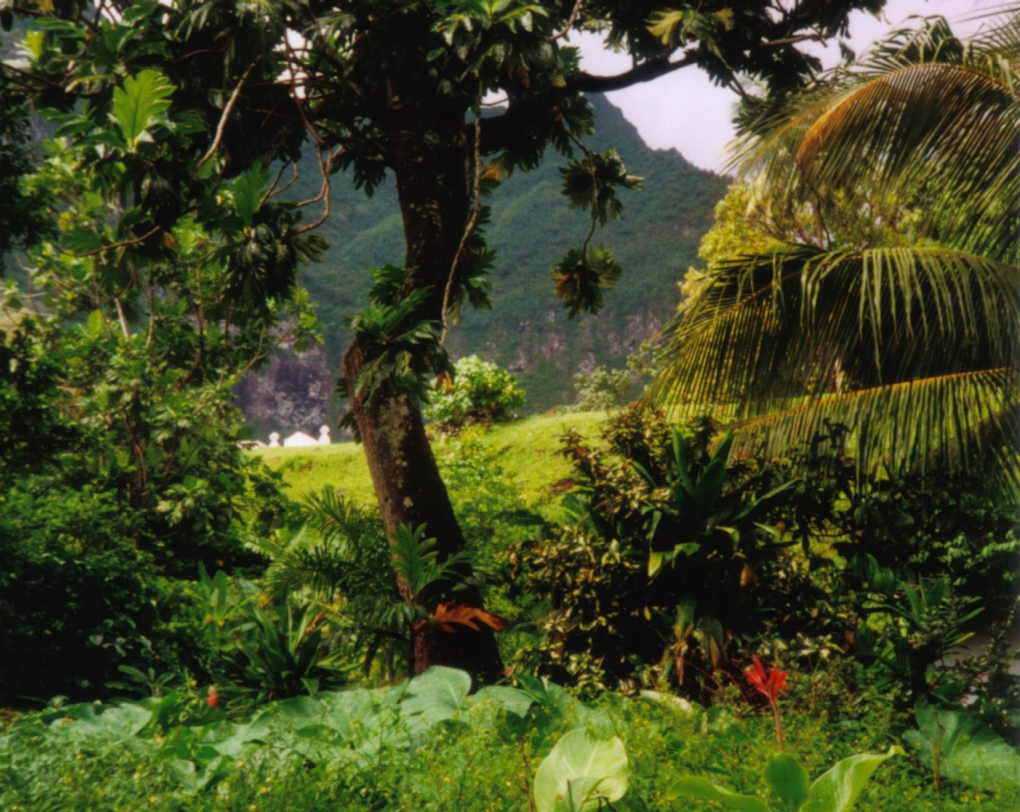
Natural resources are part of humanity's natural heritage or protected in nature reserves. Particular areas (such as the rainforest in Fatu-Hiva) often feature biodiversity and geodiversity in their ecosystems. Natural resources may be classified in different ways. Natural resources are materials and components (something that can be used) found within the environment. Every man-made product is composed of natural resources (at its fundamental level).
A natural resource may exist as a separate entity such as freshwater, air, or any living organism such as a fish, or it may be transformed by extractivist industries into an economically useful form that must be processed to obtain the resource such as metal ores, rare-earth elements, petroleum, timber and most forms of energy. Some resources are renewable, which means that they can be used at a certain rate and natural processes will restore them. In contrast, many extractive industries rely heavily on non-renewable resources that can only be extracted once.
Natural resource allocations can be at the centre of many economic and political confrontations both within and between countries. This is particularly true during periods of increasing scarcity and shortages (depletion and overconsumption of resources). Resource extraction is also a major source of human rights violations and environmental damage. The Sustainable Development Goals and other international development agendas frequently focus on creating more sustainable resource extraction, with some scholars and researchers focused on creating economic models, such as circular economy, that rely less on resource extraction, and more on reuse, recycling and renewable resources that can be sustainably managed.
Classification
[edit]There are various criteria for classifying natural resources. These include the source of origin, stages of development, renewability and ownership.
Origin
[edit]- Biotic: Resources that originate from the biosphere and have life such as flora and fauna, fisheries, livestock, etc. Fossil fuels such as coal and petroleum are also included in this category because they are formed from decayed organic matter.
- Abiotic: Resources that originate from non-living and inorganic material. These include land, water, air, rare-earth elements, and heavy metals including ores, such as gold, iron, copper, silver, etc.
Stage of development
[edit]- Potential resources: Resources that are known to exist, but have not been utilized yet. These may be used in the future. For example, petroleum in sedimentary rocks that, until extracted and put to use, remains a potential resource.
- Actual resources: Resources that have been surveyed, quantified and qualified, and are currently used in development. These are typically dependent on technology and the level of their feasibility, wood processing for example.
- Reserves: The part of an actual resource that can be developed profitably in the future.
- Stocks: Resources that have been surveyed, but cannot be used due to lack of technology, hydrogen vehicles for example.
Renewability/exhaustibility
[edit]- Renewable resources: These resources can be replenished naturally. Some of these resources, like solar energy, air, wind, water, etc. are continuously available and their quantities are not noticeably affected by human consumption. Though many renewable resources do not have such a rapid recovery rate, these resources are susceptible to depletion by over-use. Resources from a human use perspective are classified as renewable so long as the rate of replenishment/recovery exceeds that of the rate of consumption. They replenish easily compared to non-renewable resources.

- Non-renewable resources: These resources are formed over a long geological time period in the environment and cannot be renewed easily. Minerals are the most common resource included in this category. From the human perspective, resources are non-renewable when their rate of consumption exceeds the rate of replenishment/recovery; a good example of this is fossil fuels, which are in this category because their rate of formation is extremely slow (potentially millions of years), meaning they are considered non-renewable. Some resources naturally deplete in amount without human interference, the most notable of these being radio-active elements such as uranium, which naturally decay into heavy metals. Of these, the metallic minerals can be re-used by recycling them,[5] but coal and petroleum cannot be recycled.[6]
Ownership
[edit]- Individual resources: Resources owned privately by individuals. These include plots, houses, plantations, pastures, ponds, etc.
- Community resources: Resources which are accessible to all the members of a community. E.g.: Cemeteries
- National resources: Resources that belong to the nation. The nation has legal powers to acquire them for public welfare. These also include minerals, forests and wildlife within the political boundaries and Exclusive economic zone.
- International resources: These resources are regulated by international organizations. E.g.: International waters.
Extraction
[edit]Resource extraction involves any activity that withdraws resources from nature. This can range in scale from the traditional use of preindustrial societies to global industry. Extractive industries are, along with agriculture, the basis of the primary sector of the economy. Extraction produces raw material, which is then processed to add value. Examples of extractive industries are hunting, trapping, mining, oil and gas drilling, and forestry. Natural resources can be a substantial part of a country's wealth;[7] however, a sudden inflow of money caused by a resource extraction boom can create social problems including inflation harming other industries ("Dutch disease") and corruption, leading to inequality and underdevelopment, this is known as the "resource curse".
Extractive industries represent a large growing activity in many less-developed countries but the wealth generated does not always lead to sustainable and inclusive growth. People often accuse extractive industry businesses as acting only to maximize short-term value, implying that less-developed countries are vulnerable to powerful corporations. Alternatively, host governments are often assumed to be only maximizing immediate revenue. Researchers argue there are areas of common interest where development goals and business cross. These present opportunities for international governmental agencies to engage with the private sector and host governments through revenue management and expenditure accountability, infrastructure development, employment creation, skills and enterprise development, and impacts on children, especially girls and women.[8] A strong civil society can play an important role in ensuring the effective management of natural resources. Norway can serve as a role model in this regard as it has good institutions and open and dynamic public debate with strong civil society actors that provide an effective checks and balances system for the government's management of extractive industries, such as the Extractive Industries Transparency Initiative (EITI), a global standard for the good governance of oil, gas and mineral resources. It seeks to address the key governance issues in the extractive sectors.[9] However, in countries that do not have a very strong and unified society, meaning that there are dissidents who are not as happy with the government as in Norway's case, natural resources can actually be a factor in whether a civil war starts and how long the war lasts.[10]
Depletion
[edit]
In recent years, the depletion of natural resources has become a major focus of governments and organizations such as the United Nations (UN). This is evident in the UN's Agenda 21 Section Two, which outlines the necessary steps for countries to take to sustain their natural resources.[11] The depletion of natural resources is considered a sustainable development issue.[12] The term sustainable development has many interpretations, most notably the Brundtland Commission's 'to ensure that it meets the needs of the present without compromising the ability of future generations to meet their own needs';[13] however, in broad terms it is balancing the needs of the planet's people and species now and in the future.[11] In regards to natural resources, depletion is of concern for sustainable development as it has the ability to degrade current environments[14] and the potential to impact the needs of future generations.[12]
"The conservation of natural resources is the fundamental problem. Unless we solve that problem, it will avail us little to solve all others."
Depletion of natural resources is associated with social inequity. Considering most biodiversity are located in developing countries,[16] depletion of this resource could result in losses of ecosystem services for these countries.[17] Some view this depletion as a major source of social unrest and conflicts in developing nations.[18]
At present, there is a particular concern for rainforest regions that hold most of the Earth's biodiversity.[19] According to Nelson,[20] deforestation and degradation affect 8.5% of the world's forests with 30% of the Earth's surface already cropped. If we consider that 80% of people rely on medicines obtained from plants and 3⁄4 of the world's prescription medicines have ingredients taken from plants,[17] loss of the world's rainforests could result in a loss of finding more potential life-saving medicines.[21]
The depletion of natural resources is caused by 'direct drivers of change'[20] such as mining, petroleum extraction, fishing, and forestry as well as 'indirect drivers of change' such as demography (e.g. population growth), economy, society, politics, and technology.[20] The current practice of agriculture is another factor causing depletion of natural resources. For example, the depletion of nutrients in the soil due to excessive use of nitrogen[20] and desertification.[11] The depletion of natural resources is a continuing concern for society. This is seen in the cited quote given by Theodore Roosevelt, a well-known conservationist and former United States president, who was opposed to unregulated natural resource extraction.
Protection
[edit]In 1982, the United Nations developed the World Charter for Nature, which recognized the need to protect nature from further depletion due to human activity. It states that measures must be taken at all societal levels, from international to individual, to protect nature. It outlines the need for sustainable use of natural resources and suggests that the protection of resources should be incorporated into national and international systems of law.[22] To look at the importance of protecting natural resources further, the World Ethic of Sustainability, developed by the IUCN, WWF and the UNEP in 1990,[23] set out eight values for sustainability, including the need to protect natural resources from depletion. Since the development of these documents, many measures have been taken to protect natural resources including establishment of the scientific field and practice of conservation biology and habitat conservation, respectively.
Conservation biology is the scientific study of the nature and status of Earth's biodiversity with the aim of protecting species, their habitats, and ecosystems from excessive rates of extinction.[24][25] It is an interdisciplinary subject drawing on science, economics and the practice of natural resource management.[26][27][28][29] The term conservation biology was introduced as the title of a conference held at the University of California, San Diego, in La Jolla, California, in 1978, organized by biologists Bruce A. Wilcox and Michael E. Soulé.
Habitat conservation is a type of land management that seeks to conserve, protect and restore habitat areas for wild plants and animals, especially conservation reliant species, and prevent their extinction, fragmentation or reduction in range.[30]
Management
[edit]Natural resource management is a discipline in the management of natural resources such as land, water, soil, plants, and animals—with a particular focus on how management affects quality of life for present and future generations. Hence, sustainable development is followed according to the judicious use of resources to supply present and future generations. The disciplines of fisheries, forestry, and wildlife are examples of large subdisciplines of natural resource management.
Management of natural resources involves identifying who has the right to use the resources and who does not to define the management boundaries of the resource.[31] The resources may be managed by the users according to the rules governing when and how the resource is used depending on local condition[32] or the resources may be managed by a governmental organization or other central authority.[33]
A "...successful management of natural resources depends on freedom of speech, a dynamic and wide-ranging public debate through multiple independent media channels and an active civil society engaged in natural resource issues..."[34] because of the nature of the shared resources, the individuals who are affected by the rules can participate in setting or changing them.[31] The users have rights to devise their own management institutions and plans under the recognition by the government. The right to resources includes land, water, fisheries, and pastoral rights.[32] The users or parties accountable to the users have to actively monitor and ensure the utilisation of the resource compliance with the rules and impose penalties on those people who violate the rules.[31] These conflicts are resolved quickly and efficiently by the local institution according to the seriousness and context of the offense.[32] The global science-based platform to discuss natural resources management is the World Resources Forum, based in Switzerland.
See also
[edit]- Asteroid mining
- Citizen's dividend
- Conservation (ethic)
- Cultural resources
- Environmental movement
- Land (economics)
- Lunar resources
- Mining
- Nature-based solutions
- Resource nationalism
- Sustainable development
- United Nations Framework Classification for Resources
- United Nations Resource Management System
References
[edit]- ^ "natural resources - definition of natural resources in English". Oxford Dictionaries. 2014-04-20. Archived from the original on November 3, 2013. Retrieved 2016-12-12.
- ^ "Definition of natural resource - Student Dictionary". Wordcentral.com. 2012-09-20. Archived from the original on 2017-08-03. Retrieved 2016-12-12.
natural resource [...] : something (as a mineral, waterpower source, forest, or kind of animal) that is found in nature and is valuable to humans (as in providing a source of energy, recreation, or scenic beauty[.]
- ^ "What is Natural Resources? definition and meaning". Investorwords.com. Archived from the original on 2019-11-02. Retrieved 2016-12-12.
- ^ "Natural resource dictionary definition | natural resource defined". Yourdictionary.com. Archived from the original on 2019-10-22. Retrieved 2016-12-12.
Natural-resource meaning [:]
An actual or potential form of wealth supplied by nature, as coal, oil, water power, timber, arable land, etc.
A material source of wealth, such as timber, fresh water, or a mineral deposit, that occurs in a natural state and has economic value.
Something, such as a forest, a mineral deposit, or fresh water, that is found in nature and is necessary or useful to humans.
Any source of wealth that occurs naturally, especially minerals, fossil fuels, timber, etc. - ^ "Earth's natural wealth: an audit". Science.org.au. May 23, 2007. Archived from the original on July 20, 2008.
- ^ "Peak Everything?". Reason.com. April 27, 2010. Archived from the original on January 1, 2019. Retrieved May 5, 2010.
- ^ "EnviroStats: Canada's natural resource wealth at a glance". Statcan.gc.ca. Archived from the original on 2014-11-06. Retrieved 2014-05-31.
- ^ Evelyn Dietsche; Samantha Dodd; Dan Haglund; Mark Henstridge; Maja Jakobsen; Esméralda Sindou; Caroline Slaven. "Extractive industries, development and the role of donors - ECONOMIC AND PRIVATE SECTOR PROFESSIONAL EVIDENCE AND APPLIED KNOWLEDGE SERVICES". Partberplatform.org. Archived from the original on 2017-02-05. Retrieved 2016-12-12.
- ^ Indra Overland (2018) 'Introduction: Civil Society, Public Debate and Natural Resource Management', in Indra Overland (ed.) Public Brainpower: Civil Society and Natural Resource Management, Cham: Palgrave, pp. 1–22. https://www.researchgate.net/publication/320656629 Archived 2018-06-12 at the Wayback Machine
- ^ Lujala, Päivi (January 2010). "The spoils of nature: Armed civil conflict and rebel access to natural resources". Journal of Peace Research. 47 (1): 15–28. doi:10.1177/0022343309350015. S2CID 111088968.
- ^ a b c "UN 2002 Earth Summit Agenda 21 The United Nations programme for action from Rio: Section Two – Conservation and Management of Resources for Development, United Nations, Rio". Un.org. 12 September 2011. Archived from the original on 2019-10-10. Retrieved 2016-12-12.
- ^ a b Schilling M and Chiang L 2011 The effect of natural resources on sustainable development policy: The approach of non-sustainable externalities. Energy Policy 39: 990–998
- ^ "UN 1987 'Report of the World Commission on Environment and Development: Our Common Future' UN Documents: Gathering a body of global agreements". Un.org. 12 September 2011. Archived from the original on 2019-05-17. Retrieved 2016-12-12.
- ^ Salvati L and Marco Z 2008 Natural resource depletion and economic performance of local districts: suggestions from a within-country analysis Journal of Sustainable Development and World Ecology. 15(6): 518–523
- ^ Theodore Roosevelt, Address to the Deep Waterway Convention Memphis, TN, October 4, 1907
- ^ UNESCO and UNEP 2002 Cultural Diversity and Biodiversity for Sustainable Development, World Summit on Sustainable Development, Johannesburg.
- ^ a b Nellemann C and Corcoran E 2010 Dead Planet, Living Planet- Biodiversity and Ecosystem Restoration for Sustainable Development: A Rapid Response Assessment. United Nations Environment Program, GRID-Arendal
- ^ Von Braun J cited in Inforesources Trends 2005 Depletion of Natural Resources – Implications for Development: An assessment by experts Berne, Switzerland
- ^ Nations, United (12 September 2011). "UNEP 2011 International Year of Forests". United Nations. Un.org. Archived from the original on 2016-12-09. Retrieved 2016-12-12.
- ^ a b c d "Nelson 2005 Chapter 3: Drivers of Ecosystem Change: Summary Chapter in Current State and Trends Assessment Millenium Ecosystem Assessment" (PDF). 12 September 2011. Archived from the original (PDF) on 14 October 2009. Retrieved 2016-12-12.
- ^ Clark H cited in UNESCO and UNEP 2002 Cultural Diversity and Biodiversity for Sustainable Development, World Summit on Sustainable Development, Johannesburg
- ^ "UN 1982 General Assembly World Charter for Nature: 48th Plenary meeting". United Nations. 13 September 2011. Archived from the original on 2019-04-02. Retrieved 2016-12-12.
- ^ Fein, J. (2003). "Learning to Care: Education and Compassion" (PDF). Australian Journal of Environmental Education. 19: 1–13. doi:10.1017/S0814062600001427. hdl:10072/368672. Archived from the original (PDF) on September 14, 2015. Retrieved May 31, 2014.
- ^ M. E. Soulé and B. A. Wilcox. 1980. Conservation Biology: An Evolutionary-Ecological Perspective. Sinauer Associatess. Sunderland, Massachusetts.
- ^ M. E. Soule. (1986). What is conservation Biology? BioScience, 35(11): 727–734 [1] Archived 2019-04-12 at the Wayback Machine
- ^ Soule, Michael E. (1986). Conservation Biology: The Science of Scarcity and Diversity. Sinauer Associates. p. 584. ISBN 0-87893-795-1.
- ^ Hunter, M. L. (1996). Fundamentals of Conservation Biology. Blackwell Science Inc., Cambridge, Massachusetts., ISBN 0-86542-371-7.
- ^ Groom, M.J., Meffe, G.K. and Carroll, C.R. (2006) Principles of Conservation Biology (3rd ed.). Sinauer Associates, Sunderland, MA. ISBN 0-87893-518-5
- ^ van Dyke, Fred (2008). Conservation Biology: Foundations, Concepts, Applications, 2nd ed. Springer Verlag. p. 478. ISBN 978-1-4020-6890-4.
- ^ Habitat Conservation Planning Branch. "Habitat Conservation". California Department of Fish & Game. Archived from the original on 2019-10-26. Retrieved 2009-04-07.
- ^ a b c "Ostrom E cited in Kommers N and Mackie P 2005 Journalist guide to world resources 2005 World Resources Institute 1-30" (PDF). Pdf.wri.org. Archived (PDF) from the original on 2011-11-25. Retrieved 2011-09-22.
- ^ a b c "UNDP, UNEP, The World Bank and World Resources Institute – The Wealth of the Poor: Managing Ecosystems to Fight Poverty Institute 2005 Chapter 3 The board's role in governance, World Resources 2005" (PDF). Sc.com.my. Archived from the original (PDF) on 2011-07-25.
- ^ Conroy, Michael J. (2012). Decision Making in Natural Resource Management: a Structured, Adaptive Approach. Peterson, James T. Chicester: Wiley. ISBN 978-1-118-50623-3. OCLC 827207638.
- ^ Overland, Indra (2018-01-01). "Introduction: Civil Society, Public Debate and Natural Resource Management". Public Brainpower: Civil Society and Natural Resource Management. pp. 1–22. doi:10.1007/978-3-319-60627-9_1. ISBN 9783319606262. Archived from the original on 2018-06-12. Retrieved 2018-04-05.
External links
[edit]- Natural resource, britannica.com
- Natural resources, encyclopedia.com
Media related to Natural resources at Wikimedia Commons
Natural resource
View on GrokipediaFundamentals
Definition and Characteristics
Natural resources are naturally occurring substances or features of the Earth's environment that exist without human intervention and can be utilized to meet human needs, including materials for production, energy, and sustenance. These encompass biotic elements derived from living organisms, such as timber and fisheries, and abiotic components like minerals, water, and soil, which serve as inputs for economic activities.[11][12] A defining trait is their inherent scarcity relative to potential demand, as global reserves of non-renewable types, such as proven oil reserves estimated at 1.7 trillion barrels in 2023, impose physical limits on extraction rates. Resources must also possess utility—providing tangible benefits like heat from coal or structural support from stone—and be technologically accessible, meaning extraction feasibility depends on available methods, as seen in deep-sea mining requiring specialized equipment developed post-2000.[7] Characteristics further include spatial heterogeneity, where deposits concentrate in specific regions—for instance, 70% of the world's bauxite reserves lie in Guinea, Australia, and Brazil as of 2022—affecting trade and geopolitical dynamics. Economic viability hinges on cost structures, including depletion risks for finite stocks, which drive market prices; for example, uranium ore's value correlates with processing yields averaging 0.1-1% uranium content. Environmental externalities, such as habitat disruption from logging, arise from exploitation but stem from causal extraction processes rather than resources themselves.Economic and Societal Importance
Natural resources constitute a cornerstone of economic activity worldwide, generating rents that directly contribute to gross domestic product (GDP) through extraction, export, and processing. In many resource-abundant countries, these rents form a substantial portion of national income; for example, in Saudi Arabia, rents from oil and natural gas accounted for 41.1% of GDP in recent assessments. Similarly, nations like Angola and Nigeria derive significant GDP shares from fossil fuels and minerals, often exceeding 20-30% depending on global commodity prices. Globally, natural resource rents averaged around 1-2% of GDP across countries in World Bank data from 2010-2020, though this metric understates broader dependencies such as supply chains for manufacturing and agriculture.[13][14][15] The value of untapped and exploited reserves underscores this economic weight, with Russia holding an estimated $75 trillion in resources dominated by coal, natural gas, oil, and rare earth metals as of 2024, enabling it to fund state budgets and geopolitical influence. Other examples include China, with $23 trillion primarily in coal and rare earths, supporting its industrial base, and Australia, where iron ore and coal exports drive trade surpluses. These assets facilitate capital accumulation for infrastructure and diversification, though empirical evidence shows outcomes vary with institutional quality—countries with strong governance, like Norway, convert resource wealth into sustained prosperity, while others face volatility from price cycles and "resource curse" dynamics, where rents crowd out non-resource sectors.[16][17][18] Societally, natural resources provide indispensable inputs for human sustenance and advancement, supplying energy for powering homes and industries, fertile land and water for food production, and materials like timber and minerals for shelter and tools. Resource availability has shaped societal evolution, from enabling early agricultural settlements to fueling modern urbanization and technological progress, with over 50% of global GDP—roughly $44 trillion as of 2022—relying on ecosystem services such as pollination, soil fertility, and raw material provision. In developing regions, access to these resources correlates with poverty reduction and health improvements via affordable energy and nutrition, though overexploitation risks depletion, as seen in historical cases of soil erosion limiting agrarian societies. Extraction industries also employ millions directly in mining, forestry, and fisheries, sustaining rural communities and migration patterns, while indirect jobs in processing amplify social stability.[19][20]Classification
By Origin and Composition
Natural resources are classified by origin into biotic and abiotic categories, reflecting their derivation from living or non-living components of the Earth system. Biotic resources originate from the biosphere, encompassing materials and organisms produced through biological processes. These include flora such as timber from forests, fauna like fish stocks and livestock, and derived products from organic decay, notably fossil fuels including coal, petroleum, and natural gas, which formed over millions of years from compressed remains of prehistoric plants and animals.[21][22] Abiotic resources, by contrast, arise from inorganic, non-biological sources within the lithosphere, hydrosphere, or atmosphere, lacking direct ties to living matter. Key examples comprise metallic minerals such as iron ore, copper, and gold deposits formed through geological crystallization; non-metallic minerals like phosphates and salts from sedimentary processes; and elemental resources including water cycles, atmospheric air, and solar radiation harnessed for energy.[22][23] This binary distinction by origin and composition—organic versus inorganic—underpins assessments of extraction feasibility and environmental interactions, as biotic resources often involve ecological dynamics while abiotic ones engage physicochemical properties. For instance, biotic fossil fuels release stored carbon from ancient biomass upon combustion, whereas abiotic metals require metallurgical separation from host rocks based on atomic structure.[24][25]By Renewability and Exhaustibility
Renewable natural resources are those that can replenish themselves through natural processes at rates comparable to or exceeding human consumption under sustainable management practices, such as solar energy, wind, flowing water, timber from forests, and fish stocks in fisheries.[4] These resources derive from ongoing ecological or physical cycles, including photosynthesis for biomass and atmospheric circulation for wind and precipitation, allowing potential indefinite use if extraction does not exceed replenishment rates; for instance, annual global timber harvest from sustainably managed forests reached approximately 4.1 billion cubic meters in 2020 without net depletion in certified areas. However, even renewable resources can become effectively exhaustible through overexploitation, as evidenced by the collapse of Atlantic cod fisheries in the 1990s due to extraction rates surpassing biological reproduction, reducing spawning stock biomass by over 99% from historical levels. Non-renewable or exhaustible natural resources, by contrast, exist in finite geological stocks formed over millions of years and cannot replenish on human timescales, leading to inevitable depletion with continued extraction; primary examples include fossil fuels like coal, oil, and natural gas, as well as metallic minerals such as copper, iron ore, and rare earth elements.[26] These resources' exhaustibility stems from fixed reserves—global proven oil reserves stood at about 1.7 trillion barrels as of 2023, sufficient for roughly 50 years at current consumption rates of 100 million barrels per day—necessitating substitution or technological alternatives once stocks are drawn down, as extraction follows Hotelling's rule of rising scarcity rents over time. Unlike renewables, their value derives from concentrated, non-recurring deposits, with recycling mitigating but not eliminating depletion; for copper, secondary supply from scrap met only 20-30% of demand in 2022, underscoring primary mining's dominance. This binary classification, while useful, overlooks hybrid cases where renewability hinges on management and scale; groundwater aquifers, for example, renew slowly via infiltration but function as exhaustible when pumped unsustainably, as in California's Central Valley where overdraft exceeded 2 million acre-feet annually in the 2010s, lowering water tables by hundreds of feet. Empirical assessments prioritize replenishment kinetics over origin, with non-renewables defined by geological formation timescales exceeding 10,000 years, contrasting biological or solar cycles under decades.[27]| Category | Key Characteristics | Examples | Replenishment Time Scale |
|---|---|---|---|
| Renewable | Replenish via natural cycles; sustainable if managed | Solar radiation, wind, forests, fisheries | Days to decades (e.g., tree regrowth: 20-100 years)[4] |
| Non-renewable (Exhaustible) | Finite stocks; no viable natural replenishment | Fossil fuels, metals, phosphates | Millions of years (geological processes)[26] |
