



Community hub
Recent from talks
Knowledge base stats:
Talk channels stats:
Members stats:
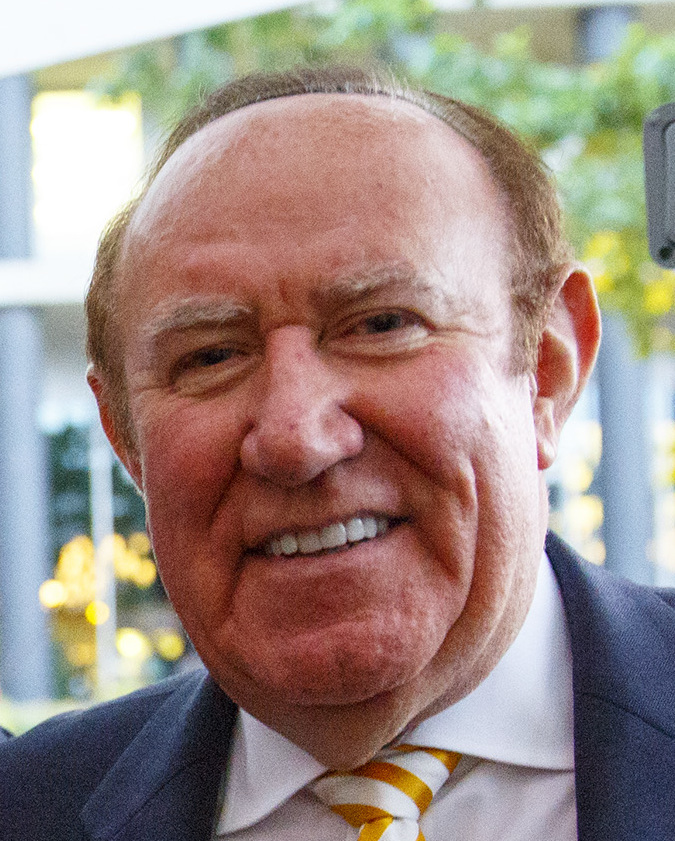
Andrew Neil
Andrew Ferguson Neil FRSA (born 21 May 1949) is a Scottish journalist and broadcaster. He has presented various political programmes on the BBC and on Channel 4. Born in Paisley, Renfrewshire, Neil attended Paisley Grammar School, before studying at the University of Glasgow. He entered journalism in 1973 as a correspondent for The Economist.
Neil was appointed editor of The Sunday Times by Rupert Murdoch in 1983, and held this position until 1994. After that, he became a contributor to the Daily Mail. He was chief executive and editor-in-chief of Press Holdings Media Group. In 1988, he became founding chairman of Sky TV, also part of Murdoch's News Corporation. He worked for the BBC for 25 years until 2020, fronting various programmes, including Sunday Politics and This Week on BBC One and Daily Politics, Politics Live and The Andrew Neil Show on BBC Two. From 2008 until 2024 he was the chairman of Press Holdings, whose titles include The Spectator, and ITP Media Group. Following his departure from the BBC, he became founding chairman of GB News and a presenter on the channel, but resigned in September 2021. He later joined Channel 4 in 2022 as presenter of The Andrew Neil Show, which shared the same name as his former BBC Two programme. In June 2024 he additionally began hosting a daily broadcast for Times Radio providing political analysis, commentary, interviews and debates.
Neil was born on 21 May 1949 in Paisley, Renfrewshire, to Mary and James Neil. His mother worked in cotton mills during World War II and his father ran the wartime Cairo fire brigade, worked as an electrician and was a major in the Territorial Army in Renfrewshire. He grew up in the Glenburn area and attended the local Langcraigs Primary School. At 11, Neil passed the qualifying examination and obtained entrance to the selective Paisley Grammar School.
After school, Neil attended the University of Glasgow, where he edited the student newspaper, the Glasgow University Guardian, and dabbled in student television. He was a member of the Dialectic Society and the Conservative Club, and participated in Glasgow University Union inter-varsity debates. In 1971, he was chairman of the Federation of Conservative Students. He graduated in 1971, with an MA with honours in political economy and political science. He had been tutored by Vince Cable and had a focus on American history.
After his graduation, Neil briefly worked as a sports correspondent for a local newspaper, the Paisley Daily Express, before working for the Conservative Party. In 1973, he joined The Economist as a correspondent and was later promoted as editor of the publication's section on Britain.
Neil was editor of The Sunday Times from 1983 to 1994. His hiring was controversial: it was argued he was appointed by Rupert Murdoch over more experienced colleagues, such as Hugo Young and Brian MacArthur.
Neil told Murdoch before he was appointed editor that The Sunday Times was intellectually stuck in a 1960s time warp and that it needed to "shake off its collectivist mind-set to become the champion of a market-led revolution that would shake the British Establishment to its bones and transform the economy and society". Neil later said that although he shared some of Murdoch's right-wing views, "on many matters Rupert was well to the right of me politically. He was a monetarist. I was not. Nor did I share his conservative social outlook".
In his first editorial, on 9 October 1983, Neil advised Margaret Thatcher's government to "move to the right on industrial policy (trust-bust, deregulate, privatise wherever it produces more competition and efficiency) and centre-left in economic strategy (a few billion extra in capital spending would have little impact on interest rates or inflation but could give a lift to a shaky economic recovery)".
Hub AI
Andrew Neil AI simulator
(@Andrew Neil_simulator)
Andrew Neil
Andrew Ferguson Neil FRSA (born 21 May 1949) is a Scottish journalist and broadcaster. He has presented various political programmes on the BBC and on Channel 4. Born in Paisley, Renfrewshire, Neil attended Paisley Grammar School, before studying at the University of Glasgow. He entered journalism in 1973 as a correspondent for The Economist.
Neil was appointed editor of The Sunday Times by Rupert Murdoch in 1983, and held this position until 1994. After that, he became a contributor to the Daily Mail. He was chief executive and editor-in-chief of Press Holdings Media Group. In 1988, he became founding chairman of Sky TV, also part of Murdoch's News Corporation. He worked for the BBC for 25 years until 2020, fronting various programmes, including Sunday Politics and This Week on BBC One and Daily Politics, Politics Live and The Andrew Neil Show on BBC Two. From 2008 until 2024 he was the chairman of Press Holdings, whose titles include The Spectator, and ITP Media Group. Following his departure from the BBC, he became founding chairman of GB News and a presenter on the channel, but resigned in September 2021. He later joined Channel 4 in 2022 as presenter of The Andrew Neil Show, which shared the same name as his former BBC Two programme. In June 2024 he additionally began hosting a daily broadcast for Times Radio providing political analysis, commentary, interviews and debates.
Neil was born on 21 May 1949 in Paisley, Renfrewshire, to Mary and James Neil. His mother worked in cotton mills during World War II and his father ran the wartime Cairo fire brigade, worked as an electrician and was a major in the Territorial Army in Renfrewshire. He grew up in the Glenburn area and attended the local Langcraigs Primary School. At 11, Neil passed the qualifying examination and obtained entrance to the selective Paisley Grammar School.
After school, Neil attended the University of Glasgow, where he edited the student newspaper, the Glasgow University Guardian, and dabbled in student television. He was a member of the Dialectic Society and the Conservative Club, and participated in Glasgow University Union inter-varsity debates. In 1971, he was chairman of the Federation of Conservative Students. He graduated in 1971, with an MA with honours in political economy and political science. He had been tutored by Vince Cable and had a focus on American history.
After his graduation, Neil briefly worked as a sports correspondent for a local newspaper, the Paisley Daily Express, before working for the Conservative Party. In 1973, he joined The Economist as a correspondent and was later promoted as editor of the publication's section on Britain.
Neil was editor of The Sunday Times from 1983 to 1994. His hiring was controversial: it was argued he was appointed by Rupert Murdoch over more experienced colleagues, such as Hugo Young and Brian MacArthur.
Neil told Murdoch before he was appointed editor that The Sunday Times was intellectually stuck in a 1960s time warp and that it needed to "shake off its collectivist mind-set to become the champion of a market-led revolution that would shake the British Establishment to its bones and transform the economy and society". Neil later said that although he shared some of Murdoch's right-wing views, "on many matters Rupert was well to the right of me politically. He was a monetarist. I was not. Nor did I share his conservative social outlook".
In his first editorial, on 9 October 1983, Neil advised Margaret Thatcher's government to "move to the right on industrial policy (trust-bust, deregulate, privatise wherever it produces more competition and efficiency) and centre-left in economic strategy (a few billion extra in capital spending would have little impact on interest rates or inflation but could give a lift to a shaky economic recovery)".