
Recent from talks
Angiotensin-converting enzyme
Knowledge base stats:
Talk channels stats:
Members stats:
Angiotensin-converting enzyme
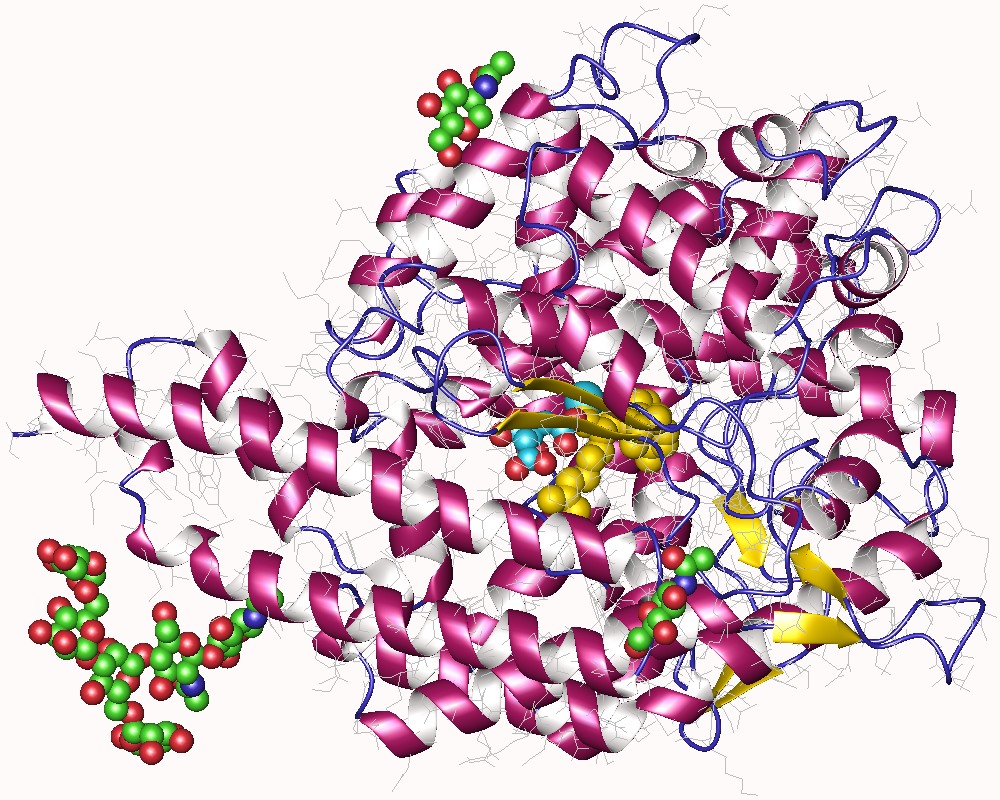
Angiotensin-converting enzyme (EC 3.4.15.1), or ACE, is a central component of the renin–angiotensin system (RAS), which controls blood pressure by regulating the volume of fluids in the body. It converts the hormone angiotensin I to the active vasoconstrictor angiotensin II. Therefore, ACE indirectly increases blood pressure by causing blood vessels to constrict. ACE inhibitors are widely used as pharmaceutical drugs for treatment of cardiovascular diseases.
Other lesser known functions of ACE are degradation of bradykinin, substance P and amyloid beta-protein.
ACE hydrolyzes peptides by the removal of a dipeptide from the C-terminus. Likewise it converts the inactive decapeptide angiotensin I to the octapeptide angiotensin II by removing the dipeptide His-Leu.
ACE is a central component of the renin–angiotensin system (RAS), which controls blood pressure by regulating the volume of fluids in the body.
Angiotensin II is a potent vasoconstrictor in a substrate concentration-dependent manner. Angiotensin II binds to the type 1 angiotensin II receptor (AT1), which sets off a number of actions that result in vasoconstriction and therefore increased blood pressure.
ACE is also part of the kinin–kallikrein system where it degrades bradykinin, a potent vasodilator, and other vasoactive peptides.
Kininase II is the same as angiotensin-converting enzyme. Thus, the same enzyme (ACE) that generates a vasoconstrictor (ANG II) also disposes of vasodilators (bradykinin).
ACE is a zinc metalloproteinase. The zinc center catalyses the peptide hydrolysis. Reflecting the critical role of zinc, ACE can be inhibited by metal-chelating agents.
Hub AI
Angiotensin-converting enzyme AI simulator
(@Angiotensin-converting enzyme_simulator)
Angiotensin-converting enzyme
Angiotensin-converting enzyme (EC 3.4.15.1), or ACE, is a central component of the renin–angiotensin system (RAS), which controls blood pressure by regulating the volume of fluids in the body. It converts the hormone angiotensin I to the active vasoconstrictor angiotensin II. Therefore, ACE indirectly increases blood pressure by causing blood vessels to constrict. ACE inhibitors are widely used as pharmaceutical drugs for treatment of cardiovascular diseases.
Other lesser known functions of ACE are degradation of bradykinin, substance P and amyloid beta-protein.
ACE hydrolyzes peptides by the removal of a dipeptide from the C-terminus. Likewise it converts the inactive decapeptide angiotensin I to the octapeptide angiotensin II by removing the dipeptide His-Leu.
ACE is a central component of the renin–angiotensin system (RAS), which controls blood pressure by regulating the volume of fluids in the body.
Angiotensin II is a potent vasoconstrictor in a substrate concentration-dependent manner. Angiotensin II binds to the type 1 angiotensin II receptor (AT1), which sets off a number of actions that result in vasoconstriction and therefore increased blood pressure.
ACE is also part of the kinin–kallikrein system where it degrades bradykinin, a potent vasodilator, and other vasoactive peptides.
Kininase II is the same as angiotensin-converting enzyme. Thus, the same enzyme (ACE) that generates a vasoconstrictor (ANG II) also disposes of vasodilators (bradykinin).
ACE is a zinc metalloproteinase. The zinc center catalyses the peptide hydrolysis. Reflecting the critical role of zinc, ACE can be inhibited by metal-chelating agents.
Recent media