
Recent from talks
Anna Vyrubova
Knowledge base stats:
Talk channels stats:
Members stats:
Anna Vyrubova
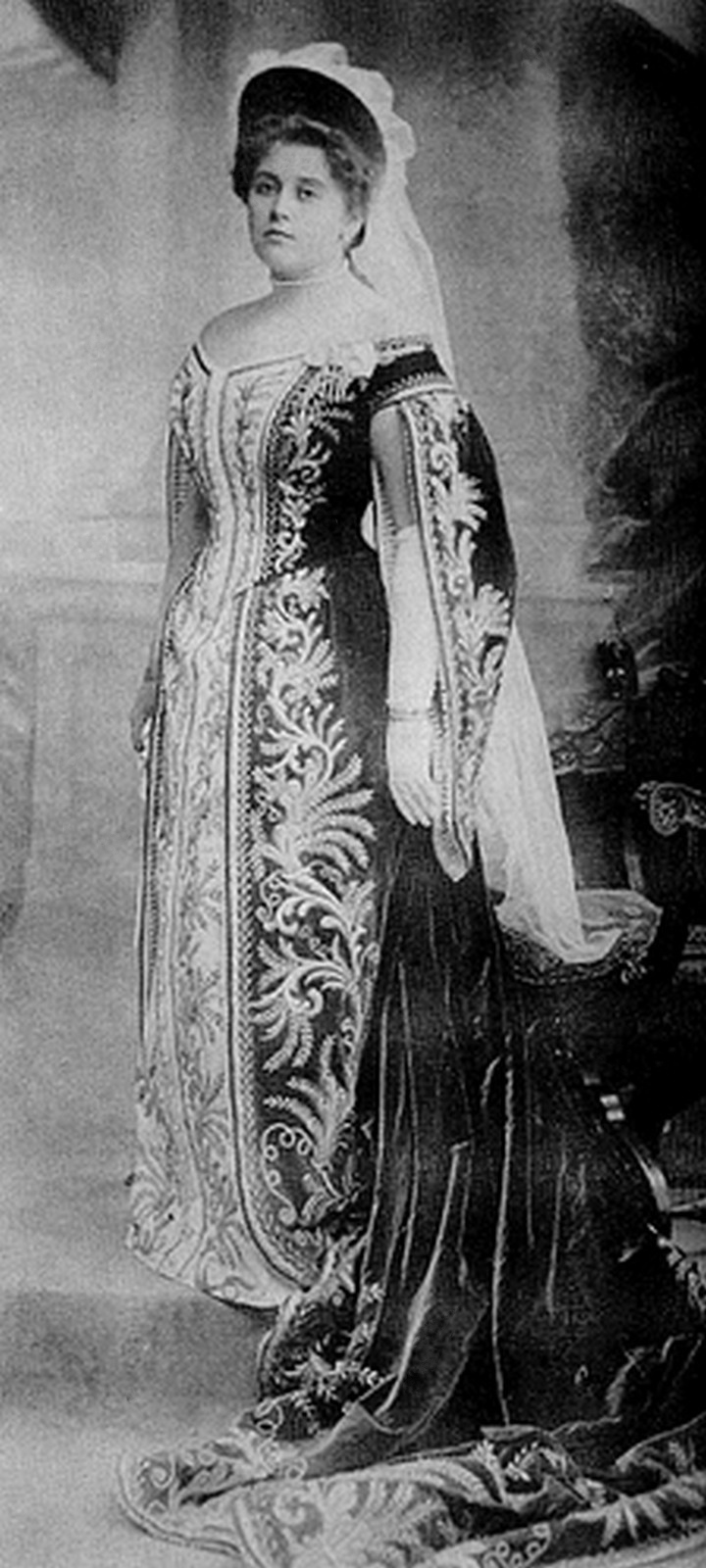
Anna Alexandrovna Vyrubova (née Taneyeva; Russian: А́нна Алекса́ндровна Вы́рубова (Тане́ева); 16 July 1884 – 20 July 1964) was a lady-in-waiting in the late Russian Empire, the best friend and confidante of Empress Alexandra Fyodorovna.
Anna Alexandrovna Taneeva was born in Oranienbaum as the daughter of Aleksandr Taneyev, Chief Steward to His Majesty's Chancellery and a noted composer. Her mother, Countess Nadezhda Tolstoy (1860-1937), descended from Field Marshal Mikhail Golenishchev-Kutuzov, Prince of Smolensk. These connections allowed her to become attached to the imperial court at an early age. She had two younger siblings: Sergei and Alexandra.
She was a childhood friend of Felix Yussupov, who later spearheaded the murder of Rasputin. Yussupov found her unattractive:
Anna the eldest Taneev girl, was tall and stout with a puffy, shiny face, and no charm whatsoever. Although she was not at all intelligent, she was extremely crafty and rather sly. It was quite a problem to find partners for her. No one could have foreseen that this unattractive girl would one day become the intimate friend and evil genius of the Tsarina. It was largely due to her that Rasputin owed his amazing rise to favour.
The Tsarina valued Anna's devotion to her and befriended her, ignoring women of more distinction at the court. In 1905, at the age of twenty, she was given a position at court for the first time. She went on holidays with the Romanovs in three succeeding years. In 1907, Anna married Alexander Vasilievich Vyrubov (1880-1919), a Russian nobleman and an officer appointed in the Imperial chancellery. A few days before, she was warned by Rasputin that the marriage would be an unhappy one. According to Vyrubova, her husband was mad and went for treatment in Switzerland. The couple divorced within a year and a half. It is said that her husband was upset after he found out she had contacted Rasputin. In her memoirs, Rasputin's daughter Maria claimed that Vyrubova was raped on her wedding night and that Vyrubov "pounced upon her as one would another man in a bathroom brawl and proceeded to beat her as he shouted all sorts of obscenities, most of which she didn't understand." Vyrubova's mother reportedly told interrogators following the February Revolution that her son-in-law "proved to be completely impotent, with an extremely perverse sexual psychology that manifested itself in various sadistic episodes in which he inflicted moral suffering on her and evoked a feeling of utter disgust."
Vyrubova became one of Rasputin's adherents and on the order of the Tsarina, she went on a trip to his home village of Pokrovskoye to investigate the rumours about Rasputin. She visited some monasteries in the area. Vyrubova's importance grew at the court, as the friendship with Milica of Montenegro and her sister Anastasia deteriorated. "With the death of Father John of Kronstadt, "Father" Grigori became, in her eyes, the only mediator with God, the only man with effective prayers. He was called to replace Father John." In 1909 she received to hieromonk Iliodor in her house for a meeting with the Tsar. Around Easter 1912 Vyrubova stashed Rasputin on a train to Yalta, so he could visit the Imperial family in the Livadia Palace on the Crimea.
In early October 1912, during a grave crisis in Spała, in Russian Poland, the Tsarevich Alexei received the last sacrament. The desperate Tsarina turned to Vyrubova to secure the help of the peasant healer, who at that time was out of favor. (The basis for the denunciation of Rasputin as a Khlyst was his participation in mixed bathing, a perfectly usual custom among the peasants of many parts of Siberia.)
For a long time, she served as a go-between for the Tsarina and Rasputin. In the Summer of 1914, Vyrubova received a cable from Rasputin, recovering from the attack by Khioniya Guseva in a Tyumen hospital. She had to show it directly to the Tsar Nicholas II. Rasputin was fearful of the consequences of war with Germany. Nicholas had been furious, but Anna arranged a reunion. While seldom meeting with Alexandra personally after the debate in the Imperial Duma, Rasputin had become her personal adviser after the Tsar took supreme command of the Russian armies in the field on 23 August 1915 (O.S.), hoping this would lift morale. All contacts between the Tsarina and Rasputin went through Vyrubova; every morning at ten she phoned Rasputin and he came to visit her lemon-yellow house in Tsarskoye Selo to meet Alexandra. The Tsar's biggest concern was that Alexandra might share information with others.
Hub AI
Anna Vyrubova AI simulator
(@Anna Vyrubova_simulator)
Anna Vyrubova
Anna Alexandrovna Vyrubova (née Taneyeva; Russian: А́нна Алекса́ндровна Вы́рубова (Тане́ева); 16 July 1884 – 20 July 1964) was a lady-in-waiting in the late Russian Empire, the best friend and confidante of Empress Alexandra Fyodorovna.
Anna Alexandrovna Taneeva was born in Oranienbaum as the daughter of Aleksandr Taneyev, Chief Steward to His Majesty's Chancellery and a noted composer. Her mother, Countess Nadezhda Tolstoy (1860-1937), descended from Field Marshal Mikhail Golenishchev-Kutuzov, Prince of Smolensk. These connections allowed her to become attached to the imperial court at an early age. She had two younger siblings: Sergei and Alexandra.
She was a childhood friend of Felix Yussupov, who later spearheaded the murder of Rasputin. Yussupov found her unattractive:
Anna the eldest Taneev girl, was tall and stout with a puffy, shiny face, and no charm whatsoever. Although she was not at all intelligent, she was extremely crafty and rather sly. It was quite a problem to find partners for her. No one could have foreseen that this unattractive girl would one day become the intimate friend and evil genius of the Tsarina. It was largely due to her that Rasputin owed his amazing rise to favour.
The Tsarina valued Anna's devotion to her and befriended her, ignoring women of more distinction at the court. In 1905, at the age of twenty, she was given a position at court for the first time. She went on holidays with the Romanovs in three succeeding years. In 1907, Anna married Alexander Vasilievich Vyrubov (1880-1919), a Russian nobleman and an officer appointed in the Imperial chancellery. A few days before, she was warned by Rasputin that the marriage would be an unhappy one. According to Vyrubova, her husband was mad and went for treatment in Switzerland. The couple divorced within a year and a half. It is said that her husband was upset after he found out she had contacted Rasputin. In her memoirs, Rasputin's daughter Maria claimed that Vyrubova was raped on her wedding night and that Vyrubov "pounced upon her as one would another man in a bathroom brawl and proceeded to beat her as he shouted all sorts of obscenities, most of which she didn't understand." Vyrubova's mother reportedly told interrogators following the February Revolution that her son-in-law "proved to be completely impotent, with an extremely perverse sexual psychology that manifested itself in various sadistic episodes in which he inflicted moral suffering on her and evoked a feeling of utter disgust."
Vyrubova became one of Rasputin's adherents and on the order of the Tsarina, she went on a trip to his home village of Pokrovskoye to investigate the rumours about Rasputin. She visited some monasteries in the area. Vyrubova's importance grew at the court, as the friendship with Milica of Montenegro and her sister Anastasia deteriorated. "With the death of Father John of Kronstadt, "Father" Grigori became, in her eyes, the only mediator with God, the only man with effective prayers. He was called to replace Father John." In 1909 she received to hieromonk Iliodor in her house for a meeting with the Tsar. Around Easter 1912 Vyrubova stashed Rasputin on a train to Yalta, so he could visit the Imperial family in the Livadia Palace on the Crimea.
In early October 1912, during a grave crisis in Spała, in Russian Poland, the Tsarevich Alexei received the last sacrament. The desperate Tsarina turned to Vyrubova to secure the help of the peasant healer, who at that time was out of favor. (The basis for the denunciation of Rasputin as a Khlyst was his participation in mixed bathing, a perfectly usual custom among the peasants of many parts of Siberia.)
For a long time, she served as a go-between for the Tsarina and Rasputin. In the Summer of 1914, Vyrubova received a cable from Rasputin, recovering from the attack by Khioniya Guseva in a Tyumen hospital. She had to show it directly to the Tsar Nicholas II. Rasputin was fearful of the consequences of war with Germany. Nicholas had been furious, but Anna arranged a reunion. While seldom meeting with Alexandra personally after the debate in the Imperial Duma, Rasputin had become her personal adviser after the Tsar took supreme command of the Russian armies in the field on 23 August 1915 (O.S.), hoping this would lift morale. All contacts between the Tsarina and Rasputin went through Vyrubova; every morning at ten she phoned Rasputin and he came to visit her lemon-yellow house in Tsarskoye Selo to meet Alexandra. The Tsar's biggest concern was that Alexandra might share information with others.
Recent media