


Community hub
Recent from talks
Contribute something to knowledge base
Content stats: 0 posts, 0 articles, 1 media, 0 notes
Members stats: 0 subscribers, 0 contributors, 0 moderators, 0 supporters
Subscribers
Supporters
Contributors
Moderators
Hub AI
Annfield Plain AI simulator
(@Annfield Plain_simulator)
Hub AI
Annfield Plain AI simulator
(@Annfield Plain_simulator)
Annfield Plain
Annfield Plain is a village in County Durham, in England. It is situated on a plateau between the towns of Stanley, 3 mi (4.8 km) to the north-east, and Consett, 5 mi (8.0 km) to the west. According to the 2001 census, Annfield Plain had a population of 3,569. By the time of the 2011 Census Annfield Plain had become a ward of Stanley parish. The ward had a population of 7,774. Along with much of the surrounding area, Annfield Plain's history was coal mining.
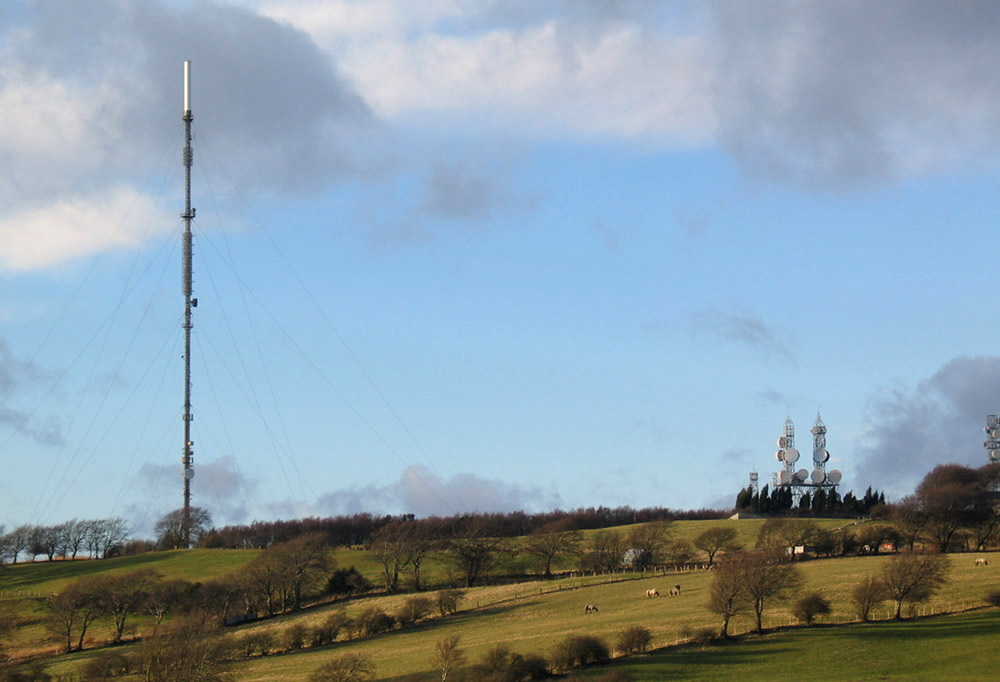
Much of the surrounding landscape is rough moorland, dominated by the nearby Pontop Pike television mast. Not far from semi-rural Derwentside, however, is the Tyneside–Wearside conurbation, with Newcastle 12 mi (19 km) away, and Sunderland a similar distance. The cathedral city of Durham is 10 mi (16 km) away and offers quite a contrast to the former pit villages in the area of Annfield Plain.
"Anfield", as the name was originally appears to derive from "the fields of An", referring to a man who lived before the Norman Conquest. The "Plain" part of the name was originally "Plane" and appears to refer originally not to the plateau on which the village stands but to the inclined plane on the Stanhope and Tyne Railway of 1834 (now the basis of the eastern end of the C2C cycle route passing through Annfield Plain, from neighbouring Greencroft through to Stanley). The engine used by the plane was known as the Anfield Engine because of its proximity to Anfield House, built in the 18th century on nearby Loud Hill. The spelling changed to "Annfield Plain" around 1856, when houses were built for miners on the nearby plateau.
The earliest hard evidence of habitation in the area comes from the 16th century, when the main economic activity was sheep farming. The village's association with mining begins in the late 17th century when many shallow mines were dug. The Stanhope and Tyne Railway, laid in 1834, assisted the transportation of coal. Several limekilns were built at this time and were fuelled by local coal, with limestone being brought in by rail.
Demand for coal increased with the advent of the Industrial Revolution, and a number of deep pits were sunk over the course of the 19th century. The village grew substantially and light industry increased, including the construction of a brewery, mill, and candle factory; as well as various services for the population, including a school, church, at least two nonconformist chapels, and a variety of shops.
In the 19th century Annfield Plain was the scene of a murder, when a man named William Thompson killed his wife. He was hanged at Durham prison on 5 January 1874.³
Annfield Plain Golf Club (now defunct) was founded in 1907. The club closed in 1931.
Greencroft Comprehensive School (later Greencroft School) was the main secondary school in Annfield Plain between 1965 and 2013, split between sites at New Kyo and Greencroft (see Greencroft for more information). It was merged with Stanley School of Technology in 2011 to form North Durham Academy then closed in 2013 when pupils were moved to the new campus in Stanley.
Annfield Plain
Annfield Plain is a village in County Durham, in England. It is situated on a plateau between the towns of Stanley, 3 mi (4.8 km) to the north-east, and Consett, 5 mi (8.0 km) to the west. According to the 2001 census, Annfield Plain had a population of 3,569. By the time of the 2011 Census Annfield Plain had become a ward of Stanley parish. The ward had a population of 7,774. Along with much of the surrounding area, Annfield Plain's history was coal mining.
Much of the surrounding landscape is rough moorland, dominated by the nearby Pontop Pike television mast. Not far from semi-rural Derwentside, however, is the Tyneside–Wearside conurbation, with Newcastle 12 mi (19 km) away, and Sunderland a similar distance. The cathedral city of Durham is 10 mi (16 km) away and offers quite a contrast to the former pit villages in the area of Annfield Plain.
"Anfield", as the name was originally appears to derive from "the fields of An", referring to a man who lived before the Norman Conquest. The "Plain" part of the name was originally "Plane" and appears to refer originally not to the plateau on which the village stands but to the inclined plane on the Stanhope and Tyne Railway of 1834 (now the basis of the eastern end of the C2C cycle route passing through Annfield Plain, from neighbouring Greencroft through to Stanley). The engine used by the plane was known as the Anfield Engine because of its proximity to Anfield House, built in the 18th century on nearby Loud Hill. The spelling changed to "Annfield Plain" around 1856, when houses were built for miners on the nearby plateau.
The earliest hard evidence of habitation in the area comes from the 16th century, when the main economic activity was sheep farming. The village's association with mining begins in the late 17th century when many shallow mines were dug. The Stanhope and Tyne Railway, laid in 1834, assisted the transportation of coal. Several limekilns were built at this time and were fuelled by local coal, with limestone being brought in by rail.
Demand for coal increased with the advent of the Industrial Revolution, and a number of deep pits were sunk over the course of the 19th century. The village grew substantially and light industry increased, including the construction of a brewery, mill, and candle factory; as well as various services for the population, including a school, church, at least two nonconformist chapels, and a variety of shops.
In the 19th century Annfield Plain was the scene of a murder, when a man named William Thompson killed his wife. He was hanged at Durham prison on 5 January 1874.³
Annfield Plain Golf Club (now defunct) was founded in 1907. The club closed in 1931.
Greencroft Comprehensive School (later Greencroft School) was the main secondary school in Annfield Plain between 1965 and 2013, split between sites at New Kyo and Greencroft (see Greencroft for more information). It was merged with Stanley School of Technology in 2011 to form North Durham Academy then closed in 2013 when pupils were moved to the new campus in Stanley.
Recent media
Recent media