
Recent from talks
Żarnowiec Nuclear Power Plant
Knowledge base stats:
Talk channels stats:
Members stats:
Żarnowiec Nuclear Power Plant
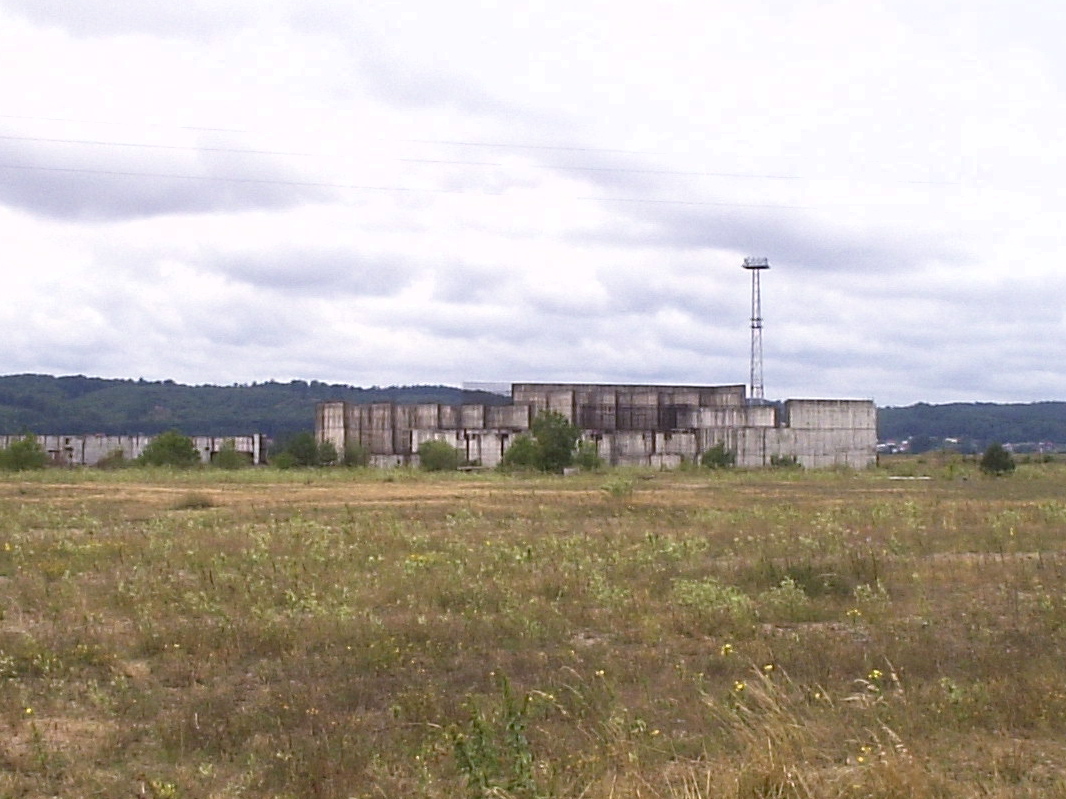
The Żarnowiec Nuclear Power Plant (Polish: Elektrownia Jądrowa Żarnowiec) was to be the first nuclear power plant in Poland. The construction was cancelled due to changes in the economic and political situation in Poland, in the Soviet Union and in the Eastern Bloc and due to the Chernobyl disaster in 1986 and the following years. It was to be located in the former village of Kartoszyno and had its seat in Nadole.
The location of the plant was chosen after several years of hydrological, seismological and demographic research commissioned for the purpose of determining the most suitable location. A site was located in the north of the country near the Baltic Sea, about 50 km northwest of Gdańsk, just to the south of its namesake village Żarnowiec, adjacent to Lake Żarnowiec which was to be used for cooling. The research also identified the site for a second plant in Klempicz in west-central Poland.
The plant was planned to occupy 70 ha of land area, while the entire complex with dedicated construction facilities and supporting buildings would take 425 ha. The design incorporated four VVER-440 pressurized water reactors of Soviet design produced in Škoda factories in Czechoslovakia, rated at 440 MWe each, for a combined power rating of 1600 MWe. The turbines and power generators were to be produced in Poland. An adjacent pumped-storage plant was to act as a load balancer and energy reservoir to ensure continued power delivery during reactor maintenance.
Completion of the first reactor block with a power rating of 465 MWe was planned for 1989, with the second one following in 1990. On the last day of 1983 the dates were adjusted to December 1990 and December 1991, respectively. After the Chernobyl disaster in 1986, there were plans to make modifications in order to bring the plant to Western safety standards, as well as install reactor automation equipment from Siemens AG.
In addition to 79 buildings of the reactor-housing compound, the complex included a lot of supporting facilities. Before the project was canceled, 630 other structures were completed, including a modern radiometeorology station, housing for the staff, production halls for prefabricated concrete elements, a railroad station, a cafeteria and cloakroom halls. Several domestic and foreign companies were involved in the project.
Near the construction site, there was also a centre for meteorological research with a 205 metres high guyed meteorological tower at 54°43′55″N 18°05′35″E / 54.73194°N 18.09306°E. While the buildings of the station still exist, but are devastated, the mast is demolished.
There was some official public discussion concerning the localization of the power plant, but it was interrupted by the introduction of martial law in Poland in 1981. Despite this, no organized opposition beyond sending letters to the authorities took place.
The protests escalated only after the Chernobyl disaster in 1986. Ecological organizations were the most active participants. The most prominent local organizations were the Franciscan Ecological Movement, which organized a series of public lectures on the risks of the Żarnowiec power plant, miniconferences in the Gdańsk Scientific Society, and manifestations; and the Gdańsk Economic Forum, an anti-nuclear organization which initiated manifestations at the construction site, conducted leaflet campaigns in the Tricity and sent hundreds of letters to the authorities. Some nationwide organizations such as Ruch Wolność i Pokój joined the protest and were responsible for its most drastic forms, including roadblocks and a 63-day hunger strike. Several public figures spoke against completing the project, including the leader of Solidarity, Lech Wałęsa. Protesters also cited the negative assessment of the plant's security by two employees of the National Atomic Energy Agency.
Hub AI
Żarnowiec Nuclear Power Plant AI simulator
(@Żarnowiec Nuclear Power Plant_simulator)
Żarnowiec Nuclear Power Plant
The Żarnowiec Nuclear Power Plant (Polish: Elektrownia Jądrowa Żarnowiec) was to be the first nuclear power plant in Poland. The construction was cancelled due to changes in the economic and political situation in Poland, in the Soviet Union and in the Eastern Bloc and due to the Chernobyl disaster in 1986 and the following years. It was to be located in the former village of Kartoszyno and had its seat in Nadole.
The location of the plant was chosen after several years of hydrological, seismological and demographic research commissioned for the purpose of determining the most suitable location. A site was located in the north of the country near the Baltic Sea, about 50 km northwest of Gdańsk, just to the south of its namesake village Żarnowiec, adjacent to Lake Żarnowiec which was to be used for cooling. The research also identified the site for a second plant in Klempicz in west-central Poland.
The plant was planned to occupy 70 ha of land area, while the entire complex with dedicated construction facilities and supporting buildings would take 425 ha. The design incorporated four VVER-440 pressurized water reactors of Soviet design produced in Škoda factories in Czechoslovakia, rated at 440 MWe each, for a combined power rating of 1600 MWe. The turbines and power generators were to be produced in Poland. An adjacent pumped-storage plant was to act as a load balancer and energy reservoir to ensure continued power delivery during reactor maintenance.
Completion of the first reactor block with a power rating of 465 MWe was planned for 1989, with the second one following in 1990. On the last day of 1983 the dates were adjusted to December 1990 and December 1991, respectively. After the Chernobyl disaster in 1986, there were plans to make modifications in order to bring the plant to Western safety standards, as well as install reactor automation equipment from Siemens AG.
In addition to 79 buildings of the reactor-housing compound, the complex included a lot of supporting facilities. Before the project was canceled, 630 other structures were completed, including a modern radiometeorology station, housing for the staff, production halls for prefabricated concrete elements, a railroad station, a cafeteria and cloakroom halls. Several domestic and foreign companies were involved in the project.
Near the construction site, there was also a centre for meteorological research with a 205 metres high guyed meteorological tower at 54°43′55″N 18°05′35″E / 54.73194°N 18.09306°E. While the buildings of the station still exist, but are devastated, the mast is demolished.
There was some official public discussion concerning the localization of the power plant, but it was interrupted by the introduction of martial law in Poland in 1981. Despite this, no organized opposition beyond sending letters to the authorities took place.
The protests escalated only after the Chernobyl disaster in 1986. Ecological organizations were the most active participants. The most prominent local organizations were the Franciscan Ecological Movement, which organized a series of public lectures on the risks of the Żarnowiec power plant, miniconferences in the Gdańsk Scientific Society, and manifestations; and the Gdańsk Economic Forum, an anti-nuclear organization which initiated manifestations at the construction site, conducted leaflet campaigns in the Tricity and sent hundreds of letters to the authorities. Some nationwide organizations such as Ruch Wolność i Pokój joined the protest and were responsible for its most drastic forms, including roadblocks and a 63-day hunger strike. Several public figures spoke against completing the project, including the leader of Solidarity, Lech Wałęsa. Protesters also cited the negative assessment of the plant's security by two employees of the National Atomic Energy Agency.
Recent media