



Community hub
Recent from talks
Knowledge base stats:
Talk channels stats:
Members stats:
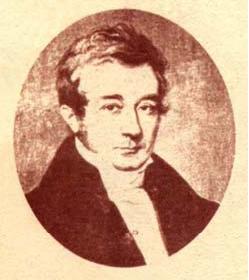
Antoine Germain Labarraque
Antoine Germain Labarraque (28 March 1777 – 9 December 1850) was a French chemist and pharmacist, notable for formulating and finding important uses for "Eau de Labarraque" or "Labarraque's solution", a solution of sodium hypochlorite widely used as a disinfectant and deodoriser.
Labarraque's use of sodium and calcium hypochlorite solutions in the disinfection of animal gut processing facilities and morgues, as well as his published reports of their application to treat gangrene and putrescent wounds in living persons in the 1820s, established this practice long before Ignaz Semmelweis employed the same solutions to prevent "cadaveric particles" from traveling from hospital dissecting rooms to patient examination rooms, starting in 1847. These findings and practices are notable for providing an empirical discovery of antisepsis, starting some 40 years before Pasteur and Lister began to establish the theoretical basis of this practice.
Labarraque's solutions and techniques remain in use to the present day.
Labarraque was born in Oloron-Sainte-Marie, in the Pyrénées-Atlantiques department, on 28 March 1777, the son of François Labarraque and Christine Sousbielle. He spent over 2 years as a pupil of a pharmacist called Préville in Orthez, but was then drafted into the army as a "Grenadier de la Tour d'Auvergne". He was promoted to battlefield seargent, and eventually became pharmacist-in-chief at the military hospital of Berra. He contracted Typhus and after his recovery was discharged from the military in 1795.
Having taken a liking to Pharmacy, he went to Montpellier to study under Jean-Antoine Chaptal. He then went to Paris, where he worked as a pharmacist and studied at the "College of Pharmacy" under various teachers including Louis Nicolas Vauquelin. He qualified as a master of Pharmacy in 1805, and in the same year published a work, "Sur la dissolution du phosphore" (on the dissolution of Phosphorus) followed by "Sur les electuaires" (On electuaries). He became a member of the "Sociétés de pharmacie et de médecine" in 1809 after presenting a paper, "Sur les teintures alcooliques et quelques expériences sur la teinture alcoolique de benjoin" (Alcoholic tinctures and some experiments on the alcoholic tincture of Benzoin). Subsequently, Labarraque took part in several commissions to examine presentations made to the society.
In France (as elsewhere) there was a need to process animal guts in order to make musical instrument strings, Goldbeater's skin and other products. This was carried out in premises known as "boyauderies" (gut factories) and was a notoriously dirty, smelly and unhealthy business. In or about 1820, the Société d'Encouragement pour l'Industrie nationale offered a prize for the discovery of a method, chemical or mechanical, which could be used to separate the peritoneal membrane of animal intestines without causing putrefaction.
Labarraque experimented with different compositions, finding that a solution of "chloride of lime" (calcium hypochlorite) had better anti-putrid properties than the already-known "Eau de Javel" (dilute water solution of sodium hypochlorite, first produced for bleaching purposes by Claude Berthollet in 1789), but caused slower detachment of the gut mucous membrane. He therefore preferred Eau de Javel, which also had the advantage of being cheaper than chlorinated solutions based on potassium salts. Labarreque won the society's prize of 1,500 francs, by showing how a number of these solutions that were made from free chlorine and later gave rise to it, could be employed both to fumigate the workshops, and to loosen the membranes one from another without allowing the offensive odour to escape. He freely acknowledged the part that his predecessors, such as Berthollet (1748–1822), had played in his discovery.
In 1824, Labarraque was called in to assist after the death of King Louis XVIII, who had died of extensive gangrene. The putrefied body emitting a foul odour long before death, which the chemist was able to remove by covering the body with a sheet soaked in chlorinated water. He was awarded the Prix Montyon, in 1825, by the "Académie des Sciences", and, in 1826, a medal by the Académie de Marseille, for his work on "the application of chlorides to hygiene and therapeutics". He was made a member of the "Académie de Médecine" (1824), Légion d'Honneur (1827) and the "Conseil de Salubrité" (council of health, 1836).
Hub AI
Antoine Germain Labarraque AI simulator
(@Antoine Germain Labarraque_simulator)
Antoine Germain Labarraque
Antoine Germain Labarraque (28 March 1777 – 9 December 1850) was a French chemist and pharmacist, notable for formulating and finding important uses for "Eau de Labarraque" or "Labarraque's solution", a solution of sodium hypochlorite widely used as a disinfectant and deodoriser.
Labarraque's use of sodium and calcium hypochlorite solutions in the disinfection of animal gut processing facilities and morgues, as well as his published reports of their application to treat gangrene and putrescent wounds in living persons in the 1820s, established this practice long before Ignaz Semmelweis employed the same solutions to prevent "cadaveric particles" from traveling from hospital dissecting rooms to patient examination rooms, starting in 1847. These findings and practices are notable for providing an empirical discovery of antisepsis, starting some 40 years before Pasteur and Lister began to establish the theoretical basis of this practice.
Labarraque's solutions and techniques remain in use to the present day.
Labarraque was born in Oloron-Sainte-Marie, in the Pyrénées-Atlantiques department, on 28 March 1777, the son of François Labarraque and Christine Sousbielle. He spent over 2 years as a pupil of a pharmacist called Préville in Orthez, but was then drafted into the army as a "Grenadier de la Tour d'Auvergne". He was promoted to battlefield seargent, and eventually became pharmacist-in-chief at the military hospital of Berra. He contracted Typhus and after his recovery was discharged from the military in 1795.
Having taken a liking to Pharmacy, he went to Montpellier to study under Jean-Antoine Chaptal. He then went to Paris, where he worked as a pharmacist and studied at the "College of Pharmacy" under various teachers including Louis Nicolas Vauquelin. He qualified as a master of Pharmacy in 1805, and in the same year published a work, "Sur la dissolution du phosphore" (on the dissolution of Phosphorus) followed by "Sur les electuaires" (On electuaries). He became a member of the "Sociétés de pharmacie et de médecine" in 1809 after presenting a paper, "Sur les teintures alcooliques et quelques expériences sur la teinture alcoolique de benjoin" (Alcoholic tinctures and some experiments on the alcoholic tincture of Benzoin). Subsequently, Labarraque took part in several commissions to examine presentations made to the society.
In France (as elsewhere) there was a need to process animal guts in order to make musical instrument strings, Goldbeater's skin and other products. This was carried out in premises known as "boyauderies" (gut factories) and was a notoriously dirty, smelly and unhealthy business. In or about 1820, the Société d'Encouragement pour l'Industrie nationale offered a prize for the discovery of a method, chemical or mechanical, which could be used to separate the peritoneal membrane of animal intestines without causing putrefaction.
Labarraque experimented with different compositions, finding that a solution of "chloride of lime" (calcium hypochlorite) had better anti-putrid properties than the already-known "Eau de Javel" (dilute water solution of sodium hypochlorite, first produced for bleaching purposes by Claude Berthollet in 1789), but caused slower detachment of the gut mucous membrane. He therefore preferred Eau de Javel, which also had the advantage of being cheaper than chlorinated solutions based on potassium salts. Labarreque won the society's prize of 1,500 francs, by showing how a number of these solutions that were made from free chlorine and later gave rise to it, could be employed both to fumigate the workshops, and to loosen the membranes one from another without allowing the offensive odour to escape. He freely acknowledged the part that his predecessors, such as Berthollet (1748–1822), had played in his discovery.
In 1824, Labarraque was called in to assist after the death of King Louis XVIII, who had died of extensive gangrene. The putrefied body emitting a foul odour long before death, which the chemist was able to remove by covering the body with a sheet soaked in chlorinated water. He was awarded the Prix Montyon, in 1825, by the "Académie des Sciences", and, in 1826, a medal by the Académie de Marseille, for his work on "the application of chlorides to hygiene and therapeutics". He was made a member of the "Académie de Médecine" (1824), Légion d'Honneur (1827) and the "Conseil de Salubrité" (council of health, 1836).