
Recent from talks
April 2015 lunar eclipse
Knowledge base stats:
Talk channels stats:
Members stats:
April 2015 lunar eclipse
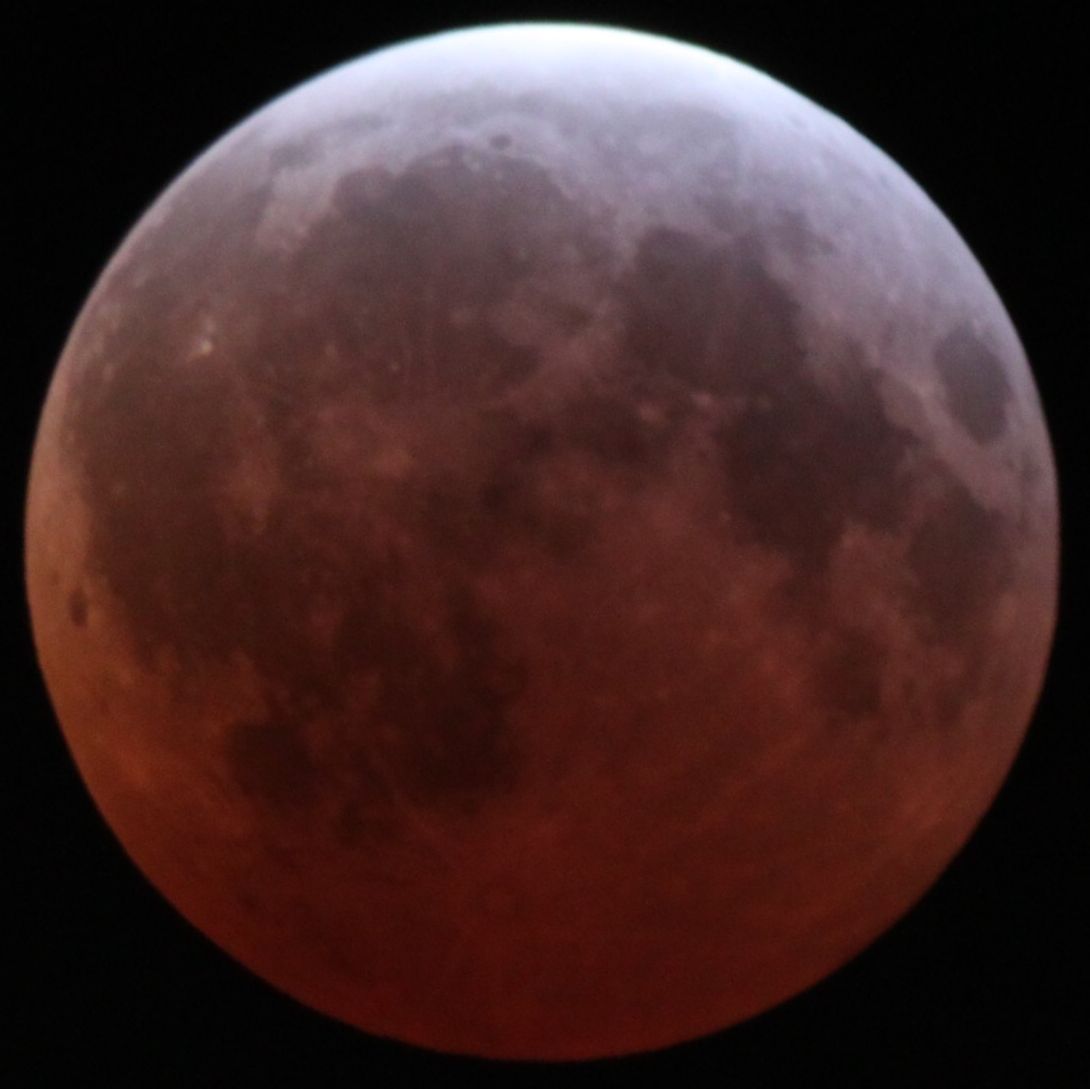
A total lunar eclipse occurred at the Moon’s ascending node of orbit on Saturday, April 4, 2015, with an umbral magnitude of 1.0019. A lunar eclipse occurs when the Moon moves into the Earth's shadow, causing the Moon to be darkened. A total lunar eclipse occurs when the Moon's near side entirely passes into the Earth's umbral shadow. Unlike a solar eclipse, which can only be viewed from a relatively small area of the world, a lunar eclipse may be viewed from anywhere on the night side of Earth. A total lunar eclipse can last up to nearly two hours, while a total solar eclipse lasts only a few minutes at any given place, because the Moon's shadow is smaller. Occurring about 3.1 days after apogee (on April 1, 2015, at 9:00 UTC), the Moon's apparent diameter was smaller.
This lunar eclipse is the third of a tetrad, with four total lunar eclipses in series, the others being on April 15, 2014; October 8, 2014; and September 28, 2015.
This is the 30th member of Lunar Saros 132, and the first total eclipse of the series. The previous event was the March 1997 lunar eclipse, being slightly partial.
It occurred on Easter Sunday (Gregorian only).
Totality lasted only 4 minutes and 43 seconds, making it the shortest lunar totality in almost five centuries since October 17, 1529 (which lasted 1 minute and 42 seconds). It was claimed by some that due to the oblateness of the Earth, it may have actually just been a partial eclipse. It was the sixth total lunar eclipse out of nine with totality under 5 minutes in a five millennium period between 2,000 BC and 3,000 AD. The eclipsed moon was 12.9% smaller in apparent diameter than the supermoon September 2015 lunar eclipse, measured as 29.66' and 33.47' in diameter from the center of the Earth. It occurred 3 days past apogee at 29.42'.
A lunar eclipse occurs when the Moon passes within Earth's umbra (shadow). As the eclipse begins, Earth's shadow first darkens the Moon slightly. Then, the shadow begins to "cover" part of the Moon, turning it a dark red-brown color (typically - the color can vary based on atmospheric conditions). The Moon appears to be reddish because of Rayleigh scattering (the same effect that causes sunsets to appear reddish) and the refraction of that light by Earth's atmosphere into its umbra.
The following simulation shows the approximate appearance of the Moon passing through Earth's shadow. The Moon's brightness is exaggerated within the umbral shadow. The southern portion of the Moon will be closest to the center of the shadow, making it darkest, and most red in appearance.
The eclipse was completely visible over northeast Asia, eastern Australia, the Pacific Ocean, and western North America, seen rising over Asia and western Australia and setting over North and South America.
Hub AI
April 2015 lunar eclipse AI simulator
(@April 2015 lunar eclipse_simulator)
April 2015 lunar eclipse
A total lunar eclipse occurred at the Moon’s ascending node of orbit on Saturday, April 4, 2015, with an umbral magnitude of 1.0019. A lunar eclipse occurs when the Moon moves into the Earth's shadow, causing the Moon to be darkened. A total lunar eclipse occurs when the Moon's near side entirely passes into the Earth's umbral shadow. Unlike a solar eclipse, which can only be viewed from a relatively small area of the world, a lunar eclipse may be viewed from anywhere on the night side of Earth. A total lunar eclipse can last up to nearly two hours, while a total solar eclipse lasts only a few minutes at any given place, because the Moon's shadow is smaller. Occurring about 3.1 days after apogee (on April 1, 2015, at 9:00 UTC), the Moon's apparent diameter was smaller.
This lunar eclipse is the third of a tetrad, with four total lunar eclipses in series, the others being on April 15, 2014; October 8, 2014; and September 28, 2015.
This is the 30th member of Lunar Saros 132, and the first total eclipse of the series. The previous event was the March 1997 lunar eclipse, being slightly partial.
It occurred on Easter Sunday (Gregorian only).
Totality lasted only 4 minutes and 43 seconds, making it the shortest lunar totality in almost five centuries since October 17, 1529 (which lasted 1 minute and 42 seconds). It was claimed by some that due to the oblateness of the Earth, it may have actually just been a partial eclipse. It was the sixth total lunar eclipse out of nine with totality under 5 minutes in a five millennium period between 2,000 BC and 3,000 AD. The eclipsed moon was 12.9% smaller in apparent diameter than the supermoon September 2015 lunar eclipse, measured as 29.66' and 33.47' in diameter from the center of the Earth. It occurred 3 days past apogee at 29.42'.
A lunar eclipse occurs when the Moon passes within Earth's umbra (shadow). As the eclipse begins, Earth's shadow first darkens the Moon slightly. Then, the shadow begins to "cover" part of the Moon, turning it a dark red-brown color (typically - the color can vary based on atmospheric conditions). The Moon appears to be reddish because of Rayleigh scattering (the same effect that causes sunsets to appear reddish) and the refraction of that light by Earth's atmosphere into its umbra.
The following simulation shows the approximate appearance of the Moon passing through Earth's shadow. The Moon's brightness is exaggerated within the umbral shadow. The southern portion of the Moon will be closest to the center of the shadow, making it darkest, and most red in appearance.
The eclipse was completely visible over northeast Asia, eastern Australia, the Pacific Ocean, and western North America, seen rising over Asia and western Australia and setting over North and South America.
Recent media