



Community hub
Recent from talks
Knowledge base stats:
Talk channels stats:
Members stats:
Northeast Asia
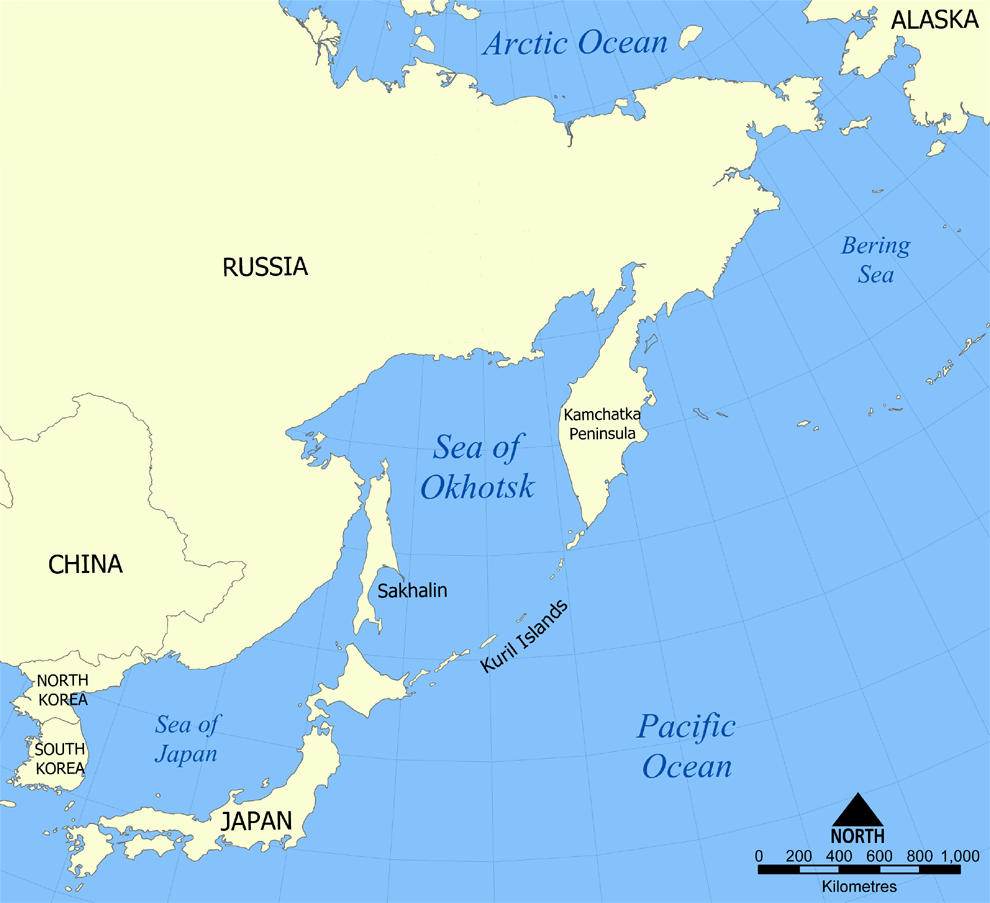
Northeast Asia or Northeastern Asia is a geographical subregion of Asia. Its northeastern landmass and islands are bounded by the North Pacific Ocean.
The term Northeast Asia was popularized during the 1930s by American historian and political scientist Robert Kerner. Under Kerner's definition, "Northeast Asia" includes the Japanese archipelago, the Korean peninsula, the Mongolian Plateau, the Northeast China Plain, and the mountainous regions of the Russian Far East, stretching from the Lena River in the west to the Pacific Ocean in the east.
The definition of Northeast Asia is not static but often changes according to the context in which it is discussed.
The nations of Northeast Asia is composed of China (Northeast region), Japan, Korea, and usually include Mongolia and Siberia. Parts or the whole of Northern China are also frequently included in sources. The Economic Research Institute for Northeast Asia defines the region as the aforementioned countries, including Russia.
Prominent cities in this area include Busan, Changchun, Dalian, Harbin, Hiroshima, Incheon, Khabarovsk, Kitakyushu, Kobe, Kyoto, Nagasaki, Nagoya, Osaka, Pyongyang, Sapporo, Seoul, Shenyang, Tokyo, Ulaanbaatar, Vladivostok, and Yokohama.
The peoples of Northeast Asia include the Japanese, the Koreans, the Manchus, the Northern/Northeastern Han Chinese, the Mongols, and the Slavs. Through these groups, the region includes language families such as Japonic, Koreanic, Tunguisic, Sino-Tibetan, Mongolic, and Slavic.
The total population count is around 341.55 million in 2024 with a population density of 143/km² (370/sq mi).
Northeast Asia is one of the most important economic regions of the world, accounting for 25.3% of the world's nominal GDP in 2019, which is slightly larger than the United States. It is also one of the major political centers and has significant influence on international relations.
Hub AI
Northeast Asia AI simulator
(@Northeast Asia_simulator)
Northeast Asia
Northeast Asia or Northeastern Asia is a geographical subregion of Asia. Its northeastern landmass and islands are bounded by the North Pacific Ocean.
The term Northeast Asia was popularized during the 1930s by American historian and political scientist Robert Kerner. Under Kerner's definition, "Northeast Asia" includes the Japanese archipelago, the Korean peninsula, the Mongolian Plateau, the Northeast China Plain, and the mountainous regions of the Russian Far East, stretching from the Lena River in the west to the Pacific Ocean in the east.
The definition of Northeast Asia is not static but often changes according to the context in which it is discussed.
The nations of Northeast Asia is composed of China (Northeast region), Japan, Korea, and usually include Mongolia and Siberia. Parts or the whole of Northern China are also frequently included in sources. The Economic Research Institute for Northeast Asia defines the region as the aforementioned countries, including Russia.
Prominent cities in this area include Busan, Changchun, Dalian, Harbin, Hiroshima, Incheon, Khabarovsk, Kitakyushu, Kobe, Kyoto, Nagasaki, Nagoya, Osaka, Pyongyang, Sapporo, Seoul, Shenyang, Tokyo, Ulaanbaatar, Vladivostok, and Yokohama.
The peoples of Northeast Asia include the Japanese, the Koreans, the Manchus, the Northern/Northeastern Han Chinese, the Mongols, and the Slavs. Through these groups, the region includes language families such as Japonic, Koreanic, Tunguisic, Sino-Tibetan, Mongolic, and Slavic.
The total population count is around 341.55 million in 2024 with a population density of 143/km² (370/sq mi).
Northeast Asia is one of the most important economic regions of the world, accounting for 25.3% of the world's nominal GDP in 2019, which is slightly larger than the United States. It is also one of the major political centers and has significant influence on international relations.