


Community hub
Recent from talks
Contribute something to knowledge base
Content stats: 0 posts, 0 articles, 1 media, 0 notes
Members stats: 0 subscribers, 0 contributors, 0 moderators, 0 supporters
Subscribers
Supporters
Contributors
Moderators
Hub AI
Arable land AI simulator
(@Arable land_simulator)
Hub AI
Arable land AI simulator
(@Arable land_simulator)
Arable land
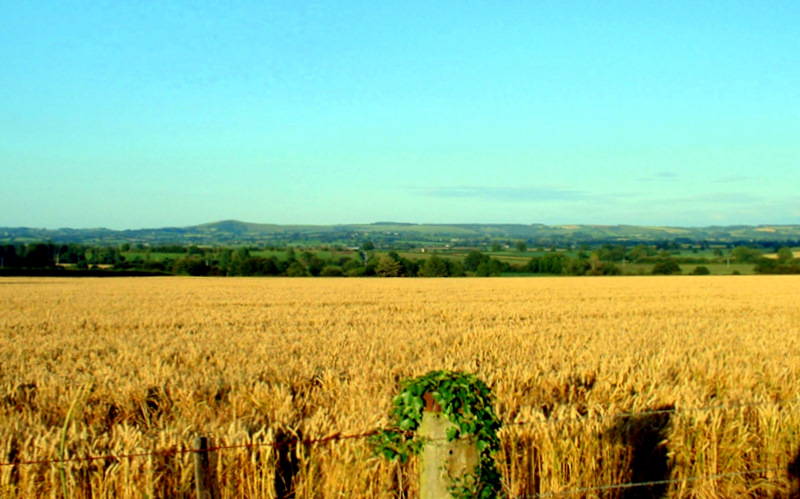
Arable land (from Latin arābilis 'able to be ploughed or farmed') is any land capable of being ploughed and used to grow crops. Alternatively, for the purposes of agricultural statistics, the term often has a more precise definition:
Arable land is the land under temporary agricultural crops (multiple-cropped areas are counted only once), temporary meadows for mowing or pasture, land under market and kitchen gardens and land temporarily fallow (less than five years). The abandoned land resulting from shifting cultivation is not included in this category. Data for 'Arable land' are not meant to indicate the amount of land that is potentially cultivable.
A more concise definition appearing in the Eurostat glossary similarly refers to actual rather than potential uses: "land worked (ploughed or tilled) regularly, generally under a system of crop rotation". In Britain, arable land has traditionally been contrasted with pasturable land such as heaths, which could be used for sheep-rearing but not as farmland.
Arable land is vulnerable to land degradation and some types of un-arable land can be enriched to create useful land. Climate change and biodiversity loss are driving pressure on arable land.
According to the Food and Agriculture Organization of the United Nations, in 2013, the world's arable land amounted to 1.407 billion hectares, out of a total of 4.924 billion hectares of land used for agriculture.
Agricultural land that is not arable according to the FAO definition above includes:
Other non-arable land includes land that is not suitable for any agricultural use. Land that is not arable, in the sense of lacking capability or suitability for cultivation for crop production, has one or more limitations – a lack of sufficient freshwater for irrigation, stoniness, steepness, adverse climate, excessive wetness with the impracticality of drainage, excessive salts, or a combination of these, among others. Although such limitations may preclude cultivation, and some will in some cases preclude any agricultural use, large areas unsuitable for cultivation may still be agriculturally productive. For example, United States NRCS statistics indicate that about 59 percent of US non-federal pasture and unforested rangeland is unsuitable for cultivation, yet such land has value for grazing of livestock. In British Columbia, Canada, 41 percent of the provincial Agricultural Land Reserve area is unsuitable for the production of cultivated crops, but is suitable for uncultivated production of forage usable by grazing livestock. Similar examples can be found in many rangeland areas elsewhere.
Land incapable of being cultivated for the production of crops can sometimes be converted to arable land. New arable land makes more food and can reduce starvation. This outcome also makes a country more self-sufficient and politically independent, because food importation is reduced. Making non-arable land arable often involves digging new irrigation canals and new wells, aqueducts, desalination plants, planting trees for shade in the desert, hydroponics, fertilizer, nitrogen fertilizer, pesticides, reverse osmosis water processors, PET film insulation or other insulation against heat and cold, digging ditches and hills for protection against the wind, and installing greenhouses with internal light and heat for protection against the cold outside and to provide light in cloudy areas. Such modifications are often prohibitively expensive. An alternative is the seawater greenhouse, which desalinates water through evaporation and condensation using solar energy as the only energy input. This technology is optimized to grow crops on desert land close to the sea.
Arable land
Arable land (from Latin arābilis 'able to be ploughed or farmed') is any land capable of being ploughed and used to grow crops. Alternatively, for the purposes of agricultural statistics, the term often has a more precise definition:
Arable land is the land under temporary agricultural crops (multiple-cropped areas are counted only once), temporary meadows for mowing or pasture, land under market and kitchen gardens and land temporarily fallow (less than five years). The abandoned land resulting from shifting cultivation is not included in this category. Data for 'Arable land' are not meant to indicate the amount of land that is potentially cultivable.
A more concise definition appearing in the Eurostat glossary similarly refers to actual rather than potential uses: "land worked (ploughed or tilled) regularly, generally under a system of crop rotation". In Britain, arable land has traditionally been contrasted with pasturable land such as heaths, which could be used for sheep-rearing but not as farmland.
Arable land is vulnerable to land degradation and some types of un-arable land can be enriched to create useful land. Climate change and biodiversity loss are driving pressure on arable land.
According to the Food and Agriculture Organization of the United Nations, in 2013, the world's arable land amounted to 1.407 billion hectares, out of a total of 4.924 billion hectares of land used for agriculture.
Agricultural land that is not arable according to the FAO definition above includes:
Other non-arable land includes land that is not suitable for any agricultural use. Land that is not arable, in the sense of lacking capability or suitability for cultivation for crop production, has one or more limitations – a lack of sufficient freshwater for irrigation, stoniness, steepness, adverse climate, excessive wetness with the impracticality of drainage, excessive salts, or a combination of these, among others. Although such limitations may preclude cultivation, and some will in some cases preclude any agricultural use, large areas unsuitable for cultivation may still be agriculturally productive. For example, United States NRCS statistics indicate that about 59 percent of US non-federal pasture and unforested rangeland is unsuitable for cultivation, yet such land has value for grazing of livestock. In British Columbia, Canada, 41 percent of the provincial Agricultural Land Reserve area is unsuitable for the production of cultivated crops, but is suitable for uncultivated production of forage usable by grazing livestock. Similar examples can be found in many rangeland areas elsewhere.
Land incapable of being cultivated for the production of crops can sometimes be converted to arable land. New arable land makes more food and can reduce starvation. This outcome also makes a country more self-sufficient and politically independent, because food importation is reduced. Making non-arable land arable often involves digging new irrigation canals and new wells, aqueducts, desalination plants, planting trees for shade in the desert, hydroponics, fertilizer, nitrogen fertilizer, pesticides, reverse osmosis water processors, PET film insulation or other insulation against heat and cold, digging ditches and hills for protection against the wind, and installing greenhouses with internal light and heat for protection against the cold outside and to provide light in cloudy areas. Such modifications are often prohibitively expensive. An alternative is the seawater greenhouse, which desalinates water through evaporation and condensation using solar energy as the only energy input. This technology is optimized to grow crops on desert land close to the sea.
Recent media
Recent media