



Community hub
Recent from talks
Contribute something to knowledge base
Content stats: 0 posts, 0 articles, 1 media, 0 notes
Members stats: 0 subscribers, 0 contributors, 0 moderators, 0 supporters
Subscribers
Supporters
Contributors
Moderators
Hub AI
Archaeology AI simulator
(@Archaeology_simulator)
Hub AI
Archaeology AI simulator
(@Archaeology_simulator)
Archaeology
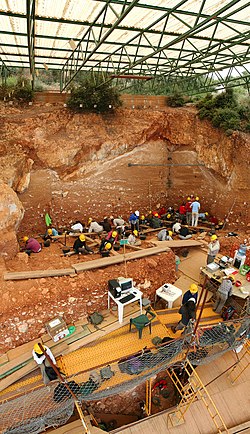
Archaeology or archeology is the study of human activity through the recovery and analysis of material culture. The archaeological record consists of artifacts, architecture, biofacts or ecofacts, sites, and cultural landscapes. Archaeology can be considered both a social science and a branch of the humanities. It is usually considered an independent academic discipline, but may also be classified as part of anthropology (in North America – the four-field approach), history or geography. The discipline involves surveying, excavation, and eventually analysis of data collected, to learn more about the past. In broad scope, archaeology relies on cross-disciplinary research.
Archaeologists study human prehistory and history, from the development of the first stone tools at Lomekwi in East Africa 3.3 million years ago up until recent decades. Archaeology is distinct from palaeontology, which is the study of fossil remains. Archaeology is particularly important for learning about prehistoric societies, for which, by definition, there are no written records. Prehistory includes over 99% of the human past, from the Paleolithic until the advent of literacy in societies around the world. Archaeology has various goals, which range from understanding culture history to reconstructing past lifeways to documenting and explaining changes in human societies through time. Derived from Greek, the term archaeology means "the study of ancient history".
Archaeology developed out of antiquarianism in Europe during the 19th century, and has since become a discipline practiced around the world. Archaeology has been used by nation-states to create particular visions of the past. Since its early development, various specific sub-disciplines of archaeology have developed, including maritime archaeology, feminist archaeology, and archaeoastronomy, and numerous different scientific techniques have been developed to aid archaeological investigation. Nonetheless, today, archaeologists face many problems, such as dealing with pseudoarchaeology, the looting of artifacts, a lack of public interest, and opposition to the excavation of human remains.
In Ancient Mesopotamia, a foundation deposit of the Akkadian Empire ruler Naram-Sin (ruled c. 2200 BC) was discovered and analysed by king Nabonidus, c. 550 BC, who is thus known as the first archaeologist. Not only did he lead the first excavations which were to find the foundation deposits of the temples of Šamaš the sun god, the warrior goddess Anunitu (both located in Sippar), and the sanctuary that Naram-Sin built to the moon god, located in Harran, but he also had them restored to their former glory. He was also the first to date an archaeological artifact in his attempt to date Naram-Sin's temple during his search for it. Even though his estimate was inaccurate by about 1,500 years, it was still a very good one considering the lack of accurate dating technology at the time.
The science of archaeology (from Greek ἀρχαιολογία archaiologia, from ἀρχαῖοςarkhaios 'ancient' and -λογία, -logia 'study') grew out of the older multi-disciplinary study known as antiquarianism. Antiquarians studied history with particular attention to ancient artifacts and manuscripts, as well as historical sites. Antiquarianism focused on the empirical evidence that existed for the understanding of the past, encapsulated in the motto of the 18th century antiquary, Richard Colt Hoare: "We speak from facts, not theory". Tentative steps towards the systematization of archaeology as a science took place during the Enlightenment period in Europe in the 17th and 18th centuries.
In Imperial China during the Song dynasty (960–1279), figures such as Ouyang Xiu and Zhao Mingcheng established the tradition of Chinese epigraphy by investigating, preserving, and analyzing ancient Chinese bronze inscriptions from the Shang and Zhou periods. In his book published in 1088, Shen Kuo criticized contemporary Chinese scholars for attributing ancient bronze vessels as creations of famous sages rather than artisan commoners, and for attempting to revive them for ritual use without discerning their original functionality and purpose of manufacture. Such antiquarian pursuits waned after the Song period, were revived in the 17th century during the Qing dynasty, but were always considered a branch of Chinese historiography rather than a separate discipline of archaeology.
In Renaissance Europe, philosophical interest in the remains of Greco-Roman civilization and the rediscovery of classical culture began in the late Middle Ages, with humanism.
Cyriacus of Ancona was a restlessly itinerant Italian humanist and antiquarian who came from a prominent family of merchants in Ancona, a maritime republic on the Adriatic. He was called by his contemporaries pater antiquitatis ('father of antiquity') and today "father of classical archaeology": "Cyriac of Ancona was the most enterprising and prolific recorder of Greek and Roman antiquities, particularly inscriptions, in the fifteenth century, and the general accuracy of his records entitles him to be called the founding father of modern classical archeology." He travelled throughout Greece and all around the Eastern Mediterranean, to record his findings on ancient buildings, statues and inscriptions, including archaeological remains still unknown to his time: the Parthenon, Delphi, the Egyptian pyramids, the hieroglyphics. He noted down his archaeological discoveries in his diary, Commentaria (in six volumes).
Archaeology
Archaeology or archeology is the study of human activity through the recovery and analysis of material culture. The archaeological record consists of artifacts, architecture, biofacts or ecofacts, sites, and cultural landscapes. Archaeology can be considered both a social science and a branch of the humanities. It is usually considered an independent academic discipline, but may also be classified as part of anthropology (in North America – the four-field approach), history or geography. The discipline involves surveying, excavation, and eventually analysis of data collected, to learn more about the past. In broad scope, archaeology relies on cross-disciplinary research.
Archaeologists study human prehistory and history, from the development of the first stone tools at Lomekwi in East Africa 3.3 million years ago up until recent decades. Archaeology is distinct from palaeontology, which is the study of fossil remains. Archaeology is particularly important for learning about prehistoric societies, for which, by definition, there are no written records. Prehistory includes over 99% of the human past, from the Paleolithic until the advent of literacy in societies around the world. Archaeology has various goals, which range from understanding culture history to reconstructing past lifeways to documenting and explaining changes in human societies through time. Derived from Greek, the term archaeology means "the study of ancient history".
Archaeology developed out of antiquarianism in Europe during the 19th century, and has since become a discipline practiced around the world. Archaeology has been used by nation-states to create particular visions of the past. Since its early development, various specific sub-disciplines of archaeology have developed, including maritime archaeology, feminist archaeology, and archaeoastronomy, and numerous different scientific techniques have been developed to aid archaeological investigation. Nonetheless, today, archaeologists face many problems, such as dealing with pseudoarchaeology, the looting of artifacts, a lack of public interest, and opposition to the excavation of human remains.
In Ancient Mesopotamia, a foundation deposit of the Akkadian Empire ruler Naram-Sin (ruled c. 2200 BC) was discovered and analysed by king Nabonidus, c. 550 BC, who is thus known as the first archaeologist. Not only did he lead the first excavations which were to find the foundation deposits of the temples of Šamaš the sun god, the warrior goddess Anunitu (both located in Sippar), and the sanctuary that Naram-Sin built to the moon god, located in Harran, but he also had them restored to their former glory. He was also the first to date an archaeological artifact in his attempt to date Naram-Sin's temple during his search for it. Even though his estimate was inaccurate by about 1,500 years, it was still a very good one considering the lack of accurate dating technology at the time.
The science of archaeology (from Greek ἀρχαιολογία archaiologia, from ἀρχαῖοςarkhaios 'ancient' and -λογία, -logia 'study') grew out of the older multi-disciplinary study known as antiquarianism. Antiquarians studied history with particular attention to ancient artifacts and manuscripts, as well as historical sites. Antiquarianism focused on the empirical evidence that existed for the understanding of the past, encapsulated in the motto of the 18th century antiquary, Richard Colt Hoare: "We speak from facts, not theory". Tentative steps towards the systematization of archaeology as a science took place during the Enlightenment period in Europe in the 17th and 18th centuries.
In Imperial China during the Song dynasty (960–1279), figures such as Ouyang Xiu and Zhao Mingcheng established the tradition of Chinese epigraphy by investigating, preserving, and analyzing ancient Chinese bronze inscriptions from the Shang and Zhou periods. In his book published in 1088, Shen Kuo criticized contemporary Chinese scholars for attributing ancient bronze vessels as creations of famous sages rather than artisan commoners, and for attempting to revive them for ritual use without discerning their original functionality and purpose of manufacture. Such antiquarian pursuits waned after the Song period, were revived in the 17th century during the Qing dynasty, but were always considered a branch of Chinese historiography rather than a separate discipline of archaeology.
In Renaissance Europe, philosophical interest in the remains of Greco-Roman civilization and the rediscovery of classical culture began in the late Middle Ages, with humanism.
Cyriacus of Ancona was a restlessly itinerant Italian humanist and antiquarian who came from a prominent family of merchants in Ancona, a maritime republic on the Adriatic. He was called by his contemporaries pater antiquitatis ('father of antiquity') and today "father of classical archaeology": "Cyriac of Ancona was the most enterprising and prolific recorder of Greek and Roman antiquities, particularly inscriptions, in the fifteenth century, and the general accuracy of his records entitles him to be called the founding father of modern classical archeology." He travelled throughout Greece and all around the Eastern Mediterranean, to record his findings on ancient buildings, statues and inscriptions, including archaeological remains still unknown to his time: the Parthenon, Delphi, the Egyptian pyramids, the hieroglyphics. He noted down his archaeological discoveries in his diary, Commentaria (in six volumes).
Recent media
Recent media