


Community hub
Recent from talks
Contribute something
Nothing was collected or created yet.
Paleolithic
View on Wikipedia


| The Paleolithic |
|---|
| ↑ Pliocene (before Homo) |
| ↓ Mesolithic |
The Paleolithic or Palaeolithic (c. 3.3 million – c. 11,700 years ago) (/ˌpeɪlioʊˈlɪθɪk, ˌpæli-/ ⓘ PAY-lee-oh-LITH-ik, PAL-ee-), also called the Old Stone Age (from Ancient Greek παλαιός (palaiós) 'old' and λίθος (líthos) 'stone'), is a period in human prehistory that is distinguished by the original development of stone tools, and which represents almost the entire period of human prehistoric technology. It extends from the earliest known use of stone tools by hominins, c. 3.3 million years ago, to the end of the Pleistocene, c. 11,650 cal BP.[1]
The Paleolithic Age in Europe preceded the Mesolithic Age, although the date of the transition varies geographically by several thousand years. During the Paleolithic Age, hominins grouped together in small societies such as bands and subsisted by gathering plants, fishing, and hunting or scavenging wild animals.[2] The Paleolithic Age is characterized by the use of knapped stone tools,[not verified in body] although at the time humans also used wood and bone tools. Other organic commodities were adapted for use as tools, including leather and vegetable fibers; however, due to rapid decomposition, these have not survived to any great degree.
About 50,000 years ago, a marked increase in the diversity of artifacts occurred. In Africa, bone artifacts and the first art appear in the archaeological record. The first evidence of human fishing is also noted, from artifacts in places such as Blombos Cave in South Africa. Archaeologists classify artifacts of the last 50,000 years into many different categories, such as projectile points, engraving tools, sharp knife blades, and drilling and piercing tools.
Humankind gradually evolved from early members of the genus Homo—such as Homo habilis, who used simple stone tools—into anatomically modern humans as well as behaviourally modern humans by the Upper Paleolithic.[3] During the end of the Paleolithic Age, specifically the Middle or Upper Paleolithic Age, humans began to produce the earliest works of art and to engage in religious or spiritual behavior such as burial and ritual.[4][page needed][5][need quotation to verify] Conditions during the Paleolithic Age went through a set of glacial and interglacial periods in which the climate periodically fluctuated between warm and cool temperatures.
By c. 50,000 – c. 40,000 BP, the first humans set foot in Australia. By c. 45,000 BP, humans lived at 61°N latitude in Europe.[6] By c. 30,000 BP, Japan was reached, and by c. 27,000 BP humans were present in Siberia, above the Arctic Circle.[6] By the end of the Upper Paleolithic Age humans had crossed Beringia and expanded throughout the Americas continents.[7][8]
Etymology
[edit]The term "Palaeolithic" was coined by archaeologist John Lubbock in 1865.[9] It derives from Greek: παλαιός, palaios, "old"; and λίθος, lithos, "stone", meaning "old age of the stone" or "Old Stone Age".
Paleogeography and climate
[edit]−10 — – −9 — – −8 — – −7 — – −6 — – −5 — – −4 — – −3 — – −2 — – −1 — – 0 — |
| |||||||||||||||||||||||||||


The Paleolithic overlaps with the Pleistocene epoch of geologic time. Both ended 12,000 years ago although the Pleistocene started 2.6 million years ago, 700,000 years after the Paleolithic's start.[10] This epoch experienced important geographic and climatic changes that affected human societies.
During the preceding Pliocene, continents had continued to drift from possibly as far as 250 km (160 mi) from their present locations to positions only 70 km (43 mi) from their current location. South America became linked to North America through the Isthmus of Panama, bringing a nearly complete end to South America's distinctive marsupial fauna. The formation of the isthmus had major consequences on global temperatures, because warm equatorial ocean currents were cut off, and the cold Arctic and Antarctic waters lowered temperatures in the now-isolated Atlantic Ocean.
Most of Central America formed during the Pliocene to connect the continents of North and South America, allowing fauna from these continents to leave their native habitats and colonize new areas.[11] Africa's collision with Asia created the Mediterranean, cutting off the remnants of the Tethys Ocean. During the Pleistocene, the continents were essentially at their modern positions; the tectonic plates on which they sit have probably moved at most 100 km (62 mi) from each other since the beginning of the period.[12]
Climates during the Pliocene became cooler and drier, and seasonal, similar to modern climates. Ice sheets grew on Antarctica. The formation of an Arctic ice cap around 3 million years ago is signaled by an abrupt shift in oxygen isotope ratios and ice-rafted cobbles in the North Atlantic and North Pacific Ocean beds.[13] Mid-latitude glaciation probably began before the end of the epoch. The global cooling that occurred during the Pliocene may have spurred on the disappearance of forests and the spread of grasslands and savannas.[11]
The Pleistocene climate was characterized by repeated glacial cycles during which continental glaciers pushed to the 40th parallel in some places. Four major glacial events have been identified, as well as many minor intervening events. A major event is a general glacial excursion, termed a "glacial". Glacials are separated by "interglacials". During a glacial, the glacier experiences minor advances and retreats. The minor excursion is a "stadial"; times between stadials are "interstadials". Each glacial advance tied up huge volumes of water in continental ice sheets 1,500–3,000 m (4,900–9,800 ft) deep, resulting in temporary sea level drops of 100 m (330 ft) or more over the entire surface of the Earth. During interglacial times, drowned coastlines were common, mitigated by isostatic or other emergent motion of some regions.

The effects of glaciation were global. Antarctica was ice-bound throughout the Pleistocene and the preceding Pliocene. The Andes were covered in the south by the Patagonian ice cap. There were glaciers in New Zealand and Tasmania. The decaying glaciers of Mount Kenya, Mount Kilimanjaro, and the Ruwenzori Range in east and central Africa were larger. Glaciers existed in the mountains of Ethiopia and to the west in the Atlas Mountains. In the northern hemisphere, many glaciers fused into one. The Cordilleran Ice Sheet covered the North American northwest; the Laurentide covered the east. The Fenno-Scandian ice sheet covered northern Europe, including Great Britain; the Alpine ice sheet covered the Alps. Scattered domes stretched across Siberia and the Arctic shelf. The northern seas were frozen. During the late Upper Paleolithic (Latest Pleistocene) c. 18,000 BP, the Beringia land bridge between Asia and North America was blocked by ice,[12] which may have prevented early Paleo-Indians such as the Clovis culture from directly crossing Beringia to reach the Americas.
According to Mark Lynas (through collected data), the Pleistocene's overall climate could be characterized as a continuous El Niño with trade winds in the south Pacific weakening or heading east, warm air rising near Peru, warm water spreading from the west Pacific and the Indian Ocean to the east Pacific, and other El Niño markers.[14]
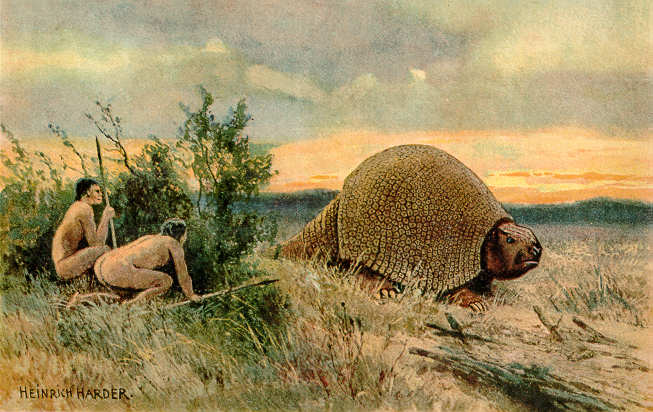
The Paleolithic is often held to finish at the end of the ice age (the end of the Pleistocene epoch), and Earth's climate became warmer. This may have caused or contributed to the extinction of the Pleistocene megafauna, although it is also possible that the late Pleistocene extinctions were (at least in part) caused by other factors such as disease and overhunting by humans.[15][16] New research suggests that the extinction of the woolly mammoth may have been caused by the combined effect of climatic change and human hunting.[16] Scientists suggest that climate change during the end of the Pleistocene caused the mammoths' habitat to shrink, resulting in a drop in population. The small populations were then hunted out by Paleolithic humans.[16] The global warming that occurred during the end of the Pleistocene and the beginning of the Holocene may have made it easier for humans to reach mammoth habitats that were previously frozen and inaccessible.[16] Small populations of woolly mammoths survived on isolated Arctic islands, Saint Paul Island and Wrangel Island, until c. 3700 BP and c. 1700 BP respectively. The Wrangel Island population became extinct around the same time the island was settled by prehistoric humans.[17] There is no evidence of prehistoric human presence on Saint Paul island (though early human settlements dating as far back as 6500 BP were found on the nearby Aleutian Islands).[18]
| Age (before) |
America | Atlantic Europe | Maghreb | Mediterranean Europe | Central Europe |
|---|---|---|---|---|---|
| 10,000 years | Flandrian interglacial | Flandriense | Mellahiense | Versiliense | Flandrian interglacial |
| 80,000 years | Wisconsin | Devensiense | Regresión | Regresión | Wisconsin Stage |
| 140,000 years | Sangamoniense | Ipswichiense | Ouljiense | Tirreniense II y III | Eemian Stage |
| 200,000 years | Illinois | Wolstoniense | Regresión | Regresión | Wolstonian Stage |
| 450,000 years | Yarmouthiense | Hoxniense | Anfatiense | Tirreniense I | Hoxnian Stage |
| 580,000 years | Kansas | Angliense | Regresión | Regresión | Kansan Stage |
| 750,000 years | Aftoniense | Cromeriense | Maarifiense | Siciliense | Cromerian Complex |
| 1,100,000 years | Nebraska | Beestoniense | Regresión | Regresión | Beestonian stage |
| 1,400,000 years | interglacial | Ludhamiense | Messaudiense | Calabriense | Donau-Günz |
Paleolithic people
[edit]
Nearly all of our knowledge of Paleolithic people and way of life comes from archaeology and ethnographic comparisons to modern hunter-gatherer cultures such as the !Kung San who live similarly to their Paleolithic predecessors.[21] The economy of a typical Paleolithic society was a hunter-gatherer economy.[22] Humans hunted wild animals for meat and gathered food, firewood, and materials for their tools, clothes, or shelters.[22]
The population density was very low, around only 0.4 inhabitants per square kilometre (1/sq mi).[2] This was most likely due to low body fat, infanticide, high levels of physical activity among women,[23] late weaning of infants, and a nomadic lifestyle.[2] In addition, even a large area of land could not support many people without being actively farmed – food was difficult to come by and so groups were prevented from growing too large by the amount of food they could gather. Like contemporary hunter-gatherers, Paleolithic humans enjoyed an abundance of leisure time unparalleled in both Neolithic farming societies and modern industrial societies.[22][24] At the end of the Paleolithic, specifically the Middle or Upper Paleolithic, people began to produce works of art such as cave paintings, rock art and jewellery and began to engage in religious behavior such as burials and rituals.[25]
Homo erectus
[edit]At the beginning of the Paleolithic, hominins were found primarily in eastern Africa, east of the Great Rift Valley. Most known hominin fossils dating earlier than one million years before present are found in this area, particularly in Kenya, Tanzania, and Ethiopia.
By c. 2,000,000 – c. 1,500,000 BP, groups of hominins began leaving Africa, settling southern Europe and Asia. The South Caucasus was occupied by c. 1,700,000 BP, and northern China was reached by c. 1,660,000 BP. By the end of the Lower Paleolithic, members of the hominin family were living in what is now China, western Indonesia, and, in Europe, around the Mediterranean and as far north as England, France, southern Germany, and Bulgaria. Their further northward expansion may have been limited by the lack of control of fire: studies of cave settlements in Europe indicate no regular use of fire prior to c. 400,000 – c. 300,000 BP.[26]
East Asian fossils from this period are typically placed in the genus Homo erectus. Very little fossil evidence is available at known Lower Paleolithic sites in Europe, but it is believed that hominins who inhabited these sites were likewise Homo erectus. There is no evidence of hominins in America, Australia, or almost anywhere in Oceania during this time period.
Fates of these early colonists, and their relationships to modern humans, are still subject to debate. According to current archaeological and genetic models, there were at least two notable expansion events subsequent to peopling of Eurasia c. 2,000,000 – c. 1,500,000 BP. Around 500,000 BP a group of early humans, frequently called Homo heidelbergensis, came to Europe from Africa and eventually evolved into Homo neanderthalensis (Neanderthals). In the Middle Paleolithic, Neanderthals were present in the region now occupied by Poland.
Both Homo erectus and Homo neanderthalensis became extinct by the start of the Upper Paleolithic. Descended from Homo sapiens, the anatomically modern Homo sapiens sapiens emerged in eastern Africa c. 300,000 BP, left Africa around 50,000 BP, and expanded throughout the planet. Multiple hominid groups coexisted for some time in certain locations. Homo neanderthalensis were still found in parts of Eurasia c. 40,000 BP years, and engaged in an unknown degree of interbreeding with Homo sapiens sapiens. DNA studies also suggest an unknown degree of interbreeding between Homo sapiens sapiens and Homo sapiens denisova.[27]
Hominin fossils not belonging either to Homo neanderthalensis or to Homo sapiens species, found in the Altai Mountains and Indonesia, were radiocarbon dated to c. 30,000 – c. 40,000 BP and c. 17,000 BP respectively.
For the duration of the Paleolithic, human populations remained low, especially outside the equatorial region. The entire population of Europe between 16,000 and 11,000 BP likely averaged some 30,000 individuals, and between 40,000 and 16,000 BP, it was even lower at 4,000–6,000 individuals.[28] However, remains of thousands of butchered animals and tools made by Palaeolithic humans were found in Lapa do Picareiro, a cave in Portugal, dating back between 41,000 and 38,000 years ago.[29]
Technology and crafts
[edit].jpg)
Some researchers have noted that science, limited in that age to some early ideas about astronomy (or cosmology),[citation needed] had limited impact on Paleolithic technology. Making fire was widespread knowledge, and it was possible without an understanding of chemical processes. These types of practical skills are sometimes called crafts. Religion, superstitution or appeals to the supernatural may have played a part in the cultural explanations of phenomena like combustion.[30]
Tools
[edit]Paleolithic humans made tools of stone, bone (primarily of deer), and wood.[22] The early Paleolithic hominins, Australopithecus, were the first users of stone tools. Excavations in Gona, Ethiopia, have produced thousands of artifacts, and through radioisotopic dating and magnetostratigraphy the sites can be firmly dated to 2.6 million years ago. Evidence shows these early hominins intentionally selected raw stone with good flaking qualities and chose appropriately sized stones for their needs to produce sharp-edged tools for cutting.[31]
The earliest Paleolithic stone tool industry, the Oldowan, began around 2.6 million years ago.[32][33] It produced tools such as choppers, burins, and stitching awls. It was completely replaced around 250,000 years ago by the more complex Acheulean industry, which was first conceived by Homo ergaster around 1.8–1.65 million years ago.[34] The Acheulean implements completely vanish from the archaeological record around 100,000 years ago and were replaced by more complex Middle Paleolithic tool kits such as the Mousterian and the Aterian industries.[35]
Lower Paleolithic humans used a variety of stone tools, including hand axes and choppers. Although they appear to have used hand axes often, there is disagreement about their use. Interpretations range from cutting and chopping tools, to digging implements, to flaking cores, to the use in traps, and as a purely ritual significance, perhaps in courting behavior. William H. Calvin has suggested that some hand axes could have served as "killer frisbees" meant to be thrown at a herd of animals at a waterhole so as to stun one of them. There are no indications of hafting, and some artifacts are far too large for that. Thus, a thrown hand axe would not usually have penetrated deeply enough to cause very serious injuries. Nevertheless, it could have been an effective weapon for defense against predators. Choppers and scrapers were likely used for skinning and butchering scavenged animals and sharp-ended sticks were often obtained for digging up edible roots. Presumably, early humans used wooden spears as early as 5 million years ago to hunt small animals, much as their relatives, chimpanzees, have been observed to do in Senegal, Africa.[36] Lower Paleolithic humans constructed shelters, such as the possible wood hut at Terra Amata.
Fire use
[edit]
Fire was used by the Lower Paleolithic hominins Homo erectus and Homo ergaster as early as 300,000 to 1.5 million years ago and possibly even earlier by the early Lower Paleolithic (Oldowan) hominin Homo habilis or by robust Australopithecines such as Paranthropus.[2] However, the use of fire only became common in the societies of the following Middle Stone Age and Middle Paleolithic.[1] Use of fire reduced mortality rates and provided protection against predators.[37] Early hominins may have begun to cook their food as early as the Lower Paleolithic (c. 1.9 million years ago) or at the latest in the early Middle Paleolithic (c. 250,000 years ago).[38] Some scientists have hypothesized that hominins began cooking food to defrost frozen meat, which would help ensure their survival in cold regions.[38] Archaeologists cite morphological shifts in cranial anatomy as evidence for emergence of cooking and food processing technologies. These morphological changes include decreases in molar and jaw size, thinner tooth enamel, and decrease in gut volume.[39] During much of the Pleistocene epoch, our ancestors relied on simple food processing techniques such as roasting.[40] The Upper Palaeolithic saw the emergence of boiling, an advance in food processing technology which rendered plant foods more digestible, decreased their toxicity, and maximised their nutritional value.[41] Thermally altered rock (heated stones) are easily identifiable in the archaeological record. Stone-boiling and pit-baking were common techniques which involved heating large pebbles then transferring the hot stones into a perishable container to heat the water.[42] This technology is typified in the Middle Palaeolithic example of the Abri Pataud hearths.[43]
Rafts
[edit]The Lower Paleolithic Homo erectus possibly invented rafts (c. 840,000 – c. 800,000 BP) to travel over large bodies of water, which may have allowed a group of Homo erectus to reach the island of Flores and evolve into the small hominin Homo floresiensis. However, this hypothesis is disputed within the anthropological community.[44][45] The possible use of rafts during the Lower Paleolithic may indicate that Lower Paleolithic hominins such as Homo erectus were more advanced than previously believed, and may have even spoken an early form of modern language.[44] Supplementary evidence from Neanderthal and modern human sites located around the Mediterranean Sea, such as Coa de sa Multa (c. 300,000 BP), has also indicated that both Middle and Upper Paleolithic humans used rafts to travel over large bodies of water (i.e. the Mediterranean Sea) for the purpose of colonizing other bodies of land.[44][46]
Advanced tools
[edit]By around 200,000 BP, Middle Paleolithic stone tool manufacturing spawned a tool-making technique known as the prepared-core technique, which was more elaborate than previous Acheulean techniques.[3] This technique increased efficiency by allowing the creation of more controlled and consistent flakes.[3] It allowed Middle Paleolithic humans to create stone-tipped spears, which were the earliest composite tools, by hafting sharp pointy stone flakes onto wooden shafts. In addition to improving tool-making methods, the Middle Paleolithic also saw an improvement of the tools themselves that allowed access to a wider variety and amount of food sources. For example, microliths or small stone tools or points were invented around 70,000–65,000 BP and were essential to the invention of bows and atlatls (spear throwers) in the following Upper Paleolithic.[37]
Harpoons were invented and used for the first time during the late Middle Paleolithic (c. 90,000 BP); the invention of these devices brought fish into the human diets, which provided a hedge against starvation and a more abundant food supply.[46][47] Thanks to their technology and their advanced social structures, Paleolithic groups such as the Neanderthals—who had a Middle Paleolithic level of technology—appear to have hunted large game just as well as Upper Paleolithic modern humans,[48] and the Neanderthals in particular may have likewise hunted with projectile weapons.[49] Nonetheless, Neanderthal use of projectile weapons in hunting occurred very rarely (or perhaps never) and the Neanderthals hunted large game animals mostly by ambushing them and attacking them with handheld weapons such as thrusting spears rather than attacking them from a distance with projectiles.[25][50]
Other inventions
[edit]During the Upper Paleolithic, further inventions were made, such as the net (c. 22,000 or c. 29,000 BP)[37] bolas,[51] the spear thrower (c. 30,000 BP), the bow and arrow (c. 25,000 or c. 30,000 BP)[2] and the oldest example of ceramic art, the Venus of Dolní Věstonice (c. 29,000 – c. 25,000 BP).[2] Kilu Cave at Buku island, Solomon Islands, demonstrates navigation of some 60 km of open ocean at 30,000 BCcal.[52]
Early dogs were domesticated sometime between 30,000 and 14,000 BP, presumably to aid in hunting.[53] However, the earliest instances of successful domestication of dogs may be much more ancient than this. Evidence from canine DNA collected by Robert K. Wayne suggests that dogs may have been first domesticated in the late Middle Paleolithic around 100,000 BP or perhaps even earlier.[54]
Archaeological evidence from the Dordogne region of France demonstrates that members of the European early Upper Paleolithic culture known as the Aurignacian used calendars (c. 30,000 BP). This was a lunar calendar that was used to document the phases of the moon. Genuine solar calendars did not appear until the Neolithic.[55] Upper Paleolithic cultures were probably able to time the migration of game animals such as wild horses and deer.[56] This ability allowed humans to become efficient hunters and to exploit a wide variety of game animals.[56] Recent research indicates that the Neanderthals timed their hunts and the migrations of game animals long before the beginning of the Upper Paleolithic.[48]
Diet and nutrition
[edit]
Paleolithic hunting and gathering people ate varying proportions of vegetables (including tubers and roots), fruit, seeds (including nuts and wild grass seeds) and insects, meat, fish, and shellfish.[58][59] However, there is little direct evidence of the relative proportions of plant and animal foods.[60] Although the term "paleolithic diet", without references to a specific timeframe or locale, is sometimes used with an implication that most humans shared a certain diet during the entire era, that is not entirely accurate. The Paleolithic was an extended period of time, during which multiple technological advances were made, many of which had impact on human dietary structure. For example, humans probably did not possess the control of fire until the Middle Paleolithic,[61] or tools necessary to engage in extensive fishing.[citation needed] On the other hand, both these technologies are generally agreed to have been widely available to humans by the end of the Paleolithic (consequently, allowing humans in some regions of the planet to rely heavily on fishing and hunting). In addition, the Paleolithic involved a substantial geographical expansion of human populations. During the Lower Paleolithic, ancestors of modern humans are thought to have been constrained to Africa east of the Great Rift Valley. During the Middle and Upper Paleolithic, humans greatly expanded their area of settlement, reaching ecosystems as diverse as New Guinea and Alaska, and adapting their diets to whatever local resources were available.
Another view is that until the Upper Paleolithic, humans were frugivores (fruit eaters) who supplemented their meals with carrion, eggs, and small prey such as baby birds and mussels, and only on rare occasions managed to kill and consume big game such as antelopes.[62] This view is supported by studies of higher apes, particularly chimpanzees. Chimpanzees are the closest to humans genetically, sharing more than 96% of their DNA code with humans, and their digestive tract is functionally very similar to that of humans.[63] Chimpanzees are primarily frugivores, but they could and would consume and digest animal flesh, given the opportunity. In general, their actual diet in the wild is about 95% plant-based, with the remaining 5% filled with insects, eggs, and baby animals.[64][65] In some ecosystems, however, chimpanzees are predatory, forming parties to hunt monkeys.[66] Some comparative studies of human and higher primate digestive tracts do suggest that humans have evolved to obtain greater amounts of calories from sources such as animal foods, allowing them to shrink the size of the gastrointestinal tract relative to body mass and to increase the brain mass instead.[67][68]
Anthropologists have diverse opinions about the proportions of plant and animal foods consumed. Just as with still existing hunters and gatherers, there were many varied "diets" in different groups, and also varying through this vast amount of time. Some paleolithic hunter-gatherers consumed a significant amount of meat and possibly obtained most of their food from hunting,[69] while others were believed to have a primarily plant-based diet.[70] Most, if not all, are believed to have been opportunistic omnivores.[71] One hypothesis is that carbohydrate tubers (plant underground storage organs) may have been eaten in high amounts by pre-agricultural humans.[72][73][74][75] It is thought that the Paleolithic diet included as much as 1.65–1.9 kg (3.6–4.2 lb) per day of fruit and vegetables.[76] The relative proportions of plant and animal foods in the diets of Paleolithic people often varied between regions, with more meat being necessary in colder regions (which were not populated by anatomically modern humans until c. 30,000 – c. 50,000 BP).[77] It is generally agreed that many modern hunting and fishing tools, such as fish hooks, nets, bows, and poisons, were not introduced until the Upper Paleolithic and possibly even Neolithic.[37] The only hunting tools widely available to humans during any significant part of the Paleolithic were hand-held spears and harpoons. There is evidence of Paleolithic people killing and eating seals and elands as far as c. 100,000 BP. On the other hand, buffalo bones found in African caves from the same period are typically of very young or very old individuals, and there is no evidence that pigs, elephants, or rhinos were hunted by humans at the time.[78]
Paleolithic peoples suffered less famine and malnutrition than the Neolithic farming tribes that followed them.[21][79] This was partly because Paleolithic hunter-gatherers accessed a wider variety of natural foods, which allowed them a more nutritious diet and a decreased risk of famine.[21][23][80] Many of the famines experienced by Neolithic (and some modern) farmers were caused or amplified by their dependence on a small number of crops.[21][23][80] It is thought that wild foods can have a significantly different nutritional profile than cultivated foods.[81] The greater amount of meat obtained by hunting big game animals in Paleolithic diets than Neolithic diets may have also allowed Paleolithic hunter-gatherers to enjoy a more nutritious diet than Neolithic agriculturalists.[79] It has been argued that the shift from hunting and gathering to agriculture resulted in an increasing focus on a limited variety of foods, with meat likely taking a back seat to plants.[82] It is also unlikely that Paleolithic hunter-gatherers were affected by modern diseases of affluence such as type 2 diabetes, coronary heart disease, and cerebrovascular disease, because they ate mostly lean meats and plants and frequently engaged in intense physical activity,[83][84] and because the average lifespan was shorter than the age of common onset of these conditions.[85][86]
Large-seeded legumes were part of the human diet long before the Neolithic Revolution, as evident from archaeobotanical finds from the Mousterian layers of Kebara Cave, in Israel.[87] There is evidence suggesting that Paleolithic societies were gathering wild cereals for food use at least as early as 30,000 years ago.[88] However, seeds—such as grains and beans—were rarely eaten and never in large quantities on a daily basis.[89] Recent archaeological evidence also indicates that winemaking may have originated in the Paleolithic, when early humans drank the juice of naturally fermented wild grapes from animal-skin pouches.[57] Paleolithic humans consumed animal organ meats, including the livers, kidneys, and brains. Upper Paleolithic cultures appear to have had significant knowledge about plants and herbs and may have sometimes practiced rudimentary forms of horticulture.[90] In particular, bananas and tubers may have been cultivated as early as 25,000 BP in southeast Asia.[91] In the Paleolithic Levant, 23,000 years ago, cereals cultivation of emmer, barley, and oats has been observed near the Sea of Galilee.[92][93]
Late Upper Paleolithic societies also appear to have occasionally practiced pastoralism and animal husbandry, presumably for dietary reasons. For instance, some European late Upper Paleolithic cultures domesticated and raised reindeer, presumably for their meat or milk, as early as 14,000 BP.[53] Humans also probably consumed hallucinogenic plants during the Paleolithic.[2] The Aboriginal Australians have been consuming a variety of native animal and plant foods, called bushfood, for an estimated 60,000 years, since the Middle Paleolithic.
In February 2019, scientists reported evidence, based on isotope studies, that at least some Neanderthals may have eaten meat.[94][95][96] People during the Middle Paleolithic, such as the Neanderthals and Middle Paleolithic Homo sapiens in Africa, began to catch shellfish for food as revealed by shellfish cooking in Neanderthal sites in Italy about 110,000 years ago and in Middle Paleolithic Homo sapiens sites at Pinnacle Point, South Africa around 164,000 BP.[46][97] Although fishing only became common during the Upper Paleolithic,[46][98] fish have been part of human diets long before the dawn of the Upper Paleolithic and have certainly been consumed by humans since at least the Middle Paleolithic.[56] For example, the Middle Paleolithic Homo sapiens in the region now occupied by the Democratic Republic of the Congo hunted large 6 ft (1.8 m)-long catfish with specialized barbed fishing points as early as 90,000 years ago.[46][56] The invention of fishing allowed some Upper Paleolithic and later hunter-gatherer societies to become sedentary or semi-nomadic, which altered their social structures.[99] Example societies are the Lepenski Vir as well as some contemporary hunter-gatherers, such as the Tlingit. In some instances (at least the Tlingit), they developed social stratification, slavery, and complex social structures such as chiefdoms.[37]
Anthropologists such as Tim White suggest that cannibalism was common in human societies prior to the beginning of the Upper Paleolithic, based on the large amount of "butchered human" bones found in Neanderthal and other Lower/Middle Paleolithic sites.[100] Cannibalism in the Lower and Middle Paleolithic may have occurred because of food shortages.[101] However, it may have been for religious reasons, and would coincide with the development of religious practices thought to have occurred during the Upper Paleolithic.[102][103] Nonetheless, it remains possible that Paleolithic societies never practiced cannibalism, and that the damage to recovered human bones was either the result of excarnation or predation by carnivores such as saber-toothed cats, lions, and hyenas.[102]
A modern-day diet known as the Paleolithic diet exists, based on restricting consumption only to those foods presumed to be available to anatomically modern humans prior to the advent of settled agriculture.[104]
Social organization
[edit] |

The social organization of the earliest Paleolithic (Lower Paleolithic) societies remains largely unknown to scientists, though Lower Paleolithic hominins such as Homo habilis and Homo erectus are likely to have had more complex social structures than chimpanzee societies.[105] Late Oldowan/Early Acheulean humans such as Homo ergaster/Homo erectus may have been the first people to invent central campsites or home bases and incorporate them into their foraging and hunting strategies like contemporary hunter-gatherers, possibly as early as 1.7 million years ago;[3] however, the earliest solid evidence for the existence of home bases or central campsites (hearths and shelters) among humans only dates back to 500,000 years ago.[3]
Similarly, scientists disagree whether Lower Paleolithic humans were largely monogamous or polygynous.[105] In particular, the Provisional model suggests that bipedalism arose in pre-Paleolithic australopithecine societies as an adaptation to monogamous lifestyles; however, other researchers note that sexual dimorphism is more pronounced in Lower Paleolithic humans such as Homo erectus than in modern humans, who are less polygynous than other primates, which suggests that Lower Paleolithic humans had a largely polygynous lifestyle, because species that have the most pronounced sexual dimorphism tend more likely to be polygynous.[106]
Human societies from the Paleolithic to the early Neolithic farming tribes lived without states and organized governments. For most of the Lower Paleolithic, human societies were possibly more hierarchical than their Middle and Upper Paleolithic descendants, and probably were not grouped into bands,[107] though during the end of the Lower Paleolithic, the latest populations of the hominin Homo erectus may have begun living in small-scale (possibly egalitarian) bands similar to both Middle and Upper Paleolithic societies and modern hunter-gatherers.[107]
Middle Paleolithic societies, unlike Lower Paleolithic and early Neolithic ones, consisted of bands that ranged from 20 to 30 or 25–100 members and were usually nomadic.[2][107] These bands were formed by several families. Bands sometimes joined into larger "macrobands" for activities such as acquiring mates and celebrations or where resources were abundant.[2] By the end of the Paleolithic era (c. 10,000 BP), people began to settle down into permanent locations, and began to rely on agriculture for sustenance in many locations. Much evidence exists that humans took part in long-distance trade between bands for rare commodities (such as ochre, which was often used for religious purposes such as ritual[108][55]) and raw materials, as early as 120,000 years ago in Middle Paleolithic.[25] Inter-band trade may have appeared during the Middle Paleolithic because trade between bands would have helped ensure their survival by allowing them to exchange resources and commodities such as raw materials during times of relative scarcity (i.e. famine, drought).[25] Like in modern hunter-gatherer societies, individuals in Paleolithic societies may have been subordinate to the band as a whole.[21][22] Both Neanderthals and modern humans took care of the elderly members of their societies during the Middle and Upper Paleolithic.[25]
Some sources claim that most Middle and Upper Paleolithic societies were possibly fundamentally egalitarian[2][22][46][109] and may have rarely or never engaged in organized violence between groups (i.e. war).[46][110][111][112]
Some Upper Paleolithic societies in resource-rich environments (such as societies in Sungir, in what is now Russia) may have had more complex and hierarchical organization (such as tribes with a pronounced hierarchy and a somewhat formal division of labor) and may have engaged in endemic warfare.[46][113] Some argue that there was no formal leadership during the Middle and Upper Paleolithic. Like contemporary egalitarian hunter-gatherers such as the Mbuti pygmies, societies may have made decisions by communal consensus decision making rather than by appointing permanent rulers such as chiefs and monarchs.[5] Nor was there a formal division of labor during the Paleolithic. Each member of the group was skilled at all tasks essential to survival, regardless of individual abilities. Theories to explain the apparent egalitarianism have arisen, notably the Marxist concept of primitive communism.[114][115] Christopher Boehm (1999) has hypothesized that egalitarianism may have evolved in Paleolithic societies because of a need to distribute resources such as food and meat equally to avoid famine and ensure a stable food supply.[116] Raymond C. Kelly speculates that the relative peacefulness of Middle and Upper Paleolithic societies resulted from a low population density, cooperative relationships between groups such as reciprocal exchange of commodities and collaboration on hunting expeditions, and because the invention of projectile weapons such as throwing spears provided less incentive for war, because they increased the damage done to the attacker and decreased the relative amount of territory attackers could gain.[112] However, other sources claim that most Paleolithic groups may have been larger, more complex, sedentary and warlike than most contemporary hunter-gatherer societies, due to occupying more resource-abundant areas than most modern hunter-gatherers who have been pushed into more marginal habitats by agricultural societies.[91]
Anthropologists have typically assumed that in Paleolithic societies, women were responsible for gathering wild plants and firewood, and men were responsible for hunting and scavenging dead animals.[2][46] However, analogies to existent hunter-gatherer societies such as the Hadza people and the Aboriginal Australians suggest that the sexual division of labor in the Paleolithic was relatively flexible. Men may have participated in gathering plants, firewood and insects, and women may have procured small game animals for consumption and assisted men in driving herds of large game animals (such as woolly mammoths and deer) off cliffs.[46][111] Additionally, recent research by anthropologist and archaeologist Steven Kuhn from the University of Arizona is argued to support that this division of labor did not exist prior to the Upper Paleolithic and was invented relatively recently in human pre-history.[70][117] Sexual division of labor may have been developed to allow humans to acquire food and other resources more efficiently.[117] Possibly there was approximate parity between men and women during the Middle and Upper Paleolithic, and that period may have been the most gender-equal time in human history.[110][118][119] Archaeological evidence from art and funerary rituals indicates that a number of individual women enjoyed seemingly high status in their communities, and it is likely that both sexes participated in decision making.[119] The earliest known Paleolithic shaman (c. 30,000 BP) was female.[120] Jared Diamond suggests that the status of women declined with the adoption of agriculture because women in farming societies typically have more pregnancies and are expected to do more demanding work than women in hunter-gatherer societies.[80] Like most modern hunter-gatherer societies, Paleolithic and Mesolithic groups probably followed a largely ambilineal approach. At the same time, depending on the society, the residence could be virilocal, uxorilocal, and sometimes the spouses could live with neither the husband's relatives nor the wife's relatives at all. Taken together, most likely, the lifestyle of hunter-gatherers can be characterized as multilocal.[37]
Sculpture and painting
[edit]
Early examples of artistic expression, such as the Venus of Tan-Tan and the patterns found on elephant bones from Bilzingsleben in Thuringia, may have been produced by Acheulean tool users such as Homo erectus prior to the start of the Middle Paleolithic period. However, the earliest undisputed evidence of art during the Paleolithic comes from Middle Paleolithic/Middle Stone Age sites such as Blombos Cave–South Africa–in the form of bracelets,[121] beads,[122] rock art,[108] and ochre used as body paint and perhaps in ritual.[46][108] Undisputed evidence of art only becomes common in the Upper Paleolithic.[123]
Lower Paleolithic Acheulean tool users, according to Robert G. Bednarik, began to engage in symbolic behavior such as art around 850,000 BP. They decorated themselves with beads and collected exotic stones for aesthetic, rather than utilitarian qualities.[124] According to him, traces of the pigment ochre from late Lower Paleolithic Acheulean archaeological sites suggests that Acheulean societies, like later Upper Paleolithic societies, collected and used ochre to create rock art.[124] Nevertheless, it is also possible that the ochre traces found at Lower Paleolithic sites is naturally occurring.[125]
Upper Paleolithic humans produced works of art such as cave paintings, Venus figurines, animal carvings, and rock paintings.[126] Upper Paleolithic art can be divided into two broad categories: figurative art such as cave paintings that clearly depicts animals (or more rarely humans); and nonfigurative, which consists of shapes and symbols.[126] Cave paintings have been interpreted in a number of ways by modern archaeologists. The earliest explanation, by the prehistorian Abbe Breuil, interpreted the paintings as a form of magic designed to ensure a successful hunt.[127] However, this hypothesis fails to explain the existence of animals such as saber-toothed cats and lions, which were not hunted for food, and the existence of half-human, half-animal beings in cave paintings. The anthropologist David Lewis-Williams has suggested that Paleolithic cave paintings were indications of shamanistic practices, because the paintings of half-human, half-animal figures and the remoteness of the caves are reminiscent of modern hunter-gatherer shamanistic practices.[127] Symbol-like images are more common in Paleolithic cave paintings than are depictions of animals or humans, and unique symbolic patterns might have been trademarks that represent different Upper Paleolithic ethnic groups.[126] Venus figurines have evoked similar controversy. Archaeologists and anthropologists have described the figurines as representations of goddesses, pornographic imagery, apotropaic amulets used for sympathetic magic, and even as self-portraits of women themselves.[46][128]
R. Dale Guthrie[129] has studied not only the most artistic and publicized paintings, but also a variety of lower-quality art and figurines, and he identifies a wide range of skill and ages among the artists. He also points out that the main themes in the paintings and other artifacts (powerful beasts, risky hunting scenes and the over-sexual representation of women) are to be expected in the fantasies of adolescent males during the Upper Paleolithic.

The "Venus" figurines have been theorized, not universally, as representing a mother goddess; the abundance of such female imagery has inspired the theory that religion and society in Paleolithic (and later Neolithic) cultures were primarily interested in, and may have been directed by, women. Adherents of the theory include archaeologist Marija Gimbutas and feminist scholar Merlin Stone, the author of the 1976 book When God Was a Woman.[130][131] Other explanations for the purpose of the figurines have been proposed, such as Catherine McCoid and LeRoy McDermott's hypothesis that they were self-portraits of woman artists[128] and R.Dale Gutrie's hypothesis that served as "Stone Age pornography".
Music
[edit]The origins of music during the Paleolithic are unknown. The earliest forms of music probably did not use musical instruments other than the human voice or natural objects such as rocks. This early music would not have left an archaeological footprint. Music may have developed from rhythmic sounds produced by daily chores, for example, cracking open nuts with stones. Maintaining a rhythm while working may have helped people to become more efficient at daily activities.[132] An alternative theory originally proposed by Charles Darwin explains that music may have begun as a hominin mating strategy. Bird and other animal species produce music such as calls to attract mates.[133] This hypothesis is generally less accepted than the previous hypothesis, but nonetheless provides a possible alternative.
Upper Paleolithic (and possibly Middle Paleolithic)[134] humans used flute-like bone pipes as musical instruments,[46][99] and music may have played a large role in the religious lives of Upper Paleolithic hunter-gatherers. As with modern hunter-gatherer societies, music may have been used in ritual or to help induce trances. In particular, it appears that animal skin drums may have been used in religious events by Upper Paleolithic shamans, as shown by the remains of drum-like instruments from some Upper Paleolithic graves of shamans and the ethnographic record of contemporary hunter-gatherer shamanic and ritual practices.[120][126]
Religion and beliefs
[edit]
According to James B. Harrod humankind first developed religious and spiritual beliefs during the Middle Paleolithic or Upper Paleolithic.[135] Controversial scholars of prehistoric religion and anthropology, James Harrod and Vincent W. Fallio, have recently proposed that religion and spirituality (and art) may have first arisen in Pre-Paleolithic chimpanzees[136] or Early Lower Paleolithic (Oldowan) societies.[137][138] According to Fallio, the common ancestor of chimpanzees and humans experienced altered states of consciousness and partook in ritual, and ritual was used in their societies to strengthen social bonding and group cohesion.[137]
Middle Paleolithic humans' use of burials at sites such as Krapina, Croatia (c. 130,000 BP) and Qafzeh, Israel (c. 100,000 BP) have led some anthropologists and archaeologists, such as Philip Lieberman, to believe that Middle Paleolithic humans may have possessed a belief in an afterlife and a "concern for the dead that transcends daily life".[4] Cut marks on Neanderthal bones from various sites, such as Combe-Grenal and Abri Moula in France, suggest that the Neanderthals—like some contemporary human cultures—may have practiced ritual defleshing for (presumably) religious reasons. According to recent archaeological findings from Homo heidelbergensis sites in Atapuerca, humans may have begun burying their dead much earlier, during the late Lower Paleolithic; but this theory is widely questioned in the scientific community.
Likewise, some scientists have proposed that Middle Paleolithic societies such as Neanderthal societies may also have practiced the earliest form of totemism or animal worship, in addition to their (presumably religious) burial of the dead. In particular, Emil Bächler suggested (based on archaeological evidence from Middle Paleolithic caves) that a bear cult was widespread among Middle Paleolithic Neanderthals.[139] A claim that evidence was found for Middle Paleolithic animal worship c. 70,000 BCE originates from the Tsodilo Hills in the African Kalahari desert has been denied by the original investigators of the site.[140] Animal cults in the Upper Paleolithic, such as the bear cult, may have had their origins in these hypothetical Middle Paleolithic animal cults.[102] Animal worship during the Upper Paleolithic was intertwined with hunting rites.[102] For instance, archaeological evidence from art and bear remains reveals that the bear cult apparently involved a type of sacrificial bear ceremonialism, in which a bear was shot with arrows, finished off by a shot or thrust in the lungs, and ritually worshipped near a clay bear statue covered by a bear fur with the skull and the body of the bear buried separately.[102] Barbara Ehrenreich controversially theorizes that the sacrificial hunting rites of the Upper Paleolithic (and by extension Paleolithic cooperative big-game hunting) gave rise to war or warlike raiding during the following Epipaleolithic and Mesolithic or late Upper Paleolithic.[111]
The existence of anthropomorphic images and half-human, half-animal images in the Upper Paleolithic may further indicate that Upper Paleolithic humans were the first people to believe in a pantheon of gods or supernatural beings,[141] though such images may instead indicate shamanistic practices similar to those of contemporary tribal societies.[127] The earliest known undisputed burial of a shaman (and by extension the earliest undisputed evidence of shamans and shamanic practices) dates back to the early Upper Paleolithic era (c. 30,000 BP) in what is now the Czech Republic.[120] However, during the early Upper Paleolithic it was probably more common for all members of the band to participate equally and fully in religious ceremonies, in contrast to the religious traditions of later periods when religious authorities and part-time ritual specialists such as shamans, priests and medicine men were relatively common and integral to religious life.[22]
Religion was possibly apotropaic; specifically, it may have involved sympathetic magic.[46] The Venus figurines, which are abundant in the Upper Paleolithic archaeological record, provide an example of possible Paleolithic sympathetic magic, as they may have been used for ensuring success in hunting and to bring about fertility of the land and women.[2] The Upper Paleolithic Venus figurines have sometimes been explained as depictions of an earth goddess similar to Gaia, or as representations of a goddess who is the ruler or mother of the animals.[102][142] James Harrod has described them as representative of female (and male) shamanistic spiritual transformation processes.[143]
See also
[edit]References
[edit]- ^ a b Toth, Nicholas; Schick, Kathy (2007). "21 Overview of Paleolithic Archeology". In Henke, H. C. Winfried; Hardt, Thorolf; Tatersall, Ian (eds.). Handbook of Paleoanthropology. Vol. 3. Berlin; Heidelberg; New York: Springer. pp. 1943–1963. doi:10.1007/978-3-540-33761-4_64. ISBN 978-3-540-32474-4.
- ^ a b c d e f g h i j k l McClellan (2006). Science and Technology in World History: An Introduction. Baltimore: Johns Hopkins University Press. pp. 6–12. ISBN 978-0-8018-8360-6.
- ^ a b c d e Richard B. Potts. "Human Evolution". Microsoft Encarta Online Encyclopedia 2007. Archived from the original on 28 October 2009. Retrieved 12 March 2008.
- ^ a b Lieberman, Philip (1991). Uniquely Human. Cambridge, Massachusetts: Harvard University Press. ISBN 978-0-674-92183-2.
- ^ a b Kusimba, Sibel (2003). African Foragers: Environment, Technology, Interactions. Rowman Altamira. p. 285. ISBN 978-0-7591-0154-8.
- ^ a b Weinstock, John. "Sami Prehistory Revisited: transactions, admixture and assimilation in the phylogeographic picture of Scandinavia". University of Texas.
- ^ Goebel, Ted; Waters, Michael R.; O'Rourke, Dennis H. (14 March 2008). "The Late Pleistocene Dispersal of Modern Humans in the Americas" (PDF). Science. 319 (5869): 1497–502. Bibcode:2008Sci...319.1497G. doi:10.1126/science.1153569. ISSN 0036-8075. PMID 18339930. S2CID 36149744. Archived from the original (PDF) on 22 September 2017. Retrieved 24 September 2019.
- ^ Bennett, Matthew R.; Bustos, David; Pigati, Jeffrey S.; Springer, Kathleen B.; Urban, Thomas M.; Holliday, Vance T.; Reynolds, Sally C.; Budka, Marcin; Honke, Jeffrey S.; Hudson, Adam M.; Fenerty, Brendan; Connelly, Clare; Martinez, Patrick J.; Santucci, Vincent L.; Odess, Daniel (23 September 2021). "Evidence of humans in North America during the Last Glacial Maximum". Science. 373 (6562): 1528–1531. Bibcode:2021Sci...373.1528B. doi:10.1126/science.abg7586. ISSN 0036-8075. PMID 34554787. S2CID 237616125.
- ^ Lubbock, John (2005) [1872]. "4". Pre-Historic Times, as Illustrated by Ancient Remains, and the Manners and Customs of Modern Savages. Williams and Norgate. p. 75. ISBN 978-1-4212-7039-5 – via Elibron Classics.
- ^ "The Pleistocene Epoch". University of California Museum of Paleontology. Archived from the original on 24 August 2014. Retrieved 22 August 2014.
- ^ a b "University of California Museum of Paleontology website the Pliocene epoch". University of California Museum of Paleontology. Retrieved 31 January 2010.
- ^ a b Scotese, Christopher. "Paleomap project". The Earth has been in an Ice House Climate for the last 30 million years. Retrieved 23 March 2008.
- ^ Van Andel, Tjeerd H. (1994). New Views on an Old Planet: A History of Global Change. Cambridge: Cambridge University Press. p. 454. ISBN 978-0-521-44243-5.
- ^ Six Degrees Could Change The World Mark Lynas interview. National Geographic Channel.
- ^ "University of California Museum of Paleontology website the Pleistocene epoch(accessed March 25)". University of California Museum of Paleontology. Archived from the original on 7 February 2010. Retrieved 31 January 2010.
- ^ a b c d Johnson, Kimberly. "Climate Change, Then Humans, Drove Mammoths Extinct from National Geographic". National Geographic news. Archived from the original on April 5, 2008. Retrieved 4 April 2008.
- ^ Nowak, Ronald M. (1999). Walker's Mammals of the World. Baltimore: Johns Hopkins University Press. ISBN 978-0-8018-5789-8.
- ^ "Phylogeographic Analysis of the mid-Holocene Mammoth from Qagnax Cave, St. Paul Island, Alaska" (PDF). Harvard University.[dead link]
- ^ Gamble, Clive (1990). El poblamiento Paleolítico de Europa [The Paleolithic settlement of Europe] (in Spanish). Barcelona: Editorial Crítica. ISBN 84-7423-445-X.
- ^ Musée de Préhistoire Terra Amata. "Le site acheuléen de Terra Amata" [The Acheulean site of Terra Amata]. Musée de Préhistoire Terra Amata (in French). Retrieved 10 June 2022.
- ^ a b c d e Stavrianos, Leften Stavros (1997). Lifelines from Our Past: A New World History. New Jersey: M.E. Sharpe. ISBN 978-0-13-357005-2. pp. 9–13 p. 70
- ^ a b c d e f g Stavrianos, Leften Stavros (1991). A Global History from Prehistory to the Present. New Jersey: Prentice Hall. pp. 9–13. ISBN 978-0-13-357005-2.
- ^ a b c "The Consequences of Domestication and Sedentism by Emily Schultz, et al". Primitivism.com. Archived from the original on 15 July 2009. Retrieved 31 January 2010.
- ^ Armesto, Felipe Fernandez (2003). Ideas that changed the world. New York: Dorling Kindersley limited. pp. 10, 400. ISBN 978-0-7566-3298-4.
- ^ a b c d e Hillary Mayell. "When Did "Modern" Behavior Emerge in Humans?". National Geographic News. Archived from the original on August 13, 2005. Retrieved 5 February 2008.
- ^ Roebroeks, Wil; Villa, Paola (14 March 2011). "On the earliest evidence for habitual use of fire in Europe". PNAS. 108 (13): 5209–5214. Bibcode:2011PNAS..108.5209R. doi:10.1073/pnas.1018116108. PMC 3069174. PMID 21402905.
- ^ Ewen, Callaway (22 September 2011). "First Aboriginal genome sequenced". Nature News. doi:10.1038/news.2011.551.
- ^ Bocquet-Appel, Jean-Pierre; et al. (2005). "Estimates of Upper Palaeolithic meta-population size in Europe from archaeological data" (PDF). Journal of Archaeological Science. 32 (11): 1656–1668. Bibcode:2005JArSc..32.1656B. doi:10.1016/j.jas.2005.05.006. Archived from the original (PDF) on 20 October 2017. Retrieved 9 October 2012.
- ^ "More surprises about Palaeolithic humans". Cosmos Magazine. 29 September 2020.
- ^ McClellan, James E.; Dorn, Harold (2006). Science and Technology in World History. United States: The Johns Hopkins University Press. p. 13.
- ^ Semaw, Sileshi (2000). "The World's Oldest Stone Artefacts from Gona, Ethiopia: Their Implications for Understanding Stone Technology and Patterns of Human Evolution Between 2.6–1.5 Million Years Ago". Journal of Archaeological Science. 27 (12): 1197–214. Bibcode:2000JArSc..27.1197S. doi:10.1006/jasc.1999.0592. S2CID 1490212.
- ^ Klein, R. (1999). The Human Career. University of Chicago Press. ISBN 978-0-226-43963-1.
- ^ "Oldowan Stone Tools".
- ^ Roche, Hélène; Brugal, Jean-Philip; Delagnes, Anne; Feibel, Craig; Harmand, Sonia; Kibunjia, Mzalendo; Prat, Sandrine; Texier, Pierre-Jean (2003). "Les sites archéologiques plio-pléistocènes de la formation de Nachukui, Ouest-Turkana, Kenya: bilan synthétique 1997-2001" [The Plio-Pleistocene archaeological sites of the Nachukui formation, West-Turkana, Kenya: summary report 1997-2001] (PDF). Palevol Reports (in French). 2 (8): 663–673. Bibcode:2003CRPal...2..663R. doi:10.1016/j.crpv.2003.06.001.
- ^ Clark, JD, Variability in primary and secondary technologies of the Later Acheulian in Africa in Milliken, S and Cook, J (eds), 2001
- ^ Weiss, Rick (22 February 2007). "Chimps Observed Making Their Own Weapons". The Washington Post.
- ^ a b c d e f Marlowe, F.W. (2005). "Hunter-gatherers and human evolution" (PDF). Evolutionary Anthropology. 14 (2): 15294. doi:10.1002/evan.20046. S2CID 53489209. Archived from the original (PDF) on 27 May 2008. Retrieved 11 April 2008.
- ^ a b Wrangham R, Conklin-Brittain N (September 2003). "Cooking as a biological trait" (PDF). Comp Biochem Physiol A. 136 (1): 35–46. doi:10.1016/S1095-6433(03)00020-5. PMID 14527628. Archived from the original (PDF) on 19 May 2005.
- ^ Wrangham, R.W. 2009. Catching Fire: How Cooking Made Us Human. Basic Books, New York.
- ^ Johns, T.A., Kubo, I. 1988. A survey of traditional methods employed for the detoxification of plant foods. Journal of Ethnobiology 8, 81–129.
- ^ Speth, J.D. (2015). "When did humans learn to boil". PaleoAnthropology: 54–67.
- ^ Mousterian Brace 1997: 545
- ^ Movius Jr, H.L. (1966). "The hearths of the Upper Perigordian and Aurignacian horizons at the Abri Pataud, Les Eyzies (Dordogne), and their possible significance". American Anthropologist: 296–325.
- ^ a b c "First Mariners Project Photo Gallery 1". Mc2.vicnet.net.au. Archived from the original on 25 October 2009. Retrieved 31 January 2010.
- ^ "First Mariners – National Geographic project 2004". Mc2.vicnet.net.au. 2 October 2004. Archived from the original on 26 October 2009. Retrieved 31 January 2010.
- ^ a b c d e f g h i j k l m n Miller, Barbra; Wood, Bernard; Balansky, Andrew; Mercader, Julio; Panger, Melissa (2006). Anthropology. Boston: Allyn and Bacon. p. 768. ISBN 978-0-205-32024-0.
- ^ "Human Evolution," Microsoft Encarta Online Encyclopedia 2007 Archived 2008-04-08 at the Wayback Machine Contributed by Richard B. Potts, B.A., Ph.D.
- ^ a b Ann Parson. "Neanderthals Hunted as Well as Humans, Study Says". National Geographic News. Archived from the original on February 17, 2006. Retrieved 2008-02-01.
- ^ Boëda, E.; Geneste, J.M.; Griggo, C.; Mercier, N.; Muhesen, S.; Reyss, J.L.; Taha, A.; Valladas, H. (1999). "A Levallois point embedded in the vertebra of a wild ass (Equus africanus): Hafting, projectiles and Mousterian hunting". Antiquity. 73 (280): 394–402. doi:10.1017/S0003598X00088335. S2CID 163560577.
- ^ Balbirnie, Cameron (10 May 2005). "The icy truth behind Neanderthals". BBC News. Retrieved 1 April 2008.
- ^ J. Chavaillon, D. Lavallée, « Bola », in Dictionnaire de la Préhistoire, PUF, 1988.
- ^ Wickler, Stephen. "Prehistoric Melanesian Exchange and Interaction: Recent Evidence from the Northern Solomon Islands" (PDF). Asian Perspectives. 29 (2): 135–154.
- ^ a b Lloyd, J & Mitchinson, J: "The Book of General Ignorance". Faber & Faber, 2006.
- ^ Mellot, Christine. "Stalking the ancient dog" (PDF). Science news. Retrieved 3 January 2008.
- ^ a b Armesto, Felipe Fernandez (2003). Ideas that changed the world. New York: Dorling Kindersley limited. p. 400. ISBN 978-0-7566-3298-4.; [1][permanent dead link]
- ^ a b c d "Stone Age," Microsoft Encarta Online Encyclopedia 2007 Archived 2009-11-01 at the Wayback Machine Contributed by Kathy Schick, B.A., M.A., Ph.D. and Nicholas Toth, B.A., M.A., Ph.D.
- ^ a b William Cocke. "First Wine? Archaeologist Traces Drink to Stone Age". National Geographic News. Archived from the original on July 24, 2004. Retrieved 2008-02-03.
- ^ Gowlett JAJ (2003). "What actually was the Stone Age Diet?" (PDF). J Nutr Environ Med. 13 (3): 143–47. doi:10.1080/13590840310001619338.
- ^ Weiss E, Wetterstrom W, Nadel D, Bar-Yosef O (June 29, 2004). "The broad spectrum revisited: Evidence from plant remains". Proc Natl Acad Sci USA. 101 (26): 9551–55. Bibcode:2004PNAS..101.9551W. doi:10.1073/pnas.0402362101. PMC 470712. PMID 15210984.
- ^ Richards, MP (December 2002). "A brief review of the archaeological evidence for Palaeolithic and Neolithic subsistence". Eur J Clin Nutr. 56 (12): 1270–78. doi:10.1038/sj.ejcn.1601646. PMID 12494313.
- ^ Johanson, Donald; Blake, Edgar (2006). From Lucy to Language: Revised, Updated, and Expanded. Berlin: Simon & Schuster. pp. 96–97. ISBN 978-0-7432-8064-8.
- ^ Hart, Donna; Sussman, Robert W. (2005). Man the Hunted. Basic Books. ISBN 978-0-8133-3936-8.
- ^ Lovgren, Stefan (31 August 2005). "Chimps, Humans 96 Percent the Same, Gene Study Finds". National Geographic. Archived from the original on September 5, 2005. Retrieved 23 December 2013.
- ^ "Chimp hunting and flesh-eating".
- ^ "Chimpanzees 'hunt using spears'". BBC News. 22 February 2007.
- ^ "The Predatory Behavior and Ecology of Wild Chimpanzees". Archived from the original on 6 June 2013. Retrieved 13 June 2014.
- ^ Milton, Katharine (1999). "A hypothesis to explain the role of meat-eating in human evolution" (PDF). Evolutionary Anthropology. 8 (1): 11–21. doi:10.1002/(SICI)1520-6505(1999)8:1<11::AID-EVAN6>3.0.CO;2-M. S2CID 86221120.
- ^ Aiello, Leslie C.; Wheeler, Peter (1995). "The expensive-tissue hypothesis" (PDF). Current Anthropology. 36 (2): 199–221. doi:10.1086/204350. S2CID 144317407. Archived from the original (PDF) on 2019-05-17. Retrieved 2014-06-13.
- ^ Cordain, L. (2006). "Implications of Plio-Pleistocene Hominin Diets for Modern Humans" (PDF). In Ungar, P. (ed.). Early Hominin Diets: The Known, the Unknown, and the Unknowable. Oxford: Oxford University Press. pp. 363–383. Archived from the original (PDF) on 27 February 2008.
- ^ a b Dahlberg, Frances (1975). Woman the Gatherer. London: Yale University Press. ISBN 978-0-300-02989-5.
- ^ Nature's Magic: Synergy in Evolution and the Fate of Humankind By Peter Corning
- ^ Laden G, Wrangham R (October 2005). "The rise of the hominids as an adaptive shift in fallback foods: plant underground storage organs (USOs) and australopith origins" (PDF). Journal of Human Evolution. 49 (4): 482–98. Bibcode:2005JHumE..49..482L. doi:10.1016/j.jhevol.2005.05.007. PMID 16085279. Archived from the original (PDF) on 11 September 2008.
- ^ Wrangham RW, Jones JH, Laden G, Pilbeam D, Conklin-Brittain N (December 1999). "The Raw and the Stolen. Cooking and the Ecology of Human Origins". Current Anthropology. 40 (5): 567–94. doi:10.1086/300083. PMID 10539941. S2CID 82271116.[permanent dead link]
- ^ Yeakel JD, Bennett NC, Koch PL, Dominy NJ (July 2007). "The isotopic ecology of African mole rats informs hypotheses on the evolution of human diet" (PDF). Proc Biol Sci. 274 (1619): 1723–1730. doi:10.1098/rspb.2007.0330. PMC 2493578. PMID 17472915. Archived from the original (PDF) on 11 September 2008. Retrieved 10 August 2008.
- ^ Hernandez-Aguilar RA, Moore J, Pickering TR (December 2007). "Savanna chimpanzees use tools to harvest the underground storage organs of plants". Proc Natl Acad Sci U S A. 104 (49): 19210–19213. doi:10.1073/pnas.0707929104. PMC 2148269. PMID 18032604.
- ^ Eaton, S. Boyd; Eaton III, Stanley B.; Sinclair, Andrew J.; Cordain, Loren; Mann, Neil J. (1998). "Dietary intake of long-chain polyunsaturated fatty acids during the Paleolithic" (PDF). The Return of ω3 Fatty Acids Into the Food Supply: Land-Based Animal Food Products and Their Health Effects. pp. 12–23. CiteSeerX 10.1.1.691.6953. doi:10.1159/000059672. ISBN 978-3-8055-6694-0. PMID 9648501. Archived from the original (PDF) on 9 May 2015. Retrieved 14 June 2014.
- ^ Gowlet, J. A. J. (September 2003). "What actually was the stone age diet?" (PDF). Journal of Environmental Medicine. 13 (3): 143–147. doi:10.1080/13590840310001619338. Retrieved 4 May 2008.)
- ^ Diamond, Jared (1992). The third chimpanzee: the evolution and future of the human animal. HarperCollins. ISBN 978-0-06-098403-8.
- ^ a b Russell, Sharman Apt (2006). Hunger an unnatural history. Basic books. ISBN 978-0-465-07165-4.[permanent dead link] p. 2
- ^ a b c Jared Diamond. "The Worst Mistake in the History of the Human Race". Discover. Retrieved 2008-01-14.
- ^ Milton, Katharine (2002). "Hunter-gatherer diets: wild foods signal relief from diseases of affluence (PDF)" (PDF). In Ungar, Peter S.; Teaford, Mark F. (eds.). Human Diet: Its Origins and Evolution. Westport, CN: Bergin and Garvey. pp. 111–22. ISBN 978-0-89789-736-5.
- ^ Larsen, Clark Spencer (1 November 2003). "Animal source foods and human health during evolution". Journal of Nutrition. 133 (11, Suppl 2): 3893S – 97S. doi:10.1093/jn/133.11.3893S. PMID 14672287.
- ^ Cordain L, Eaton SB, Sebastian A, Mann N, Lindeberg S, Watkins BA, O'Keefe JH, Brand-Miller J (2005). "Origins and evolution of the Western diet: health implications for the 21st century". The American Journal of Clinical Nutrition. 81 (2): 341–354. doi:10.1093/ajcn.81.2.341. PMID 15699220.
- ^ Thorburn AW, Brand JC, Truswell AS (1 January 1987). "Slowly digested and absorbed carbohydrate in traditional bushfoods: a protective factor against diabetes?". The American Journal of Clinical Nutrition. 45 (1): 98–106. doi:10.1093/ajcn/45.1.98. PMID 3541565.
- ^ Kaplan, Hillard; Hill, Kim; Lancaster, Jane & Hurtado, A. Magdalena (2000). "A Theory of Human Life History Evolution: Diet, Intelligence and Longevity" (PDF). Evolutionary Anthropology. 9 (4): 156–85. doi:10.1002/1520-6505(2000)9:4<156::AID-EVAN5>3.0.CO;2-7. S2CID 2363289. Retrieved 12 September 2010.
- ^ Caspari, Rachel & Lee, Sang-Hee (27 July 2004). "Older age becomes common late in human evolution". Proceedings of the National Academy of Sciences. 101 (20): 10895–900. doi:10.1073/pnas.0402857101. PMC 503716. PMID 15252198.
- ^ Lev, Efraim; Kislev, Mordechai E.; Bar-Yosef, Ofer (March 2005). "Mousterian vegetal food in Kebara Cave, Mt. Carmel". Journal of Archaeological Science. 32 (3): 475–84. Bibcode:2005JArSc..32..475L. doi:10.1016/j.jas.2004.11.006.
- ^ Revedin, Anna; Aranguren, B.; Becattini, R.; Longo, L.; Marconi, E.; Lippi, M.M.; Skakun, N.; Sinitsyn, A.; et al. (2010). "Thirty thousand-year-old evidence of plant food processing". Proc Natl Acad Sci U S A. 107 (44): 18815–19. Bibcode:2010PNAS..10718815R. doi:10.1073/pnas.1006993107. PMC 2973873. PMID 20956317.
- ^ Lindeberg, Staffan (June 2005). "Palaeolithic diet ("stone age" diet)". Scandinavian Journal of Food & Nutrition. 49 (2): 75–77. doi:10.1080/11026480510032043.
- ^ Academic American Encyclopedia By Grolier Incorporated (1994). Academic American Encyclopedia By Grolier Incorporated. University of Michigan: Grolier Academic Reference.; p 61
- ^ a b Kiefer, Thomas M. (Spring 2002). "Anthropology E-20". Lecture 8 Subsistence, Ecology and Food production. Harvard University. Archived from the original on 10 April 2008. Retrieved 11 March 2008.
- ^ Snir, Ainit; Nadel, Dani; Groman-Yaroslavski, Iris; Melamed, Yoel; Sternberg, Marcelo; Bar-Yosef, Ofer; Weiss, Ehud (2015-07-22). "The Origin of Cultivation and Proto-Weeds, Long Before Neolithic Farming". PLOS ONE. 10 (7) e0131422. Bibcode:2015PLoSO..1031422S. doi:10.1371/journal.pone.0131422. ISSN 1932-6203. PMC 4511808. PMID 26200895.
- ^ "First evidence of farming in Mideast 23,000 years ago: Evidence of earliest small-scale agricultural cultivation". ScienceDaily. Archived from the original on 23 April 2022. Retrieved 2022-04-23.
- ^ Jaouen, Klervia; et al. (19 February 2019). "Exceptionally high δ15N values in collagen single amino acids confirm Neandertals as high-trophic level carnivores". Proceedings of the National Academy of Sciences of the United States of America. 116 (11): 4928–4933. Bibcode:2019PNAS..116.4928J. doi:10.1073/pnas.1814087116. PMC 6421459. PMID 30782806.
- ^ Yika, Bob (19 February 2019). "Isotopes found in bones suggest Neanderthals were fresh meat eaters". Phys.org. Retrieved 20 February 2019.
- ^ Max Planck Institute for Evolutionary Anthropology (19 February 2019). "Neanderthals' main food source was definitely meat – Isotope analyses performed on single amino acids in Neanderthals' collagen samples shed new light on their debated diet". Science Daily. Retrieved 21 February 2019.
- ^ Wilford, John Noble (18 October 2007). "Key Human Traits Tied to Shellfish Remains". The New York Times. Retrieved 11 March 2008.
- ^ "African Bone Tools Dispute Key Idea About Human Evolution". National Geographic News. Archived from the original on January 17, 2006.
- ^ a b Bahn, Paul (1996) "The atlas of world archeology" Copyright 2000 The Brown Reference Group PLC
- ^ Tim D. White (2006). "Once were Cannibals". Evolution: A Scientific American Reader. University of Chicago Press. ISBN 978-0-226-74269-4. Retrieved 2008-02-14.
- ^ Owen, James. "Neandertals Turned to Cannibalism, Bone Cave Suggests". National Geographic News. Archived from the original on December 8, 2006. Retrieved 3 February 2008.
- ^ a b c d e f Narr, Karl J. "Prehistoric religion". Britannica online encyclopedia 2008. Archived from the original on 9 April 2008. Retrieved 28 March 2008.
- ^ Pathou-Mathis, M. (2000). "Neanderthal subsistence behaviours in Europe". International Journal of Osteoarchaeology. 10 (5): 379–395. doi:10.1002/1099-1212(200009/10)10:5<379::AID-OA558>3.0.CO;2-4.
- ^ "Prehistoric Dining: The Real Paleo Diet". National Geographic. 22 April 2014. Archived from the original on 4 August 2017. Retrieved 3 August 2017.
- ^ a b Nancy White. "Intro to archeology The First People and Culture". Introduction to archeology. Archived from the original on 2012-10-09. Retrieved 2008-03-20.
- ^ Urquhart, James (8 August 2007). "Finds test human origins theory". BBC News. Retrieved 20 March 2008.
- ^ a b c Christopher Boehm (1999) "Hierarchy in the Forest: The Evolution of Egalitarian Behavior" pp. 198–208 Harvard University Press
- ^ a b c Henahan, Sean. "Blombos Cave art". Science News. Retrieved 12 March 2008.
- ^ Christopher Boehm (1999) "Hierarchy in the Forest: The Evolution of Egalitarian Behavior" p. 198 Harvard University Press
- ^ a b Gutrie, R. Dale (2005). The Nature of Paleolithic art. Chicago: University of Chicago Press. ISBN 978-0-226-31126-5. pp. 420–422
- ^ a b c Ehrenreich, Barbara (1997). Blood Rites: Origins and History of the Passions of War. London: Macmillan. ISBN 978-0-8050-5787-4. p. 123
- ^ a b Kelly, Raymond (October 2005). "The evolution of lethal intergroup violence". PNAS. 102 (43): 15294–98. Bibcode:2005PNAS..10215294K. doi:10.1073/pnas.0505955102. PMC 1266108. PMID 16129826.
- ^ Kelly, Raymond C. Warless societies and the origin of war. Ann Arbor : University of Michigan Press, 2000.
- ^ Marx, Karl; Engels, Friedrich (2005) [1848]. The Communist Manifesto. Filiquarian Publishing. pp. 71, 87. ISBN 978-1-59986-995-7.
- ^ Rigby, Stephen Henry (1999). Marxism and History: A Critical Introduction. Manchester University Press. pp. 111, 314. ISBN 0-7190-5612-8.
- ^ Christopher Boehm (1999) "Hierarchy in the Forest: The Evolution of Egalitarian Behavior" p. 192 Harvard university press
- ^ a b Stefan Lovgren. "Sex-Based Roles Gave Modern Humans an Edge, Study Says". National Geographic News. Archived from the original on December 10, 2006. Retrieved 2008-02-03.
- ^ Stavrianos, Leften Stavros (1991). A Global History from Prehistory to the Present. New Jersey: Prentice Hall. ISBN 978-0-13-357005-2.
the sexes were more equal during Paleolithic millennia than at any time since.
p. 9 - ^ a b Museum of Antiquites web site Archived 2007-11-21 at the Wayback Machine . Retrieved February 13, 2008.
- ^ a b c Tedlock, Barbara. 2005. The Woman in the Shaman's Body: Reclaiming the Feminine in Religion and Medicine. New York: Bantam.
- ^ Jonathan Amos (2004-04-15). "Cave yields 'earliest jewellery'". BBC News. Retrieved 2008-03-12.
- ^ Hillary Mayell. "Oldest Jewelry? "Beads" Discovered in African Cave". National Geographic News. Archived from the original on April 16, 2004. Retrieved 2008-03-03.
- ^ "Human Evolution," Microsoft Encarta Online Encyclopedia 2007 Archived 2009-10-31 at the Wayback Machine Contributed by Richard B. Potts, B.A., Ph.D.
- ^ a b Robert G. Bednarik. "Beads and the origins of symbolism". Archived from the original on 2018-10-26. Retrieved 2008-04-05.
- ^ Klein, Richard G. (22 March 2002). The Dawn of Human Culture. Wiley. ISBN 0-471-25252-2.
- ^ a b c d "Paleolithic Art". Microsoft Encarta Online Encyclopedia. 2007. Archived from the original on 14 March 2008. Retrieved 20 March 2008.
- ^ a b c Clottes, Jean. "Shamanism in Prehistory". Bradshaw foundation. Archived from the original on 30 April 2008. Retrieved 11 March 2008.
- ^ a b McDermott, LeRoy (1996). "Self-Representation in Upper Paleolithic Female Figurines". Current Anthropology. 37 (2): 227–275. doi:10.1086/204491. JSTOR 2744349. S2CID 144914396.
- ^ R. Dale Guthrie, The Nature of Paleolithic Art. University of Chicago Press, 2006. ISBN 978-0-226-31126-5. Preface.
- ^ Stone, Merlin (1978). When God Was a Woman. Harcourt Brace Jovanovich. p. 265. ISBN 978-0-15-696158-5.
- ^ Gimbutas, Marija (1991). The Civilization of the Goddess. HarperSanFrancisco. ISBN 978-0-06-250804-1.
- ^ Bücher, Karl. Trabajo y ritmo [Work and rhythm] (in Spanish). Madrid: Biblioteca Científico-Filosófica.
- ^ Darwin, Charles (May 1998). The origin of man. Edimat books, S.A. ISBN 84-8403-034-2.
- ^ Nelson, D.E., Radiocarbon dating of bone and charcoal from Divje babe I cave, cited by Morley, p. 47
- ^ "About OriginsNet by James Harrod". Originsnet.org. Retrieved 31 January 2010.
- ^ "Appendices for chimpanzee spirituality by James Harrod" (PDF). Archived from the original (PDF) on 27 May 2008. Retrieved 31 January 2010.
- ^ a b Fallio, Vincent W. (2006). New Developments in Consciousness Research. New York: Nova Publishers. pp. 98–109. ISBN 978-1-60021-247-5.
- ^ "Oldowan Art, Religion, Symbols, Mind by James Harrod". Originsnet.org. Archived from the original on 10 March 2010. Retrieved 31 January 2010.
- ^ Wunn, Ina (2000). "Beginning of Religion". Numen. 47 (4): 434–435. doi:10.1163/156852700511612.
- ^ Robbins, Lawrence H.; Campbell, Alec C.; Brook, George A.; Murphy, Michael L. (June 2007). "World's Oldest Ritual Site? The "Python Cave" at Tsodilo Hills World Heritage Site, Botswana" (PDF). NYAME AKUMA, the Bulletin of the Society of Africanist Archaeologists (67). Archived from the original (PDF) on 28 September 2011. Retrieved 1 December 2010.
- ^ Steven Mithen (1996). The Prehistory of the Mind: The Cognitive Origins of Art, Religion and Science. Thames & Hudson. ISBN 978-0-500-05081-1.
- ^ Christopher L. C. E. Witcombe, "Women in the Stone Age Archived 2010-08-01 at the Wayback Machine", in the essay "The Venus of Willendorf" . Retrieved March 13, 2008.
- ^ "Upper Paleolithic Art, Religion, Symbols, Mind By James Harrod". Originsnet.org. Archived from the original on 2010-03-08. Retrieved 2010-01-31.
External links
[edit]
- Human Timeline (Interactive) – Smithsonian, National Museum of Natural History (August 2016).
- Donsmaps: a vast repository of Paleolithic resources
- Interactive Timeline Simile/Timemap index of Eurasian sites
| International | |
|---|---|
| National | |
| Artists | |
| Other | |

Paleolithic
View on GrokipediaIntroduction and Terminology
Definition and Chronology
The Paleolithic, also known as the Old Stone Age, represents the earliest and longest phase of human prehistory, characterized by the initial development and use of stone tools by hominins. It spans from the appearance of the oldest known stone tools, dated to approximately 3.3 million years ago at Lomekwi 3 in Kenya, to the end of the Pleistocene epoch around 11,650 years before present (BP), marking the transition to the Mesolithic or Neolithic periods in most regions.[5][4] This period encompasses the gradual evolution of tool-making technologies and adaptive behaviors in response to environmental changes, without evidence of agriculture or permanent settlements.[6] The Paleolithic is traditionally subdivided into three main chronological phases based on technological and cultural advancements. The Lower Paleolithic, from about 3.3 million to 300,000 years ago, includes the earliest tool industries such as the Lomekwian and Oldowan, followed by the Acheulean, reflecting basic flaking and bifacial handaxe production.[5][4] The Middle Paleolithic, spanning roughly 300,000 to 50,000 years ago, is associated with more refined prepared-core techniques like the Levallois method and the Mousterian industry, primarily linked to Neanderthals and early modern humans in Eurasia and Africa.[7] The Upper Paleolithic, from approximately 50,000 to 11,650 years ago, features advanced blade technologies, symbolic artifacts, and the emergence of behavioral modernity, coinciding with the global dispersal of anatomically modern humans.[8] These divisions, while Eurocentric in origin, are applied globally with adjustments for regional archaeological sequences. The end of the Paleolithic is defined by the onset of the Holocene epoch and the advent of sedentism, plant domestication, and animal husbandry, though exact dates vary regionally due to differing environmental and cultural trajectories. In Eurasia and Africa, it generally concludes around 10,000 BCE with the warming climate facilitating Neolithic innovations. In the Americas, where human presence is more recent, the equivalent Paleoindian period extends later, with cultures like Clovis dating to 13,050–12,750 calibrated years BP, and some foraging traditions persisting until about 8,000 BCE before transitioning to Archaic periods.[9] Recent archaeological findings have refined the early chronology; for instance, 2023 excavations at Nyayanga, Kenya, uncovered Oldowan tools dated to 3.03–2.58 million years ago, expanding the geographic range of early lithic technologies beyond East Africa.[10] Additionally, 2025 analyses at the same site revealed evidence of raw material transport over 10 kilometers, indicating planned foraging behaviors by 2.6 million years ago, while reaffirming the Lomekwi origins at 3.3 million years.[11]Etymology and Periodization
The term "Paleolithic" was coined by British archaeologist and naturalist John Lubbock in 1865, in his seminal work Pre-historic Times, as Illustrated by Ancient Remains and the Manners and Customs of Modern Savages, deriving from the Greek words palaios ("old") and lithos ("stone") to designate the "Old Stone Age."[12][13] This nomenclature distinguished it from the "New Stone Age" or Neolithic, which Lubbock contrasted with polished stone tools and early agriculture.[14] Lubbock's framework built upon the three-age system earlier proposed by Danish antiquarian Christian Jürgensen Thomsen in 1836, which categorized prehistory into Stone, Bronze, and Iron Ages based on predominant materials in artifacts at the National Museum of Denmark.[15][16] The periodization of the Paleolithic evolved significantly from its 19th-century origins, initially relying on stratigraphic sequences and typological classifications of stone tools from European sites. Lubbock's broad division was refined by French archaeologist Gabriel de Mortillet in the 1880s, who subdivided the Paleolithic into Lower, Middle, and Upper phases based on tool morphologies observed in French caves, such as the Chellean (early handaxes) and Aurignacian (blades).[17] By the mid-20th century, absolute dating revolutionized this system; potassium-argon (K-Ar) dating, introduced in the 1960s, provided chronologies for volcanic layers enclosing early tools, while uranium-series (U-series) dating applied to carbonate deposits in caves enabled precise timelines for later assemblages.[18][19] These methods revealed chronological overlaps and regional disparities, sparking debates on synchronizing African and Eurasian timelines—for example, whether the African Middle Stone Age aligns temporally with the Eurasian Middle Paleolithic or reflects independent trajectories influenced by local ecologies.[20][21] Paleolithic subdivisions are fundamentally rationalized by shifts in lithic technology and associated behaviors, rather than uniform temporal markers, allowing for flexible application across continents. The Lower Paleolithic emphasizes rudimentary flaking, as in the simple pebble tools of the Oldowan industry (~2.6 million to 1.7 million years ago), progressing to the more refined bifacial handaxes of the Acheulean.[1] The Middle Paleolithic marks a leap in premeditation with prepared-core methods, exemplified by the Levallois technique in the Mousterian toolkit, enabling efficient flake production for diverse implements.[22] The Upper Paleolithic (~50,000 to 12,000 years ago) showcases heightened sophistication, including thin blades, burins for engraving, and composite tools, often linked to symbolic expressions like art.[23] In Africa, the contemporaneous Middle Stone Age parallels these Eurasian developments through innovations like heat-treated silcrete blades but incorporates regionally specific adaptations, such as backed tools, underscoring that periodization prioritizes techno-cultural transitions over rigid chronology.[24][25] Criticisms of early 20th-century models highlight their Eurocentric bias, which imposed French sequences globally and undervalued African evidence; post-2020 refinements, incorporating genomic data from ancient DNA, have integrated behavioral modernity—evidenced by complex planning and symbolism—back to around 300,000 years ago in Africa, associated with early Homo sapiens at sites like Jebel Irhoud, rather than confining it to the Eurasian Upper Paleolithic.[26][27] This genetic-archaeological synthesis challenges outdated linear progressions, emphasizing mosaic evolution across regions.[28]Geological and Environmental Setting
Paleogeography
During the Pleistocene epoch, which encompasses the Paleolithic period from approximately 2.58 million to 11,700 years ago, Earth's continental configurations remained largely stable compared to earlier geological eras, with the supercontinent Pangaea long fragmented into the modern continents. Tectonic activity was minimal, featuring gradual shifts such as the continued separation of Africa from Eurasia and minor subduction along plate boundaries, but these did not drastically alter landmasses relevant to human dispersal. Africa served as the primary cradle for early hominins, characterized by diverse habitats including expansive savannas and woodlands that supported evolutionary adaptations.[29] Eurasia exhibited a mosaic of environments, from steppes and tundras in the north to forests and grasslands in the south, while later expansions reached Australia around 65,000 years ago and the Americas, with habitats ranging from arid interiors to coastal zones.[30] Significant paleogeographic features emerged due to glacial-interglacial cycles, notably land bridges exposed by lowered sea levels. The Beringia land bridge, connecting Siberia to Alaska, was intermittently exposed during glacial maxima, facilitating human migration into the Americas between approximately 20,000 and 13,000 years ago as a corridor of tundra and steppe environments.[31] In Southeast Asia, Sundaland formed a vast low-lying landmass linking modern Indonesia, Malaysia, and surrounding islands, encompassing rainforests and riverine habitats that enabled early human movements.[32] Similarly, Doggerland in northern Europe connected Britain to the mainland, featuring wetlands, rivers, and coastal plains that supported Mesolithic populations before inundation.[33] Sea level fluctuations, driven by the accumulation and melting of continental ice sheets, profoundly shaped these configurations. At the Last Glacial Maximum (approximately 26,500–19,000 years ago), global sea levels dropped by about 120 meters, exposing extensive coastal shelves and creating migration routes now submerged.[34][35] Recent 2025 archaeological evidence from lithic tool analyses, including microblade technologies, supports a Pacific coastal migration route to North America, with artifacts linking East Asian traditions to submerged Pacific Rim pathways used over 20,000 years ago.[36][37]Climate Variations and Impacts
The Pleistocene epoch, encompassing the Paleolithic period from about 2.6 million to 11,700 years ago, featured pronounced glacial-interglacial cycles driven by Milankovitch orbital variations and amplified by feedback mechanisms such as ice-albedo effects. In the European Alps, these cycles are traditionally divided into four major glaciations—Günz (approximately 2.6–0.65 million years ago), Mindel (0.65–0.3 million years ago), Riss (0.3–0.13 million years ago), and Würm (0.13 million to 11,700 years ago)—interspersed with warmer interglacial intervals that facilitated biotic recoveries and expansions.[38] Correlative stages in North America include the Nebraskan, Kansan, Illinoian, and Wisconsinan glaciations, with the latter peaking around 20,000 years ago during the Last Glacial Maximum (LGM).[39] Interglacials, such as the Eemian (about 130,000–115,000 years ago), brought global warming of several degrees, enabling forest regrowth and faunal dispersals across previously glaciated landscapes.[40] During glacial maxima, global temperatures declined by up to 10°C in mid-latitudes relative to interglacials, with sea-surface temperatures dropping similarly in the North Atlantic and precipitation shifting toward drier conditions in many continental interiors.[41] These shifts intensified aridity in tropical regions and expanded polar fronts southward, culminating in widespread megafauna extinctions; for instance, woolly mammoths vanished around 10,000 years ago amid the terminal Pleistocene warming transition from the LGM.[42] Superimposed on these long-term cycles were abrupt millennial-scale fluctuations, including Dansgaard-Oeschger (D-O) events—rapid Greenland warmings of 8–15°C lasting centuries, occurring roughly 25 times between 115,000 and 11,700 years ago—and Heinrich events, involving iceberg armadas that cooled the North Atlantic by 2–5°C for millennia through freshwater influx disrupting ocean circulation.[43][44] Ecologically, glacial advances transformed Africa's equatorial belt from humid tropical forests to expansive arid savannas and grasslands during episodes like 135,000–90,000 years ago, reducing vegetation cover and altering herbivore distributions.[45] In Eurasia, cooling promoted tundra and steppe biomes, with tundra expanding southward to cover much of northern Europe and Asia between 21,000 and 14,000 years ago, supporting cold-adapted megafauna while constraining woodland habitats.[46] Volcanic perturbations, such as the Toba supereruption in Indonesia around 74,000 years ago—a VEI 8 event ejecting over 2,800 km³ of material—induced a multi-year volcanic winter with global temperature drops of 3–5°C and reduced photosynthesis, yet archaeological and genetic evidence reveals human populations exhibited resilience without a near-total bottleneck.[47] Recent 2023 analyses of bipolar ice cores from Greenland and Antarctica refine Toba's timing to approximately 73,700 years ago and indicate only modest, short-lived radiative forcing, underscoring early modern humans' adaptive capacity amid such stressors rather than extinction-level collapse.[48]Human Evolution and Populations
Early Hominins and Tool Makers
The earliest hominins associated with the onset of the Paleolithic include species predating the genus Homo, such as Australopithecus afarensis, which is exemplified by the partial skeleton known as "Lucy," discovered in 1974 at Hadar, Ethiopia, and dated to approximately 3.2 million years ago.[49] This species exhibits key adaptations like bipedalism, evidenced by skeletal features such as a curved phalanges indicating partial arboreality alongside upright walking, which likely facilitated the carrying of tools or food over distances.[50] A. afarensis had a small brain size, estimated at 400–500 cubic centimeters, comparable to that of modern chimpanzees, suggesting limited cognitive capacity for complex behaviors despite evidence of potential tool use inferred from associated cut marks on animal bones.[51] Other pre-Homo species potentially linked to early tool making include Australopithecus garhi, known from fossils dated to about 2.5 million years ago in the Afar region of Ethiopia, where cut-marked bones and primitive stone tools were found in proximity, indicating possible involvement in scavenging and meat processing. Similarly, Kenyanthropus platyops, discovered in 1998 at Lomekwi, Kenya, and dated to around 3.5 million years ago, features a flat face, small molars, and a brain size of approximately 400 cubic centimeters, with its location near early tool sites suggesting it as a candidate for rudimentary tool use among diverse hominin lineages. These species highlight a mosaic of traits, including bipedal locomotion that freed the hands for manipulation, though their small cranial capacities imply that tool behaviors were opportunistic rather than systematically innovative.[52] The origins of Oldowan technology, the simplest known stone tool industry, are traced to approximately 2.6 million years ago at sites in Gona, Ethiopia, where flakes were produced by striking cores to create choppers and scrapers primarily for processing animal carcasses through opportunistic scavenging rather than active hunting.[53] Anatomical evidence from these early tool makers includes bipedalism, which enabled efficient transport of unmodified stones or simple implements across savanna landscapes, as supported by locomotor reconstructions from fossil pelvises and femora.[54] Additionally, analysis of cut marks on bones from Oldowan contexts reveals a bias toward oblique incisions consistent with right-handed tool wielding, providing the earliest indications of population-level manual laterality among hominins.[55] Recent discoveries have challenged the traditional attribution of tool use exclusively to Homo, with 2023 findings at Nyayanga, Kenya, uncovering 2.9-million-year-old stone tools used for butchering hippopotamus remains and pounding plant materials, expanding the geographic and temporal scope of pre-Homo lithic activities.[10] Similarly, at Dikika, Ethiopia, bones dated to 3.3 million years ago bear cut marks interpreted as evidence of stone-tool-assisted defleshing, potentially linked to A. afarensis or related taxa, though some debate persists over whether these marks result from tools or trampling. A 2025 hypothesis posits that early lithic technologies may have been influenced by behavioral patterns observed in non-human primates, such as percussive nut-cracking in chimpanzees and capuchins, which produce sharp flakes as by-products and suggest convergent evolutionary pathways in tool modification without cumulative cultural transmission.[56]Key Homo Species
Homo habilis Homo habilis, often translated as "handy man," represents one of the earliest members of the genus Homo, emerging around 2.4 million years ago and persisting until approximately 1.4 million years ago in East Africa.[57] This species is characterized by a brain size averaging about 600 cubic centimeters, slightly larger than that of preceding australopiths, along with reduced facial prognathism and smaller teeth adapted for a more varied diet.[57] Fossils, including notable specimens from Olduvai Gorge in Tanzania such as OH 7 and OH 24, reveal a body size similar to modern humans but with more primitive limb proportions.[58] H. habilis is closely associated with the Oldowan tool industry, consisting of simple stone flakes and choppers used for processing food, marking an early advancement in cultural technology during the Paleolithic.[57] Homo erectus Homo erectus, appearing around 1.9 million years ago and enduring until about 110,000 years ago, was the first hominin to exhibit modern body proportions, including longer legs suited for endurance walking and running.[59] Brain size in this species ranged from approximately 900 to 1,200 cubic centimeters, showing a significant increase over earlier Homo and enabling enhanced cognitive capabilities.[59] As the first global disperser, H. erectus fossils are found across Africa, Asia, and Europe, including the Dmanisi site in Georgia dated to 1.8 million years ago and the Trinil site in Java, Indonesia, where Eugene Dubois discovered "Java Man" in 1891.[59] This species is linked to the Acheulean tool tradition, featuring symmetrical bifacial hand axes that demonstrate improved planning and skill in lithic technology.[60] Homo heidelbergensis Homo heidelbergensis, dating from about 700,000 to 200,000 years ago, served as a transitional or "bridge" species between earlier Homo erectus and later forms like Neanderthals and anatomically modern humans.[61] With a brain size averaging around 1,200 cubic centimeters, this species displayed a more rounded cranium, reduced brow ridges compared to H. erectus, and robust skeletal features indicative of high physical activity.[61] Key evidence includes wooden spears from the Schöningen site in Germany, dated to approximately 300,000 years ago, which represent the earliest known complex hunting weapons and suggest advanced predatory strategies.[62] Fossils from sites like Broken Hill in Zambia and the type specimen from Mauer, Germany, highlight its wide distribution across Africa and Eurasia, underscoring its role as a precursor to regional human variants.[63] Homo neanderthalensis Homo neanderthalensis, commonly known as Neanderthals, thrived from roughly 400,000 to 40,000 years ago, primarily in Europe and western Asia, with adaptations for cold climates including a stocky build, broad noses for warming air, and large nasal cavities.[64] Their brain size averaged about 1,500 cubic centimeters, larger than that of modern humans, potentially supporting sophisticated problem-solving and social structures.[64] Neanderthals are renowned for the Mousterian tool industry, which involved prepared-core techniques for producing Levallois flakes, indicating foresight in tool manufacture.[65] Evidence of intentional burials, such as the child interment at La Ferrassie in France dated to around 70,000 years ago, points to symbolic cognition and possible ritualistic behaviors.[66] Recent genetic analyses from 2024 have refined the timeline of interbreeding between Neanderthals and early Homo sapiens, confirming gene flow occurred around 50,000 years ago as modern humans dispersed into Eurasia.[67] In Asia, Denisovans—a sister group to Neanderthals known from limited fossils in Siberia and Tibet—also interbred with Homo sapiens, contributing genetic variants related to high-altitude adaptation in modern populations.[68]Dispersal and Anatomical Modern Humans
Anatomically modern humans, or Homo sapiens, first emerged in Africa approximately 300,000 years ago, as evidenced by fossils from Jebel Irhoud in Morocco, which display a mix of modern facial features and archaic braincase morphology. These early H. sapiens possessed a cranial capacity averaging around 1,350 cubic centimeters and a gracile skeletal build, characterized by lighter bones and more rounded skulls compared to earlier hominins.[69] This anatomical modernity reflects adaptations for enhanced cognitive and social capabilities, marking the onset of our species' global trajectory during the Paleolithic.[70] The major dispersal of H. sapiens out of Africa occurred between 70,000 and 50,000 years ago, primarily via a northern route through the Levant, allowing populations to enter Eurasia.[71] From there, migrants reached Australia by around 65,000 years ago, as indicated by archaeological layers at Madjedbebe rock shelter containing stone tools and ochre.[72] In Europe, H. sapiens arrived approximately 45,000 years ago, represented by Cro-Magnon individuals associated with the Aurignacian culture, overlapping with Neanderthal populations.[73] The peopling of the Americas involved multiple routes, with pre-Clovis evidence from human footprints at White Sands National Park in New Mexico dating to about 23,000 years ago, predating the traditional Clovis horizon by over 10,000 years.[74] A 2025 analysis of stone tools from Pacific Rim sites further supports a coastal migration pathway alongside the Beringian land bridge, linking East Asian seafarers to North American entry points during the Last Glacial Maximum.[37] These migrations were facilitated briefly by geographic features like the exposed Beringia land bridge, enabled by lowered sea levels.[75] Population dynamics during these dispersals included severe bottlenecks, such as the one around 74,000 years ago potentially linked to the Toba supervolcano eruption, which reduced global human genetic diversity through a near-extinction event affecting early migrants.[76] Interactions with archaic humans involved both replacement and assimilation; non-African H. sapiens carry 1-2% Neanderthal DNA from interbreeding in Eurasia, while some Asian and Oceanian populations show up to 5% Denisovan admixture from hybridizations.[77] Recent 2023-2025 research reinforces earlier African modernity, with genetic analyses suggesting structured dispersals within Africa predating 300,000 years ago and ongoing Denisovan contributions in hybrid Asian populations.[78] These findings highlight a complex history of admixture shaping modern human variation.[79]Technological Developments
Lithic Technology and Tools
Lithic technology represents the cornerstone of Paleolithic innovation, encompassing the systematic production of stone tools through knapping techniques that evolved over millions of years. The earliest evidence of intentional stone tool manufacture dates to the Lower Paleolithic, with Oldowan assemblages characterized by simple flakes and choppers produced by striking pebbles or cores with hammerstones, primarily using quartzite and other locally available materials. These tools, found in eastern Africa, exhibit basic flaking patterns that suggest opportunistic reduction of nodules to create sharp edges for cutting and scraping. Recent analyses confirm Oldowan artifacts from localities dating between approximately 2.9 and 2.6 million years ago, pushing back the onset of lithic technology and highlighting early hominin adaptation to resource availability.[80] The Acheulean industry, emerging around 1.7 million years ago and persisting until about 200,000 years ago, marked a significant advance with the introduction of bifacial handaxes and cleavers shaped through symmetric flaking on both sides, indicating greater planning and standardization in tool production. These large cutting tools, often made from quartzite or basalt sourced from river gravels, featured teardrop or pointed forms with refined edges, facilitating diverse functions such as butchery and woodworking. Assemblages from sites like Konso in Ethiopia demonstrate the gradual refinement of these bifaces, with early examples showing thick profiles and sinusoidal edges that evolved toward more symmetrical designs over time.[81] In the Middle Paleolithic, the Levallois technique revolutionized lithic production by employing prepared cores to detach predetermined flakes of consistent shape and size, a method that enhanced efficiency and versatility around 300,000 years ago. Associated predominantly with Neanderthals in Europe and the Near East, this core reduction strategy involved hierarchical flaking sequences to create a Levallois flake from a tortoise-like core, often using high-quality flint or chert transported from specific outcrops up to tens of kilometers away. This period also saw the emergence of bone tools alongside lithics, with Neanderthals shaping ribs into specialized lissoirs for hide processing, reflecting integrated organic and stone technologies.[82][83] The Upper Paleolithic witnessed further sophistication in blade technology, where long, thin blades were struck from prismatic cores starting around 45,000 years ago, enabling the production of composite tools with interchangeable parts. These blades, typically crafted from fine-grained flint sourced through long-distance procurement networks, supported the creation of microliths—small, geometrically shaped inserts for hafted projectiles—and burins, chisel-like tools for engraving bone or wood. Microliths, often backed or tanged for secure attachment, appeared widely in late Upper Paleolithic assemblages, optimizing cutting efficiency for hunting armatures. Burins, with their acute-angled working edges formed by deliberate notching, facilitated precise incisions essential for artistic and functional modifications.[84][85] Knapping techniques across the Paleolithic relied on percussion and pressure methods, with raw material selection emphasizing fracture predictability; flint's conchoidal breakage produced sharp, uniform edges, while quartzite's durability suited heavy-duty tasks despite coarser flaking. Sourcing strategies involved targeted exploitation of secondary deposits, as evidenced by geochemical analyses of flint artifacts showing transport distances exceeding 100 kilometers in some regions, underscoring territorial knowledge and exchange. A 2025 hypothesis posits that early lithic innovation may have been inspired by observations of natural rock breakage, such as from trampling or geological processes, bridging the gap between opportunistic use of sharp stones and deliberate manufacture prior to 2.6 million years ago.[86][87]Control of Fire and Cooking
The earliest evidence for the use of fire by hominins dates to approximately 1.0 million years ago, as indicated by microscopic traces of wood ash, burned bone fragments heated to 400–500°C, and ashed plant remains discovered in Stratum 10 of Wonderwerk Cave in South Africa.[88] These findings, located 30 meters inside the cave, rule out natural causes like wildfires or spontaneous combustion, suggesting intentional burning events associated with early Acheulean tool makers, likely Homo erectus.[88] Controlled use of fire, implying repeated and purposeful management, is evidenced around 790,000 years ago at the Gesher Benot Ya'aqov site in Israel, where clusters of burned flint, wood, seeds, and fruits occur across multiple sedimentary layers, consistent with hearth-like features and hominin activity.[89] This site demonstrates fire's integration into daily behaviors, including possible cooking, as supported by the spatial distribution of heat-altered materials away from natural fire sources.[89] Fire-starting methods during the Paleolithic are inferred primarily from indirect evidence and experimental archaeology, with percussion techniques—striking flint against pyrite or manganese dioxide to produce sparks—appearing in Middle Paleolithic contexts around 50,000 years ago among Neanderthals, and likely earlier for Homo erectus based on the presence of such minerals at sites.[90] Friction methods, such as hand drills or bow drills using wood, are hypothesized for the Lower Paleolithic but lack direct artifacts, though ethnographic analogies and residue analysis on tools suggest their feasibility for maintaining hearths.[91] Fire transport was probably achieved via slow-burning materials like moss or bark in portable hearths, enabling mobility as seen in dispersed burnt sediments at occupation sites.[91] Archaeological evidence for fire and cooking includes charred animal bones indicating temperatures above 300°C, burnt sediments with ash layers, and heat-fractured lithics, all diagnostic of anthropogenic heating rather than opportunistic scavenging.[88] More recent analyses, such as those from Gesher Benot Ya'aqov, reveal cooked fish remains dated to 780,000 years ago, with scales and bones showing exposure to low-heat baking around 500–600°C, providing direct proof of plant and animal processing over fire.[92] Charred plant fragments from African Paleolithic sites (such as Klasies River Caves in South Africa) further confirm cooking of starchy foods, altering microstructures consistent with boiling or roasting by 120,000 years ago.[93] The control of fire profoundly impacted Paleolithic survival and evolution, offering protection from predators, warmth during glacial periods, and light for extended activities, which expanded habitable ranges into colder environments.[89] Cooking, by denaturing proteins and breaking down starches, reduced digestion time and energy costs by up to 50%, freeing metabolic resources for larger brains as outlined in the expensive tissue hypothesis, where gut size decreased while encephalization increased in Homo erectus and later species. This dietary shift, enabled by fire, supported cognitive advancements and population growth, with brain sizes doubling over 2 million years partly attributable to more efficient nutrient extraction from cooked foods.Other Innovations
Paleolithic peoples constructed various forms of shelter to adapt to diverse environments, ranging from natural rock shelters to built structures. Rock shelters, such as those in the Dordogne region of France and the Levant, provided natural protection and often contain archaeological evidence of repeated occupation, including hearths and tool scatters.[94] In open landscapes, early evidence of constructed shelters appears in the form of post holes—depressions in the ground indicating wooden supports—dating back to around 400,000 years ago at sites like Terra Amata in France, suggesting the use of lightweight frames covered with hides or branches.[95] More elaborate semi-permanent dwellings emerged during the Upper Paleolithic, exemplified by the mammoth bone huts at Mezhirich in Ukraine, dated to approximately 15,000 years ago, where large bones formed circular walls up to 2 meters high, enclosing oval living spaces of about 20 square meters, possibly roofed with hides and thatch.[96] These structures, clustered in small settlements, demonstrate organized resource use and seasonal habitation during cold glacial periods.[97] Clothing technologies developed to enable survival in varied climates, with evidence pointing to the use of animal hides processed into garments. Genetic analysis of human lice indicates that body lice, adapted to clothing, diverged from head lice lineages between 83,000 and 170,000 years ago, suggesting regular use of body coverings by anatomically modern humans in Africa during this period to combat environmental exposure.[98] The earliest direct artifacts for sewing appear in Eurasia, including eyed bone needles from Denisova Cave in Siberia, dated to around 40,000 calibrated years before present, crafted from bird bone and likely used to stitch hides into fitted clothing for cold steppe conditions.[99] These needles, measuring about 7 centimeters long with a perforation for thread, represent a key innovation in composite manufacturing, allowing for tailored apparel that enhanced mobility and thermoregulation.[100] Transport innovations facilitated dispersal across barriers, inferred from colonization patterns requiring watercraft. The presence of Homo floresiensis on Flores Island, Indonesia, with remains dated to about 50,000 years ago, implies seafaring capabilities, as the island lies beyond swimming distance from mainland Asia, separated by deep straits even during glacial lowstands.[101][102] Recent 2025 analysis of stone tools from Pacific Northwest sites in North America reveals technological links to Upper Paleolithic tools from Hokkaido, Japan, supporting a coastal migration route around 20,000 years ago that likely involved watercraft to navigate the Pacific shoreline and reach the Americas.[37] Such voyages would have required rafts or simple boats constructed from logs and fibers, enabling the transport of people and goods over open water.[103] Beyond basic shelters and apparel, Paleolithic innovations included composite tools and binding materials that amplified utility. Hafted tools, where stone points were attached to wooden or bone handles, appear as early as 300,000 years ago in Africa and Europe, with residues indicating secure fastening for spears and knives.[104] Neanderthals produced birch bark tar adhesives as early as around 200,000 years ago, for example at Campitello Quarry in Italy, and later at sites like Königsaue in Germany (~40,000–80,000 years ago), heating bark in oxygen-poor conditions to create a sticky resin for hafting stone tools, demonstrating advanced pyrotechnic knowledge.[105][106] Evidence of cordage from plant fibers, such as bast, dates to at least 41,000 years ago in Europe; a 3-ply twisted cord fragment from Grotte du Renne in France, adhering to a stone tool, was made from pine inner bark and used for binding or netting.[107] Similar rope-making techniques, involving twisting and plying fibers, are documented in Aurignacian contexts over 41,000 years old, underscoring the role of fiber technology in crafting nets, bags, and structural elements.[108]Subsistence Strategies
Diet and Nutrition
The Paleolithic diet was primarily foraging-based, consisting of a diverse array of animal and plant resources that varied by region and season. Animal proteins formed a significant component, particularly from large herbivores such as mammoths, bison, and reindeer, which provided high-quality protein and fats essential for energy demands in cold climates.[109] Coastal populations often incorporated marine resources like fish and shellfish, contributing omega-3 fatty acids and other nutrients, while inland groups relied more on terrestrial game and gathered plants.[110] Seasonal fluctuations influenced intake, with greater emphasis on preserved or stored foods during scarcity, and broader dietary breadth emerging in the Upper Paleolithic as evidenced by isotopic signatures indicating mixed carnivory and herbivory.[111] Nutritionally, this diet supported brain development and overall health through balanced macronutrients and micronutrients. Seafood consumption supplied long-chain omega-3 fatty acids like DHA, which are linked to enhanced cognitive function and neural growth in early humans.[112] The high diversity of plants, including tubers, nuts, seeds, and wild fruits, ensured adequate fiber, vitamins, and minerals, making deficiencies in essentials like vitamin C or B vitamins rare compared to more monotonous modern diets.[113] Estimated daily caloric intake ranged from 2,500 to 3,000 kcal, sufficient for active lifestyles, with proteins comprising 20-35% of energy, fats 30-40%, and carbohydrates from plants filling the remainder.[114] Archaeological and biochemical evidence elucidates this dietary profile. Stable isotope analysis of bone collagen, particularly elevated δ¹⁵N levels, indicates substantial carnivorous intake from megafauna, reflecting trophic positions high in food chains.[115] Dental microwear textures reveal abrasive patterns from plant processing and meat consumption, supporting a mixed diet rather than meat dominance.[116] Recent studies, including a 2022 PNAS review of paleobiological data, challenge meat-centric views by providing biogeochemical and dental evidence of significant plant consumption in early hominins, such as C4 grasses and tubers. Analyses of hunter-gatherer subsistence ratios indicate plant foods could contribute 35–55% of energy in ecologically variable settings.[113][117] A 2024 isotopic study from Moroccan sites further confirms high plant reliance (over 50% of diet) via low δ¹³C and δ¹⁵N in remains, highlighting underappreciated botanical contributions.[118] Early cooking, facilitated by fire control, enhanced nutrient bioavailability from plants and tubers, as shown in dental calculus analyses revealing processed starches.[119] Health outcomes from this nutrition were generally positive, with Paleolithic skeletons displaying robust bone density and minimal signs of nutritional stress.[120] Low incidences of chronic conditions like atherosclerosis or diabetes are inferred from the absence of pathological markers in preserved remains, contrasting sharply with post-agricultural increases in such diseases due to dietary shifts.[121] This nutritional resilience likely stemmed from the diet's anti-inflammatory profile and physical activity synergy, promoting longevity and physical vigor absent in sedentary modern contexts.[120]Hunting, Gathering, and Resource Use
During the Lower Paleolithic, early hominins primarily relied on scavenging for meat, supplemented by opportunistic hunting of small animals, as evidenced by cut-mark patterns on bones from sites like Olduvai Gorge that suggest access to carcasses rather than primary kills.[122] By the Middle Paleolithic, subsistence strategies became more flexible, incorporating both hunting and scavenging of larger game, with Neanderthals demonstrating planned exploitation of herd animals through ambush tactics at sites such as Kebara Cave.[123] The transition to the Upper Paleolithic marked a shift toward organized cooperative hunting, enabled by advanced projectile technologies and group coordination, allowing modern humans to target a broader spectrum of prey more efficiently. Similar practices emerged in Eurasia during this period, while in the terminal Pleistocene Americas (Paleoindian period), groups used Clovis points for big-game drives, herding large herbivores like mammoths into traps or over cliffs, as reconstructed from kill sites featuring these fluted points embedded in mammoth bones, indicating deliberate projectile use around 13,000 years ago.[124][125] These fluted stone points, hafted to spears, facilitated communal hunts that maximized returns from megafauna, with evidence from sites like Murray Springs showing multiple animals processed in single events.[126] The timing of Pleistocene megafauna extinctions varied regionally—staggered over 50,000–10,000 years ago in Eurasia, around 13,000–10,000 years ago in the Americas, and 50,000–40,000 years ago in Australia—coinciding with human hunting pressures and climate changes, prompting shifts to smaller, more resilient prey worldwide.[127] Smaller game was pursued using snares and traps, as inferred from bone accumulations and tool microwear at Middle Stone Age sites like Sibudu Cave in South Africa, dated to over 70,000 years ago, where passive capture methods supplemented direct encounters.[128] Such techniques, including pitfalls and nets implied by ethnographic analogies, allowed for sustained exploitation of fast-moving species like rabbits and birds during the Late Paleolithic.[129] This evolution in strategies contributed to dietary diversification, though detailed nutritional impacts are addressed elsewhere.[130] Gathering of wild plants, including nuts, tubers, and seeds, formed a critical component of Paleolithic economies, providing reliable carbohydrates and often comprising the majority of caloric intake in non-coastal environments.[131] Ethnographic studies of recent hunter-gatherer societies, such as the Hadza and !Kung, infer that women typically led these efforts, collecting seasonally available resources during daily forays that required knowledge of plant phenology and processing techniques.[132] Tools like wooden digging sticks, preserved at waterlogged sites, facilitated extraction of underground storage organs; for instance, over 30 such implements from the Gantangqing site in southwest China, dated to 300,000 years ago, show deliberate shaping for probing and uprooting tubers.[133] These perishable artifacts highlight the underrepresentation of plant-based tools in the archaeological record but underscore gathering's role in risk buffering against hunting variability.[134] Resource exploitation involved strategic mobility, with groups establishing seasonal camps near resource patches to optimize access to food and materials, as seen in the patterned distribution of artifacts at open-air sites like those in the Basque region, where lithic scatters indicate repeated occupations tied to herd migrations.[135] Raw material quests drove long-distance travel for high-quality flint and obsidian, with Upper Paleolithic foragers transporting nodules up to 200 kilometers, as documented by sourcing analyses from sites in southwest Europe that reveal planned provisioning for tool maintenance during hunts.[136] Recent excavations at Late Paleolithic sites in the southeastern margin of China's Badain Jaran Desert, reported in 2025, uncover diverse activities including hunting, plant processing, and lithic production, illustrating adaptive resource use in arid inland settings previously underrepresented in global narratives.[137] Lithic tools for hunting, such as spear points, were central to these expeditions but are detailed in technological contexts.[138]Social and Cognitive Aspects
Group Organization and Behavior
Paleolithic societies are inferred to have been organized into small, egalitarian bands typically ranging from 20 to 50 individuals, with fluid membership allowing for fission-fusion dynamics based on resource availability and seasonal needs.[139] Archaeological evidence from camp scatters, such as clustered hearths and tool distributions at sites like Ohalo II in Israel, supports these modest group sizes, indicating temporary aggregations rather than permanent settlements.[140] This structure, drawn from comparisons with modern hunter-gatherers and primate social groups, promoted mobility and low hierarchy, as larger units would strain foraging efficiency in varied Paleolithic environments.[141] Kinship ties likely formed the core of these bands, with roles showing a flexible division of labor where hunting large game was often male-dominated, while gathering plant resources and small game collection involved both sexes, though recent analyses of ethnographic and later prehistoric evidence challenge rigid gender binaries, suggesting the possibility of female participation in big-game hunts.[142] Evidence of elder care and compassion emerges from Neanderthal remains, such as the Shanidar 1 individual, who survived severe injuries with group support, and a child with Down syndrome from Cueva del Sidrón, Spain, who lived to at least age six despite debilitating conditions, suggesting empathetic caregiving within family units.[143][144] These practices highlight relational bonds beyond immediate survival, integrating vulnerable members through shared responsibilities. Cooperative behaviors underpinned group stability, with widespread food sharing evident from faunal remains at sites like Kebara Cave, where diverse animal bones indicate communal processing and distribution to mitigate individual foraging risks.[145] Conflict resolution likely involved rituals and alliances, inferred from low violence markers in skeletal records and ethnographic analogies.[146] Footprint assemblages at White Sands National Park, dated to 21,000–23,000 years ago, preserve tracks of multiple individuals—including adults, adolescents, and children—suggesting coordinated group travel and possibly collective hunting of megafauna like giant sloths.[147] Recent findings from Tinshemet Cave in Israel (as of 2025) indicate prolonged coexistence and possible interactions between Neanderthals and early Homo sapiens around 70,000–60,000 years ago, suggesting complex social dynamics across groups.[148] Inferences from ethnographic analogies suggest relatively egalitarian gender dynamics, with women often central to gathering, which provided the majority of caloric intake, fostering mutual dependence without pronounced hierarchies.[141]Language, Symbolism, and Cognition
The cognitive evolution of Homo sapiens during the Paleolithic involved significant genetic and neurological changes that facilitated advanced communication and abstract thinking. Key genetic adaptations included derived mutations in the FOXP2 gene, associated with speech and language production, shared with Neanderthals and arising in their common ancestor with modern humans approximately 400,000–600,000 years ago.[149] Concurrently, the human brain underwent substantial reorganization, including a threefold increase in size and structural shifts toward a more globular shape, enhancing cognitive capacities for complex problem-solving and social interaction.[150][151] These developments marked a departure from earlier hominins, enabling sapiens to process symbolic information more efficiently. Evidence for early language capabilities in Paleolithic populations includes anatomical and environmental indicators suggesting proto-language use. The discovery of a well-preserved hyoid bone from a Neanderthal individual at Kebara Cave, dated to around 60,000 years ago, indicates that Neanderthals possessed the vocal tract anatomy necessary for producing a range of sounds similar to modern humans, supporting the potential for complex vocal communication.[152] Acoustic properties of Paleolithic caves, such as enhanced reverberation in chambers with visual motifs, suggest that early humans may have selected sites for vocalization, where sound resonance could amplify group interactions and possibly aid in the development of spoken language.[153] Additionally, the gestural origins hypothesis posits that language evolved from manual and facial gestures used by early hominins for coordination during activities like toolmaking, with archaeological evidence from tool assemblages indicating gestural signaling as a precursor to vocal speech around 2 million years ago, persisting into the Paleolithic.[154] Symbolic behavior emerged as a hallmark of Paleolithic cognition, with material evidence pointing to intentional use of pigments and ornaments for non-utilitarian purposes. At Blombos Cave in South Africa, engraved ochre pieces dated to approximately 100,000 years ago demonstrate early abstract marking, likely serving symbolic roles in social or ritual contexts beyond practical applications like hide processing.[155] Similarly, perforated Nassarius shell beads from Grotte des Pigeons in Morocco, dated to about 82,000 years ago, represent deliberate adornment, implying personal or group identity signaling through body modification.[156] Advanced cognition is further evidenced by behaviors requiring foresight and empathy, such as intentional burials and resource planning. Paleolithic burials, beginning around 120,000 years ago at sites like Qafzeh Cave, suggest an awareness of others' mental states—termed theory of mind—through deliberate positioning of bodies with grave goods, indicating beliefs in post-mortem existence or social mourning.[157] Tool caches, like those of prepared cores and unused implements found in Middle Paleolithic sites, reflect forward planning and mental representation of future needs, as early humans stockpiled materials anticipating scarcity or group mobility.[158] Recent discoveries, including oversized handaxes from Kent, England, dated to 300,000 years ago, push the timeline for symbolic thought even earlier, potentially indicating ceremonial or status-related production among pre-sapiens hominins.[159]Cultural Expressions
Rock Art and Portable Art
Paleolithic rock art encompasses a range of visual expressions created on cave walls and rock shelters, primarily through the application of mineral pigments and incising techniques. These artworks, dating from the Upper Paleolithic period, often depict animals, human hands, and abstract signs, providing insights into early human symbolic behavior. Notable examples include the cave of Lascaux in France, where paintings of large herbivores such as horses, aurochs, and deer were created around 17,000 years ago using red ochre and black charcoal pigments mixed with binders like animal fat or water, applied via finger daubing, blowing, or rudimentary brushes made from moss or feathers.[160][161] Engravings were also common, achieved by scraping the rock surface with flint tools to create outlines and textures that interacted with the cave's natural relief.[162] In northern Spain's Altamira Cave, hand stencils—produced by placing a hand on the wall and blowing pigment over it—date to the Upper Paleolithic Gravettian to Middle Magdalenian periods, approximately 22,000–13,000 years ago, highlighting the use of red iron oxide for vivid contrast against limestone surfaces.[163][164] Portable art, in contrast, consists of small-scale sculptures and carvings that could be carried by mobile hunter-gatherer groups, often fashioned from stone, bone, or ivory. These objects, emerging around 30,000 years ago, include anthropomorphic and zoomorphic figures that suggest personal or communal significance. The Venus of Willendorf, a limestone statuette from Austria standing about 11 cm tall, dates to 28,000–25,000 years ago and features exaggerated female forms—prominent breasts, hips, and abdomen—possibly symbolizing fertility or abundance, carved using stone tools to shape and polish the oolitic limestone surface coated with red ochre.[165] In eastern Siberia, at sites like Mal'ta associated with the Mal'ta-Buret' culture, mammoth ivory was extensively used for portable art around 24,000–15,000 years ago; examples include delicately carved bird and bear figurines, crafted with fine burins and abrasives to achieve smooth contours and detailed features, reflecting advanced micro-lithic technology.[166][167] Thematic content in Paleolithic art frequently revolves around fauna and human-animal interactions, with hunting scenes portraying dynamic pursuits of prey, as seen in later European caves, and a possible undercurrent of animism where animals were viewed as possessing spiritual essences integral to human survival.[168][169] These motifs emphasize realism in European rock art, with animals rendered in profile using shading for depth, while abstract geometric patterns and hand motifs appear alongside, potentially serving mnemonic or ritual functions. Regional variations are evident: European parietal art prioritizes large-scale, naturalistic animal depictions in deep caves, whereas African examples, such as the engraved ochre plaques from Blombos Cave in South Africa dated to about 73,000 years ago, feature abstract cross-hatched designs incised with pointed stones, indicating an earlier tradition of non-figurative symbolism predating European cave paintings by tens of thousands of years.[170][171] Recent archaeological findings have expanded the global scope of Paleolithic art, challenging Eurocentric narratives of its origins. In 2024, a cave painting in Leang Karampuang Cave, Sulawesi, Indonesia, depicting therianthropic figures hunting a warty pig, was dated to at least 51,200 years ago using uranium-series analysis of overlying calcite, surpassing many European examples in age and illustrating narrative complexity with human-animal hybrids.[172] Similarly, African discoveries like the Blombos abstract drawing underscore that symbolic art likely emerged first in Africa, with portable and engraved forms appearing up to 73,000 years ago, well before the florescence of European cave art around 40,000 years ago. These advancements highlight the diverse, worldwide development of artistic expression during the Paleolithic, driven by cognitive capacities for symbolism briefly linked to broader social practices.[173]Music, Instruments, and Rituals
Evidence for musical practices during the Paleolithic period primarily derives from archaeological finds of instruments and contextual analyses of soundscapes, suggesting that sound played a significant role in social and performative activities among early modern humans and possibly Neanderthals.[174] The earliest undisputed aerophones, dating to the Aurignacian culture around 43,000 years ago, were discovered in the Swabian Jura region of southwestern Germany, including the Hohle Fels cave where a flute crafted from the wing bone of a griffon vulture was found, featuring five finger holes and a V-shaped notch for blowing.[174] These instruments indicate a developed musical tradition capable of producing melodic tones, with experimental reconstructions demonstrating diatonic scales similar to modern systems.[174] Additional flutes from the same period, such as those made from mammoth ivory at Geißenklösterle cave, further attest to the use of diverse materials for sound production, with radiocarbon dating placing them between 42,000 and 43,000 calibrated years before present.[174] Percussion instruments are inferred from modified animal bones, including mammoth scapulae and long bones showing wear patterns consistent with rhythmic striking, as evidenced by experimental archaeology replicating sounds from Ukrainian Upper Paleolithic sites.[175] A controversial earlier example is the Divje Babe I artifact from Slovenia, a cave bear femur with two holes dated to approximately 60,000 years ago and associated with Neanderthals; while some analyses suggest intentional modification for musical use, others attribute the perforations to carnivore bites, though recent reviews (up to 2023) maintain the possibility of it being a simple flute.[176][177] Sonic archaeology, or archaeoacoustics, has revealed how Paleolithic caves amplified and altered sounds, with acoustic modeling of sites like La Garma and Las Chimeneas in Spain showing that visual motifs such as dots and lines often align with areas of high reverberation or low-frequency resonance, implying deliberate selection of spaces for auditory effects in performances.[153] Ethnographic analogies from modern hunter-gatherer societies suggest that pre-instrumental music likely involved vocalizations and body percussion, including rhythmic clapping and foot-stamping, which could have facilitated group synchronization without durable artifacts.[178] Ritualistic uses of music are inferred from associations between instruments and symbolic artifacts, such as the dynamic "dancing" figurine from the Vogelherd cave in Germany, dated to around 40,000 years ago and found near multiple flutes, indicating performative dances during seasonal gatherings.[179] Shamanistic elements appear in contexts where art and sound intersect, with cave acoustics potentially inducing altered states through echoes and resonances, as modeled in Upper Paleolithic sites, supporting rituals that blended auditory and visual symbolism for communal bonding or spiritual experiences.[180] These practices likely reinforced social cohesion, though direct evidence remains sparse due to the perishable nature of non-osseous elements.[178]Spiritual Beliefs and Practices
Paleolithic spiritual beliefs are primarily inferred from archaeological evidence of intentional burials, symbolic artifacts, and artistic representations that suggest concepts of animism, an afterlife, and ritual mediation between the physical and spirit worlds. The earliest indications of such practices appear in the Middle Paleolithic, around 100,000 years ago, with intentional human burials accompanied by red ochre, a pigment often associated with symbolic or ritual significance. At Qafzeh Cave in Israel, excavations uncovered the remains of at least 15 early Homo sapiens individuals in shallow pits, some flexed in fetal positions and covered or surrounded by red ochre chunks and tools stained with the pigment, dating to approximately 92,000–115,000 years ago.[181][182] This use of ochre, sourced from distant locations and processed for application, implies deliberate ritual actions possibly linked to beliefs in transformation or the afterlife, marking a shift from incidental body disposal to structured mortuary behavior.[183] Neanderthals also exhibit evidence of burial practices during the Middle Paleolithic, suggesting shared or parallel spiritual concerns across hominin species. At Shanidar Cave in Iraq, multiple Neanderthal skeletons from around 60,000–70,000 years ago were found in clustered pits, with one (Shanidar IV) initially interpreted as a "flower burial" due to concentrated pollen from bee-pollinated plants like yarrow and hellebore around the body, hinting at intentional floral offerings as part of a ritual to honor the dead or invoke spiritual continuity.[184] However, recent analyses, including 2023 sediment studies, attribute the pollen to ancient bee burrows rather than deliberate placement, challenging the flower offering hypothesis while affirming the intentionality of the interments themselves as evidence of emerging ritual complexity.[185] These Middle Paleolithic burials, often simple pits with minimal goods, contrast with the Upper Paleolithic (approximately 50,000–12,000 years ago), where rituals evolved to include more elaborate grave goods, body orientations, and ochre applications, indicating intensified beliefs in post-mortem existence and communal mourning.[186][187] Animistic beliefs, positing that animals, natural forces, and objects possess spirits or souls, are evoked through Upper Paleolithic art featuring therianthropic figures—hybrids blending human and animal forms—that likely represented interactions with a spirit world. Such depictions, including a 44,000-year-old hunting scene in Leang Bulu’ Sipong 4 cave on Sulawesi, Indonesia, show half-human, half-buffalo figures alongside therianthropes wielding spears, interpreted as shamans or ancestral spirits guiding human endeavors in a metaphysical realm. In European contexts, similar animal-human hybrids in caves like Chauvet (France, ~36,000 years ago) suggest totemistic elements, where clans identified with animal spirits for protection or power, bridging the material and supernatural. Venus figurines, small carved female forms from the Upper Paleolithic across Europe (e.g., Willendorf, Austria, ~25,000–30,000 years ago), further imply fertility cults within this animistic framework, with exaggerated breasts, hips, and vulvas symbolizing life-giving forces or earth mother deities to ensure reproductive success and communal survival.[188][189] Shamanism, involving trance-induced journeys to spirit realms for healing or divination, finds support in the deliberate placement of Upper Paleolithic art in deep, dark cave sections inaccessible for daily use, evoking altered states of consciousness. Archaeologist Jean Clottes posits that these remote locations facilitated shamanic rituals, where practitioners entered trances to commune with animal spirits depicted on walls, as seen in the narrow, echoing chambers of Lascaux and Altamira caves.[190] Evidence for trance induction includes potential use of psychotropic plants in later Upper Paleolithic Europe, with archaeological traces of poisonous and hallucinogenic substances like those from nightshade family plants or ephedra suggesting ritual ingestion to access visionary states, building on earlier medicinal plant knowledge.[191][192] Although direct evidence from Spain around 13,000 years ago remains elusive, broader European pollen and residue analyses indicate such plants were incorporated into rituals by the Magdalenian period (~17,000–12,000 years ago).[193] Recent research emphasizes the global scope of Paleolithic spirituality beyond Europe, with 2023–2024 studies reinterpreting non-European art and burials as inherently spiritual rather than merely decorative or functional. In the Levant, Early Upper Paleolithic (~38,000 years ago) engravings on a massive boulder deep in Manot Cave, Israel, alongside ochre and marine shell arrangements, point to collective rituals invoking symbolic protection or ancestral presence in a challenging environment.[194] Similarly, in South Africa, 100,000-year-old ochre processing kits from Blombos Cave suggest early symbolic rituals tied to blood or life-force metaphors, paralleling animistic practices observed in later African hunter-gatherer traditions and expanding the timeline of spiritual expression.[195] These findings underscore a diverse evolution of beliefs, from Middle Paleolithic mortuary simplicity to Upper Paleolithic shamanic complexity, rooted in human adaptation to existential uncertainties.References
- https://en.wikibooks.org/wiki/Introduction_to_Paleoanthropology/MiddlePaleolithic_Technology